
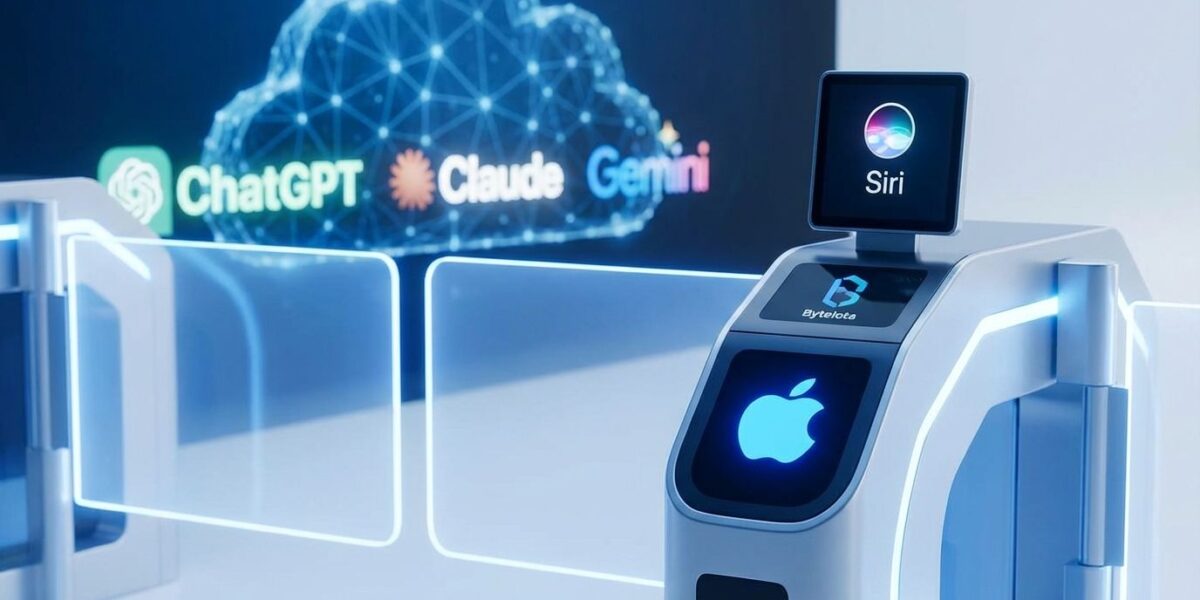
CUPERTINO, CA — In a seismic shift that recalibrates the competitive dynamics of the consumer technology landscape, Apple Inc. has officially initiated the rollout granting artificial intelligence capabilities deep, cross-application access to third-party software. For a company historically defined by its walled-garden architecture, proprietary control, and uncompromising risk mitigation, this structural maneuver represents a watershed moment. As enterprise technology budgets recalibrate and consumer expectations pivot toward ambient, agentic computing, Apple’s capital allocation and infrastructure scalability are now being tested on a global stage.
This investigative report examines the mechanics of Apple’s latest OS deployment, the underlying cloud compute architecture, the regulatory compliance hurdles, and the profound valuation multiples at stake for stakeholders across the digital ecosystem.
Executive Takeaways
- Ecosystem Transformation: Apple is officially breaking down its proprietary software silos, granting generative AI models deep command-line and API-level access to non-native applications.
- Infrastructure Scaling: The integration relies on a hybrid execution model, combining on-device neural processing units (NPUs) with private cloud compute architecture to guarantee data privacy and high throughput.
- Monetization & Valuation: Wall Street analysts are closely tracking how enterprise ROI and developer monetization frameworks will impact Apple’s service revenue growth and hardware replacement cycles.
- Regulatory Scrutiny: Opening closed platforms to third-party AI agents introduces complex antitrust compliance dimensions across both North American and European Union jurisdictions.
The Catalytic Shift: Breaking the Walled Garden
Test Our Free AI & Tech Utilities Suite
Calculate LLM API token costs, analyze article dwell-time, or simulate tech DCA returns.
For over a decade, Apple’s competitive moat was fortified by vertical integration. Hardware, operating systems, and native software functioned in a frictionless, highly secure unison. However, the generative artificial intelligence boom exposed a vulnerability in this strategy: ambient assistants require contextual breadth, and users increasingly demand an agentic interface capable of executing complex multi-step workflows across disparate software environments.
The decision to open Siri to third-party applications is not merely a feature update; it is a fundamental architectural overhaul. By leveraging advanced natural language understanding (NLU) alongside system-level intent APIs, Siri can now parse unstructured user requests and translate them into structured API calls inside third-party applications. Whether a user is instructing Siri to edit a photo within a specialized creator economy tool, dispatch funds through a fintech utility, or retrieve enterprise data from a cloud repository, the friction of manual navigation is systematically eliminated.
Industry insiders note that this strategic pivot was accelerated by softening upgrade cycles for high-end consumer hardware. By infusing Siri with utilitarian depth powered by third-party integrations, Apple is engineering a compelling replacement cycle. Consumers are no longer evaluating iPhones purely on camera physics or screen fidelity; they are purchasing computational access to an intelligent, interconnected software layer.
Infrastructure Scalability and Privacy Engineering
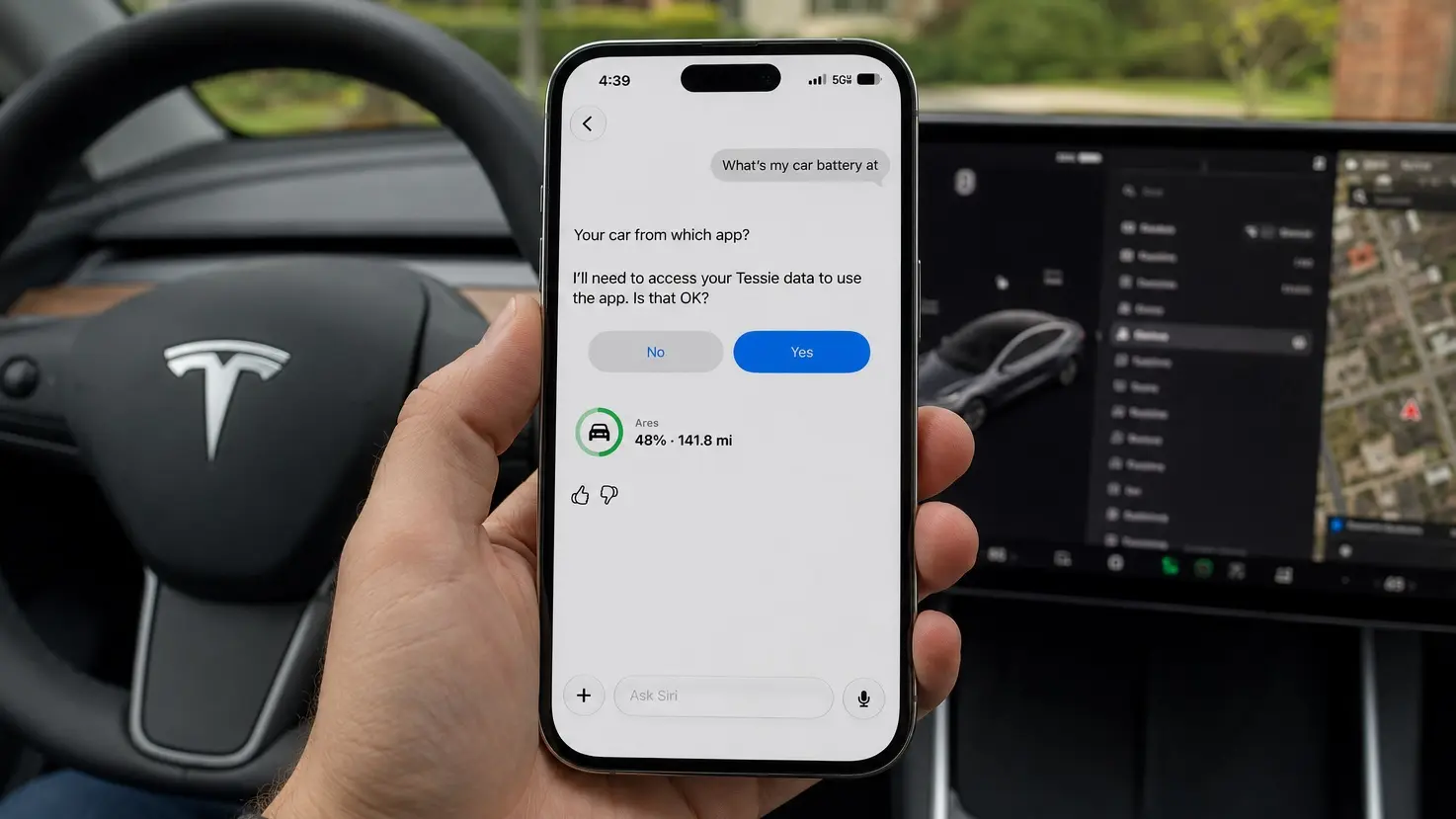
To execute real-time cross-app AI interactions without compromising its brand-defining stance on data privacy, Apple has had to scale its engineering infrastructure aggressively. The system operates on a dual-tier framework: lightweight inference tasks are handled locally on the device’s dedicated neural engine, while heavy context aggregation and complex multi-app orchestration leverage Apple’s proprietary Private Cloud Compute (PCC) nodes.
From a technical standpoint, maintaining low-latency execution while validating cryptographic proofs of data privacy represents a masterclass in cloud compute architecture. Enterprise IT directors and cybersecurity auditors have scrutinized Apple’s zero-knowledge verification protocols. Unlike competitors who route extensive conversational histories to public server farms for model training, Apple’s localized sandboxing ensures that third-party apps only receive the specific context required to execute the user's explicit intent.
This infrastructure scalability protects consumer trust while opening the door for software-as-a-service (SaaS) providers and independent developers to integrate seamlessly into Apple’s ecosystem. The long-term enterprise ROI for participating developers hinges on their ability to expose clean, well-documented APIs that harmonize with Apple’s strict intent schema.
| Metric / Parameter | Legacy Siri Architecture | New Third-Party AI Integration |
|---|---|---|
| App Interaction Scope | Strictly limited to native Apple apps and basic intents. | Deep API-level hooks across certified third-party software. |
| Execution Environment | Local device processing with rudimentary cloud lookups. | Hybrid local NPU + Private Cloud Compute (PCC) infrastructure. |
| Data Governance | Isolated sandboxing; minimal data sharing. | Zero-knowledge encrypted context handoff to authorized APIs. |
| Market Impact | Stagnant engagement metrics; utility limitations. | Accelerated hardware replacement and expanded service monetization. |
Industry & Market Implications: Who Wins and Who Loses?
Market liquidity and equity valuations are already responding to the realignment of platform power. Software developers who previously struggled to acquire user attention in overcrowded app stores now have a direct conduit to voice- and intent-driven discovery via Siri. Productivity suites, fintech platforms, and media streaming apps stand to capture substantial usage volume as automated agents streamline consumer workflows.
Conversely, standalone utility applications that relied on simple feature sets face immediate existential pressure. When an operating system natively incorporates cross-app automation into its default assistant, single-purpose apps risk being commoditized. Furthermore, rival platform operators—particularly Alphabet’s Google and Amazon—are forced to accelerate their own agentic workflows to counter Apple's hardware-backed distribution advantage.
From a regulatory compliance standpoint, antitrust regulators across the European Union and the United States are monitoring whether Apple provides equitable API access to all developers without favoring preferential partners or internal tools. The Digital Markets Act (DMA) in Europe creates a stringent legal framework that demands absolute transparency and non-discriminatory interoperability standards.
Frequently Asked Questions (People Also Ask)
How does Apple protect user privacy when Siri accesses third-party applications?
Apple utilizes a hybrid privacy model combining on-device processing with Private Cloud Compute (PCC). When a request involves a third-party app, Siri securely packages only the necessary contextual data using end-to-end encryption. Third-party servers do not retain user data for model training, and all transactions adhere to strict zero-knowledge verification standards.
Which third-party apps are currently supported by the updated Siri AI system?
Initial rollout phases focus on productivity, messaging, media creation, and financial services apps that have adopted Apple's updated App Intent APIs. Support is expanding iteratively, with major enterprise software suites and consumer platforms integrating deeper systemic hooks throughout the current fiscal cycle.
Will this update require new hardware, or will older device models be compatible?
While basic API routing functions across a wide range of modern iOS devices, advanced generative AI features and complex multi-app agentic orchestration require specialized on-chip neural processing units (NPUs). Consequently, full feature parity is optimized for devices boasting advanced neural engine specifications.
How does this integration impact developer monetization and app store dynamics?
By enabling voice- and intent-driven activation, developers can bypass traditional visual UI discovery hurdles. This creates new high-value monetization channels, though participants must align their backend architectures with Apple's stringent developer guidelines and API security protocols.
Future Outlook: Milestones to Watch
As Apple continues to scale its AI infrastructure throughout the upcoming fiscal quarters, financial analysts and tech strategists will monitor several key performance indicators. First, developer adoption rates of the new App Intent frameworks will dictate the velocity at which Siri’s utility expands. Second, consumer engagement metrics will reveal whether agentic voice interfaces successfully drive hardware upgrade cycles.
Ultimately, Apple’s willingness to open its ecosystem to third-party AI marks the beginning of a new chapter in personal computing. By balancing robust privacy architecture with expansive software interoperability, Cupertino is positioning itself to capture significant market share in the next era of intelligent enterprise and consumer technology.


