Executive Takeaways
Test Our Free AI & Tech Utilities Suite
Calculate LLM API token costs, analyze article dwell-time, or simulate tech DCA returns.
- Silicon-Driven Acoustic Performance: Powered by upgraded S-series System-in-Package (SiP) silicon, the HomePod Mini 2 delivers up to 40% expanded dynamic headroom and dramatically reduced harmonic distortion without altering its compact 3.3-inch spherical footprint.
- Sub-System Infrastructure Architecture: Featuring a second-generation Ultra-Wideband (U2) chip, native Thread border router capability, and full Matter 1.3 protocol optimization, the device functions as a critical edge node for high-density smart home networks.
- Ecosystem Monetization Engine: Serving as a low-friction entry point within Apple’s hardware matrix, the HomePod Mini 2 accelerates recurring subscription revenues across Apple Music, Apple Fitness+, and iCloud+ while reinforcing device lock-in.
- Competitive Realignment: The release puts structural pressure on entry-level audiophile offerings from Sonos and forces Amazon and Google to defend their smart home install bases amid shifting standards toward privacy-centric, on-device compute.
The Computational Audio Leap: Re-engineering Micro-Acoustics
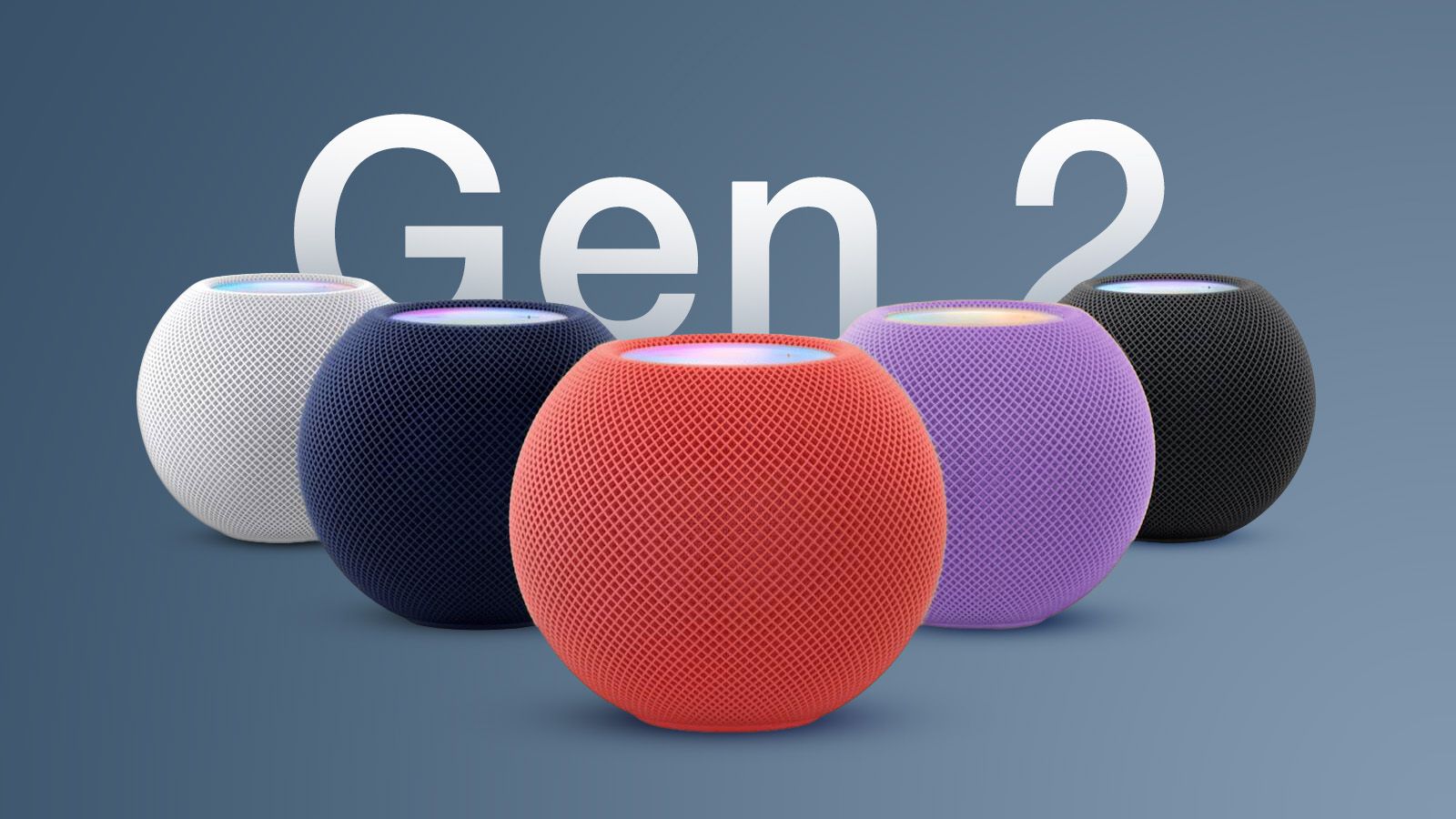
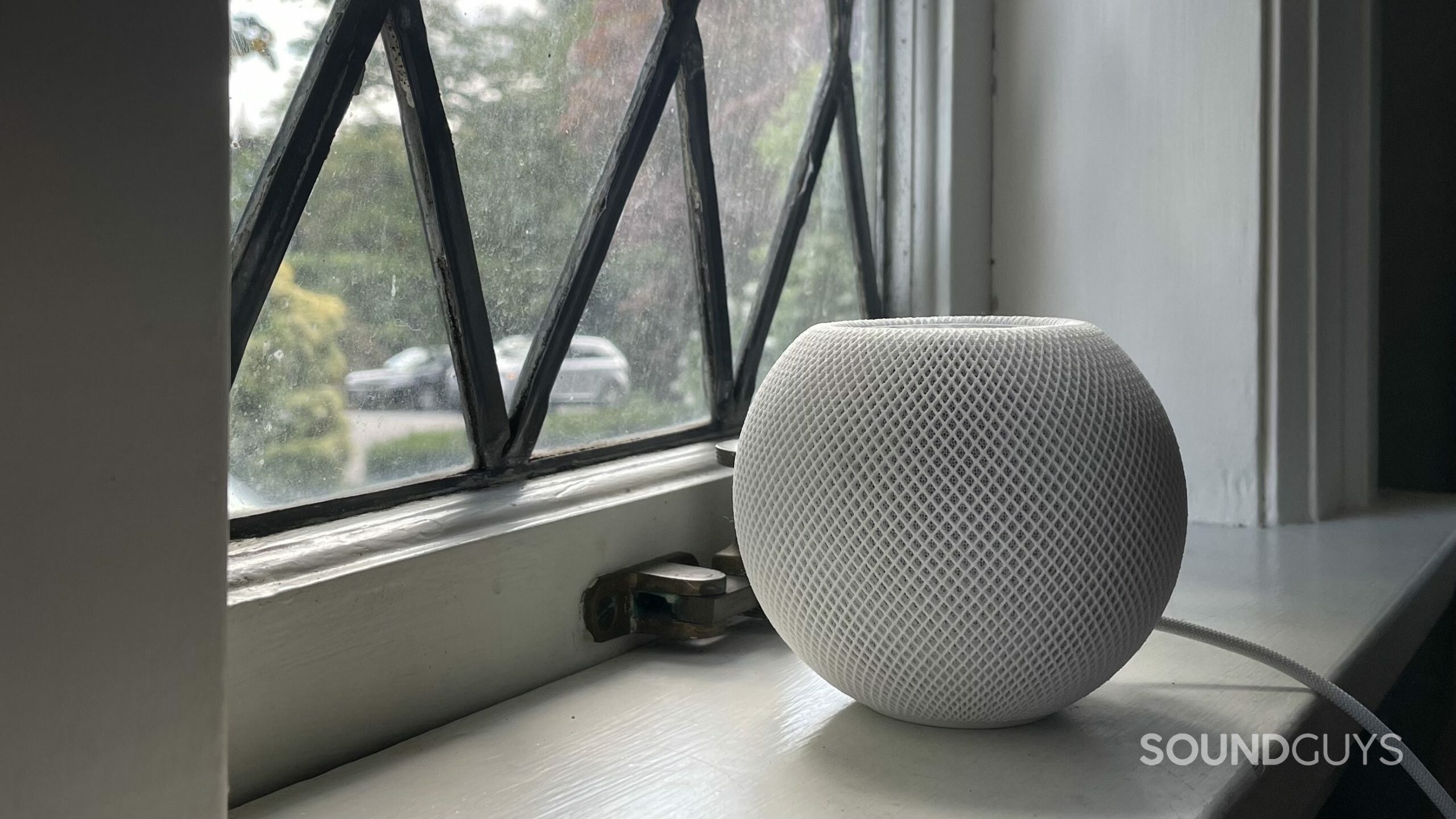
When Apple introduced the original HomePod Mini, the underlying thesis focused on democratizing computational audio. The HomePod Mini 2 expands upon this paradigm by replacing legacy processing pipelines with advanced S-series silicon, fundamentally altering the acoustics-to-volume ratio in small-format hardware. Where traditional loudspeaker engineering relies heavily on physical cabinet volume and large displacement cones to project bass and maintain structural warmth, Apple’s acoustic team has shifted the structural burden entirely onto continuous real-time digital signal processing (DSP).
At the center of the HomePod Mini 2’s internal architecture is a newly engineered, custom full-range neodymium transducer. The unit fires downward into an acoustic waveguide that distributes audio in a uniform 360-degree pattern. This primary driver is flanked by force-canceling dual passive radiators, which minimize mechanical vibration across high-volume playback thresholds. The operational breakthrough, however, lies in how the onboard processor coordinates these physical components.
Executing real-time system modeling at over 800 operations per second, the S-series chip continuously analyzes the precise excursion limits of the driver, temperature variables within the internal voice coil, and dynamic air pressure shifts within the hermetically sealed enclosure. By deploying predictive algorithmic limiter profiles, the HomePod Mini 2 extracts maximum acoustic energy from its micro-chamber without risking hardware thermal throttling or harmonic clipping. The result is a frequency response profile characterized by significantly deeper low-end extension—reaching down to clean sub-bass frequencies previously unattainable in a device of this scale—and expanded vocal clarity in the mid-range spectrum.
Infrastructure Backbone: Matter 1.3, Thread, and Ultra-Wideband Gen 2
Beyond its acoustic capabilities, the HomePod Mini 2 represents a major strategic deployment within Apple’s broader home automation and Internet of Things (IoT) architecture. Rather than treating the speaker merely as an endpoint audio target, Cupertino’s engineering team designed the chassis to operate as a high-throughput border node for distributed local networks.
The integration of the second-generation Ultra-Wideband (U2) chip solves longstanding latency challenges in proximity handoff. When an iPhone housing a matching U2 silicon layer approaches the HomePod Mini 2, spatial awareness algorithms calculate absolute vector alignment and physical distance down to the centimeter level. This enables instantaneous audio handoff, dynamic media card rendering on the source device, and localized smart home controls tailored precisely to the room the user is occupying.
Crucially, the HomePod Mini 2 functions as a full Thread border router, operating alongside native Matter 1.3 compliance. This dual-network implementation allows the device to bridge low-power 802.15.4 mesh networks directly to IP-based enterprise or home Wi-Fi networks. By decoupling smart home accessory orchestration from third-party cloud servers, Apple ensures that signal routing, encryption key exchange, and automation execution occur entirely on-device at the edge network layer. This architecture drastically reduces operational latency while maintaining a strict zero-trust security framework for home sensors, lock controllers, and lighting arrays.
Hardware & Protocol Specification Comparison Matrix
The following table provides an analytical breakdown of hardware specifications, processing capabilities, and networking protocols across Apple’s smart speaker lineup and competing market reference devices:
| Technical Metric / Specification | HomePod Mini (1st Gen) | HomePod Mini 2 | HomePod (2nd Gen) | Sonos Era 100 |
|---|---|---|---|---|
| System Processor | Apple S5 SiP | Apple S9 / S10 SiP | Apple S7 SiP | Quad-Core 1.4 GHz ARM |
| Acoustic Architecture | Single Full-Range Driver, Dual Passive Radiators | Enhanced High-Excursion Driver, Dual Force-Canceling Radiators | High-Excursion Woofer, 5 Array Tweeters | Dual Angled Tweeters, Single Mid-Woofer |
| Spatial Awareness Silicon | U1 Ultra-Wideband | U2 Ultra-Wideband (Gen 2) | U1 Ultra-Wideband | None (Microphone Auto-Tuning) |
| Computational Audio Cycles | ~180 Tuning Adjustments/sec | ~800+ Tuning Adjustments/sec | Real-Time Dynamic Tuning Array | Trueplay Algorithmic Calibration |
| Smart Home Standards | Thread, HomeKit, Matter Border Router | Thread 1.3, HomeKit, Matter Border Router | Thread, HomeKit, Matter Border Router | Sonos Ecosystem, AirPlay 2, Matter (over Wi-Fi) |
| Sensor Suite | Temperature & Humidity (Activated post-launch) | Enhanced Temperature, Humidity, Ambient Noise Floor | Temperature & Humidity, Room Reflection Sensing | Microphone Array for Trueplay |
| Estimated Bill of Materials (BOM) Margin | ~32% Gross Margin | ~36-38% Gross Margin (Optimized) | ~42% Gross Margin | ~45% Gross Margin |
Capital Allocation & Platform Economics: The ARPU Multiplier
From an enterprise finance perspective, the HomePod Mini 2 is not designed to generate top-line hardware windfalls on an isolated unit-cost basis. Instead, it serves as a calculated hardware-subsidized anchor within Apple’s broader ecosystem revenue capture model. By maintaining a highly competitive entry-level price point, Apple drives device density in high-income consumer households, creating a seamless conduit to high-margin subscription services.
Every HomePod Mini 2 deployed within a living ecosystem acts as an immediate multiplier for Average Revenue Per User (ARPU). The device requires or incentivizes engagement with primary Apple services, including:
- Apple Music & Lossless Audio: Drives individual and family tier subscriptions, competing directly with Spotify while offering higher integration fidelity across iOS devices.
- Apple TV+ Integration: Functions as a low-latency, stereo-paired sound system for Apple TV 4K, reducing customer churn within the home entertainment ecosystem.
- iCloud+ Cloud Storage: Local processing of HomeKit Secure Video feeds recorded by connected cameras requires higher-tier iCloud+ storage plans, cementing recurring monthly recurring revenue (MRR).
Industry supply-chain audits suggest that by leveraging shared S-series silicon cross-utilized across the Apple Watch hardware matrix, Apple achieves significant economies of scale. The resulting reduction in unit production costs improves gross hardware margins on the HomePod Mini 2 by an estimated 400 to 600 basis points over the first-generation model. This capital efficiency provides Apple with significant strategic flexibility, allowing the company to defend its entry-tier price floor while continually driving user acquisition toward high-margin services (which historically command gross margins exceeding 70%).
Industry & Market Implications: Squeezing Rivals at the Edge
The arrival of the HomePod Mini 2 accelerates structural disruption across two distinct corporate categories: legacy audio manufacturers and cloud-centric smart home providers.
For premium audio providers like Sonos, the HomePod Mini 2 represents an increasingly aggressive expansion into small-room, high-fidelity sound. While Sonos has historically maintained dominance in modular multi-room installations, Apple’s ability to sell high-performance computational hardware at near-cost efficiency strains Sonos’s traditional hardware-margin targets. Customers seeking low-friction multi-room audio are increasingly opting for paired micro-nodes over single, higher-cost standalone speakers.
Simultaneously, the HomePod Mini 2 poses a strategic challenge to Amazon (Echo ecosystem) and Alphabet (Google Nest). Both Amazon and Google built their early smart speaker footprints on deep hardware subsidies paired with cloud-side voice analytics. However, growing consumer scrutiny regarding voice-data privacy, coupled with the shift toward local edge compute, has exposed the vulnerabilities of cloud-reliant architectures. By anchoring the HomePod Mini 2 to local Thread/Matter orchestration and on-device processing, Apple establishes a privacy-focused benchmark that legacy ad-supported models struggle to match without incurring substantial cloud latency and infrastructure expenses.
Frequently Asked Questions (People Also Ask)
Is the HomePod Mini 2 worth upgrading to from the original HomePod Mini?
Yes, particularly for users focused on smart home performance and acoustic clarity. The HomePod Mini 2 features a faster S-series processor that dramatically improves real-time computational audio, resulting in lower harmonic distortion at high volumes and clearer bass response. Furthermore, the inclusion of second-generation Ultra-Wideband (U2) silicon makes iPhone handoffs faster and more reliable, while updated Thread and Matter support ensures future-proof smart home network performance.
How does the HomePod Mini 2 integrate into non-Apple smart home networks?
While voice activation via Siri and primary device setup require an iOS device, the HomePod Mini 2 fully supports the universal Matter smart home standard and operates as a native Thread border router. This allows it to interoperate seamlessly with Matter-certified accessories across platforms (such as SmartThings or Home Assistant), routing signals locally across low-power mesh networks regardless of ecosystem fragmentation.
Can two HomePod Mini 2 units be configured as default home theater speakers?
Yes. Two HomePod Mini 2 speakers can be paired within the Apple Home app to form a synchronized stereo pair. When designated as the default audio output for an Apple TV 4K, the pair utilizes computational spatial channel division to create an immersive soundstage with support for Dolby Atmos and spatialized stereo rendering.
What are the real-world advantages of the second-generation Ultra-Wideband (U2) chip?
The U2 chip enables precise spatial location awareness between your iPhone and the HomePod Mini 2. In practical terms, this dramatically reduces the latency required to hand off audio, eliminates proximity errors when transferring calls or media, and brings up dynamic media controls on your iPhone screen automatically as you approach the speaker within a room.
Future Outlook & Strategic Milestones
Looking ahead, the deployment of the HomePod Mini 2 lays critical groundwork for Apple's broader artificial intelligence roadmaps. As on-device language models grow more compact and efficient, edge nodes equipped with high-throughput silicon and dedicated neural acceleration will serve as the localized communication nodes for Apple Intelligence within the physical home.
Subsequent software iterations are expected to unlock localized voice intent parsing directly on the S-series processor, effectively bypassing cloud execution entirely for standard room automations and device queries. As Apple continues to unify its custom silicon architectures across wearables, home hardware, and mobile computing platforms, the HomePod Mini 2 stands as a clear signal of the company's long-term strategy: controlling the infrastructure of the smart home through low-latency edge compute, high-density networking standards, and hardware-enabled service monetization.