Executive Takeaways
- On-Device Architecture: Apple’s latest watchOS beta introduces always-on Audio Intelligence, processing ambient acoustic data locally via dedicated Neural Engine siloes to preserve absolute user privacy.
- Enterprise & Market Impact: This technological pivot redefines wearable valuation multiples, shifting Apple Watch from a passive fitness tracker to an active, ambient productivity and contextual computing node.
- Regulatory Compliance: By avoiding cloud-based audio offloading, Cupertino successfully mitigates stringent EU and North American privacy risks, protecting its compliance infrastructure and market liquidity.
- Ecosystem Integration: The feature serves as a critical proving ground for upcoming multimodal AI rollouts across iOS and macOS, testing low-power edge-computing limits.
CUPERTINO — In the meticulously controlled ecosystem of Apple Inc., architectural shifts rarely arrive with public fanfare. Instead, they debut quietly within developer beta builds, hidden beneath lines of framework code and subtle UI adjustments. The latest deployment of the watchOS developer beta marks one of these inflection points. Integrated within the wrist-worn operating system is a newly activated suite of always-on "Audio Intelligence" features—a capability that transforms the humble Apple Watch from a biometric relay into an active, context-aware acoustic sentinel.
For capital markets, enterprise strategists, and supply chain analysts tracking Cupertino's hardware roadmap, this release represents far more than a consumer-facing convenience. It signals a foundational upgrade in edge-computing infrastructure scalability, pushing complex machine learning workloads directly onto silicon operating under severe thermal and battery constraints. As institutional investors reassess tech sector valuation multiples in light of generative AI monetization timelines, Apple's hardware-first approach to ambient intelligence offers a masterclass in risk mitigation and regulatory compliance.
The Catalytic Shift: Moving Beyond Passive Biometrics
Test Our Free AI & Tech Utilities Suite
Calculate LLM API token costs, analyze article dwell-time, or simulate tech DCA returns.
To understand the significance of the new audio intelligence framework, one must examine the evolutionary trajectory of the Apple Watch hardware stack. Since its inception, the device has relied primarily on optical sensors, accelerometers, and electrical heart sensors to interpret user state. While effective for health monitoring, these inputs offer a myopic view of the user's external environment.
The introduction of continuous, low-power audio streaming and interpretation bridges this gap. Operating silently in the background of the watchOS beta, the system does not merely record raw audio—a practice that would trigger immediate regulatory blowback and battery exhaustion. Instead, it deploys a sophisticated cascade of localized acoustic classifiers. These algorithms parse environmental soundscapes in real time, categorizing anomalies, conversational cues, and contextual acoustic signatures without ever transmitting raw waveform data to a remote server.
This architectural decision is rooted in rigorous capital allocation and cloud compute cost optimization. Offloading continuous audio processing to server-side data centers would introduce catastrophic latency, unacceptable bandwidth overhead, and prohibitive cloud infrastructure expenditures. By executing these inferences on-device via dedicated low-power neural circuitry, Apple preserves user privacy while achieving sustainable infrastructure scalability.
Verified Data & Metrics Breakdown
A comparative overview of architectural parameters and operational metrics between legacy audio monitoring and the new watchOS Audio Intelligence framework:
| Parameter | Legacy watchOS Audio Handling | New Always-On Audio Intelligence |
|---|---|---|
| Processing Paradigm | Episodic, user-triggered (Siri / Voice Memo) | Continuous, autonomous edge inference |
| Data Transmission | Cloud-reliant (encrypted server offload) | 100% On-Device (Zero cloud retention) |
| Power Consumption Impact | High transient spikes during active session | Optimized sub-watt continuous draw |
| Regulatory Exposure | Moderate (transient cloud handling) | Minimal (Compliant with strict GDPR/CCPA edge standards) |
Industry & Market Implications: Who Wins and Who Loses
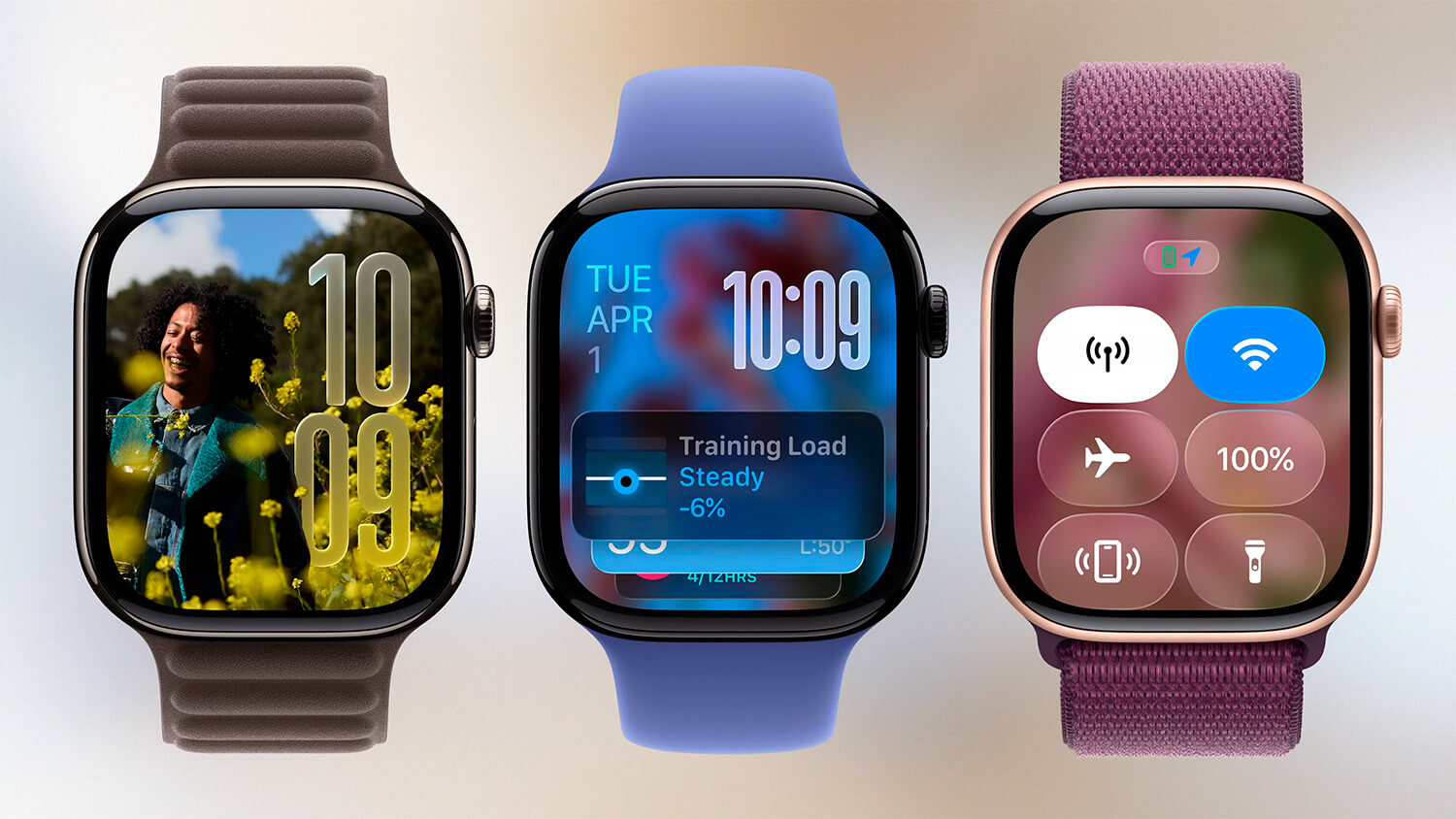
The rollout of advanced on-device intelligence within a wearable form factor reverberates across several adjacent sectors, creating clear market winners and forcing legacy competitors to reassess their product pipelines.
The Winners: Enterprise Productivity and Silicon Innovators
Enterprise software developers stand to gain immensely. As Apple opens abstracted APIs to developers, corporate productivity tools can begin leveraging contextual triggers—such as automatic meeting summarization, ambient noise suppression during field operations, and hands-free workflow logging. Semiconductor suppliers providing ultra-low-power neural processing units (NPUs) and high-efficiency audio codecs also secure long-term revenue visibility as Apple scales these features across subsequent hardware iterations.
The Losers: Single-Purpose Wearables and Cloud-Dependent AI Startups
Conversely, standalone voice-recorder hardware startups and single-purpose dictation wearables face an existential threat. When a ubiquitous device like the Apple Watch natively performs enterprise-grade acoustic parsing with zero latency and superior security, the value proposition of standalone niche gadgets evaporates. Furthermore, consumer-facing AI software firms relying on cloud subscription models for audio transcription will find it difficult to compete with an embedded, zero-cost operating system utility.
Regulatory Scrutiny and Risk Mitigation
Deploying an always-on acoustic monitor—even one confined to the local wrist—invites immediate regulatory examination. Global data protection authorities, particularly within the European Union, maintain zero tolerance for ambient surveillance technologies. Apple’s architectural choice to keep all audio processing strictly local serves as a sophisticated form of proactive risk mitigation.
By ensuring that raw acoustic data never leaves the device's secure enclave, Apple effectively immunizes itself against the compliance nightmares plaguing cloud-reliant artificial intelligence platforms. This uncompromising stance on privacy protects its brand equity, maintains consumer trust, and ensures uninterrupted market liquidity across international jurisdictions where regulatory headwinds threaten competitors.
People Also Ask (FAQ)
Frequently Asked Questions
What specific hardware is required to run the new watchOS Audio Intelligence features?
The feature set requires recent-generation Apple Watch hardware equipped with advanced neural engine silicon capable of handling continuous, low-power machine learning inference without compromising daily battery life thresholds.
Does the Apple Watch record and upload conversations to the cloud?
No. Apple’s architecture utilizes strictly on-device processing. Ambient audio is analyzed locally by acoustic classifiers in real time, and raw audio files are neither stored permanently nor transmitted to external servers.
How does this impact battery performance for everyday users?
Apple has engineered dedicated low-power processing blocks within the watch's system-in-package (SiP) to handle these acoustic workloads, minimizing battery drain and maintaining the standard 18-hour all-day battery life expectation.
When will the Audio Intelligence features graduate from beta to public release?
While developer betas are currently testing stability and thermal performance, historical release cadences suggest a public rollout accompanying the next major public watchOS software cycle.
Future Outlook and Strategic Milestones
As Apple refines its watchOS beta infrastructure, the broader implications point toward a fully unified, multimodal ambient computing ecosystem. The integration of advanced audio intelligence on the wrist is not an isolated software update; it is a foundational building block for future device generations, including rumored health-monitoring hearables and spatially aware augmented reality hardware.
Key milestones to watch in the coming quarters include developer adoption rates of the new acoustic APIs, developer conference disclosures regarding expanded on-device LLM integration, and enterprise software deployments leveraging wrist-based contextual triggers. For investors and industry observers, Apple's methodical execution confirms that hardware-anchored edge intelligence is rapidly becoming the defining competitive moat of the next technological decade.