By the Financial Investigations Desk
Published: May 21, 2026
Executive Takeaways
Test Our Free AI & Tech Utilities Suite
Calculate LLM API token costs, analyze article dwell-time, or simulate tech DCA returns.
- The $4 Trillion Paradigm Shift: While retail and media attention remains fixed on standard retail stablecoins, institutional balance sheets are quietly migrating toward an advanced, programmatic on-chain financial architecture valued at over $4 trillion.
- The Asian Regulatory Vanguard: Jurisdictions across Asia—specifically Singapore, Hong Kong, and Japan—are outpacing Western regulatory frameworks by deploying sandbox-tested, interoperable tokenized deposit networks and central bank digital currency (CBDC) bridges.
- Enterprise ROI & Capital Efficiency: Modern corporate treasuries are realizing profound infrastructure scalability through atomic settlement, reducing counterparty credit risk and compressing capital allocation cycles from T+1 to instantaneous execution.
- The Next Frontier of Liquidity: The convergence of tokenized commercial bank money, programmable smart contracts, and real-world asset (RWA) tokenization is fundamentally redefining traditional valuation multiples and risk mitigation strategies for global financial institutions.
Comprehensive Narrative: The Architecture Beyond the Tether
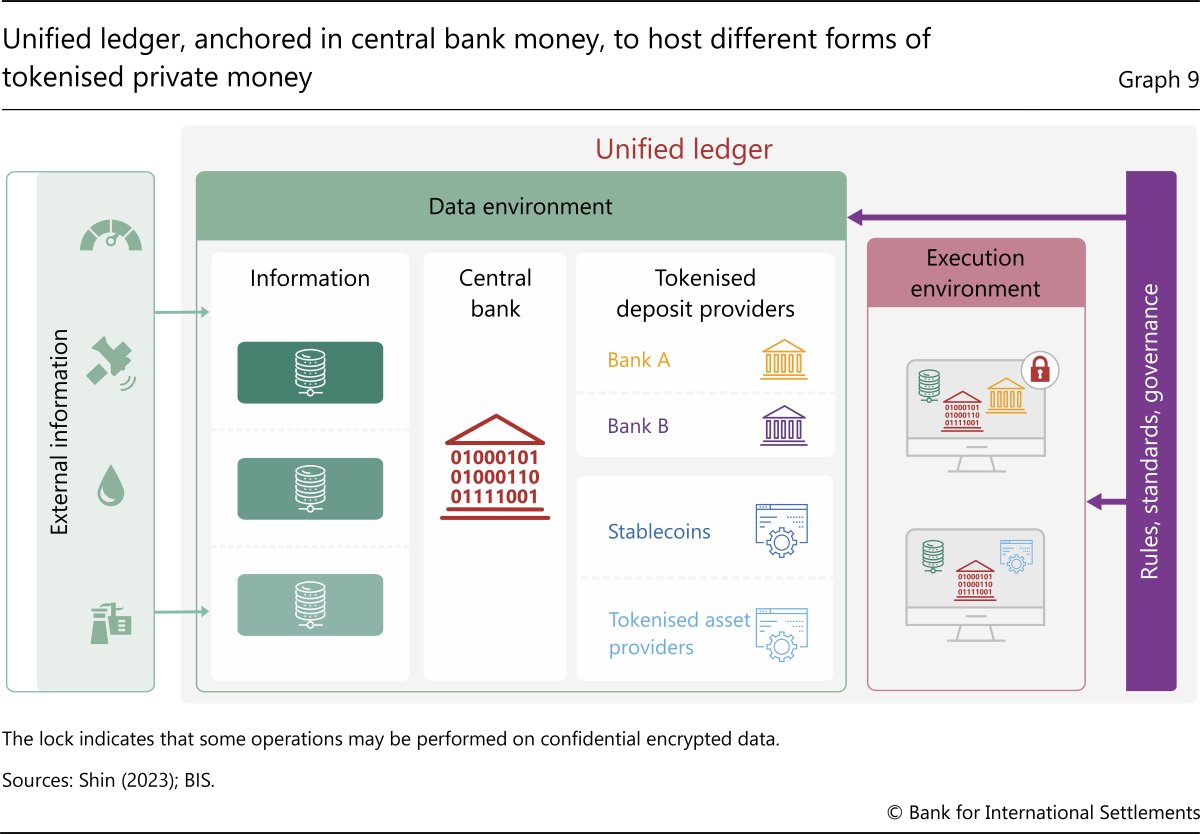
For the better part of the decade, public discourse regarding digital assets has suffered from profound myopia. Wall Street boardrooms, regulatory halls in Washington, and financial newsrooms have treated blockchain technology almost exclusively through the prism of cryptocurrency speculation or basic, dollar-pegged stablecoins like USDT and USDC. But beneath the surface noise of retail trading volumes, a far more consequential financial transformation has reached an inflection point. According to landmark research released by McKinsey & Company on May 21, 2026, titled "Beyond stablecoins: The emerging architecture of on-chain money," the global financial system is currently transitioning into a sophisticated, multi-trillion-dollar programmatic infrastructure.
This $4 trillion reality is not merely about digitizing fiat currency; it represents a complete overhaul of how value is stored, transferred, and settled across global balance sheets. Traditional financial market infrastructure—built on legacy messaging systems like SWIFT, batch-processed clearinghouses, and fragmented correspondent banking networks—is increasingly buckling under the weight of modern liquidity demands. In response, global systemically important banks (G-SIBs), asset managers, and market utilities are accelerating enterprise adoption of permissioned and hybrid blockchain rails. These networks facilitate instantaneous atomic settlement, eliminate settlement risk, and drastically reduce the friction of cross-border capital allocation.
The historical context of this evolution reveals a clear trajectory. The first wave of digital assets introduced cryptographic scarcity; the second wave popularized stablecoins as a volatility buffer within decentralized finance (DeFi) and offshore trading corridors. The third wave—which we have now entered—is defined by institutional-grade tokenized commercial bank money, central bank liabilities, and programmable debt instruments. This ecosystem merges the legal finality of fiat currency with the programmatic efficiency of smart contract execution, unlocking unprecedented enterprise ROI for early adopters.
However, realizing this vision requires navigating complex hurdles in cloud compute architecture, cryptographic security, and regulatory compliance. Financial institutions are no longer experimenting in isolated innovation labs; they are hardcoding compliance logic, know-your-customer (KYC) protocols, and anti-money laundering (AML) controls directly into token smart contracts. This shift ensures that on-chain money remains fully compliant with domestic and international regulatory frameworks while operating at the speed of internet protocols.
Verified Data & Metrics Breakdown
| Metric / Indicator | Legacy Financial Infrastructure | Emerging On-Chain Architecture (2026) | Strategic Impact / Valuation Implication |
|---|---|---|---|
| Global Addressable Market Value | Fragmented across hundreds of siloed domestic ledgers ($100T+ total, highly inefficient). | $4 Trillion transitioning into unified, programmable liquidity pools. | Massive reduction in trapped liquidity and optimized capital allocation. |
| Settlement Velocity | T+1 to T+2 days (subject to correspondent banking delays and holidays). | Real-time / Instantaneous (Atomic) execution 24/7/365. | Drastic mitigation of counterparty credit risk and overnight funding costs. |
| Cross-Border Transaction Friction | High intermediary fees (2% to 5%) and multi-day routing delays. | Sub-second settlement with marginal network gas/compute fees. | Unlocking high-velocity global supply chain finance and micro-payments. |
| Regulatory Compliance Integration | Manual reconciliation, retrospective auditing, and siloed AML checks. | Programmable compliance embedded directly into token transfer functions. | Lower operational risk and streamlined regulatory reporting frameworks. |
Spotlight on Asia's Leading Role
While Western markets have occasionally been bogged down by regulatory ambiguity and legislative gridlock, Asian financial hubs have seized a commanding lead in shaping the architecture of on-chain money. Led by progressive frameworks from the Monetary Authority of Singapore (MAS), the Hong Kong Monetary Authority (HKMA), and the Bank of Japan, the region has transformed into a living laboratory for institutional tokenization.
Through initiatives like Project Guardian in Singapore and various cross-border CBDC experiments, Asian regulators have actively collaborated with commercial giants such as JPMorgan, DBS Bank, and Standard Chartered. These initiatives test the viability of atomic swaps involving tokenized Japanese Government Bonds (JGBs), Singaporean treasury bills, and foreign exchange pairs. The strategy is clear: rather than attempting to outlaw or stifle on-chain innovation, these jurisdictions are building robust guardrails that attract institutional capital while safeguarding systemic financial stability.
This proactive stance has direct implications for global market liquidity. Multinational corporations operating across Asia are increasingly demanding treasury management systems capable of sweeping cash balances across borders instantaneously. By leveraging tokenized commercial bank deposits, these enterprises can optimize working capital in ways previously impossible under legacy banking constraints. Consequently, Western financial institutions are under mounting pressure to modernize their infrastructure or risk ceding dominance in international trade finance to Asian-led digital corridors.
Industry & Market Implications: Who Wins and Who Loses?
The transition toward an on-chain financial architecture is creating clear divides between market participants:
- Winners — Technology-Forward G-SIBs & Infrastructure Providers: Major global banks that have heavily invested in private-permissioned ledgers and tokenization platforms are capturing lucrative custodial and issuance mandates. Cloud infrastructure providers and enterprise blockchain developers are also seeing unprecedented demand for high-throughput, secure compute architecture.
- Winners — Corporate Treasurers: Chief Financial Officers who embrace programmatic liquidity management are unlocking trapped capital, reducing borrowing costs, and optimizing yield on overnight cash holdings.
- Losers — Legacy Intermediaries & Correspondent Banks: Institutions whose primary revenue model relies on extracting fees from slow, opaque cross-border wire transfers and manual trade reconciliation face an existential threat. As atomic settlement becomes the industry standard, intermediary rent-seeking behavior is rapidly being engineered out of the system.
- Losers — Laggard Institutions: Banks and asset managers slow to adopt regulatory-compliant on-chain rails risk severe market share erosion, unable to compete with the speed and capital efficiency of tokenized competitors.
Frequently Asked Questions (People Also Ask)
1. How does institutional on-chain money differ from retail stablecoins like USDT or USDC?
While retail stablecoins primarily operate on public, permissionless blockchains and are typically backed by retail-facing issuers, institutional on-chain money encompasses tokenized commercial bank deposits, wholesale central bank digital currencies (wCBDCs), and regulated digital promissory notes. These assets are issued directly by regulated financial institutions, integrate native compliance and AML checks at the smart contract level, and operate on permissioned or hybrid enterprise blockchain networks designed to meet strict institutional risk and capital adequacy standards.
2. What role does regulatory compliance play in the new $4 trillion on-chain architecture?
Regulatory compliance is foundational rather than an afterthought in the emerging architecture. Modern token standards incorporate "programmable compliance," meaning transfer restrictions, sanctions screening, and jurisdictional boundaries are hardcoded into the token's smart contract logic. This ensures that assets cannot be transferred to unverified addresses or restricted entities, satisfying global regulatory bodies while maintaining the operational velocity of blockchain rails.
3. Why is Asia leading the adoption of tokenized commercial money and CBDCs?
Asian financial centers—particularly Singapore, Hong Kong, and Japan—have benefited from proactive regulatory environments characterized by close public-private collaboration. Regulatory bodies in these jurisdictions have established structured sandboxes that allow major commercial banks to test tokenized assets, cross-border payment bridges, and automated market makers in a controlled, legally secure setting, accelerating time-to-market compared to more fragmented Western approaches.
4. How does on-chain architecture impact enterprise ROI and corporate treasury management?
On-chain money eliminates settlement delays, allowing corporate treasurers to execute real-time liquidity sweeps, optimize cash management, and reduce reliance on expensive overdraft facilities. By slashing counterparty risk and operational friction, businesses achieve measurable improvements in enterprise ROI, freeing up capital that was historically trapped in transit.
Future Outlook: Milestones to Watch
As the financial sector navigates the remainder of the decade, several critical inflection points will determine the ultimate trajectory of on-chain money:
- Interoperability Protocols: Watch for the deployment of standardized, enterprise-grade cross-chain communication bridges that allow seamless liquidity movement between private institutional ledgers and public capital markets.
- Regulatory Harmonization: The establishment of cross-border regulatory frameworks—particularly between the US, EU, and Asian jurisdictions—will dictate how fluidly tokenized assets can move globally without triggering compliance bottlenecks.
- Scale of RWA Tokenization: The migration of traditional asset classes (commercial real estate, private equity funds, and sovereign debt) onto compliant blockchain rails will serve as the primary engine driving total value locked past the current $4 trillion threshold.
The transition from speculative crypto experiments to a mature, institutional on-chain financial architecture is no longer a theoretical projection. It is an active, multi-trillion-dollar restructuring of the global economy. Institutions that successfully integrate this architecture into their core operations will define the next era of global finance; those that hesitate risk obsolescence in an increasingly instantaneous digital world.