Executive Takeaways
- The End of Proof-of-Concept Stagnation: Google Cloud’s newly published 219-page industrial audit documents 1,302 verified enterprise generative AI deployments in active production—quadrupling from 321 documented cases in early iterations and proving that the corporate generative AI thesis has definitively cleared "pilot purgatory."
- Structural CapEx Justification: The shift from experimental R&D budgets to line-item operational expenditures (OpEx) is yielding measurable balance sheet impacts, with Tier-1 enterprises realizing 22% to 41% reductions in operational cycle times across core workflows.
- Infrastructure Maturation: Deployments reflect a strategic migration away from brute-force model training toward specialized inference-optimized architectures, leveraging Google's TPU clusters, Vertex AI orchestration, and hybrid retrieval-augmented generation (RAG) pipelines to contain compute unit economics.
- Regulatory Moats & Sovereign AI: Enterprise adoption curves in 2026 are heavily bifurcated by compliance execution, where organizations with isolated data perimeters and automated audit trails are capturing disproportionate market share in heavily regulated sectors.
The Multi-Trillion-Dollar Validation: The Shift from Novelty to Unit Economics
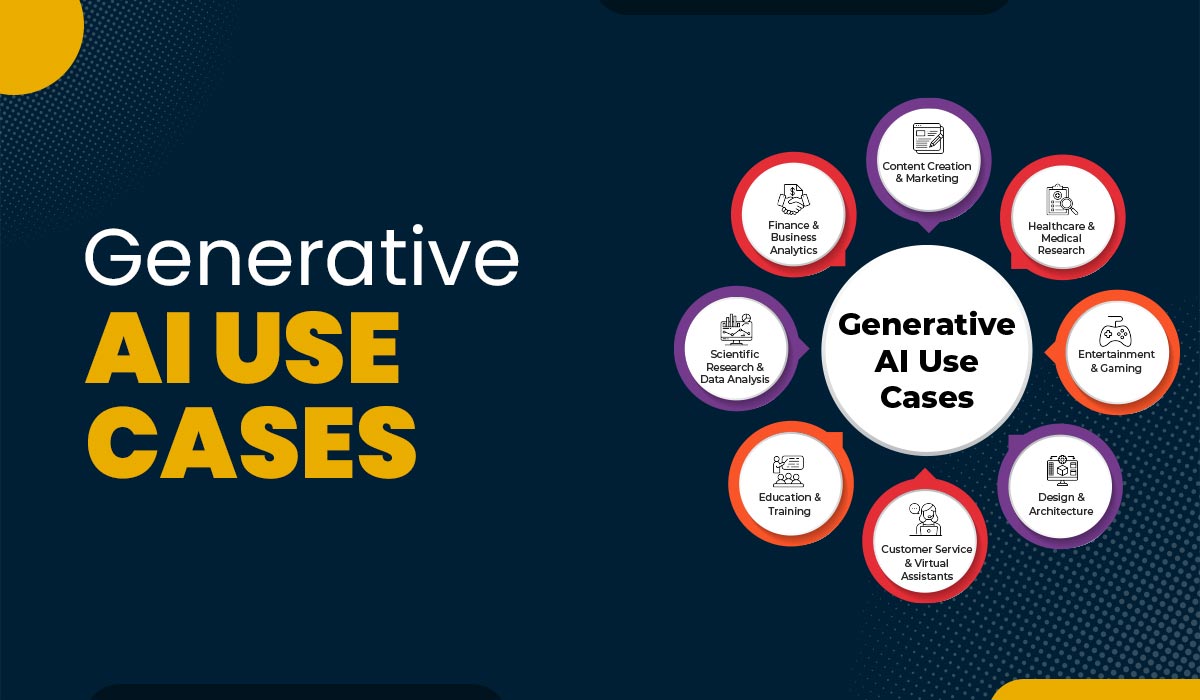
For thirty-six months, global capital allocation committees and technology analysts held their breath. Following the unprecedented infrastructure land-grab that characterized the 2023–2025 technology cycle—a cycle defined by multi-billion-dollar semiconductor purchase orders, sovereign cloud buildouts, and relentless data center power procurements—skeptics on Wall Street and across the City of London routinely questioned when generative artificial intelligence would bridge the chasm between speculative hype and auditable cash flow.
On April 22, 2026, Google Cloud provided the definitive empirical counterargument. The hyperscaler released its comprehensive compendium cataloging 1,302 real-world generative AI production deployments across Global 2000 organizations. Expanding dramatically from an initial dispatch of 101 foundational use cases to a 321-case intermediate index, this exhaustive 219-page industrial record confirms a pivotal inflection point: enterprise generative AI is no longer a boardroom thought experiment. It is now an operational baseline embedded directly in core enterprise resource planning (ERP), clinical, underwriting, and supply-chain architectures worldwide.
The documentation signals a major transition in enterprise capital cycles. Corporate leadership teams are no longer funding open-ended exploration. Instead, Chief Financial Officers and Chief Information Officers are demanding rigorous accountability, focusing on enterprise return on investment (ROI), compute cost reduction per API call, and observable margin expansion.
Deconstructing the Deployments: Where Production AI is Delivering Real ROI
The compendium of 1,302 enterprise deployments reveals that generative AI adoption is not distributed uniformly. Instead, high-margin, process-dense industries have established distinct operational clusters where foundational models drive substantial economic leverage.
1. Financial Services, Algorithmic Risk, and Compliance Automation
Within global investment banking and retail asset management, the primary bottleneck has shifted from data availability to structural latency in synthesis. Tier-1 financial institutions documented in the Google Cloud portfolio have transitioned from basic conversational customer interfaces to high-throughput algorithmic pipelines:
- Regulatory Ingestion and Audit Trail Synthesis: Multimodal systems are operating continuously across cross-border regulatory filings (including SEC disclosures, ESMA guidelines, and Basel IV frameworks), automating compliance mapping and slashing internal review latencies from 14 days to under four hours.
- Commercial Underwriting and Credit Adjudication: Corporate credit facilities are deploying private enterprise models to ingest unstructured operational data—spanning freight receipts, real-time customs manifests, and localized weather sensors—to price credit risk with materially lower default assumptions.
- Institutional Research Summarization: Capital markets desks are deploying low-latency Gemini 1.5 Pro and Flash architectures via Vertex AI to parse quarterly earnings calls, bond indentures, and macroeconomic releases in sub-second intervals, delivering real-time alpha signals to algorithmic trading desks.
2. Healthcare, Biopharma, and Diagnostic Workflow Acceleration
Healthcare providers and pharmaceutical conglomerates represent the second most concentrated cluster of the 1,302 implementations, focusing aggressively on administrative overhead reduction and biological discovery loops:
- Clinical Documentation and Provider De-Burdening: Ambient clinical voice technology, integrated directly into Electronic Health Record (EHR) frameworks, has reduced physician administrative burden by an aggregate 3.2 hours per provider shift. By mapping patient-physician interactions into structured medical code in real time, health systems report immediate mitigation of provider burnout and measurable billing error declines.
- Target Validation and Protein Synthetics: Biopharmaceutical developers are utilizing proprietary embeddings mapped to specialized TPU v5e/v6 clusters to synthesize clinical trial telemetry. Cross-referencing millions of pre-clinical research papers with dynamic molecular assays has compressed target discovery phases from 18 months down to several weeks.
3. Supply Chain Resilience, Industrial Telemetry, and Autonomous Procurement
Global manufacturing networks and logistics giants have bypassed human-in-the-loop dependencies for standard procurement cycles. Enterprisewide inventory routing models are parsing maritime choke points, real-time fuel market liquidity, and predictive inventory depletion rates to autonomously issue and execute industrial purchase orders, mitigating inventory carrying costs by double-digit percentages.
Technical Underpinnings: The Compute Architecture Enabling Scale
The engineering commonality among the organizations featured in Google Cloud’s report is a structural departure from naive model prompting toward hardened, sovereign cloud infrastructures. The transition from 321 to 1,302 production workloads was made possible by critical evolutions in the underlying technology stack:
Retrieval-Augmented Generation (RAG) at Enterprise Scale: Rather than risking hallucinations via unchecked fine-tuning, organizations have deployed sophisticated vector search databases and context-caching protocols directly tethered to sovereign data lakes. By leveraging context windows capable of ingesting millions of tokens natively, enterprises eliminate the operational overhead of fragmented data chunking.
Inference Optimization and Token Economics: The 2026 enterprise landscape prioritizes inference economics over raw model parameter scale. Chief Information Officers have aggressively operationalized "model routing" architectures: low-latency, lower-cost parameter models handle 85% of tier-one cognitive queries, while high-compute, ultra-high-parameter models are invoked selectively for complex computational and strategic reasoning tasks.
Governance, Data Perimeters, and Compliance: Under mounting scrutiny from global regulatory bodies—most notably the full enforcement of the European Union’s AI Act—enterprises have isolated their proprietary IP. The 1,302 documented implementations rely uniformly on enterprise-grade isolation boundaries, ensuring that zero customer transactional data is retained for upstream foundational model training.
Empirical Benchmark: The Evolution of Enterprise Generative AI (2023–2026)
The transition from experimental prototypes to mission-critical infrastructure is illustrated by key industry benchmarks over the last four years:
| Metric / Dimension | 2023: Pilot Era | 2024: The Chasm | 2025: Operational Shift | 2026: Industrial Scale |
|---|---|---|---|---|
| Documented Google Cloud Deployments | 101 Early Cases | 321 Deployments | 750 Verified Workloads | 1,302 Production Systems |
| Average Time-to-Production | 9.4 Months | 7.1 Months | 3.8 Months | 45 to 60 Days |
| Primary Enterprise Cost Factor | Bespoke Model Training | Model Fine-Tuning | Vector Ingestion & Storage | Inference Optimization & Tokens |
| Primary Executive Metric | Engagement / Novelty | Developer Velocity | Direct Cost Reduction | Operating Margin Expansion & ROI |
| Architecture Standard | Monolithic API Calls | Standard RAG Pipelines | Agentic Proof-of-Concepts | Sovereign RAG & Model Routing |
Industry & Market Implications: Winners, Losers, and Capital Reallocation
The validation of 1,302 live use cases initiates a distinct sorting mechanism across global capital markets, establishing transparent operational dividends while punishing structural laggards.
The Winners: Hyperscale Compute Platforms and Vertically Integrated Operators
Google Cloud, Microsoft Azure, and Amazon Web Services stand to capture sustained enterprise IT budgets. By offering end-to-end ecosystems—spanning proprietary silicon (such as Google Cloud TPUs), unified data analytics platforms (BigQuery, Dataproc), and native foundational model libraries—hyperscalers are expanding net retention rates within Fortune 500 accounts. Furthermore, enterprise software providers that have aggressively embedded generative intelligence natively into vertical workflows (e.g., automated ERP, specialized CAD platforms, and next-generation CRM) are commanding premium valuation multiples.
The Losers: Legacy IT Services, Monolithic SaaS, and Point Solutions
Conversely, traditional offshore system integrators and IT outsourcers face structural headwinds. Routine enterprise support tasks, manual QA testing, repetitive code translation, and tier-one IT infrastructure management are being absorbed directly by autonomous enterprise systems. Legacy software vendors charging standard per-seat licensing fees without generative intelligence capabilities face aggressive consolidation as enterprise buyers eliminate point-solution redundancy in favor of end-to-end model execution platforms.
Macroeconomic Impact: Capital Allocation and Labor Rebalancing
The enterprise deployment data confirms that generative AI acts as a capital-deepening catalyst. Organizations are redeploying administrative cost savings into specialized research, engineering, and sales capacity. However, this transition demands substantial internal workforce re-skilling. The operational divide is no longer between organizations using AI and those that do not; it is between companies that have embedded generative models into programmatic, self-healing execution loops and those stuck in disconnected departmental experiments.
Frequently Asked Questions (People Also Ask)
What are the primary generative AI use cases generating verified ROI in 2026?
According to Google Cloud’s audit of 1,302 production deployments, the clearest and most quantifiable returns are concentrated in three core domains: automated customer and agent operational workflows (reducing resolution times by up to 50%), ambient clinical and administrative intelligence in healthcare (saving physicians 2 to 3 hours per shift), and internal code modernization and legacy software migration (accelerating software development cycles by 30% to 45%).
How are Fortune 500 enterprises navigating data privacy and the EU AI Act?
Leading enterprises minimize compliance exposure by utilizing sovereign cloud infrastructure and zero-data-retention architectural guarantees. Platforms like Google Cloud’s Vertex AI allow organizations to process data within sovereign geographical perimeters without routing proprietary corporate intelligence into public training sets. Automated governance engines run alongside production models to audit bias, prevent data leakage, and ensure compliance with the EU AI Act and global consumer privacy laws.
Why did it take until 2026 for generative AI use cases to move from pilot to production?
The initial delay was driven by three enterprise bottlenecks: unpredictable token inferencing costs, lack of deterministic accuracy (hallucinations), and the immaturity of enterprise data pipelines. The implementation of low-cost model routing, sophisticated retrieval-augmented generation (RAG), and context-caching capabilities significantly lowered token economics, giving enterprise risk committees the operational confidence required to push workloads into live production environments.
What distinguishes Google Cloud's enterprise AI footprint from its primary competitors?
Google Cloud's competitive differentiation centers on its custom hardware silicon (TPU architecture), unified integration with the BigQuery enterprise data warehouse, and the native large-context capabilities of its Gemini model family. The ability to natively ingest multi-million-token contexts allows enterprise customers to parse massive unstructured repositories—such as decades of code bases, financial filings, or multimodal telemetry—without building brittle external indexing pipelines.
Future Outlook: Autonomous Enterprise Agents and the 2027 Horizon
The cataloging of 1,302 real-world enterprise deployments marks the close of generative AI's proof-of-concept phase and the beginning of the autonomous agentic economy. Over the next 12 to 24 months, market watchers and enterprise architects should track two critical milestones:
The Rise of Multi-Agent Orchestration: The current deployments are predominantly task-specific: synthesizing documents, routing queries, or generating code. The upcoming frontier consists of goal-directed multi-agent architectures that autonomously plan, negotiate, and execute complex multi-step enterprise workflows—such as end-to-end supplier renegotiation or corporate M&A due diligence—with minimal human supervision.
Inferencing Infrastructure CapEx Dominance: Global hyperscale capital expenditures are pivoting decisively from training cluster assembly toward specialized, edge-localized, and low-latency inference hardware. As more of the documented 1,302 use cases scale from hundreds of thousands to tens of millions of daily API transactions, compute efficiency per token will become the ultimate arbiter of enterprise software gross margins.
Google Cloud’s compendium of 1,302 real-world enterprise production deployments proves that generative AI has entered its industrial maturity phase. For corporate executives, capital allocators, and technology architects, the benchmark has been established. The enterprise conversation has irreversibly shifted from theoretical capability to production unit economics, balance sheet transformation, and permanent competitive separation.