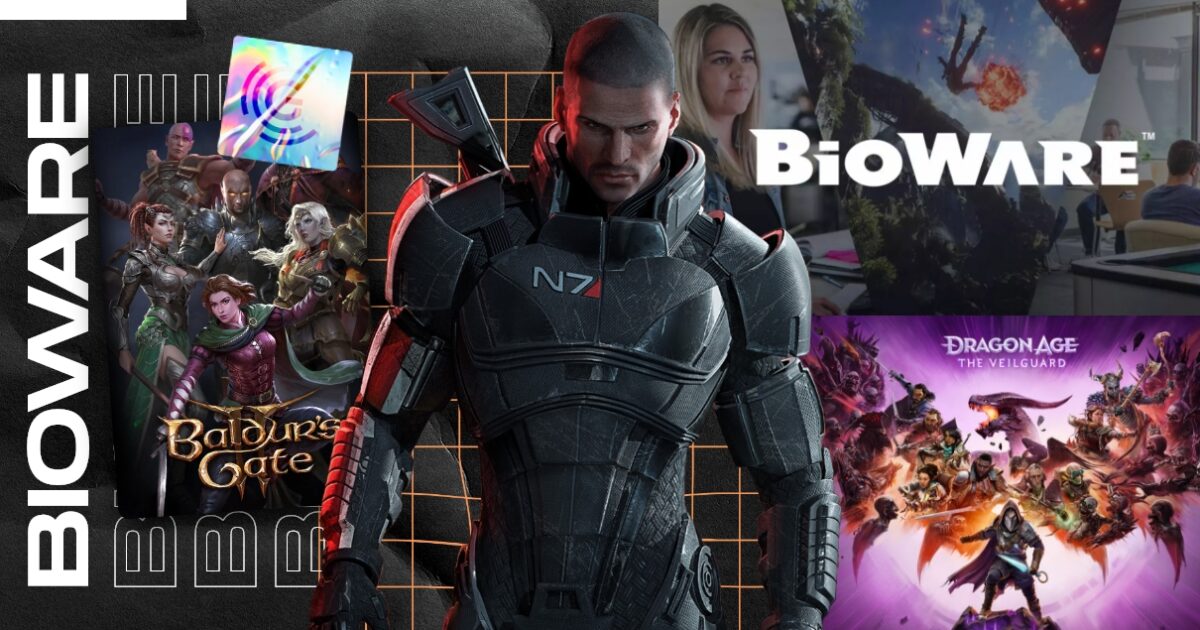
For three decades, BioWare stood as the undisputed crucible of narrative-driven role-playing games, minting legendary franchises like Baldur's Gate, Mass Effect, and Dragon Age. However, as corporate restructuring, volatile valuation multiples, and shifting consumer preferences forced prolonged development cycles, the legendary studio underwent a profound structural transformation. Today, the true legacy of BioWare is no longer confined to a single Edmonton campus or corporate ledger. Instead, it lives on through an aggressive diaspora of veteran creators who have founded independent ventures, secured substantial institutional funding, and built a massive pipeline of next-generation titles.
This comprehensive investigative report examines the current financial backing, technical architecture, and market implications of the post-BioWare projects currently in production across the global games industry. By analyzing capital allocation, infrastructure scalability, and intellectual property portfolios, we decode how the industry's premier narrative architects are charting a new course for interactive entertainment.
Executive Takeaways
Test Our Free AI & Tech Utilities Suite
Calculate LLM API token costs, analyze article dwell-time, or simulate tech DCA returns.
- The Veteran Diaspora: Dozens of former BioWare directors, lead writers, and principal engineers have established independent studios, effectively decentralizing the studio’s institutional knowledge.
- Venture Capital Influx: Post-BioWare ventures are bypassing traditional publisher bottlenecks by leveraging private equity, strategic partnerships, and cloud compute architecture to optimize capital allocation.
- A Diverse Production Slate: Current projects range from spiritual successors to classic sci-fi epics to cutting-edge fantasy IPs utilizing advanced engine tech and modular content pipelines.
- Risk Mitigation Models: Modern post-BioWare studios are implementing leaner organizational structures and remote-first infrastructure to protect profit margins against ballooning AAA production costs.
The Catalytic Shift: Anatomy of the BioWare Exodus
The evolution of BioWare from an independent pioneer under Electronic Arts to a streamlined, multi-project machine has been marked by significant creative friction. As corporate mandates emphasized live-service scalability and predictable enterprise ROI, core creative talent faced mounting creative constraints. The departure of key figures—including former General Manager Casey Hudson, lead writer David Gaider, and veteran producers across engineering and design—triggered a massive dispersion of talent across the global games sector.
From an economic standpoint, this talent flight represents a decentralization of high-value intellectual capital. In the traditional media ecosystem, senior talent burnouts often result in early retirements or peripheral consultancy roles. In the modern interactive sector, however, seasoned developers are capitalizing on favorable valuation multiples and surging investor demand for proven leadership. Armed with decades of institutional knowledge regarding branching dialogue trees, cinematic combat design, and complex world-building, these veterans have secured robust early-stage financing to launch their own independent enterprises.
This shift aligns with broader enterprise trends in software development. Just as cloud-native architecture disrupted legacy enterprise IT infrastructure, independent studios are utilizing modular game engines, remote collaboration tools, and scalable cloud compute infrastructure to eliminate bloated overhead costs. The result is a vibrant ecosystem of boutique studios capable of producing AAA-grade narrative experiences at a fraction of traditional corporate burn rates.
Mapping the Post-BioWare Production Slate
The pipeline of games currently being spearheaded by former BioWare veterans is remarkably diverse, spanning hard sci-fi, dark fantasy, and emergent tactical RPGs. Below is a detailed breakdown of the primary titles currently moving through various stages of production and active development.
Humanoid Origin: The Untitled Sci-Fi Epic
Founded by former BioWare General Manager Casey Hudson, Humanoid Origin represents one of the most heavily capitalized post-BioWare ventures. Backed by private investment and strategic publishing partnerships, the studio is building an entirely new science-fiction universe from the ground up. Industry insiders note that the project aims to capture the philosophical depth and cinematic scope of the original Mass Effect trilogy, while integrating modern procedural generation tools and scalable cloud-based rendering pipelines to maximize visual fidelity without inflating production timelines.
Summerfall Studios: Chorus: An Adventure Musical and Beyond
Co-founded by veteran writer and former BioWare lead David Gaider, Summerfall Studios takes a distinctly different approach to narrative design, fusing deep RPG mechanics with musical theater. While their debut title, Chorus, established a new benchmark for branching narrative interaction, Gaider and his team are actively expanding their development footprint. The studio utilizes agile production methodologies that allow for rapid iteration on narrative branches—a direct countermeasure to the notoriously protracted writing cycles that plagued late-stage BioWare projects.
Archetype Entertainment: Exodus
Operating under the Wizards of the Coast umbrella, Archetype Entertainment is helmed by BioWare veterans James Ohlen and Chad Robertson. Their flagship project, Exodus, is a AAA science-fiction action-RPG centering around the consequences of time dilation and relativistic space travel. Backed by robust corporate infrastructure, Archetype has positioned itself as a direct spiritual successor to classic BioWare RPGs, emphasizing player choice, consequence, and cinematic immersion. The project represents a masterclass in risk mitigation, leveraging established corporate backing while maintaining creative autonomy through a dedicated, veteran-led studio unit.
Verified Data & Metrics: Post-BioWare Studio Ecosystem
To understand the economic scale and operational scope of these post-BioWare ventures, the following table contrasts key operational metrics, funding strategies, and primary technological frameworks across the leading studios.
| Studio Name | Key Leadership | Flagship Project | Funding / Backing Model | Core Technological Focus |
|---|---|---|---|---|
| Humanoid Origin | Casey Hudson | Untitled Sci-Fi IP | Venture Capital & Strategic Partners | Cloud-Scale Narrative & Real-Time Rendering |
| Archetype Entertainment | James Ohlen, Chad Robertson | Exodus | Corporate Subsidiary (Wizards of the Coast) | Unreal Engine 5 & Relativistic Physics |
| Summerfall Studios | David Gaider, Liam Esler | Chorus & Unannounced IP | Crowdfunding, Grants, & Private Equity | Modular Narrative Branching & Audio Integration |
Industry & Market Implications: Who Wins and Who Loses?
The proliferation of post-BioWare studios is having a profound ripple effect across the broader interactive entertainment economy, altering risk profiles, talent retention strategies, and publisher negotiations.
The Winners: Agile Independent Studios and Private Equity
Venture capital firms and private equity funds specializing in interactive media are emerging as major beneficiaries. By identifying top-tier creative talent early in their independent lifecycles, these investors can secure favorable equity stakes before major publishing deals are finalized. Furthermore, independent studios that adopt lean operational frameworks are proving capable of delivering high-margin entertainment products without the crushing overhead that traditionally derailed large-scale corporate ventures.
The Losers: Legacy Publishers Relying on Monolithic Structures
Traditional publishers that rely on monolithic, centralized studio models face mounting headwinds. As top creative talent increasingly opts for entrepreneurial autonomy and remote-friendly environments, legacy organizations find it difficult to attract and retain the visionary leadership required to launch successful new intellectual properties. Consequently, legacy publishers are increasingly forced to acquire these independent ventures downstream at inflated valuation multiples, driving up capital acquisition costs.
Frequently Asked Questions (People Also Ask)
What is the status of BioWare's current internal projects?
While former talent builds independent studios, BioWare itself remains operational under Electronic Arts. The studio recently shipped Dragon Age: The Veilguard and has redirected the majority of its internal engineering and narrative resources toward the pre-production and active development of the next installment in the Mass Effect franchise.
How are post-BioWare studios financing their games without major publisher backing?
Many post-BioWare studios utilize a hybrid capital allocation model. This typically combines early-stage venture capital, private equity funding, government media grants, and selective regional publishing partnerships. By retaining intellectual property ownership, these studios maximize their long-term valuation and revenue retention.
Are these new projects considered spiritual successors to classic BioWare games?
Yes. Projects like Archetype Entertainment's Exodus and Humanoid Origin's unannounced sci-fi epic are explicitly designed to appeal to fans of classic BioWare titles. They emphasize deep character development, player choice-driven narratives, and cinematic world-building, while updating the underlying mechanical frameworks for modern hardware.
How do modern post-BioWare studios mitigate the high costs of AAA game development?
To ensure regulatory compliance, financial stability, and risk mitigation, these studios rely on modular game engines (such as Unreal Engine 5), remote-first organizational structures, and scalable cloud compute infrastructure. This prevents runaway development budgets and optimizes capital efficiency.
Future Outlook and Key Milestones to Watch
As the post-BioWare generation moves deeper into active production, the next 24 to 36 months will serve as an ultimate stress test for this decentralized development model. Market observers, institutional investors, and enterprise analysts should monitor several critical milestones:
- Technical Vertical Slices: Expect initial gameplay reveals and technical demonstrations over the coming year, which will validate whether these lean studio structures can match the visual fidelity and narrative depth of legacy AAA titles.
- Publishing and Distribution Partnerships: Watch for strategic alliances between independent post-BioWare studios and global distribution giants, which will dictate global market penetration and marketing scale.
- Talent Retention and Scaling: As headcounts grow from boutique startup sizes to full production capacity, maintaining corporate culture and preventing developer burnout will be vital for sustained operational success.
Ultimately, the narrative of BioWare is no longer defined by the fortunes of a single corporate entity. Through an expansive network of independent studios, venture-backed pipelines, and uncompromising creative vision, the architectural blueprint of modern role-playing games lives on, setting a new standard for resilience and innovation in the global digital economy.