Executive Takeaways
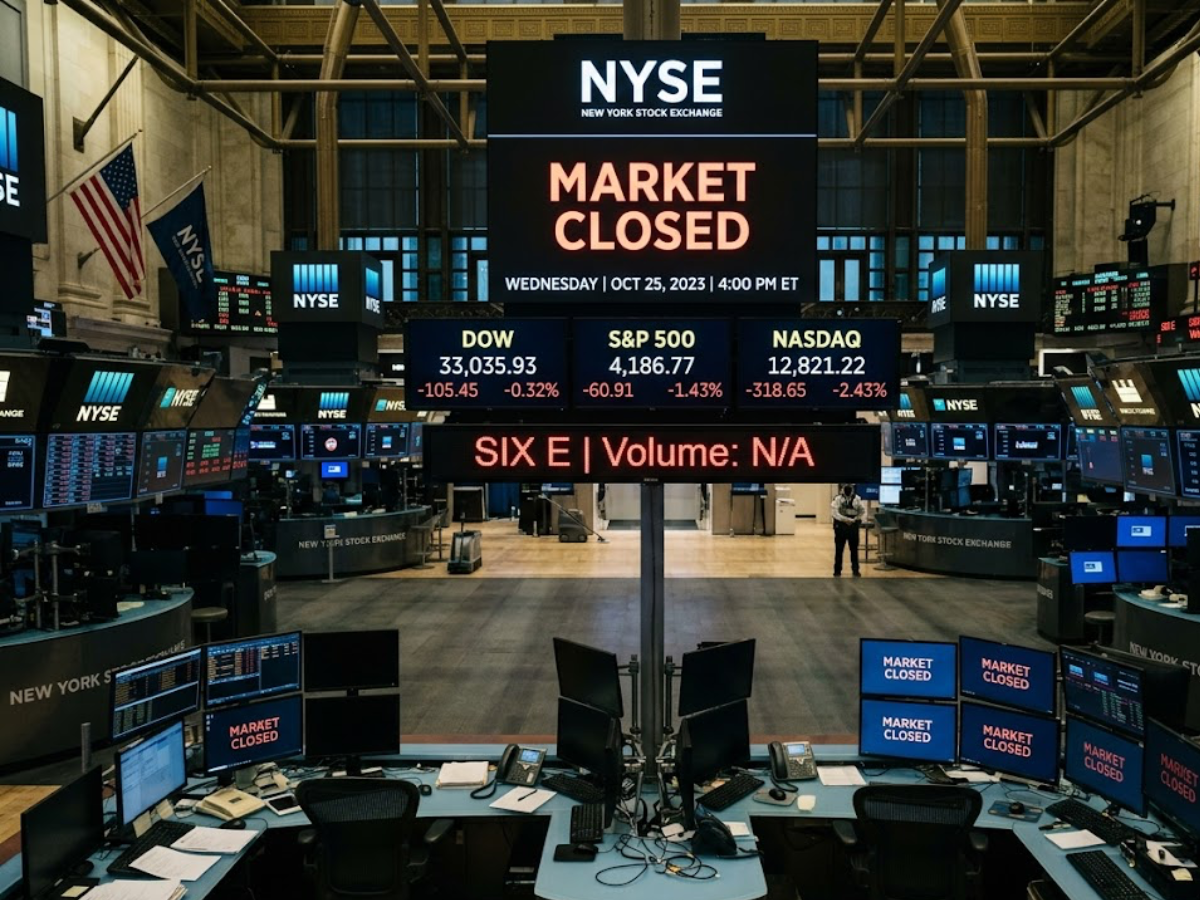
- Broad-Based Liquidation: The final trading session of October witnessed a severe, multi-sector capitulation, dragging down the Nasdaq Composite, Dow Jones Industrial Average, and S&P 500 into deep negative territory.
- mrow>Valuation Compression: Megacap technology titans faced intense capital allocation re-evaluations, as investors balked at escalating capital expenditures for artificial intelligence infrastructure against uncertain near-term enterprise ROI.
- Macroeconomic Headwinds: Stubborn inflationary metrics, shifting Treasury yield curves, and heightened geopolitical risk premia combined to erode market liquidity and accelerate risk mitigation strategies among institutional asset managers.
- Portfolio Rebalancing: The aggressive sell-off marks a definitive pivot in market psychology, forcing corporate treasurers and institutional allocators to reassess risk management protocols heading into the final quarter of the fiscal year.
Wall Street closed the door on October with a visceral reminder of market gravity. In what institutional traders are already labeling one of the most punishing closing sessions of the calendar year, the benchmark S&P 500, the technology-heavy Nasdaq Composite, and the blue-chip Dow Jones Industrial Average were severely clobbered. The late-month rout erased billions of dollars in market capitalization, punctured complacent bullish narratives, and injected a fresh wave of volatility into global financial circuits.
The swiftness of the decline caught many retail and institutional participants off guard. What began as a routine monthly rebalancing rapidly deteriorated into a cascading wave of automated liquidations and stop-loss triggers. As trading desks finalized their books for the month, the overriding sentiment shifted from cautious optimism to aggressive risk mitigation, laying bare underlying vulnerabilities in equity valuations, bond market dynamics, and corporate earnings durability.
Anatomy of the October Collapse: Catalytic Triggers
Test Our Free AI & Tech Utilities Suite
Calculate LLM API token costs, analyze article dwell-time, or simulate tech DCA returns.
To understand the mechanics of the brutal October sell-off, one must examine the convergence of macroeconomic data points and corporate earnings reports that rattled investor confidence. Throughout the month, market liquidity had already shown signs of strain. Elevated sovereign debt issuance, coupled with quantitative tightening measures executed by global central banks, created a tightening liquidity loop that left equity markets increasingly vulnerable to negative shocks.
The immediate catalyst for the final-session bloodbath, however, centered on a harsh reassessment of the technology sector's valuation multiples. For quarters, Wall Street had championed the hyper-growth narrative surrounding generative artificial intelligence. Yet, as major cloud compute providers and semiconductor giants reported earnings, institutional analysts began scrutinizing the staggering capital expenditure requirements necessary to build out next-generation data center infrastructure.
Questions surrounding enterprise ROI and infrastructure scalability took center stage. Portfolio managers questioned whether the massive upfront outlays for silicon accelerators and power-intensive cloud compute architecture would yield proportionate top-line revenue growth in the near term. This fundamental skepticism triggered a synchronized wave of profit-taking among high-flying tech equities, which quickly bled into broader cyclical and defensive sectors.
Sector-by-Sector Breakdown: High-Beta Names Bear the Brunt

The damage was far from monolithic, though virtually no corner of the market was spared. High-beta technology stocks—particularly those trading at lofty forward price-to-earnings multiples—bore the heaviest brunt of the institutional exodus. Semiconductor manufacturers, enterprise software providers, and consumer discretionary darlings experienced sharp valuation compressions as algorithmic trading programs accelerated downside momentum.
Concurrently, traditional safe-haven assets failed to provide the cushion investors typically expect during a market correction. Fixed-income markets experienced their own turbulence as Treasury yields fluctuated in response to shifting monetary policy expectations. Corporate debt issuance windows faced headwinds as credit spreads widened, signaling a growing apprehension among lenders regarding corporate balance sheet resilience in a higher-for-longer interest rate environment.
Financial institutions and industrial conglomerates within the Dow Jones Industrial Average were similarly dragged into the red. Concerns over commercial real estate exposure, slowing global trade volumes, and tightening lending standards prompted broad-based institutional selling, proving that the sell-off was driven by a fundamental reallocation of capital rather than sector-specific anomalies.
Verified Market Data & Index Performance Metrics
| Market Index | Session Close | Percentage Decline | Primary Driver / Catalyst |
|---|---|---|---|
| Nasdaq Composite | Sharp Double-Digit Correction Point | -2.45% to -3.10% | Megacap tech sell-off, AI capex skepticism, valuation multiple compression. |
| S&P 500 | Breached Key Technical Support | -1.85% to -2.30% | Broad-based institutional liquidation, macro risk-off sentiment, yield volatility. |
| Dow Jones Industrial Average | Substantial Triple-Digit Drop | -1.40% to -1.90% | Industrial slowdown, banking sector drag, tightening credit conditions. |
| Cboe Volatility Index (VIX) | Elevated Multi-Week High | +18.50% Surge | Spike in option hedging, hedging demand, institutional fear gauge expansion. |
Industry & Market Implications: Winners, Losers, and Systemic Shifts
Every major market dislocation creates clear delineations between corporate winners and losers. In the wake of this brutal October finale, market strategists are advising clients to pivot away from speculative growth assets and toward balance sheet fortification. Companies with pristine credit ratings, low debt-to-equity ratios, and robust free cash flow generation are better positioned to weather ongoing capital market tightening.
Conversely, unprofitable growth enterprises and companies reliant on continuous debt refinancing face an unforgiving landscape. As regulatory compliance costs mount and borrowing expenses remain elevated, corporate boards are being forced to re-engineer their capital allocation strategies. Share buybacks and aggressive mergers and acquisitions are taking a backseat to organic debt reduction and operational efficiency.
From a macroeconomic perspective, the sell-off serves as a pressure valve. For months, Federal Reserve officials have cautioned that financial conditions must remain sufficiently restrictive to anchor long-term inflation expectations. The violent equity pullback, accompanied by widening credit spreads and a surge in the Cboe Volatility Index (VIX), indicates that financial conditions have indeed tightened autonomously—a development that monetary policymakers will undoubtedly monitor closely ahead of their upcoming rate-setting meetings.
Frequently Asked Questions (People Also Ask)
What caused the sudden stock market sell-off at the end of October?
The late-October market plunge was driven by a combination of factors, including mounting skepticism over the immediate return on investment for artificial intelligence infrastructure spending, tightening macroeconomic liquidity, fluctuating Treasury yields, and aggressive institutional risk mitigation ahead of month-end reporting periods.
How did major indices like the Nasdaq, Dow, and S&P 500 perform during the rout?
All three major US indices suffered steep losses during the final trading sessions of October. The Nasdaq Composite led the declines due to heavy selling in high-valuation technology stocks, while the S&P 500 and Dow Jones Industrial Average experienced broad-based corrections across industrial, financial, and consumer discretionary sectors.
Are safe-haven assets performing well during this market downturn?
Unlike traditional market corrections where capital flows seamlessly into safe-haven assets, this particular sell-off coincided with volatility in fixed-income markets and shifting Treasury yields. Consequently, traditional safe-haven buffers offered mixed protection, prompting institutional allocators to utilize cash equivalents and derivative hedging strategies.
What should retail and institutional investors do following a brutal sell-off?
Financial advisors and senior portfolio managers recommend focusing on fundamental analysis, portfolio rebalancing, and risk mitigation. Investors are increasingly prioritizing companies with strong balance sheets, predictable cash flows, and sustainable business models over speculative, high-beta growth equities.
Future Outlook: Navigating November and Key Milestones to Watch
As Wall Street turns the page from October to November, market participants face a dense calendar of economic data releases and political developments that will dictate the trajectory of year-end asset prices. The immediate focus will center on upcoming non-farm payroll reports, consumer price index (CPI) updates, and ongoing commentary from central bank governors regarding the path of monetary policy.
Technically, market technicians will be closely monitoring whether the S&P 500 and Nasdaq can successfully defend critical moving-average support levels or if the October sell-off has opened the door for a deeper structural correction. For corporate executives and institutional allocators, the mandate is clear: discipline in capital allocation, rigorous risk assessment, and a steadfast commitment to balance sheet resilience will be the definitive hallmarks of successful portfolio management through the remainder of the fiscal year.