ATHENS TRAGEDY: Six Recovered Dead, Including Four Americans, After Historic Building Collapses Near Acropolis
ATHENS — A devastating building collapse in the heart of Greece’s capital has left six people dead, including four American citizens, sending shockwaves through the historic Plaka district and raising urgent questions about the structural integrity of the city’s aging architectural heritage amidst a tourism boom.
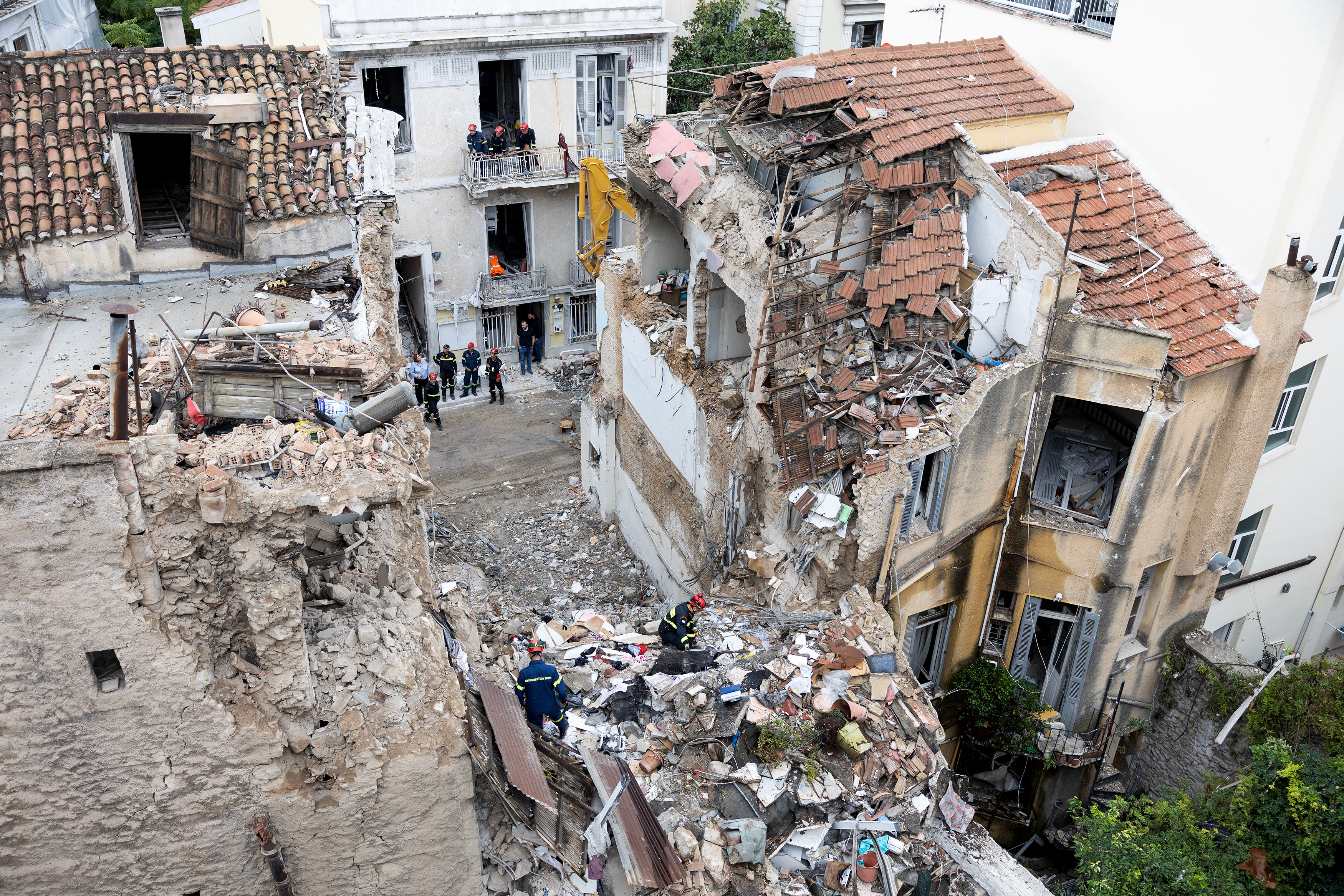
Emergency rescue crews working through the night recovered the bodies from the pulverized ruins of a multi-story neoclassical building located just steps from the Acropolis. The tragedy, which occurred in one of the most heavily trafficked tourist zones in Europe, has prompted a swift diplomatic response from Washington and ignited a fierce domestic debate in Greece over municipal safety regulations and landlord negligence.
Executive Summary: The Plaka Disaster at a Glance
- The Casualties: Six fatalities confirmed. Greek authorities have identified four of the victims as American citizens, believed to be tourists staying in or visiting the property. The identities of the remaining two victims are still being verified.
- The Location: The Plaka district, famed for its narrow, winding streets, historic Byzantine-era layout, and thousands of neoclassical structures dating back to the 19th century.
- The Response: Over 50 firefighters, specialized search-and-rescue canine units (EMAK), and heavy excavation equipment were deployed to the scene, facing severe logistical hurdles due to the narrow pedestrian passages.
- The Core Conflict: The incident exposes a growing systemic risk in European historic capitals: the friction between rapid tourism-driven real estate monetization (such as short-term rentals) and the costly, often neglected maintenance of historic unreinforced masonry.
Under the Shadow of the Acropolis: How the Disaster Unfolded

According to eyewitnesses and preliminary reports from the Athens Fire Service, the collapse occurred with catastrophic suddenness. Neighbors reported hearing a deep, rumbling sound, followed by a massive cloud of dust that choked the narrow alleyways of Plaka. Within seconds, a three-story neoclassical building—flanked by bustling cafes and boutique hotels—had folded inward, spilling tons of heavy stone, timber, and plaster onto the street below.
Because Plaka’s streets are highly pedestrianized and inaccessible to standard emergency vehicles, rescuers had to manually transport specialized shoring equipment and delicate listening devices to the site. Sniffer dogs from the Greek Disaster Response Unit (EMAK) clawed through the dust-choked debris for hours, hoping to find voids where survivors might be trapped.
By early morning, rescue coordinators confirmed the worst. The structural failure was absolute, leaving no survival pockets. The six victims were recovered from the deep interior core of the collapse, pinned beneath heavy structural load-bearing walls that had pancaked downward.
Verified Incident Data
The following table outlines the verified structural and casualty details of the Athens collapse, compiled from local municipal registries and emergency services:
| Parameter | Verified Details |
|---|---|
| Location | Plaka District, Athens, Greece (Near the Acropolis) |
| Structure Type | Late 19th-century unreinforced masonry (Neoclassical) |
| Total Casualties | 6 confirmed dead (4 US Citizens, 2 Unidentified) |
| Responding Agencies | Hellenic Fire Service, EMAK Rescue Unit, Hellenic Police |
| Primary Investigation Focus | Structural decay, unpermitted internal renovations, water ingress |
The Structural Timebomb: Tourism, Aging Masonry, and Regulatory Gaps
For economic analysts and urban planners, the Plaka tragedy is not an isolated freak accident, but rather a warning sign of a systemic issue plaguing historic European cities. Athens has experienced an unprecedented real estate and tourism surge over the last decade, driven largely by short-term holiday rentals and the conversion of older residential buildings into boutique lodging.
Many of these historic properties, constructed of unreinforced stone and lime mortar, require meticulous, highly regulated engineering interventions to remain seismically safe. However, the high cost of compliance, combined with Byzantine bureaucratic hurdles from archaeological protection agencies, often leads property owners to defer maintenance or perform unpermitted internal renovations that compromise structural stability.
"These buildings were never engineered to support modern HVAC systems, heavy stone bathtubs, or the increased live loads associated with high-turnover tourist accommodation without extensive structural retrofitting," said Dr. Dimitris Angelopoulos, a structural engineer based in Athens. "When you combine aging timber joists with unnoticed water ingress from failing roofs, the structural load-bearing capacity drops exponentially until a sudden, catastrophic shear failure occurs."
Diplomatic Shockwaves and the Investigative Outlook
The involvement of four American citizens has elevated the incident to an international diplomatic level. The U.S. Embassy in Athens released a brief statement confirming they are in close contact with Greek authorities to facilitate the repatriation of the victims' remains and to provide comprehensive consular support to the grieving families.
"We express our deepest condolences to the families of those lost in this horrific event," the Embassy spokesperson stated. "Out of respect for the families during this incredibly painful time, we have no further comment on the identities of the deceased."
Meanwhile, the Athens Public Prosecutor has launched a criminal inquiry into the collapse. Investigators are focusing on whether the property was undergoing illegal interior modifications that may have knocked out crucial load-bearing columns. Under Greek law, if negligence is proven, the property owners and any involved contractors could face severe charges of negligent homicide.
As the dust settles over Plaka, pressure is mounting on the Greek Ministry of Culture and the Athens Municipality to conduct urgent, mandatory structural audits of all pre-war buildings in the capital. For a nation whose economy relies on tourism for nearly 20% of its GDP, ensuring that visitors are safe inside its historic quarters is no longer just a regulatory issue—it is an economic imperative.
Frequently Asked Questions
What caused the building in Plaka to collapse?
While the official investigation is ongoing, preliminary assessments point to a combination of long-term structural decay, potential water damage to timber supports, and unpermitted interior structural modifications. A criminal inquiry is currently underway to determine if landlord negligence or illegal construction played a direct role in the failure.
Are other buildings in historic Athens at risk?
Yes. Engineering experts have warned for years that thousands of neoclassical and pre-war masonry buildings across Athens require urgent retrofitting. The financial strain of the Greek debt crisis, followed by the rapid monetization of these properties for short-term holiday rentals, has left a significant backlog of deferred maintenance in historic districts like Plaka, Monastiraki, and Psiri.