Executive Takeaways
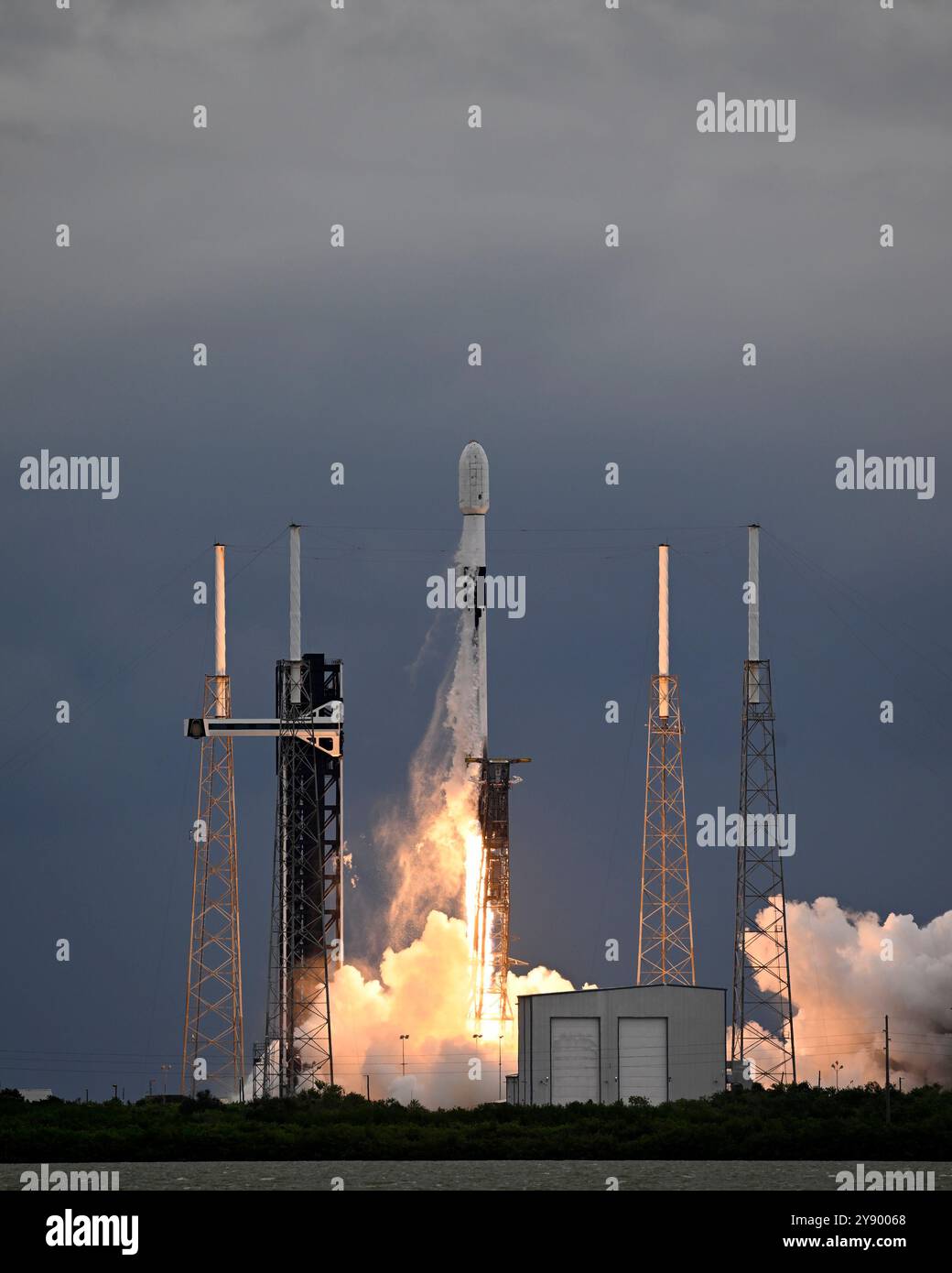
- A Historic Milestone: SpaceX closed out October by executing its 700th historical Falcon 9 launch, cementing the rocket as the most prolific orbital-class launch vehicle in human history.
- Unmatched Infrastructure Scalability: The unprecedented cadence of operations has fundamentally compressed launch cost structures, driving enterprise ROI for both commercial payload operators and institutional defense contractors.
- Capital Allocation Paradigm Shift: With vertical integration and aggressive booster reuse reaching a mature steady-state, capital allocation strategies across the global aerospace and telecommunications sectors are being forced to adapt to compressed valuation multiples for legacy providers.
- Regulatory and Market Dominance: This operational milestone deepens SpaceX's moat, creating profound regulatory compliance challenges and strategic risk mitigation dilemmas for international competitors attempting to bridge the technological gap.
WASHINGTON & HAWTHORNE — In an industry historically defined by multi-year development delays, crushing cost overruns, and catastrophic risk profiles, SpaceX has achieved a benchmark that once belonged to the realm of science fiction. By closing out October with its 700th successful Falcon 9 launch to date, Elon Musk’s privately held aerospace enterprise has not merely demonstrated operational reliability; it has rewritten the fundamental economics of Earth-to-orbit transportation. For institutional investors, risk mitigation analysts, and global telecommunications executives, this milestone represents a watershed moment in infrastructure scalability, marking the point where high-cadence rocket manufacturing transitioned from an experimental capital sink into a high-margin, predictable cash-generation engine.
The journey from the Falcon 9’s maiden flight on June 4, 2010, to this landmark 700th liftoff is a masterclass in iterative engineering, relentless software optimization, and aggressive supply-chain control. While legacy aerospace firms have traditionally relied on cost-plus government contracting models that disincentivize velocity, SpaceX’s vertically integrated manufacturing facility in Hawthorne, California, operates more akin to a high-volume automotive assembly line or a hyperscale cloud compute architecture deployment. Every launch now serves as a live telemetry feedback loop, driving iterative improvements across avionics, thermal protection systems, and Merlin engine metallurgy. As global markets evaluate the long-term capitalization of the new space economy, the sheer velocity of the Falcon 9 program stands as an insurmountable barrier to entry for prospective market entrants.
The Catalytic Engine: From Experimental Heavy-Lift to Industrialized Routine
Test Our Free AI & Tech Utilities Suite
Calculate LLM API token costs, analyze article dwell-time, or simulate tech DCA returns.
To understand the magnitude of the 700th launch, one must examine the velocity curve of the program itself. It took SpaceX over a decade to reach its first few hundred flights, but the exponential scaling of the past thirty-six months has transformed orbital logistics into a predictable, weekly—and sometimes daily—affair. October’s closing slate of missions underscored this industrialized rhythm, dispatching batches of Starlink broadband satellites alongside critical national security payloads and commercial customer spacecraft with clockwork precision.
This operational tempo is anchored by SpaceX’s pioneering implementation of first-stage booster recovery and rapid turnaround. By consistently landing and reusing orbital-class boosters—frequently flying individual boosters upwards of twenty times—the company has radically altered the unit economics of spaceflight. In financial terms, this capability suppresses marginal cost per launch while insulating profit margins from the inflationary pressures affecting raw materials like aerospace-grade aluminum-lithium alloys and specialized carbon composites. Competitors attempting to model competing enterprise ROI find themselves paralyzed by the capital expenditure required to match a reusable architecture that has already amortized its foundational research and development costs across hundreds of successful flights.
Furthermore, the reliability metrics of the Falcon 9 have achieved a statistical certainty that underwriters at major global insurance syndicates can no longer ignore. With a consecutive string of successful missions spanning years, launch insurance premium rates for Falcon 9 payloads have experienced downward pricing pressure, contrasting sharply with the volatile, high-risk insurance markets historically associated with unproven or erratic launch vehicles. This stability directly impacts market liquidity for satellite operators, who can secure project financing with greater confidence in orbital delivery schedules.
Verified Data & Metrics Breakdown

| Program Metric / Specification | Falcon 9 Historical Data | Legacy Industry Baseline |
|---|---|---|
| Total Successful Launches (To Date) | 700+ Missions (Closed October milestone) | Varies widely; legacy fleets rarely exceed 100-150 total flights across decades. |
| First-Stage Booster Reuse Record | Up to 20+ flights per individual booster | Predominantly expendable single-use hardware. |
| Average Launch Cadence | Multiple launches per week (Approx. 100+ annually) | 5 to 12 launches annually per vehicle family. |
| Payload Capacity to Low-Earth Orbit (LEO) | Up to 22,800 kg (Expendable) / ~17,400 kg (Reusable) | Comparable medium-to-heavy lift classes (e.g., 10,000 to 20,000 kg). |
| Regulatory Compliance & Certification | Full NASA Category 3 Certification & USSF National Security Space Launch (NSSL) | Standard multi-year bureaucratic certification pathways. |
Industry & Market Implications: Winners, Losers, and Macroeconomic Shifts
The achievement of the 700-flight threshold sends shockwaves through the global aerospace supply chain, redrawing competitive boundaries and forcing institutional realignment. The economic implications span multiple sectors:
- Commercial Satellite Operators (The Clear Winners): Telecommunications providers, Earth-observation startups, and scientific research institutions benefit from unprecedented schedule certainty and plunging payload delivery costs. The ability to iterate on orbital hardware rapidly without prohibitive launch overhead allows venture-backed entities to prove out business models faster, attracting deeper institutional venture capital and private equity interest.
- Legacy Aerospace Contractors (Under Severe Margin Pressure): Traditional prime contractors in Europe, the United States, and Asia face a daunting existential dilemma. Bound by legacy cost structures, unionized labor agreements, and geographically fragmented supply chains, these firms struggle to compete against SpaceX’s vertically integrated price points. Consequently, government procurement agencies are increasingly forced to re-evaluate legacy cost-plus contracts in favor of fixed-price commercial procurement models.
- Global Defense and National Security Agencies: With the United States Space Force and intelligence agencies relying heavily on the Falcon 9 for classified and unclassified national security payloads, SpaceX has entrenched itself as an indispensable pillar of Western geopolitical defense architecture. This deep integration ensures steady, high-margin government revenue streams that further insulate the company against broader macroeconomic volatility.
From a capital allocation perspective, institutional portfolios heavily weighted toward traditional defense primes are undergoing rigorous risk mitigation reassessments. Portfolio managers are actively trimming exposure to legacy aerospace equities that lack viable, road-tested reusable rocket architectures, redirecting liquidity toward firms capable of adapting to the new high-cadence paradigm.
Frequently Asked Questions (People Also Ask)
What is the significance of SpaceX reaching 700 Falcon 9 launches?
Reaching 700 successful Falcon 9 launches signifies the complete industrialization of orbital-class spaceflight. It demonstrates an unmatched level of hardware reliability, supply-chain maturity, and operational cadence that no other aerospace company or nation-state has replicated in history. This milestone reinforces SpaceX's dominant market share and validates its core economic thesis of booster reusability.
How does booster reuse impact the financial valuation and cost structure of SpaceX?
Booster reuse fundamentally breaks the traditional cost-plus model of aerospace manufacturing. By flying individual first-stage boosters up to 20 or more times, SpaceX amortizes the heavy manufacturing capital expenditure across dozens of missions. This drastically reduces marginal flight costs, expands profit margins, and allows the company to price commercial and government launches far below competitors while retaining exceptional profitability.
What are the broader implications for legacy aerospace and defense contractors?
Legacy prime contractors face severe valuation and competitive pressures. Because many traditional aerospace programs rely on single-use rockets and fragmented, geographically dispersed supply chains, they cannot match the launch frequency or cost efficiency of the Falcon 9. This forces institutional investors to reallocate capital and compels government defense agencies to accelerate their own reusable vehicle development programs.
How does this milestone affect Starlink and future broadband deployments?
The relentless cadence of the Falcon 9 fleet directly fuels the rapid densification and expansion of the Starlink constellation. With a reliable, in-house delivery system capable of launching dozens of satellites per flight, SpaceX can continuously refresh its orbital network, scale global bandwidth capacity, and secure enterprise telecommunications contracts worldwide without relying on third-party launch providers.
Future Outlook: The Road Ahead Beyond Flight 700
As SpaceX closes the chapter on its 700th Falcon 9 mission, industry analysts are already turning their attention to the horizon. While the Falcon 9 remains the workhorse of global commercial and governmental access to space, the strategic focus within Hawthorne is rapidly shifting toward the maturation of Starship—the fully reusable, super-heavy lift transport system designed to eventually supersede both Falcon 9 and Falcon Heavy.
The transition over the next decade will not be abrupt; the Falcon 9 will continue to fly hundreds of missions, serving as the steady financial foundation that funds interplanetary research and next-generation architecture development. However, as regulatory frameworks evolve to accommodate higher launch frequencies, and as international space agencies grapple with orbital debris management and spectrum allocation, SpaceX’s operational dominance will cast a long shadow over global trade and national security policy.
For executive leadership, financial analysts, and tech sector investors, the message from October’s milestone is unequivocal: space is no longer an exotic frontier reserved for government science experiments. It is a fully industrialized, high-velocity operational domain where infrastructure scalability and ruthless capital efficiency dictate who commands the future economy.