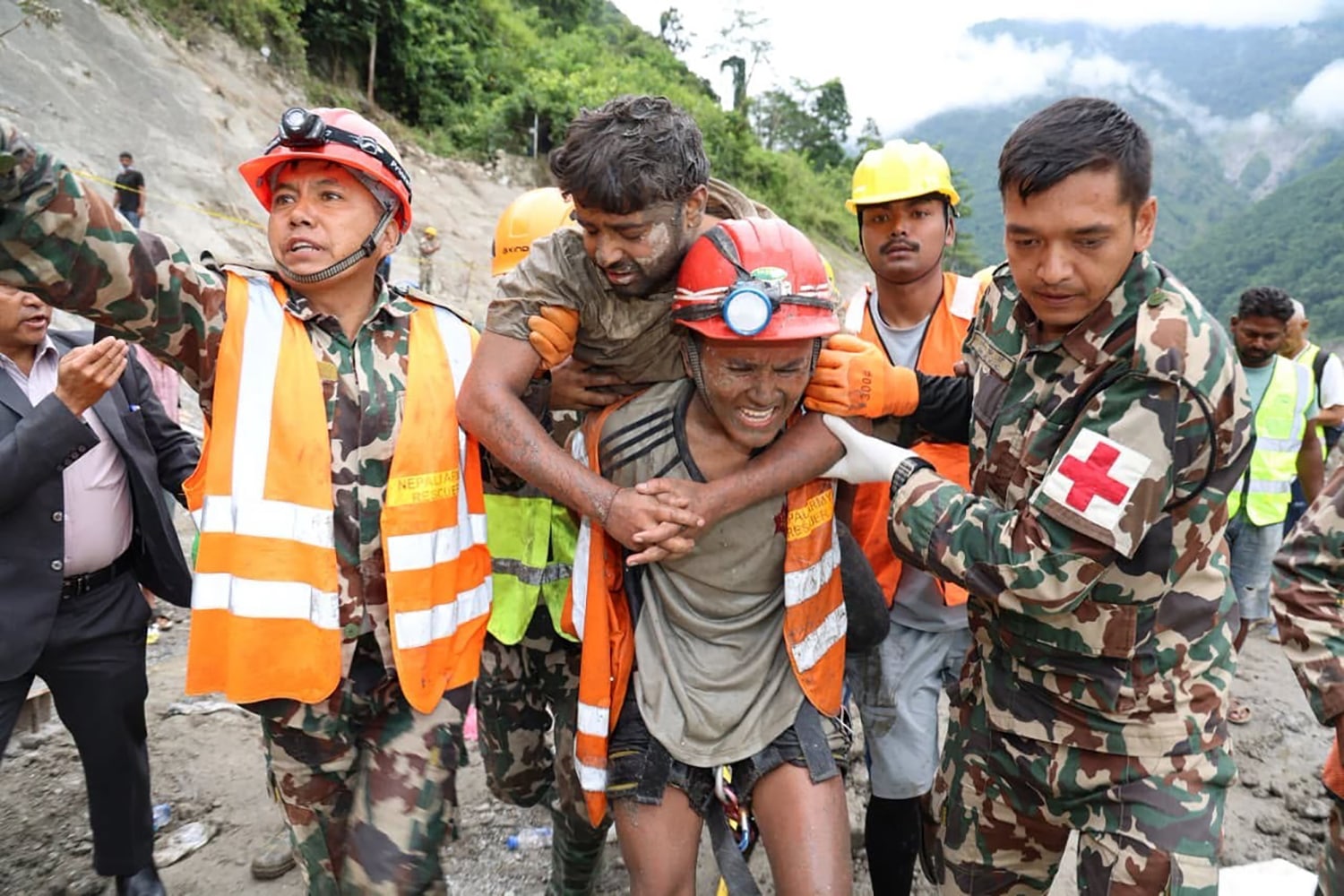
Miracle in the Himalayas: Two Workers Pulled Alive After 190 Hours Trapped in Nepal Tunnel Collapse
KATHMANDU, NEPAL — In a dramatic triumph of human endurance and relentless engineering, rescue teams in northern Nepal have pulled two construction workers alive from a collapsed hydroelectric tunnel, more than eight days after a catastrophic structural failure cut them off from the outside world.
The successful extraction of the two men, which unfolded in the early hours of Thursday morning local time, has triggered widespread relief and turned global attention toward the extreme safety hazards of the Himalayan nation’s aggressive, foreign-funded infrastructure boom. According to Nepal's Ministry of Home Affairs and disaster management officials, both survivors are in stable condition after surviving nearly 192 hours in pitch-black, damp underground conditions.
The rescue operation, described by local authorities as "nothing short of a miracle," required round-the-clock drilling, specialized military engineers, and the delicate navigation of highly unstable geological formations that threatened to collapse further at any moment.
Executive Summary: The Himalayan Miracle Rescue
- The Breakthrough: Two trapped laborers were successfully extracted through a customized, 70-meter horizontal escape pipe after a grueling 8-day rescue operation.
- Survival Mechanics: The workers survived by consuming muddy water dripping from the tunnel ceiling and receiving oxygen and liquified nutrients through a narrow, 2-inch pilot borehole drilled early in the effort.
- Economic Stakes: The incident occurred at a major multi-million-dollar hydroelectric facility under construction, highlighting the systemic safety and ESG (Environmental, Social, and Governance) risks plaguing South Asia’s high-altitude infrastructure projects.
- Market Implications: Insurance underwriters and regional developers are bracing for stricter safety audits and potential premium hikes for underground construction projects across the structurally fragile Himalayan belt.
Inside the 190-Hour Fight for Survival

The ordeal began late last week when a sudden geological shift triggered a massive internal collapse of a diversion tunnel at the under-construction hydroelectric project. Tons of rock, mud, and debris sealed the exit, trapping the two workers deep within the mountain. Initial hopes of a swift rescue were dashed when secondary cave-ins blocked the primary access shafts.
For the first 48 hours, rescuers operated in near-blind conditions, unsure if the men had survived the initial cave-in. The turning point came when a specialized seismic acoustic detector picked up faint, rhythmic tapping sounds on the tunnel’s structural steel ribs.
With life confirmed, a multi-agency coalition—comprising the Nepalese Army, armed police forces, and specialized engineering consultants from neighboring India and China—scrambled to establish a lifeline. A narrow pilot hole was successfully bored through the debris field, allowing rescue teams to pump in fresh oxygen, establish a basic communications link, and send down high-calorie glucose solutions and rehydration salts.
"They were in incredibly high spirits despite the psychological toll of being buried alive," said Colonel Ramesh Thapa, who coordinated the military’s response team. "The primary challenge was managing their body temperatures in the freezing, high-humidity environment of the subterranean caverns."
Geological Volatility Meets the Hydroelectric Gold Rush
For global investors and regional policy analysts, this near-disaster underscores a much larger, systemic challenge. Nepal, positioned directly on the active seismic boundary between the Indian and Eurasian tectonic plates, is currently undergoing an unprecedented infrastructure expansion. Driven by bilateral funding from China’s Belt and Road Initiative (BRI) and bilateral power-purchase agreements with India, the country is scrambling to harness its vast, glacial river systems to generate thousands of megawatts of clean energy.
However, the geology of the Young Fold Mountains is notoriously unpredictable. Thin rock covers, high water tables, and shearing faults make tunneling in this region some of the most dangerous engineering work in the world.
According to regional infrastructure consultants, many of these fast-tracked projects suffer from inadequate pre-construction geological mapping. Pressured by tight delivery timelines and high debt-servicing costs, developers frequently bypass comprehensive seismic testing, relying instead on observational tunneling methods that leave laborers highly exposed to sudden rockbursts and mud inflows.
Key Operational Data of the Nepal Tunnel Rescue
The scale of the rescue operation and the parameters of the survival effort are detailed in the verified data table below:
| Parameter | Operational Metric / Detail |
|---|---|
| Total Time Trapped | 191 Hours and 45 Minutes (approx. 8 days) |
| Location | Trishuli River Basin Hydroelectric Project, Nepal |
| Rescue Method | Horizontal micro-tunneling with a 24-inch steel casing pipe |
| Personnel Involved | Over 150 engineers, military personnel, and medical experts |
| Surviving Workers' Age/Status | Ages 28 and 34; currently treated for mild hypothermia and dehydration |
| Estimated Economic Impact | Project delay of 4–6 months; pending safety audit and site stabilization |
Future Outlook: Regulatory Crackdowns and Insurance Audits
While the successful rescue is celebrated as a humanitarian victory, the economic fallout for the region's construction sector is just beginning. Industry insiders expect the Nepalese government to face immense pressure from labor unions and international human rights watchdogs to overhaul its lax safety regulations.
For global insurance and reinsurance companies, which underwrite these massive infrastructure risks, this incident will likely trigger a re-evaluation of project risk profiles in the Himalayas. Insurers are expected to demand more rigorous risk-mitigation measures, including mandatory secondary escape shafts, advanced seismic monitoring equipment, and on-site rescue chambers equipped with independent oxygen supplies.
"This miracle must serve as a wake-up call," warned a senior infrastructure analyst at a Singapore-based investment firm. "We cannot rely on miracles to make up for systemic gaps in engineering safety. If Nepal wants to remain an attractive destination for clean energy capital, it must prove it can build safely."
Frequently Asked Questions (FAQ)
How did the workers survive for more than eight days in a collapsed tunnel?
The workers survived due to a combination of fortuitous structural elements and rapid emergency intervention. The collapse left a localized "pocket" of stable rock where the air remained breathable. Crucially, rescuers drilled a narrow pilot borehole within the first 48 hours, which allowed them to pump in fresh oxygen, establish communications, and deliver liquified nutrients to prevent starvation and dehydration.
What will be the immediate impact on Nepal's hydroelectric and infrastructure sector?
In the short term, the government is expected to order mandatory safety audits for all active underground tunnel projects across the country. Developers will likely face stricter regulatory scrutiny, which could delay ongoing projects. Long-term, the incident is expected to drive up insurance premiums for high-risk tunneling projects in the Himalayan region, forcing developers to invest more heavily in advanced geological forecasting and worker safety systems.