The Grief of Giants: Rare Humpback Discovery Challenges Everything We Know About Marine Intelligence
GOLD COAST, AUSTRALIA — For decades, the line separating human emotion from animal instinct has been fiercely guarded by the scientific establishment. However, a stunning and rare observation off the coast of Queensland, Australia, has forced marine biologists to confront an unsettling, deeply moving possibility: humpback whale mothers may experience profound grief when their calves die.
Led by researchers from Griffith University in collaboration with the Sea World Foundation, scientists documented a maternal humpback whale displaying persistent, protective, and energy-depleting behavior toward her deceased calf. The extraordinary sighting, first reported by the BBC, offers a rare window into the complex emotional lives of cetaceans and has sent shockwaves through the global scientific and environmental policy communities.
Executive Summary: Key Takeaways
- The Sighting: Scientists documented a female humpback whale (Megaptera novaeangliae) repeatedly supporting and carrying the carcass of her dead calf, refusing to abandon it for hours.
- Scientific Terminology: This phenomenon, known as "epimeletic behavior" (nurturing or attention-giving behavior directed toward dead or distressed kin), is extremely rare to capture in humpback whales.
- Why It Matters: The discovery challenges the traditional scientific avoidance of anthropomorphism, suggesting cetaceans possess advanced cognitive structures capable of grief.
- Economic & Policy Impact: These findings are expected to influence global animal sentience legislation, potentially reshaping marine conservation budgets, ESG mandates, and eco-tourism regulations.
The Agony of the Deep: Inside the Rare Sighting
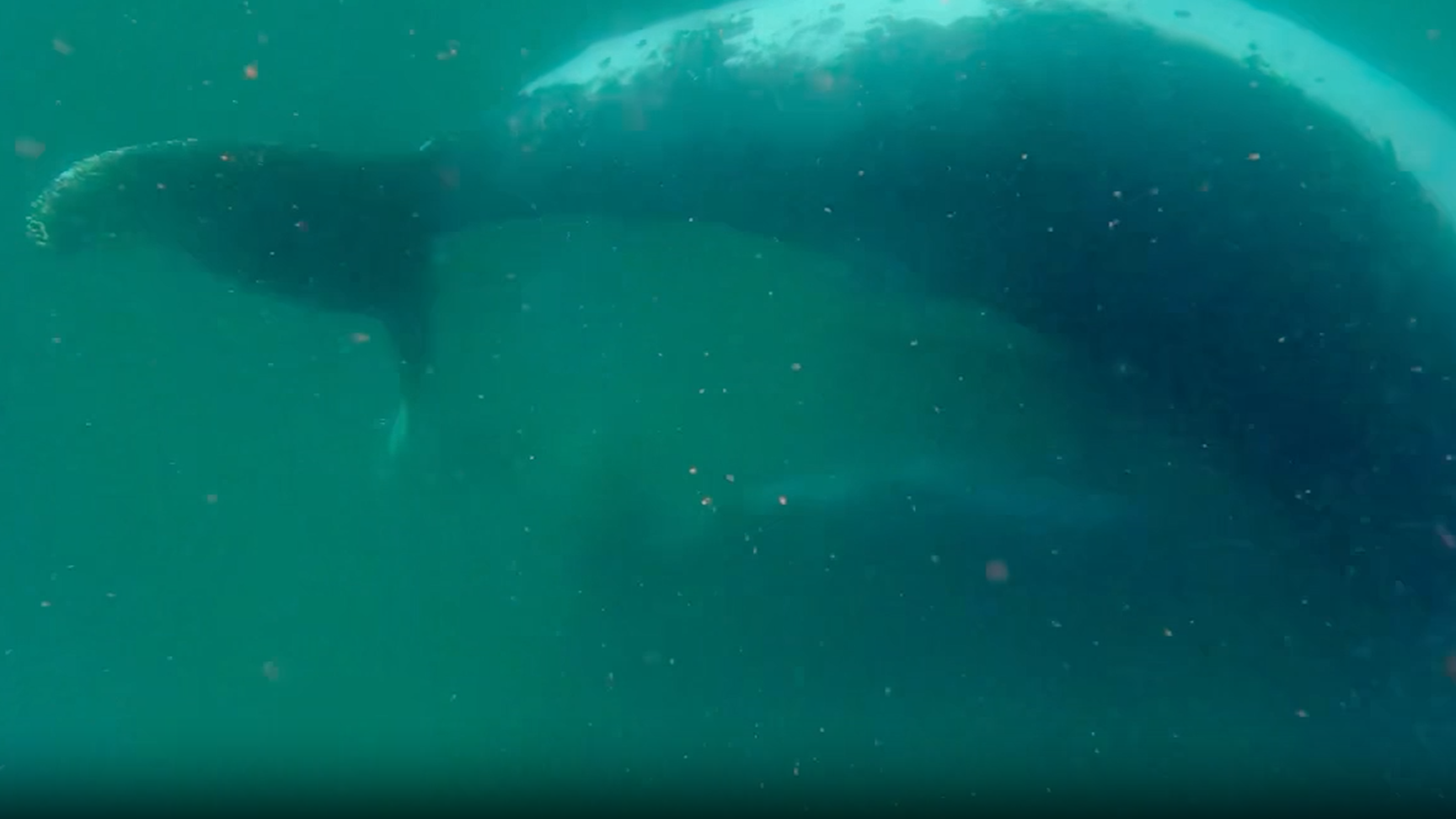
The observation occurred during the annual southern migration, a grueling journey where humpback mothers navigate treacherous waters to protect their newborn calves. Researchers aboard a Sea World Foundation vessel noticed a female humpback behaving erratically. Upon closer inspection via aerial drone footage and surface observation, they discovered she was cradling the lifeless body of her newborn calf.
For hours, the mother used her rostrum (snout) and pectoral fins to keep the decomposing carcass afloat, pushing it to the surface as if to help it breathe. According to Dr. Olaf Meynecke, a lead researcher at Griffith University, the mother’s actions were deliberate, exhausting, and highly dangerous, given that dead calves quickly attract apex predators like tiger sharks and great whites.
"She was trying to keep the calf up, supporting it on her head and side," Dr. Meynecke noted. "This is incredibly energy-consuming. There is no evolutionary advantage to carrying a dead calf; in fact, it is a massive liability. This suggests a motivation driven by a deep emotional bond — what we in human terms would call grief."
The Science of Cetacean Grief: Epimeletic Behavior
While grief-like behaviors have been well-documented in highly social terrestrial mammals like elephants, chimpanzees, and wolves, recording it in baleen whales is exceedingly rare. Most documented marine cases involve odontocetes (toothed whales), such as killer whales (orcas) and bottlenose dolphins, who possess different social structures than migratory baleen whales.
The table below highlights the variation in documented grieving and epimeletic behaviors across key marine species:
| Species Type | Primary Behavior Observed | Frequency of Documentation | Scientific Interpretation |
|---|---|---|---|
| Orcas (Killer Whales) | Carrying dead calves on rostrum for up to 17 days; social pod mourning. | Moderate | High social bonding; conscious acknowledgement of loss. |
| Bottlenose Dolphins | Pushing dead calves, guarding carcass from divers and predators. | Moderate to High | Strong maternal-filial bonds; active distress signals. |
| Humpback Whales | Supporting carcass at the surface, vocalizations, tactile physical contact. | Extremely Rare | Evidence of complex emotional processing in baleen species. |
| Beluga Whales | Carrying dead calves or inanimate objects (carcass substitutes). | Rare | Maternal instinct override; prolonged attachment. |
The Evolutionary Paradox: Why Mourn?
From a strictly Darwinian perspective, the mother’s behavior is a paradox. Migrating humpbacks rely on finite energy reserves stored in their blubber. Every hour spent carrying a heavy, deceased calf is an hour spent wasting precious calories needed for her own survival. Furthermore, the physical effort exposes the mother to severe predatory risks.
This biological cost is precisely why scientists are taking the "grief" hypothesis seriously. When an animal acts directly against its own immediate survival interests to maintain a connection with a deceased offspring, it indicates that cognitive and emotional drivers are overriding basic survival instincts.
"We must be careful not to over-anthropomorphize," says Dr. Meynecke. "But we also cannot ignore the reality of what we are seeing. The psychological pain of separation and loss is a powerful evolutionary mechanism designed to keep mothers and calves together. When that bond is severed, the system doesn’t just switch off instantly."
Economic and Conservation Implications
The realization that baleen whales may experience complex emotional states arrives at a critical juncture for environmental policy. As nations debate the legal definition of animal sentience, observations like this provide powerful ammunition for conservationists pushing for stricter maritime regulations.
If humpbacks are recognized as sentient, emotionally complex beings, the legal framework surrounding commercial shipping lanes, offshore wind farm construction, and sonar testing could face unprecedented scrutiny. For the multi-billion-dollar global whale-watching industry, the narrative of "emotional giants" is expected to drive increased consumer demand, while simultaneously putting pressure on operators to maintain greater distances to avoid disturbing mourning pods.
Looking Ahead: Decoding the Minds of the Ocean
The Griffith University and Sea World Foundation teams plan to utilize advanced non-invasive technologies, including hydrophones and thermal imaging, to better understand these rare events. By analyzing the acoustic patterns of mourning mothers, researchers hope to determine if specific "grief calls" exist within the humpback lexicon.
For now, the image of a solitary mother holding her calf above the waves remains a stark, humbling reminder of how much we have yet to learn about the ocean's most majestic inhabitants.
Frequently Asked Questions
Is it possible the whale was simply confused rather than grieving?
While some skeptics argue that the mother may be experiencing hormonal confusion, continuing to care for the calf out of a lingering maternal instinct, the sheer duration and physical cost of the behavior argue against simple confusion. The active defense of the carcass against predators suggests a conscious protective drive that persists even after death.
How will this discovery impact future marine protection laws?
Evidence of emotional sentience in whales is increasingly being used in international courts to argue for the expansion of Marine Protected Areas (MPAs). If whales are recognized as possessing high cognitive and emotional capacities, it strengthens the legal arguments for imposing stricter penalties on commercial shipping companies responsible for ship strikes and acoustic pollution.