The Great Realignment: Carney Backs Historic EU Associate Membership as Trump Threatens to Shatter North American Trade
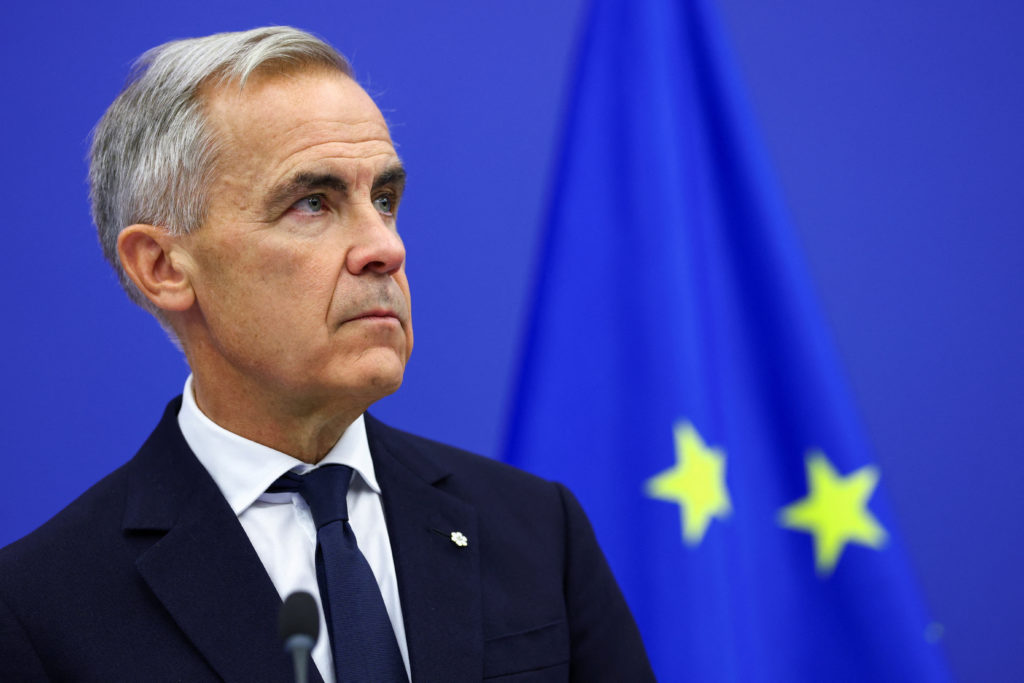
STRASBOURG, France — In what is being hailed as the most significant geopolitical pivot in Ottawa’s modern history, Mark Carney, the influential economic adviser to Prime Minister Justin Trudeau and former Governor of both the Bank of England and the Bank of Canada, has formally embraced a proposal for Canada to seek "associate membership" with the European Union.
The stunning declaration, delivered on the sidelines of European Parliament sessions in Strasbourg, comes as Donald Trump’s looming return to the White House threatens to dismantle the integrated North American economic order. With Trump promising sweeping 25% tariffs on Canadian imports and demanding a radical renegotiation of the USMCA (United States-Mexico-Canada Agreement) in 2026, Ottawa is actively looking across the Atlantic to secure its economic survival.
The Trump Catalyst: Why Canada Is Forced to Look East
For decades, Canada’s economic strategy has been simple: feed the American industrial machine. More than 77% of Canadian exports flow directly south of the border. However, Donald Trump's "America First" agenda has transformed this deep integration from a source of prosperity into a point of extreme vulnerability.
Trump’s aggressive stance on border security, immigration, and trade deficits has forced Canadian policymakers to confront a grim reality. Economic models suggest a blanket 25% tariff would plunge Canada into an immediate technical recession, devaluing the Canadian dollar and crippling its manufacturing, automotive, and energy sectors. By embracing the EU’s associate membership proposal, Carney is signaling that Canada will no longer allow itself to be held hostage by Washington's protectionist swings.
“We must build bridges where others build walls,” Carney stated during a briefing in Strasbourg. “The structural integrity of our trade depends on diversification. Europe represents not just a market of 450 million affluent consumers, but a partner that shares our fundamental values regarding the rule of law, carbon pricing, and democratic stability.”
Decoding 'Associate Membership': What Europe Is Offering
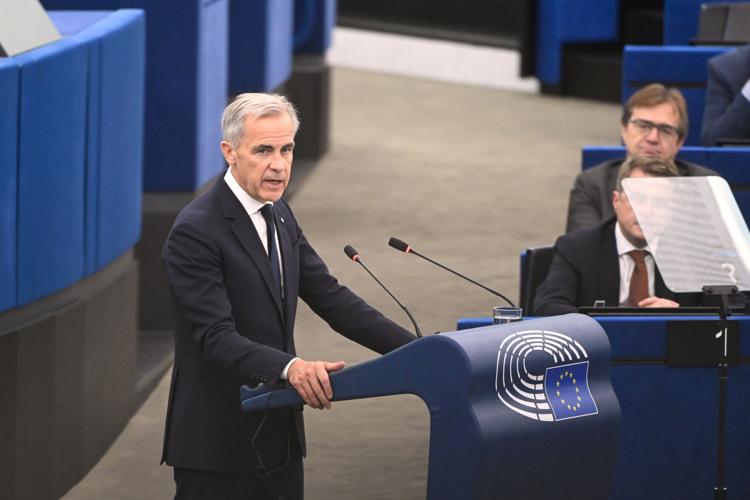
The concept of "associate membership" is an innovative diplomatic framework designed by Brussels to bind close, democratic non-European allies to the bloc's single market without requiring full political integration or adherence to the free movement of people.
For Canada, this arrangement would build upon the existing Comprehensive Economic and Trade Agreement (CETA) but would go significantly deeper. Key pillars of the proposed associate membership include:
- Regulatory Harmonization: Aligning Canadian standards with EU regulations in emerging sectors like clean tech, artificial intelligence, and critical minerals, allowing for frictionless trade.
- Joint Defense and Security Procurement: Deeper integration with European defense industries, securing supply chains against hostile actors in the Arctic and Eastern Europe.
- Strategic Resource Corridors: Fast-tracking European investments into Canada’s vast reserves of lithium, nickel, and liquefied natural gas (LNG) to replace European reliance on Russian and Chinese inputs.
- Scientific Collaboration: Full integration into the Horizon Europe research program, fostering joint innovation in biotechnology and aerospace.
Comparative Trade Dynamics: US vs. EU
The following table outlines the current economic dependencies Canada faces, highlighting the strategic necessity of the European pivot:
| Economic Metric | United States (USMCA) | European Union (CETA / Proposed Associate) |
|---|---|---|
| Share of Canadian Exports | 77.2% | ~5.4% (With rapid growth potential) |
| Tariff Environment | Unpredictable (Threat of 25% blanket tariffs) | 98% of tariff lines currently duty-free via CETA |
| Regulatory Alignment | Highly integrated but vulnerable to executive orders | Proposed formal regulatory convergence |
| Key Traded Sectors | Automotive, Oil & Gas, Agriculture | Critical Minerals, Aerospace, Tech, LNG |
Carney’s Economic Calculus and the Political Stakes
Mark Carney’s endorsement of this European strategy is not merely academic; it is highly political. Widely tipped as a future leader of the Liberal Party and a potential prime ministerial candidate, Carney is laying the groundwork for a post-Trudeau economic doctrine.
By positioning himself as the architect of Canada’s European pivot, Carney offers voters a sophisticated alternative to the Conservative Party's strategy, which largely advocates for accommodating Trump’s demands. Carney argues that trying to appease a protectionist Washington is a losing game.
“The global economy is fracturing into distinct geopolitical blocs,” a senior European diplomat in Strasbourg told reporters. “Canada is a G7 economy with European values, European legal traditions, and a shared commitment to multilateralism. Welcoming Canada into our regulatory orbit is a win-win that strengthens the democratic world against authoritarian state capitalism.”
The Roadblocks: Can Canada Truly Pivot?
Despite the optimism in Strasbourg, domestic critics point out that pivoting away from the United States is easier said than done. Canada’s transport infrastructure—pipelines, railways, and highways—runs overwhelmingly north-south, not east-west toward Atlantic ports.
Furthermore, the Conservative opposition in Ottawa has already dismissed the associate membership proposal as a "symbolic distraction" from the pressing need to repair relations with the United States. They argue that any move that alienates Washington could jeopardize the renegotiation of the USMCA, which remains the lifeblood of the Canadian economy.
Executive Summary: What This Means for Global Markets
- For Investors: Canadian critical mineral and green-energy sectors are poised for an influx of European capital as regulatory alignment makes cross-border investment seamless.
- For the USMCA: Canada's pivot will likely irritate Washington, potentially hardening Trump’s negotiating stance ahead of the mandatory 2026 trade agreement review.
- For Supply Chains: Multinational corporations must prepare for a dual-regulatory environment, balancing American standards with increasingly influential European rules adopted by Canada.
Frequently Asked Questions
Is Canada eligible for EU associate membership even though it is not in Europe?
Yes. The European Union has increasingly utilized "associate status" or specialized partnership frameworks for non-European democratic allies who share regulatory, judicial, and democratic values. While Canada cannot become a full voting member of the EU due to geography, associate membership allows for deep economic, scientific, and security integration without full political union.
How would this agreement affect Canada's trade with the United States?
The goal of associate membership is to complement, not replace, Canada's trade with the US. However, should the Trump administration implement crippling tariffs, the EU partnership provides Canada with an alternative market and a regulatory shield, preventing total economic isolation and diversifying its supply chain dependencies.