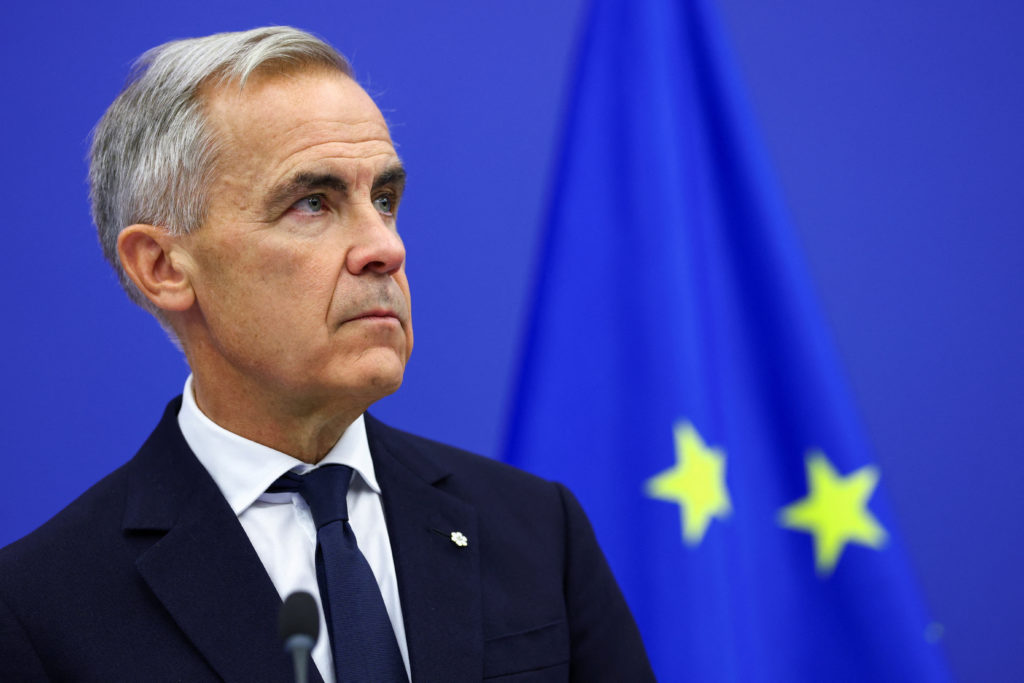
Nordic Shift: Sweden’s Prime Minister Magdalena Andersson Resigns After Historic Right-Wing Bloc Victory
STOCKHOLM — In a political sea change that has reverberated across Europe and sent ripples through international financial markets, Sweden’s Prime Minister Magdalena Andersson has formally announced her resignation. The decision follows a grueling, razor-thin general election where a coalition of right-wing, conservative, and populist parties secured a narrow majority in parliament. This dramatic exit marks the end of eight years of center-left Social Democratic dominance and signals a profound ideological realignment in one of Europe’s most traditionally liberal strongholds.
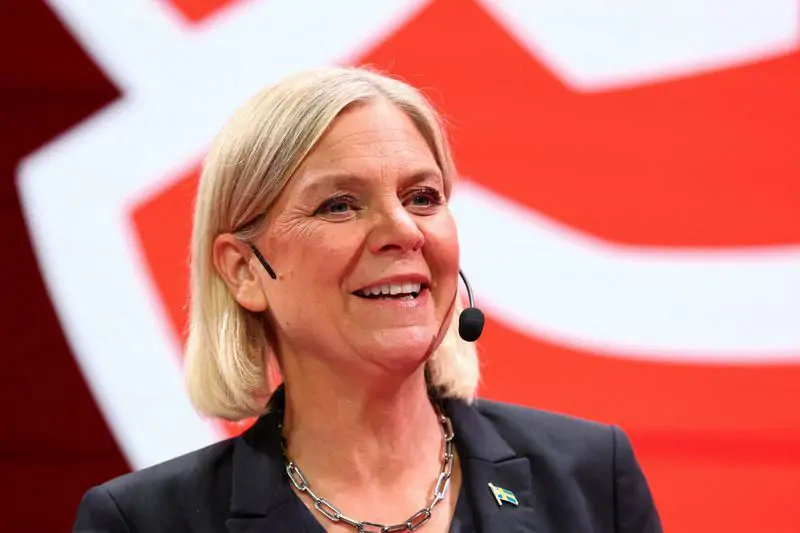
Andersson, Sweden’s first female prime minister, conceded defeat after a near-complete count of the vote left no doubt that the right-wing bloc had clinched 176 seats in the 349-seat Riksdag, compared to 173 seats for her center-left coalition. At a press conference in Stockholm, Andersson maintained a composed but serious demeanor, acknowledging the shift in the nation's political landscape.
“The preliminary result is clear enough to draw a conclusion,” Andersson stated during her address. “I will therefore tomorrow tender my resignation as prime minister, and the responsibility for the continued process will now pass to the parliament's speaker.”
Inside the Electoral Math: A Bitterly Contested Victory
The election campaign was one of the most polarizing in modern Swedish history, dominated by pressing concerns over rising gang violence, integration challenges, and a severe cost-of-living crisis exacerbated by soaring energy prices. For decades, Sweden's political establishment kept the populist, anti-immigration Sweden Democrats (SD) at arm's length. However, the political landscape shifted permanently as the center-right Moderates, Christian Democrats, and Liberals chose to align with them to defeat the Social Democrats.
While the Social Democrats actually improved their individual vote share to remain the largest single party, the collective strength of the right-wing bloc proved insurmountable. Crucially, the Sweden Democrats emerged as the biggest winner of the night, overtaking the traditional center-right Moderates to become the second-largest party in the country with 20.5% of the vote.
Key Takeaways from Sweden's Historic Election
- The Populist Surge: The Sweden Democrats, led by Jimmie Åkesson, secured over a fifth of the vote, cementing their position as kingmakers of the Swedish right.
- A Narrow Mandate: With only a three-seat majority (176 vs. 173), the incoming coalition faces a highly fragile parliamentary environment, leaving little room for dissent on key legislation.
- End of an Era: Magdalena Andersson’s exit ends a brief but historic tenure, highlighting the shifting voter sentiment across the European continent amid economic insecurity.
- Policy Reorientation: The new government is expected to pursue a hardline stance on immigration, tougher criminal sentencing, and market-friendly economic reforms.
The Sweden Election by the Numbers
The following table outlines the distribution of seats in the 349-member Riksdag, illustrating the razor-thin margin that dictated the change of power:
| Political Bloc / Party | Ideological Alignment | Seats Won | Percentage of Vote |
|---|---|---|---|
| Right-Wing Bloc (Total) | Conservative, Liberal & Nationalist | 176 | ~49.6% |
| — Sweden Democrats (SD) | Right-Wing Populist / Nationalist | 73 | 20.5% |
| — Moderate Party (M) | Liberal-Conservative | 68 | 19.1% |
| — Christian Democrats (KD) | Christian Democratic | 19 | 5.3% |
| — Liberals (L) | Liberal | 16 | 4.6% |
| Left-Center Bloc (Total) | Social Democratic, Green & Left | 173 | ~48.9% |
| — Social Democrats (S) | Social Democratic | 107 | 30.3% |
Economic and Geopolitical Implications
Global markets and European allies are closely watching the transition. Under Magdalena Andersson, Sweden took the historic step of applying for NATO membership alongside Finland, breaking decades of military non-alignment following Russia's invasion of Ukraine. Fortunately for Brussels and Washington, the shift in government is not expected to derail Sweden’s NATO accession, as the incoming right-wing parties are staunch supporters of the alliance.
However, domestic economic policies are poised for a significant pivot. Sweden is currently grappling with high inflation, which reached double digits in late 2022, and a volatile energy market. Ulf Kristersson, leader of the Moderate Party and the man expected to be tasked with forming the next government, has pledged to tackle rising electricity prices, lower income taxes, and streamline public spending.
“I now start the work of forming a new, stable, and effective government,” Kristersson said in a video statement. “We will put Sweden in order. We have a plan to deal with the economy, inflation, and the energy crisis.”
The economic challenges ahead are steep. The Swedish Krona has faced selling pressure amidst European-wide growth anxieties, and the central bank (Riksbank) has been forced to aggressively hike interest rates. A politically unstable minority government could complicate the passage of a budget, creating headwinds for Swedish businesses and international investors seeking regulatory and fiscal predictability.
What Lies Ahead: A Fragile Coalition
The road to forming a stable government will be fraught with difficulty. Although the Sweden Democrats are the largest party within the right-wing bloc, Moderate leader Ulf Kristersson is expected to take the prime minister's office. The smaller Liberal and Christian Democratic parties have expressed deep reservations about allowing the Sweden Democrats directly into the cabinet, meaning Jimmie Åkesson's party may operate from the sidelines, wielding immense leverage over policy as a parliamentary support partner.
This "deal-making" dynamic could lead to policy gridlock, particularly on sensitive social welfare and immigration issues. The world now watches as Stockholm prepares to navigate an unfamiliar political era, testing the resilience of the Nordic economic and social model.
Frequently Asked Questions (FAQ)
Why did Sweden's Prime Minister Magdalena Andersson resign?
Magdalena Andersson resigned after her center-left coalition narrowly lost the general election to a right-wing bloc led by the Moderates and supported by the Sweden Democrats. The right-wing bloc secured a 176 to 173 seat majority in parliament, making it mathematically impossible for her government to continue.
Who will become the next Prime Minister of Sweden?
Ulf Kristersson, leader of the center-right Moderate Party, is poised to become the next prime minister. He is expected to lead a coalition government of conservative parties, heavily reliant on the parliamentary votes of the populist Sweden Democrats to pass legislation.