
AI's Secret Summit: Nadella, Altman, Huang Join Trump-Xi for Unprecedented Tech-Diplomacy Dinner
WASHINGTON D.C. & BEIJING – September 21, 2026 – In a stunning convergence of geopolitical power and technological prowess, the chief executives of Microsoft, OpenAI, and Nvidia privately joined former President Donald Trump and Chinese President Xi Jinping for a highly secretive dinner meeting two days ago, a development poised to reshape the future of artificial intelligence, global technology supply chains, and U.S.-China relations. The extraordinary gathering, first revealed by Bloomberg, places Silicon Valley's most influential minds directly at the table with the leaders of the world's two largest economies, signaling a new, high-stakes chapter in tech diplomacy.
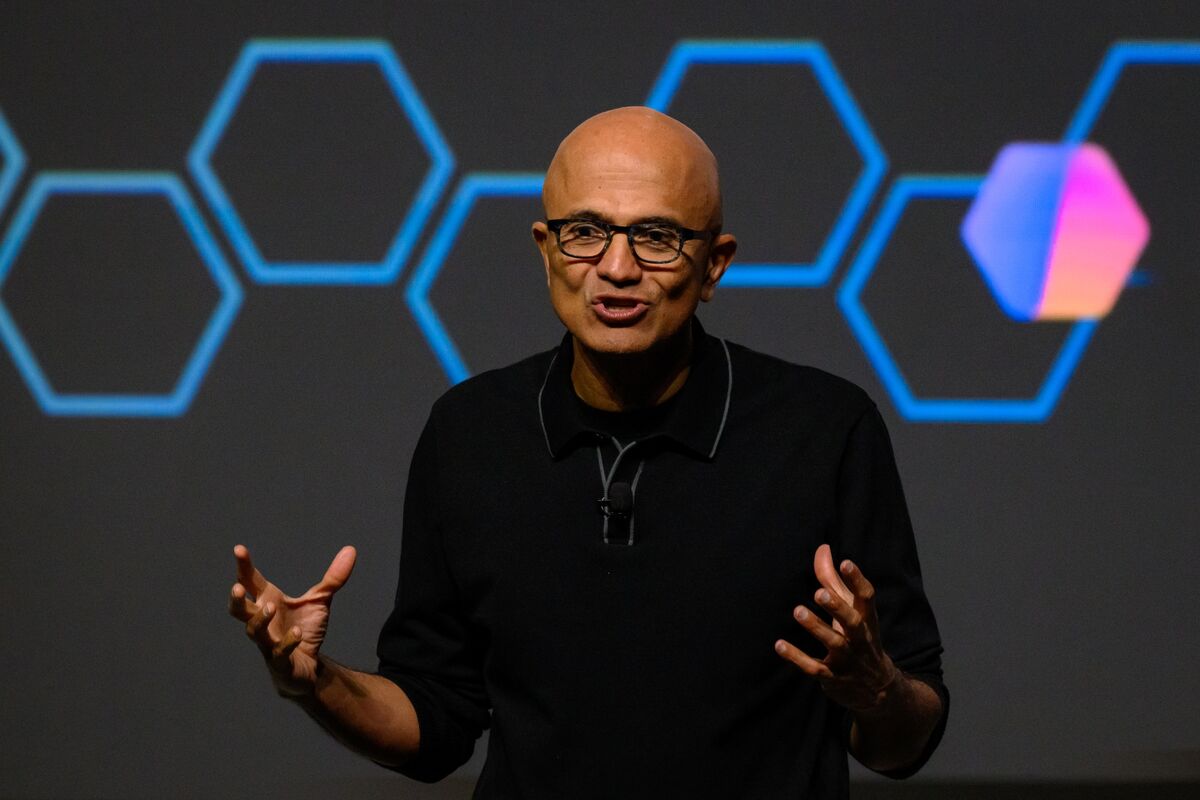
Microsoft CEO Satya Nadella, OpenAI's Sam Altman, and Nvidia's Jensen Huang were reportedly present at the intimate meal, held on the sidelines of what was ostensibly a bilateral discussion between Trump and Xi. The unprecedented guest list has sent shockwaves through boardrooms and government ministries globally, underscoring the critical role AI now plays in national security, economic dominance, and international leverage.
"This isn't just a dinner; it's an unofficial AI summit," stated Dr. Eleanor Vance, a senior fellow at the Council on Foreign Relations, speaking to The Wall Street Journal. "The sheer gravitas of these individuals together, under the watchful eyes of Trump and Xi, suggests that AI has moved beyond a business concern to a central pillar of geopolitical strategy. They weren't there for small talk; they were there to advise, to signal, and perhaps, to negotiate."
The Unexpected Alliance: Why Now?
The timing of the meeting is particularly salient. Just weeks prior, the 2026 Nvidia GTC Conference had highlighted groundbreaking advancements in AI hardware, while reports from Nscale indicated that Anthropic and Microsoft were dominating a fresh $103 billion funding round for AI infrastructure. The global race for AI supremacy is accelerating, marked by escalating U.S. export controls on advanced chips and China's relentless pursuit of self-sufficiency in cutting-edge technology.
Sources close to the discussions, who requested anonymity due to the sensitivity of the matter, suggested the meeting aimed to establish informal lines of communication on AI governance, chip supply, and potential guardrails amid growing fears of an unchecked technological arms race. It also likely provided an opportunity for both leaders to gauge the direct perspectives of the industry's architects on the practicalities and implications of their respective tech policies.
Key Players and Their Stakes
- Satya Nadella (Microsoft): As the head of a company deeply invested in OpenAI and a major cloud provider powering AI development globally, Nadella’s presence signifies Microsoft's pivotal role in both enabling and shaping the future of AI. Microsoft's cloud infrastructure (Azure) is critical for many AI projects, including those in China, despite U.S. restrictions.
- Sam Altman (OpenAI): At the forefront of generative AI, OpenAI’s technology is a focal point of both excitement and concern. Altman’s participation underscores the need for dialogue on AI's ethical implications, safety, and the potential for dual-use technologies to be exploited for strategic advantage.
- Jensen Huang (Nvidia): Nvidia's advanced GPUs are the bedrock of modern AI. Huang's presence is critically important given the U.S. government's stringent export controls on high-end AI chips to China, a policy that has significantly impacted Nvidia's market in the region and ignited China's drive for domestic chip production.
- Donald Trump: Known for his transactional approach, Trump's interest likely centered on securing U.S. technological leadership, protecting intellectual property, and potentially leveraging American tech giants in broader trade or security negotiations with China.
- Xi Jinping: Facing mounting pressure from U.S. tech restrictions, Xi’s agenda would likely involve understanding the industry's perspective on these controls, exploring avenues for continued access to critical technology, and signaling China's commitment to advancing its own AI capabilities.
The AI Cold War Heats Up
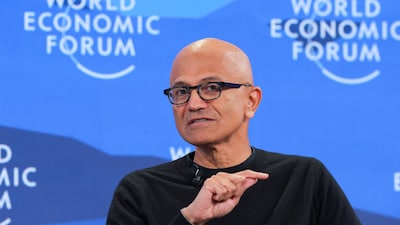
The gathering takes place against a backdrop of what many analysts are calling an "AI Cold War." The U.S. has tightened export controls on advanced semiconductors and AI hardware, aiming to hobble China's military and technological ambitions. Beijing, in response, has accelerated its domestic chip development programs and continues to pour vast resources into AI research and application, viewing it as crucial for national rejuvenation.
"The implications of this dinner are immense," commented Peter Chen, a geopolitical analyst at Eurasia Group. "It suggests that both Washington and Beijing recognize that they cannot simply dictate terms to the AI industry without understanding its intricate global dependencies. It also highlights the tech CEOs as de facto diplomats, navigating a complex landscape where their products and services are inextricably linked to national power."
While no official statements have been released by any of the parties involved, the very act of these leaders convening speaks volumes. It acknowledges that the global trajectory of AI cannot be charted by governments alone, nor by corporations in isolation. The interdependencies are too profound, and the potential risks and rewards too significant.
Market Reactions and Future Outlook
News of the meeting, even in its limited detail, is expected to ripple through global markets. Investors will be keenly watching for any signals that might emerge regarding future policy on AI regulation, chip exports, or U.S.-China tech collaborations. The presence of these specific CEOs might signal a potential easing of tensions or, conversely, a hardening of positions after direct high-level exchanges.
The potential for a 'détente' in certain areas of AI development, or at least a framework for communication, could provide much-needed stability to a volatile sector. However, the fundamental strategic rivalry between the U.S. and China over technological supremacy is unlikely to dissipate overnight.
Speculation is rife that the dinner might have been a preliminary step towards a more structured dialogue, or perhaps even an attempt to establish a 'red line' understanding on autonomous AI weapons or other sensitive applications. The absence of immediate public statements suggests the discussions were private and sensitive, with the real outcomes potentially playing out over the coming months in subtle shifts in policy and corporate strategy.
| Company | Primary Contribution to AI | Market Cap (Est.) | Geopolitical Relevance |
|---|---|---|---|
| Microsoft | Cloud AI Infrastructure, Software, OpenAI Partnership | ~$3.8 Trillion | Global enterprise & government AI adoption, strategic investment |
| OpenAI | Large Language Models, Generative AI (ChatGPT, DALL-E) | ~$150 Billion | AI frontier development, ethical AI, AGI pursuit |
| Nvidia | High-Performance AI GPUs, AI Computing Platforms | ~$4.2 Trillion | Critical component supplier, target of export controls |
FAQ: Understanding the Impact
1. Why were these specific tech CEOs invited to a Trump-Xi dinner?
The selection of Microsoft, OpenAI, and Nvidia CEOs underscores their unparalleled influence over the future of artificial intelligence. Microsoft provides the foundational cloud infrastructure and major AI investments, OpenAI develops the cutting-edge AI models that are transforming industries, and Nvidia designs and produces the essential hardware (GPUs) that power virtually all advanced AI systems. Their insights and perspectives are critical for leaders grappling with the economic, national security, and ethical implications of AI, especially in the context of U.S.-China tech rivalry.
2. What immediate impact could this meeting have on U.S.-China tech relations?
While the immediate impact remains to be seen and no official statements have been made, the meeting itself signals a recognition by both the U.S. and China that direct, high-level engagement with tech industry leaders is necessary. It could potentially open informal channels for dialogue on AI governance, chip supply chain stability, or even de-escalation of the "AI Cold War." However, fundamental strategic rivalries persist, and any concrete policy shifts or agreements are likely to be gradual and complex, possibly influencing future export control decisions, investment policies, or collaborative research frameworks.


)