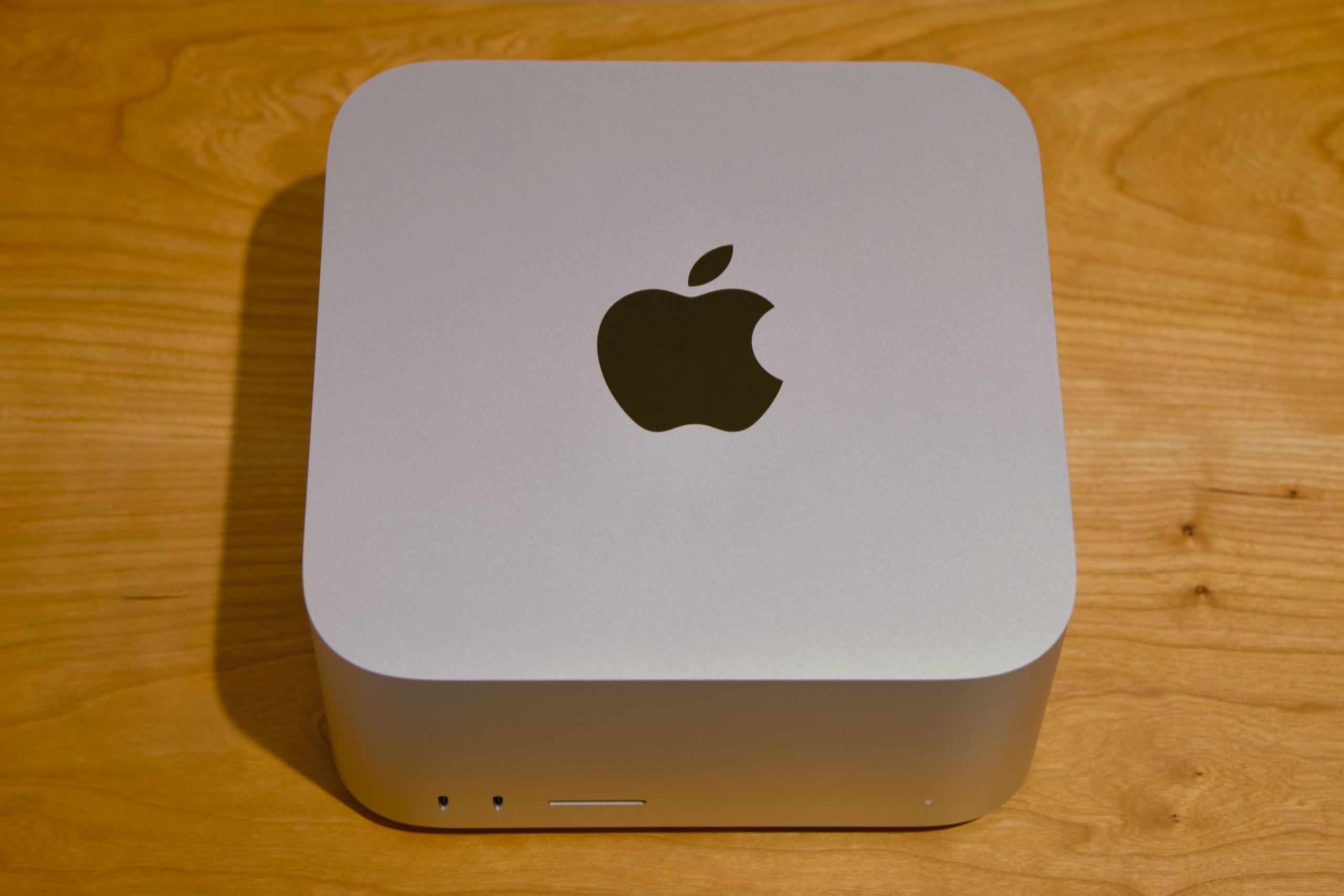
The $5,000 Silicon Beast That Turned a Hardcore Developer Into a 'Vibe Coder'
NEW YORK / SAN FRANCISCO — For decades, software engineering has been defined by syntax errors, compilation times, memory leaks, and the agonizing pursuit of semicolon perfection. But a tectonic shift is underway in Silicon Valley, and Apple’s newly unleashed M5 Ultra Mac Studio is at ground zero. Retailing at a hyper-pricey tier that routinely clears the $5,000 mark when fully spec'd, this powerhouse workstation isn't just speeding up traditional workflows. According to early reviewers and industry insiders, it is fundamentally altering how software is written—giving rise to a phenomenon known as "vibe coding."
In this paradigm, human developers step back from writing low-level code line by line. Instead, armed with hyper-local, massive-parameter Large Language Models (LLMs) running entirely on-device, engineers dictate the architecture, direct the logic through natural language, and let artificial intelligence handle the heavy lifting. The developer's primary role shifts from a frantic typist to a high-level creative director—managing the "vibe" of the application.
The Hardware Leap: Why the M5 Ultra Changes Everything
To understand the "vibe coding" revolution, one must examine the silicon engine powering it. The Apple M5 Ultra is not merely an incremental bump in clock speed. It represents a monumental leap in unified memory bandwidth and on-board neural processing units (NPUs). Previous generations of machines choked when developers attempted to run frontier-class AI models locally without cloud latency.
With massive unified memory architectures scaling up to hundreds of gigabytes, the M5 Ultra allows developers to load gargantuan open-weight models directly into local VRAM/RAM. This means zero data latency, absolute privacy for proprietary codebases, and instantaneous inference speeds that make AI pair-programming feel less like a remote API call and more like an extension of one's own thought process.
- Local AI Sovereignty: Run 70B+ parameter models locally without sending enterprise code to third-party cloud servers.
- Unprecedented Bandwidth: Unified memory architecture eliminates the traditional bottleneck between CPU, GPU, and RAM.
- Zero-Lag Compilation: Massive multi-threaded tasks and local LLM reasoning execute concurrently without dropping frames or thermal throttling.
- The Cost Factor: Starting north of $3,999 and scaling past $6,000, it is an elite investment designed strictly for power users, AI researchers, and elite engineering teams.
From Syntax Juggler to 'Vibe Coder'
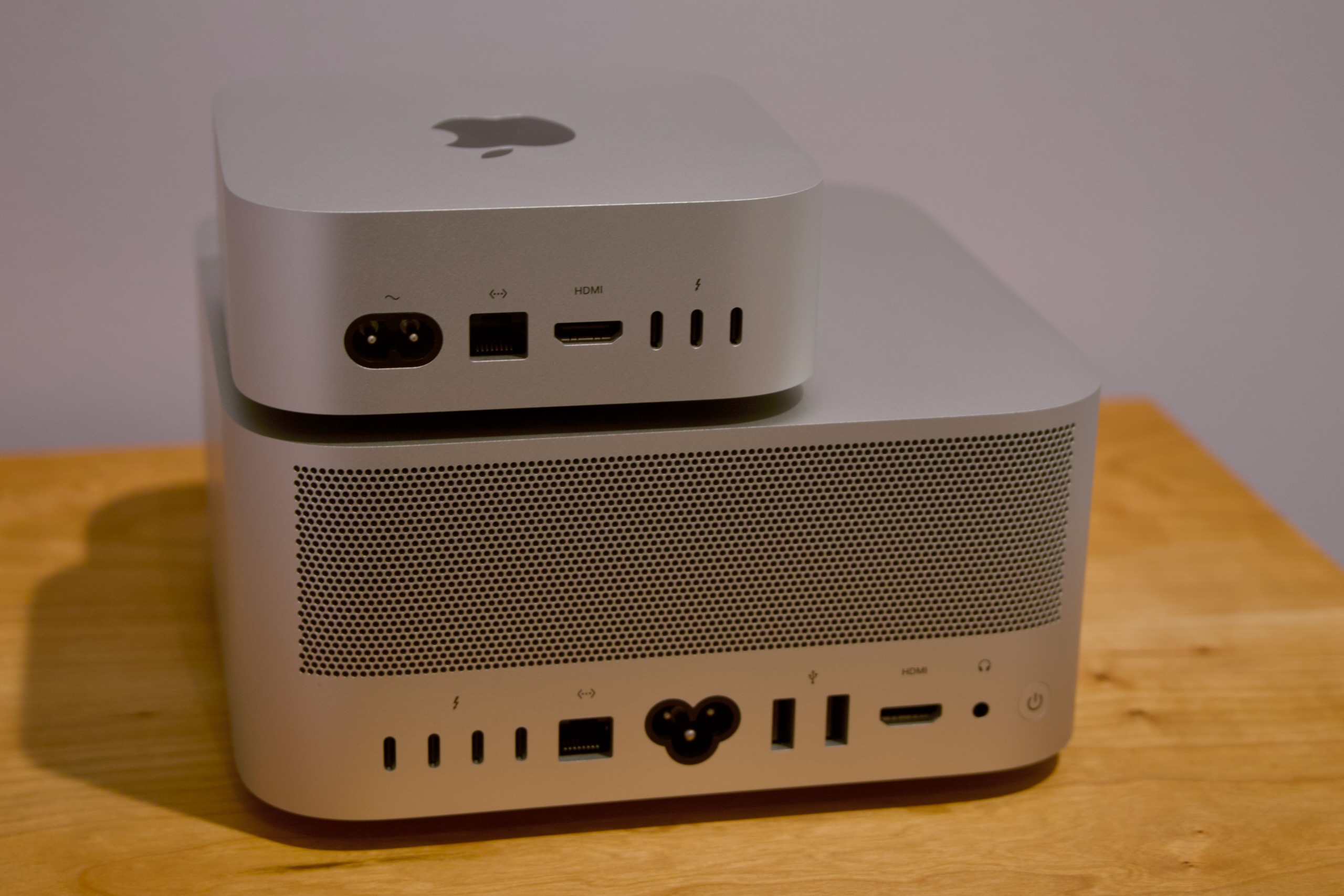
The term "vibe coder" was recently popularized to describe a new breed of technologist who relies almost entirely on generative AI prompts, semantic guidance, and high-level architectural oversight rather than manual programming. On an M5 Ultra Mac Studio, this workflow reaches its ultimate expression.
Instead of spending three hours debugging a sluggish asynchronous JavaScript loop or wrestling with CSS grid alignments, a vibe coder simply prompts the local development environment: "Make this dashboard feel more organic, secure the API endpoints against standard injection attacks, and optimize the render tree." The M5 Ultra's internal Neural Engine and beefy GPU clusters process the request instantly, spitting out production-ready code while the engineer focuses purely on the user experience and product vision.
"You stop thinking about memory allocation and syntax structures," notes a prominent Silicon Valley systems architect who tested the pre-release hardware. "You start orchestrating systems the way a movie director guides actors. You are curating the vibe, the flow, and the logic. The machine takes care of the syntax."
Market Impact and Enterprise Reception
Wall Street and enterprise technology buyers are taking note of this workstation shift. While Apple has traditionally targeted creative professionals—video editors, 3D animators, and music producers—the M5 Ultra Mac Studio aggressively repositions the Mac ecosystem as the undisputed king of local AI development.
Competitors in the Windows and Linux workstation space, armed with high-end NVIDIA RTX desktop cards, have long dominated the machine learning landscape. However, Apple’s unified memory advantage offers a compelling counter-punch, allowing massive models to fit into memory pools that would require multiple high-end consumer GPUs to replicate in the PC world.
| Specification Metric | Apple M5 Ultra Mac Studio | Previous M4 Ultra Generation | Traditional High-End PC Setup |
|---|---|---|---|
| Max Unified Memory | Up to 512GB High-Bandwidth | Up to 192GB Unified Memory | 64GB - 128GB VRAM (Split) |
| Local LLM Performance | Instantaneous (Zero Latency) | Fast, occasional bottlenecks | Dependent on multi-GPU bridges |
| Thermal & Acoustic Profile | Whisper-quiet, highly efficient | Quiet under standard load | Loud fan arrays under heavy AI load |
| Base Price Tier | Hyper-pricey ($3,999 - $5,999+) | $3,999 | $2,500 - $4,500 (Custom build) |
The Future of Software Development
As the line between human programmer and AI prompter continues to blur, questions naturally arise regarding the future of computer science education. If machines running on hardware like the M5 Ultra can generate flawless code from casual descriptions, what happens to junior developer roles?
Industry leaders argue that rather than eliminating jobs, tools like the Mac Studio elevate the floor of what a single creator can accomplish. A solo founder can now build, test, and deploy a complex enterprise SaaS application in a weekend—a feat that previously required a dedicated team of five engineers.
For Apple, the M5 Ultra Mac Studio is a bold statement. It proves that despite its eye-watering price tag, the machine pays for itself in raw productivity gains. For the developer fortunate enough to sit in front of one, it offers a glimpse into a strange, exciting new future: one where you no longer write the software—you simply curate its vibe.
Frequently Asked Questions
What makes the M5 Ultra Mac Studio uniquely suited for "vibe coding"?
The M5 Ultra features massive unified memory capacity combined with a deeply integrated Neural Engine. This allows developers to run large-scale AI models locally on their machine with zero latency and complete data privacy, enabling real-time, conversational software creation without relying on cloud servers.
Is the M5 Ultra worth the high price tag for everyday users?
No. At a starting price of roughly $4,000 and scaling well beyond $5,000 for maxed-out configurations, the M5 Ultra is strictly over-engineered for standard web browsing, office tasks, or light media consumption. It is purpose-built for AI researchers, enterprise developers, and heavy creative professionals who can monetize its raw computational power.