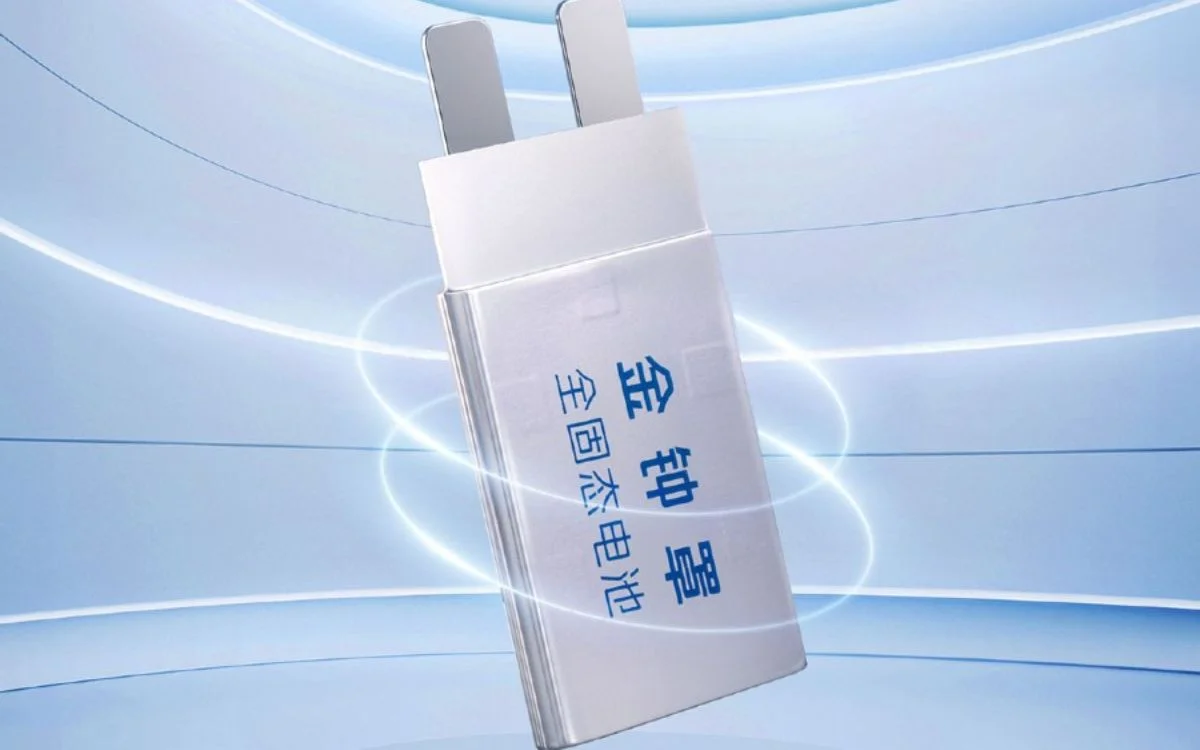
BEIJING & DETROIT — The holy grail of the global electric vehicle industry has officially crossed the threshold from laboratory theory to commercial reality. In a development poised to upend the legacy automotive landscape, Chinese manufacturers are officially rolling out commercial solid-state EV batteries capable of delivering nearly 1,000 miles of driving range on a single charge.
According to primary reporting from Electrek, this deployment represents a seismic shift in energy storage technology. For over a decade, automakers worldwide have chased the promise of solid-state cells—batteries that replace volatile liquid electrolytes with solid materials—citing their superior energy density, faster charging speeds, and near-elimination of fire risks. While Western automakers and traditional giants have largely kept solid-state tech confined to research and development pipelines, Chinese supply chains have successfully cracked the code for mass production.
The Anatomy of the Breakthrough
To understand the gravity of this rollout, one must look at the fundamental chemistry limiting current electric vehicles. Traditional lithium-ion batteries rely on liquid electrolytes, which become unstable at high voltages and add significant weight and thermal management overhead. Solid-state technology changes the physics entirely.
By utilizing solid ceramic, glass, or solid polymer electrolytes, manufacturers can pack significantly more energy into a much smaller and lighter footprint. The new generation of cells hitting the Chinese market boasts energy densities nearly double that of conventional lithium iron phosphate (LFP) or nickel-manganese-cobalt (NMC) packs.
For the end consumer, the implications are profound. A 1,000-mile (approx. 1,600 kilometers) range effectively obliterates "range anxiety," the psychological barrier that has kept mainstream buyers tethered to internal combustion engines. Road trips requiring multiple charging stops could soon become a relic of the past, with drivers able to cross entire countries on a single charge.
Key Advantages of the New Solid-State Generation
- Unprecedented Range: Up to 1,000 miles of driving distance per full charge, redefining long-haul logistics and consumer travel.
- Enhanced Safety Profile: Elimination of volatile liquid electrolytes drastically reduces the risk of thermal runaway and battery fires.
- Rapid Charging Capabilities: Advanced solid-state architecture allows for accelerated ion transfer, cutting replenishment times to a fraction of current standards.
- Superior Longevity: Reduced degradation over thousands of charge-discharge cycles, drastically improving long-term vehicle resale value.
Market Impact and Geopolitical Pressure
The speed at which Chinese battery makers have scaled this technology has sent shockwaves through boardrooms in Detroit, Wolfsburg, and Tokyo. For years, Western analysts predicted that viable solid-state batteries were at least a decade away from commercial viability. This rollout proves those timelines were severely underestimated.
Industry stakeholders note that this milestone gives Chinese EV brands an insurmountable competitive advantage in the global market. As these vehicles begin hitting domestic showrooms—and eventually eye export markets—legacy automakers face mounting pressure to accelerate their own solid-state roadmaps or risk losing market share permanently.
"This is not an incremental upgrade; this is a foundational reset of the automotive chessboard," said one senior clean-tech analyst based in Singapore. "When a vehicle can travel 1,000 miles without plugging in, the core value proposition of the gasoline engine vanishes completely."
Comparative Metrics: Traditional vs. New Solid-State Tech
| Metric | Traditional Li-Ion (NMC/LFP) | New Chinese Solid-State |
|---|---|---|
| Average Range | 300 – 450 miles | Up to 1,000 miles |
| Electrolyte Type | Volatile Liquid | Solid State (Ceramic/Polymer) |
| Thermal Risk | Moderate to High | Near Zero (High Stability) |
| Energy Density | Standard (250–300 Wh/kg) | Ultra-High (400+ Wh/kg) |
What Comes Next for Global Automakers?
As manufacturing lines spin up in China, the spotlight turns to regulatory approval, supply chain scaling, and international export strategies. While initial deployments will cater to the domestic Chinese market—where EV adoption is already approaching critical mass—global expansion is inevitable.
For Western governments and automotive titans, the message is clear: the energy transition is moving faster than anticipated. Subsidies, tariff policies, and domestic battery-manufacturing initiatives (such as those under the US Inflation Reduction Act and European Green Deal) will likely face intense scrutiny as policymakers grapple with how to counter this technological leap.
Ultimately, the era of the solid-state EV is no longer a futuristic talking point at auto shows. It is rolling off assembly lines right now, fundamentally rewriting the rules of modern mobility.
Frequently Asked Questions
When will solid-state EVs be available outside of China?
While commercial rollout is happening immediately in China, international availability will depend on local regulatory certifications, shipping logistics, and the scaling of production lines. Most industry experts anticipate export models equipped with solid-state cells to arrive in global markets late this decade.
Will these new batteries work with existing charging stations?
Yes. The external charging interface remains compatible with current DC fast-charging infrastructure. However, the internal architecture of the battery allows it to accept higher electrical loads much more safely and efficiently than older liquid-electrolyte packs.