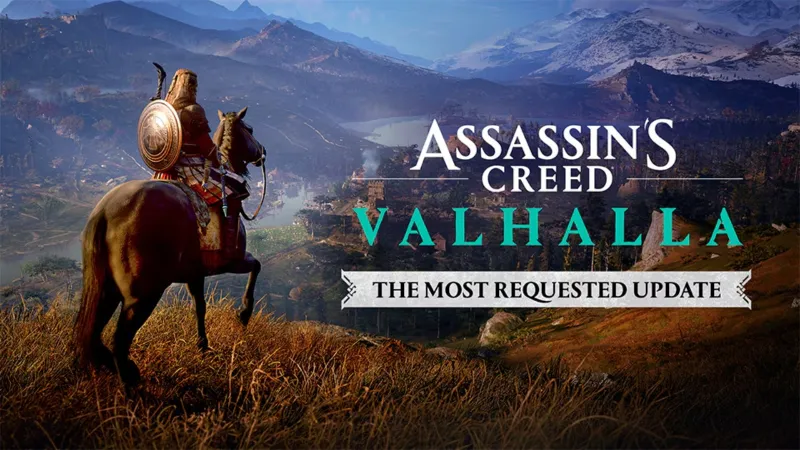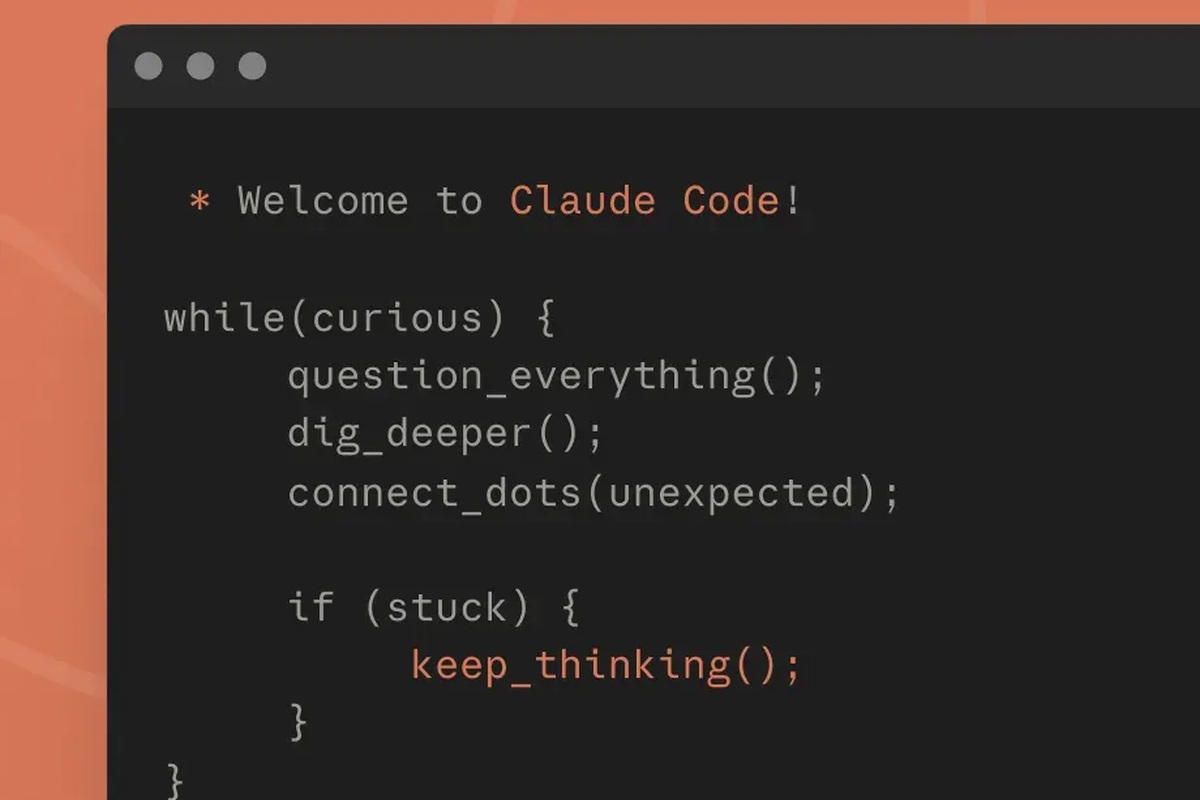
- The Core Restriction: Anthropic’s newly deployed guardrails within Claude Code are actively blocking developers from prompting the AI to recreate commercial, copyrighted video games.
- Enterprise Risk Mitigation: The move signals an aggressive pre-emptive legal posture by AI labs seeking to immunize themselves against rising copyright infringement litigation from major entertainment conglomerates and game publishers.
- Developer Friction vs. Compliance: While enterprise compliance officers praise the risk mitigation, indie developers and rapid-prototyping engineers report workflow disruptions and arbitrary boundary enforcement.
- Market & Valuation Impact: As venture capital deployment increasingly favors defensible infrastructure scalability and regulatory compliance, safety-first alignment protocols are reshaping competitive dynamics across the generative AI sector.
SAN FRANCISCO & NEW YORK — In an aggressive pivot toward strict intellectual property enforcement, artificial intelligence pioneer Anthropic has instituted sweeping systemic guardrails within its newly released terminal-based coding assistant, Claude Code, blocking users from prompting the system to replicate existing commercial video games. The policy shift, which surfaced via developer forums and widespread bug reports across GitHub and X (formerly Twitter), represents a crucial inflection point in the collision between generative software development, enterprise risk mitigation, and legacy copyright law.
For months, the software engineering community has championed terminal-integrated agents like Claude Code for their ability to rapidly scaffold complex codebases, refactor legacy systems, and prototype software applications with unprecedented velocity. However, as developers began testing the limits of the agent by requesting complete clones of beloved arcade classics, modern console titles, and indie hits, they encountered hard refusals. The system, governed by newly refined safety filters, now halts execution when detecting commands aimed at reproducing proprietary game loops, copyrighted assets, or established software architectures.
This editorial investigation examines the catalysts behind Anthropic’s policy enforcement, the broader economic and legal ramifications for capital allocation in the tech sector, and what these restrictive guardrails mean for the future of AI-assisted engineering and enterprise ROI.
The Catalyst: Litigation Anxieties and the Intellectual Property Landscape
Test Our Free AI & Tech Utilities Suite
Calculate LLM API token costs, analyze article dwell-time, or simulate tech DCA returns.
To understand Anthropic’s sudden policy hardening, one must examine the macro-level legal climate currently pressuring foundational model providers. Silicon Valley finds itself embroiled in a multi-front legal war over training data, synthetic output generation, and derivative works. Major record labels, newspaper syndicates, visual artists, and software publishers have initiated aggressive class-action litigation, arguing that large language models (LLMs) function as automated laundering machines for copyrighted material.
Within the gaming sector—a multi-billion-dollar global entertainment titan—the stakes are exceptionally high. Game mechanics, codebases, audiovisual assets, and narrative structures are fiercely protected by a complex web of copyright, trademark, and patent law. When an autonomous coding agent like Claude Code is leveraged to generate a functionally identical clone of a game like Tetris, Minecraft, or a contemporary AAA title from memory, it dances on the razor’s edge of copyright infringement.
By proactively blocking these requests, Anthropic is engaging in aggressive risk mitigation. Industry analysts suggest that preemptively curbing the generation of known commercial clones insulates the company from potential contributory infringement claims. As Anthropic courts lucrative enterprise contracts—where governance, compliance, and legal indemnity are non-negotiable prerequisites—demonstrating rigorous control over generative outputs is essential for maintaining valuation multiples and investor confidence.
Developer Backlash: Innovation Bottlenecks vs. Ethical Boundaries

The enforcement mechanism within Claude Code has drawn sharp criticism from segments of the developer community who view the restrictions as an overcorrection. Prototyping retro arcade games or mechanics-light puzzles has long served as a standard pedagogical benchmark for evaluating the computational and logical reasoning capabilities of new coding models.
Developers report that even benign requests—such as writing a simple grid-based movement system reminiscent of 1980s puzzle games—occasionally trigger false positives. These restrictive interventions disrupt workflows and force engineers to spend valuable development cycles rewriting prompts to bypass overly sensitive safety filters.
"We are witnessing the friction point where open-ended engineering tools collide with corporate legal counsel," says a senior software architect at a top-tier venture capital-backed gaming studio. "While we understand the imperative to respect intellectual property, an AI assistant that second-guesses standard programming patterns under the guise of copyright protection risks degrading its utility for legitimate, transformative software development."
Conversely, enterprise compliance officers have lauded the move. In sectors heavily scrutinized by regulatory bodies, such as financial services, healthcare, and digital entertainment, the inclusion of robust guardrails prevents rogue internal deployments from inadvertently exposing companies to devastating intellectual property lawsuits.
Verified Data & Metrics Breakdown
The following data table outlines the operational parameters, compliance shifts, and market responses surrounding the deployment of Claude Code and its newly instituted intellectual property filters:
| Metric / Parameter | Pre-Restriction State | Current Enforcement Phase | Strategic Implication |
|---|---|---|---|
| IP Guardrail Sensitivity | Low / Unstructured | High / Automated Filtering | Mitigates litigation exposure from major game publishers. |
| Developer Workflow Friction | Minimal interruption | Moderate (occasional false positives) | Forces engineers to adapt prompt-engineering methodologies. |
| Enterprise Trust Index | Standard AI safety baseline | Enhanced Compliance Rating | Strengthens enterprise sales pipelines and cloud compute adoption. |
| Capital Allocation Priority | Raw compute scaling & speed | Legal shielding & governance | Shifts R&D expenditure toward deterministic safety alignment. |
Industry & Market Implications: Who Wins, Who Loses
The tightening of code generation parameters around copyrighted entertainment properties has immediate ripple effects across the technology and venture capital ecosystems:
- Winners — Enterprise Legal and Compliance Software: Vendors specializing in AI governance, automated compliance auditing, and IP risk assessment stand to benefit immensely as foundational model providers race to implement strict guardrails.
- Winners — Major Media & Gaming Conglomerates: Content holders gain a psychological and tactical victory, establishing a precedent that AI labs cannot freely convert proprietary creative works into open-source or easily replicable software assets without resistance.
- Losers — Rapid-Prototyping Indie Developers: Independent game developers and hobbyist coders relying on autonomous agents for fast asset and mechanic generation face artificial constraints that slow down iterative design cycles.
- Losers — Unfiltered Open-Source Competitors: While decentralized models may temporarily absorb displaced developers seeking unrestricted coding environments, they face severe enterprise adoption hurdles due to a total lack of legal indemnification.
Frequently Asked Questions (People Also Ask)
Why is Claude Code blocking developers from recreating existing games?
Anthropic has implemented these restrictions as a proactive risk mitigation strategy to prevent potential copyright infringement claims. Replicating commercial game code, mechanics, or audiovisual assets without authorization exposes AI labs to significant legal liability from major entertainment and gaming conglomerates.
Does this restriction apply to all coding prompts in Claude Code?
No. The filtering mechanism specifically targets requests identified as attempts to clone or replicate existing, recognizable commercial software and proprietary video games. General programming tasks, algorithmic problem-solving, and original software development remain fully operational.
How does this impact enterprise deployment and ROI?
For corporate buyers, these guardrails are viewed positively. They provide a layer of legal protection that ensures internal engineering teams do not accidentally introduce copyrighted or legally compromised codebases into enterprise products, thereby safeguarding corporate valuation and regulatory compliance.
Will other AI coding assistants adopt similar restrictions?
Industry analysts anticipate that competing foundational model providers—including OpenAI, Google DeepMind, and major open-source contributors—will face mounting pressure from legal counsel to implement comparable guardrails to insulate themselves from rising intellectual property litigation.
Future Outlook: Navigating the Intersection of AI and Intellectual Property
As the generative artificial intelligence market matures, the era of unbridled, consequence-free scraping and code replication is drawing to a close. Anthropic’s clampdown on Claude Code is merely the vanguard of a broader institutional shift toward legal harmonization between tech innovation and copyright law.
Key milestones to monitor over the upcoming fiscal quarters include:
- Judicial Precedents: Federal court rulings on ongoing training data and output generation lawsuits that will establish statutory boundaries for AI-assisted creation.
- Licensing Ecosystems: Emerging B2B licensing frameworks where AI labs pay royalties to media conglomerates and software houses for legitimate training and generation rights.
- Granular Guardrails: Technological advancements in semantic filtering that allow AI coding agents to distinguish between infringing replication and legitimate educational or transformative software engineering.
For executive leadership, venture capitalists, and software engineers alike, the message is unequivocal: sustainable infrastructure scalability and long-term market valuation now depend as heavily on rigorous legal alignment as they do on raw compute power and algorithmic brilliance.