Executive Takeaways
- Parity Achieved: Contemporary Amperex Technology Co. Limited (CATL) has successfully scaled its second-generation sodium-ion architecture, delivering a gravimetric energy density of 200 Wh/kg that directly challenges mainstream Lithium Iron Phosphate (LFP) cells.
- Capital Allocation Shift: By bypassing expensive lithium carbonate and cobalt supply chains, CATL is slashing mass production costs, optimizing enterprise ROI, and insulating OEMs from commodity price volatility.
- Strategic Powertrain Integration: Beyond pure-play battery electric vehicles (BEVs), CATL is engineering these high-density sodium cells to power the fast-growing plug-in hybrid electric vehicle (PHEV) market.
- Infrastructural Risk Mitigation: The chemistry demonstrates superior cold-weather performance and thermal stability, resolving critical consumer adoption bottlenecks while shifting global battery supply chain dynamics.
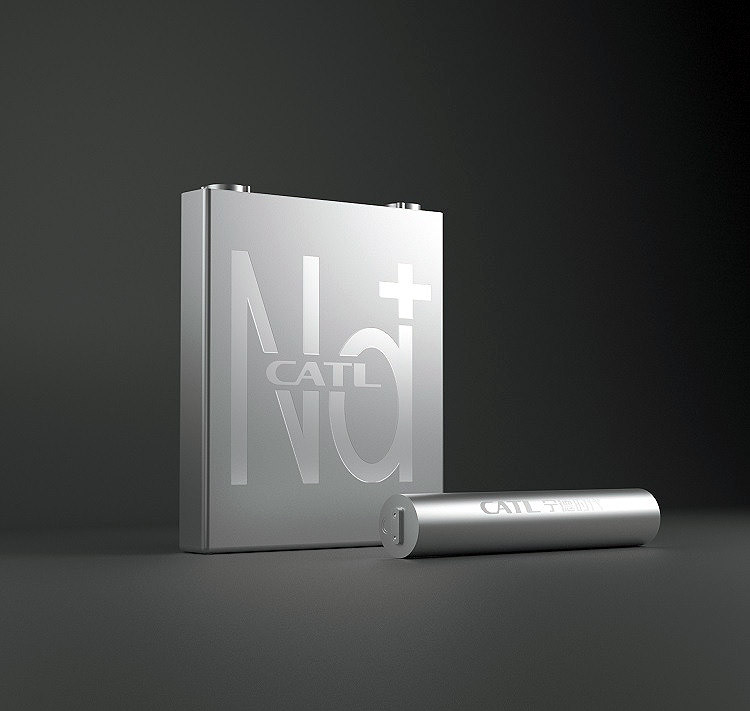
BEIJING & LONDON — In a milestone announcement that is already forcing a systemic recalibration across global boardrooms and supply chain desks, Contemporary Amperex Technology Co. Limited (CATL) has confirmed that its second-generation sodium-ion battery technology has achieved a gravimetric energy density of 200 Wh/kg. This technical breakthrough brings the abundant-earth chemistry within striking distance of traditional Lithium Iron Phosphate (LFP) cells, all while bypassing the structural cost constraints and geopolitical vulnerabilities that have long defined the lithium-ion era.
For capital markets, sovereign wealth funds, and tier-one automotive executives, the arrival of a commercial-grade 200 Wh/kg sodium-ion cell represents a fundamental restructuring of valuation multiples within the clean-tech sector. For years, battery chemistry roadmaps operated on a linear assumption: cost reduction required either compromising on energy density or suffering through severe supply chain bottlenecks tied to lithium, nickel, and cobalt mining. CATL’s latest engineering iteration shatters this paradigm, offering a pathway toward mass-market scalability that promises lower production expenditures and enhanced market liquidity for auto manufacturers seeking margin protection.
The Technical Genesis: How CATL Crossed the 200 Wh/kg Threshold
Test Our Free AI & Tech Utilities Suite
Calculate LLM API token costs, analyze article dwell-time, or simulate tech DCA returns.
The historical trade-off of sodium-ion chemistry has always centered on atomic weight and volumetric efficiency. Sodium ions are larger and heavier than lithium ions, making it historically difficult to achieve high energy density without sacrificing longevity or adding undesirable mass to the battery pack. However, CATL’s research and development division has systematically dismantled these physical barriers through breakthrough cathode material engineering and advanced anode structural design.
By utilizing Prussian blue analogue variations and optimized carbon-based anode structures with tailored interlayer spacings, CATL’s second-generation cells have successfully pushed past the historical 150–160 Wh/kg ceiling of first-generation sodium technology. At 200 Wh/kg, the chemistry now encroaches directly onto the operational turf of standard LFP chemistry, which typically ranges from 160 to 220 Wh/kg depending on cell-to-pack (CTP) integration efficiencies.
Crucially, this density milestone has been achieved without sacrificing the inherent advantages that made sodium an attractive alternative in the first place. Sodium-ion cells exhibit remarkable low-temperature performance, retaining upwards of 90% of their capacity in sub-zero environments where traditional LFP and nickel-manganese-cobalt (NMC) chemistries suffer from severe kinetic sluggishness. Furthermore, the thermal runaway thresholds of CATL’s latest cells significantly exceed standard safety benchmarks, offering automated risk mitigation for automakers navigating stringent global regulatory compliance frameworks.
Targeting the Plug-In Hybrid (PHEV) Lucrative Sweet Spot
While early market speculation assumed sodium-ion would be restricted to stationary energy storage systems (ESS) and entry-level micro-cars, CATL’s strategic roadmap points toward a far more disruptive deployment: the booming plug-in hybrid electric vehicle (PHEV) segment.
PHEVs have emerged as a critical battleground for global automotive market share, bridging the gap between internal combustion engine (ICE) phase-outs and full electrification. Yet, OEMs have continually wrestled with battery cost pressures in hybrid architectures, where profit margins are traditionally tighter than premium long-range BEVs. By integrating 200 Wh/kg sodium-ion packs into PHEVs, automakers can deliver competitive electric-only driving ranges while drastically reducing bill-of-materials (BOM) costs.
This vertical integration allows manufacturers to decouple vehicle pricing strategies from the volatile swings of the lithium commodity exchange. As enterprise ROI models adapt to slowing EV adoption curves in certain Western markets, the flexibility to deploy sodium-ion cells across both hybrid and affordable urban BEV platforms provides OEMs with unmatched operational agility.
Verified Data & Specifications Breakdown
The following comparative matrix outlines the technical and economic metrics separating CATL's second-generation sodium-ion architecture from legacy LFP and NMC chemistries:
| Metric / Feature | CATL 2nd-Gen Sodium-Ion | Standard LFP (Lithium Iron Phosphate) | NMC (Nickel Manganese Cobalt) |
|---|---|---|---|
| Gravimetric Energy Density | ~200 Wh/kg | 160 – 220 Wh/kg | 250 – 300+ Wh/kg |
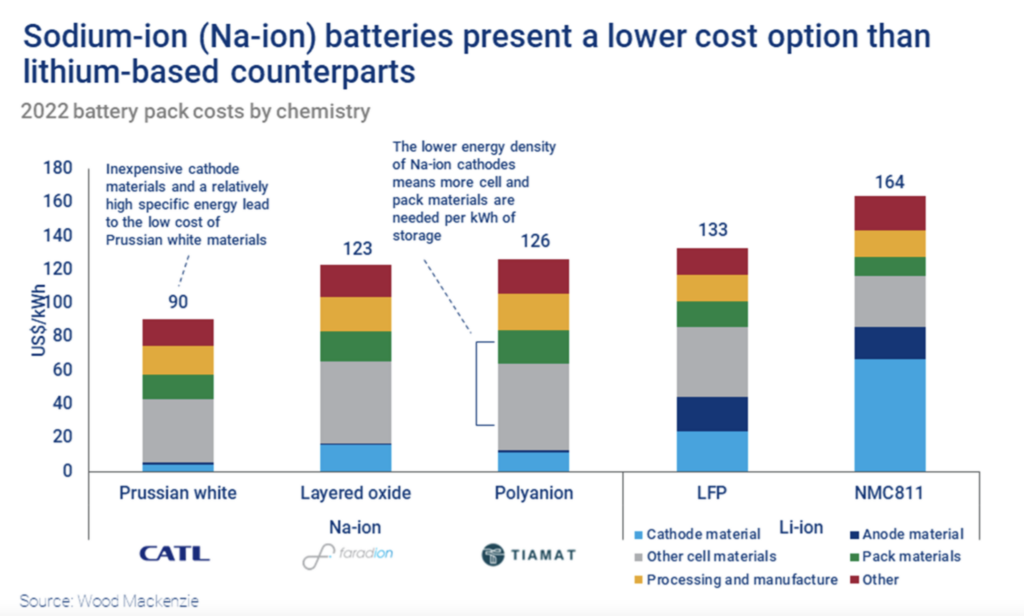
| Primary Raw Material Cost | Extremely Low (Abundant Sodium) | Moderate (Requires Lithium Carbonate) | High (Exposed to Cobalt/Nickel Volatility) |
| Sub-Zero Performance (-20°C) | Superior (>90% retention capacity) | Moderate (Capacity drop off) | Good, but requires active thermal management |
| Primary Target Markets | PHEVs, Entry BEVs, ESS | Mass-market BEVs, Commercial fleets | Long-range BEVs, High-performance vehicles |
| Supply Chain Vulnerability | Minimal (Domestic salt availability) | Moderate-High (Geopolitical refining monopolies) | High (Complex multi-mineral extraction) |
Industry & Market Implications: Winners, Losers, and Capital Shifts
The commercialization of a 200 Wh/kg sodium-ion cell triggers immediate ripples across global commodities markets and industrial supply chains. Financial analysts tracking the clean-energy sector are already re-evaluating capital allocation strategies.
The Winners:
- Tier-1 Cell Manufacturers with Sodium IP: CATL solidifies its undisputed market dominance, while fast-following domestic competitors (such as HiNA Battery and Farasis Energy) gain renewed validation.
- Automotive OEMs Focused on Margin Expansion: Volume-heavy automakers struggling with EV profitability can leverage sodium-ion integration to lower vehicle price tags without sacrificing driving range metrics.
- Sodium Compound Refiners: Industrial chemical producers positioned to supply high-purity precursor materials stand to capture unprecedented market share as Gigafactories retool.
The Losers:
- Junior Lithium Explorers and Speculative Miners: Companies relying on perpetual lithium price surges to justify capital expenditure face severe valuation corrections as alternative chemistries prove viable.
- High-Cost LFP Producers: Manufacturers slow to adopt dual-chemistry manufacturing lines risk margin compression as sodium-ion undercuts traditional LFP pricing structures at scale.
Furthermore, from an infrastructure scalability perspective, sodium-ion technology eases the strain on global electrical grids and mineral processing hubs. Because sodium can be sourced locally in virtually every major industrial economy, Western and Asian automakers alike can achieve greater regulatory compliance under regional sourcing laws (such as the United States Inflation Reduction Act and European Union supply chain directives).
Frequently Asked Questions (People Also Ask)
1. How does CATL’s 200 Wh/kg sodium-ion battery compare in cost to traditional LFP cells?
While raw material costs fluctuate, sodium-ion cells structurally bypass the volatile pricing of lithium carbonate. Because sodium is an abundant, low-cost commodity derived from common salt, CATL’s second-generation production costs are materially lower than LFP cells once mass manufacturing economies of scale are fully realized. This provides automakers with greater margin protection against commodity price shocks.
2. Can sodium-ion batteries completely replace lithium-ion in electric vehicles?
Not immediately. While a 200 Wh/kg density makes sodium-ion highly competitive for entry-to-mid-range BEVs, hybrid vehicles, and urban transit, ultra-long-range luxury vehicles and heavy-duty commercial trucks will continue to rely on high-nickel NMC chemistries or future solid-state lithium variants where maximum volumetric and gravimetric density remains paramount.
3. How do sodium-ion batteries perform in extreme cold weather compared to LFP?
Sodium-ion chemistry significantly outperforms standard LFP and traditional lithium-ion cells in sub-zero conditions. CATL’s second-generation cells retain over 90% of their operational capacity in severe cold, eliminating the frustrating range loss and sluggish charging speeds that drivers routinely experience during winter months.
4. When will vehicles powered by CATL’s second-generation sodium-ion batteries hit the market?
Following CATL’s technical validation and ongoing pilot manufacturing rollouts, commercial integration into high-volume PHEV and entry-level BEV platforms is slated to accelerate rapidly through the current fiscal cycle, with major OEM partnerships expected to debut production-line models shortly.
Future Outlook: What to Watch as Sodium-Ion Scales
As CATL transitions its 200 Wh/kg sodium-ion chemistry from advanced R&D to full industrial-scale manufacturing, financial markets and industry observers must monitor several critical operational milestones over the next 12 to 24 months:
- OEM Adoption Announcements: Watch for global automotive conglomerates to formally update their vehicle architecture roadmaps, confirming multi-gigawatt supply agreements for sodium-ion PHEV platforms.
- Gigafactory Retrofitting Speed: Assess how rapidly CATL and its licensee partners can convert existing LFP manufacturing lines to dual-purpose sodium-ion production without incurring excessive capital expenditure downtime.
- Macro-Commodity Response: Monitor pricing corrections in global lithium carbonate spot markets as institutional investors price in the permanent structural threat of sodium substitution.
Ultimately, CATL’s achievement marks the definitive end of the monoculture era in battery chemistry. By proving that sodium-ion can achieve parity-level energy density at a fraction of the cost, the industry has crossed a Rubicon. The race is no longer about whether abundant-earth chemistries can compete with lithium, but rather which automakers and suppliers can scale them fast enough to capture the next generation of market dominance.