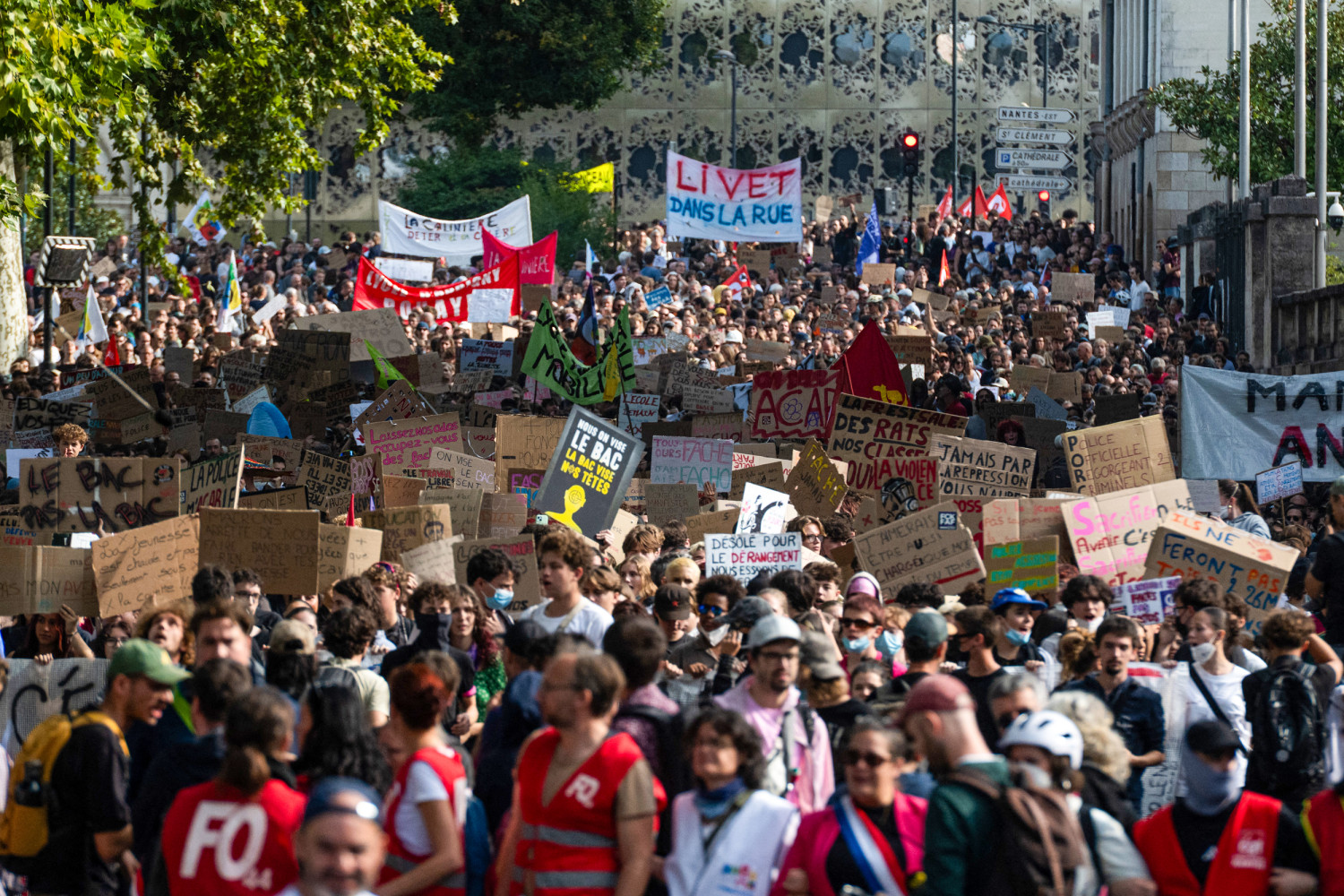
PARIS — The French government ordered the emergency closure of nearly 900 schools nationwide on Tuesday as violent nationwide protests over sweeping education reforms and funding cuts escalated dramatically. The unprecedented shutdown reflects a deepening social crisis in Europe’s second-largest economy, pitting trade unions, teachers, and restive student bodies directly against the administration of President Emmanuel Macron.
The decision to shutter academic institutions across multiple regions came after days of mounting civil unrest, blockaded campus gates, and violent clashes between riot police and radical student demonstrators. Smoke billowed from burning barricades in central Paris, Lyon, and Marseille, as transportation hubs faced severe disruptions and economic anxiety rippled through financial markets.
For international investors and local observers alike, the unfolding crisis highlights the profound political risks associated with Macron’s ambitious structural reform agenda. As labor unions threaten indefinite general strikes, the economic and operational fallout is already proving severe.
At a Glance: The Escalating French School Crisis
- Total School Closures: Nearly 900 primary and secondary institutions shuttered.
- Primary Catalysts: Proposed budget cuts, teacher shortages, and controversial curriculum overhauls.
- Security Response: Tens of thousands of riot police deployed; dozens of arrests reported.
- Economic Impact: Supply chain and commuter disruptions across major French metropolitan areas.
The Anatomy of the Unrest: Why France Is Boiling Over
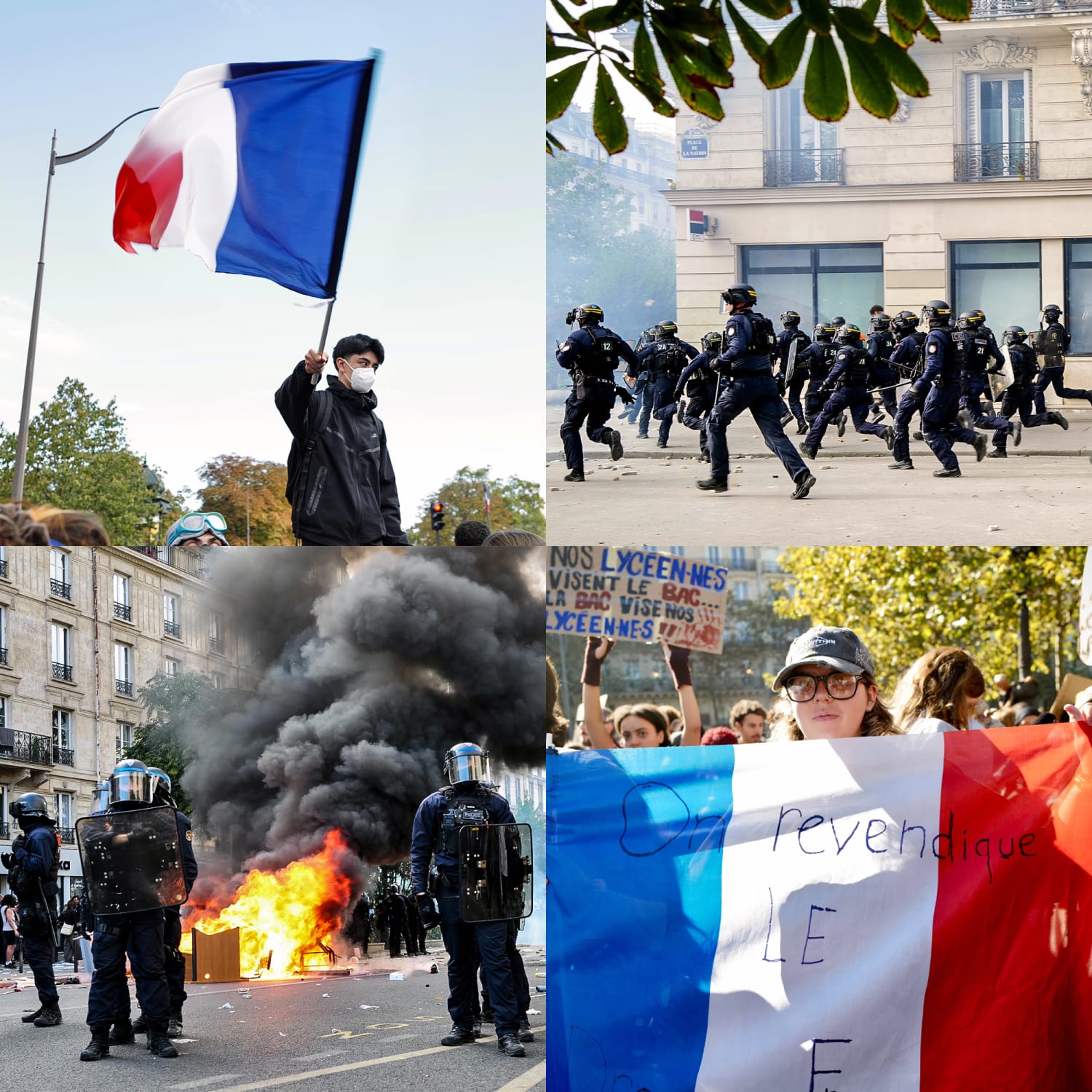
The current wave of demonstrations is not an isolated incident, but rather the culmination of months of simmering frustration. Teachers' unions argue that years of systemic underfunding, coupled with aggressive administrative restructuring, have brought the public education system to a breaking point. Class sizes are swelling, educators report burnout at historic highs, and promised wage increases have stalled amid broader fiscal tightening.
Tensions reached a boiling point late last week when the Ministry of Education announced a new wave of resource reallocations. Student groups mobilized rapidly, utilizing social media networks to organize coordinated blockades at high schools and universities. What began as peaceful sit-ins quickly devolved into violent street battles as radical factions infiltrated the protests, torching vehicles, smashing storefront windows, and hurling projectiles at law enforcement.
“We are witnessing a systemic breakdown of trust between the state and those who educate the next generation,” said Marie-Claire Dupont, a senior labor economist based in Paris. “When nearly 900 schools must close their doors purely for safety and operational reasons, it ceases to be a localized labor dispute. It becomes a national governance emergency.”
Government Response and Market Reactions
Interior Ministry officials defended the heavy police deployment, emphasizing that public safety and the protection of state property remain paramount. Government spokespersons have urged calm, reiterating that dialogue remains open, though they firmly maintained that the structural reforms are non-negotiable if France is to meet its European Union deficit reduction targets.
Financial markets have begun pricing in the contagion risk of prolonged social unrest. European equities dipped slightly in early trading, with French sovereign bonds facing minor downward pressure as traders weigh the possibility of a paralyzing general strike. Supply chains dependent on domestic transit are already reporting minor bottlenecks, particularly in urban logistics hubs.
| Metric | Current Status | Economic Impact |
|---|---|---|
| Affected Schools | ~900 Institutions | High parental absenteeism, workforce disruption |
| Security Deployment | Enhanced Riot Police (CRS) | Increased public expenditure, urban congestion |
| Labor Union Stance | Escalating Threats | Potential nationwide general strike looming |
What Lies Ahead: The Outlook for Investors and Citizens
As the government digs in its heels and protest organizers vow to ramp up pressure through the end of the week, the path forward remains perilous. Emergency cabinet meetings are reportedly underway in Paris to determine whether emergency decrees or temporary curfews will be necessary to restore order.
For multinational corporations operating in France, human resources departments are scrambling to implement contingency plans for remote work and commuter allowances. Multinational executives are closely monitoring whether the unrest will expand beyond the education sector into transportation and energy—a traditional playbook for French labor movements.
Ultimately, the administration faces a high-stakes tightrope walk. Yielding to protesters could shatter Macron’s credibility on fiscal discipline, while standing firm risks plunging the country into its most violent and disruptive social crisis in years.
Frequently Asked Questions
Why are schools being shut down across France?
Nearly 900 schools have been closed due to escalating violent protests, structural blockades by students, and security concerns following fierce clashes between demonstrators and riot police over education budget cuts.
Will the protests impact financial markets and travel?
While the direct impact is currently concentrated in domestic education and urban transit, investors are monitoring the situation closely for potential spillover effects into a broader general strike that could disrupt broader commerce and supply chains.