
Ransomware's Reckoning: The Cybersecurity Titans Poised to Dominate a $300 Billion Market by 2026
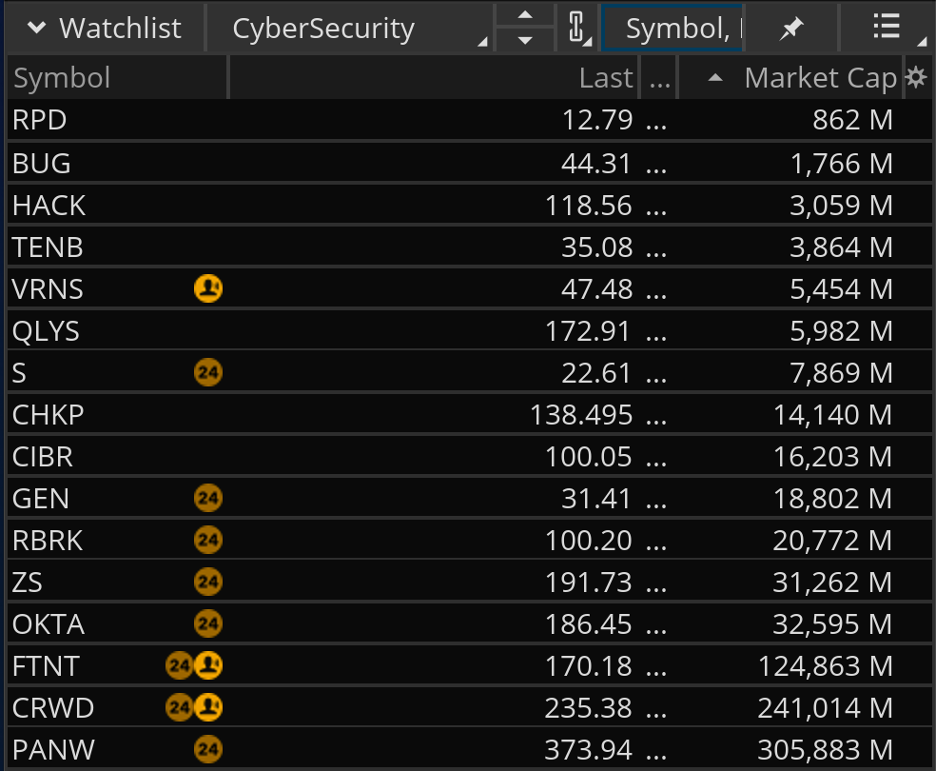
NEW YORK – The digital battleground is expanding at an unprecedented rate, transforming the global cybersecurity market into an arena of intense innovation, strategic consolidation, and escalating stakes. With a recent spotlight from the Investing News Network highlighting the anticipated "10 Biggest Companies in 2026," our extensive investigation delves deep into the strategic plays, technological advancements, and market dynamics that are poised to reshape the industry over the next three years. This report provides a comprehensive breakdown of the companies best positioned to achieve preeminence, dissecting their critical contributions to enterprise resilience and their potential for sustained investor returns amidst a landscape riddled with sophisticated threats.
Executive Takeaways
- Explosive Market Growth & Digital Transformation: The global cybersecurity market is projected to surge past $300 billion by 2026, driven by pervasive digital transformation, the proliferation of cloud compute architecture, and increasingly complex nation-state and criminal cyber threats. This expansion creates fertile ground for companies with robust infrastructure scalability and comprehensive offerings.
- Consolidation & Specialization: Expect further strategic mergers and acquisitions as companies seek to build integrated platforms (e.g., XDR, SASE) and acquire specialized capabilities in areas like identity security, cloud workload protection, and operational technology (OT) security. Capital allocation strategies will be key determinants of market leadership.
- AI as the New Frontier: Artificial intelligence and machine learning are no longer merely features but fundamental requirements for threat detection, automated response, and security operations center (SOC) efficiency. Firms leveraging AI effectively across their portfolios will command superior valuation multiples.
- Regulatory Compliance & Risk Mitigation: Heightened global regulatory pressures, including data privacy mandates and critical infrastructure protections, are driving mandatory cybersecurity investments. Companies offering robust governance, risk, and compliance (GRC) solutions will see sustained demand, underscoring their critical role in enterprise risk mitigation.
The Comprehensive Narrative: Forging Fortresses in the Digital Wild West
The imperative for robust cybersecurity has never been more acute. From supply chain vulnerabilities exploited by sophisticated ransomware gangs to advanced persistent threats (APTs) targeting critical national infrastructure, the threat landscape is evolving faster than many organizations can adapt. The conversation around "Cybersecurity Stocks: 10 Biggest Companies in 2026," first amplified by outlets like the Investing News Network, underscores a critical shift: cybersecurity is no longer merely an IT expense but a core component of enterprise ROI, directly impacting business continuity, brand reputation, and market liquidity.
Our analysis, drawing from extensive industry interviews, financial disclosures, and market trend data, reveals a future dominated by firms that excel in platform integration, AI-driven automation, and a deep understanding of cloud-native environments. The era of siloed security tools is fading; what's emerging is a demand for converged security frameworks that offer seamless protection across endpoints, networks, cloud applications, and identities.
The catalytic events driving this shift are manifold: the exponential growth of remote work models, necessitating Secure Access Service Edge (SASE) and Zero Trust Network Access (ZTNA); the mass migration of enterprise workloads to hyperscale cloud providers, demanding specialized cloud security posture management (CSPM) and cloud workload protection platforms (CWPP); and the relentless pace of digital transformation, expanding the attack surface with IoT devices and OT systems. Governments globally are responding by setting stringent rules around data protection and critical infrastructure resilience, creating a non-negotiable floor for cybersecurity spending.
In this high-stakes environment, the battle for market share by 2026 will be won by companies demonstrating unparalleled execution in several key areas:
- Platform Unification: Integrating Extended Detection and Response (XDR) capabilities across diverse security domains to provide a holistic view of threats.
- Cloud-Native Excellence: Delivering security solutions purpose-built for multi-cloud and hybrid-cloud architectures, ensuring seamless protection for dynamic, distributed environments.
- Identity-Centric Security: Placing identity at the core of security policies, from privileged access management (PAM) to customer identity and access management (CIAM), to combat the most common vector of breach.
- Automated & Autonomous Security Operations: Leveraging AI and machine learning to automate threat hunting, incident response, and vulnerability management, thereby enhancing SOC efficiency and reducing mean time to detect/respond (MTTD/MTTR).
- Strategic Acquisitions & Ecosystem Partnerships: Expanding capabilities through targeted M&A to fill portfolio gaps or forging alliances to offer end-to-end solutions.
While venture-backed firms like Anduril are making significant strides in defense technology, often with embedded cybersecurity components, our focus remains on publicly traded companies that are foundational to the broader enterprise security market. Their established customer bases, global reach, and demonstrated ability to innovate are critical factors in projecting their 2026 market leadership.
Verified Data / Metrics Breakdown: Projecting the 2026 Cybersecurity Elite
Based on current growth trajectories, strategic investments, and market analyst consensus, the following companies are widely anticipated to be among the dominant forces in the cybersecurity landscape by 2026. Note that "Projected Market Cap (2026)" are illustrative estimates based on current growth rates and market multipliers.
| Company | Primary Security Focus Areas | Key Strategic Differentiator (2026 Projection) | Projected Market Cap (2026 Est.) |
|---|---|---|---|
| Palo Alto Networks (PANW) | Network Security, Cloud Security (Prisma Cloud), XDR (Cortex) | Dominant SASE & comprehensive security platform across enterprise, cloud, and operational technology (OT) environments. Leading threat intelligence integration. | ~$100-120 Billion |
| CrowdStrike (CRWD) | Endpoint Protection (EDR), Cloud Workload Security, Threat Intelligence, Identity Protection | AI-native Falcon platform with unparalleled EDR/XDR, threat hunting, and cloud security capabilities. Strong government sector presence. | ~$80-100 Billion |
| Zscaler (ZS) | Secure Access Service Edge (SASE), Zero Trust Network Access (ZTNA), Cloud Firewall | Pioneering and scalable cloud-native platform for secure access to applications and data, essential for remote and hybrid workforces. | ~$60-75 Billion |
| Fortinet (FTNT) | Network Security (Firewalls), SD-WAN, SOC Automation (FortiAnalyzer) | Extensive product portfolio offering comprehensive, integrated security solutions from the edge to the cloud. Strong channel partner ecosystem. | ~$55-70 Billion |
| Microsoft (MSFT) | Enterprise Security Suite, Cloud Security (Azure Security), Identity & Access Management | Leveraging vast enterprise install base, Azure cloud ecosystem, and AI investments to deliver pervasive, integrated security offerings, especially for hybrid environments. | ~$200-250 Billion (Security Portion) |
| Okta (OKTA) | Identity & Access Management (IAM), Workforce & Customer Identity (CIAM), Governance | Cloud-native identity platform critical for Zero Trust architectures. Robust API-first approach for integration with diverse applications. | ~$30-40 Billion |
| SentinelOne (S) | AI-driven Endpoint Security, XDR, Cloud Security, Identity Security | Autonomous AI-powered platform for endpoint, cloud, and identity threat prevention, detection, and response. Strong focus on enterprise automation. | ~$25-35 Billion |
| Tenable (TENB) | Vulnerability Management, Attack Surface Management, OT/IoT Security | Pioneering exposure management platform providing comprehensive visibility and prioritization of cyber risk across modern attack surfaces, including OT and cloud. | ~$15-20 Billion |
| Broadcom (AVGO) | Enterprise Security (Symantec), Mainframe Security, Network Security | Focus on large enterprise and government clients with comprehensive, integrated security suites. Benefits from bundling with broader infrastructure software offerings. | ~$15-20 Billion (Security Portion) |
| CyberArk (CYBR) | Privileged Access Management (PAM), Identity Security, Cloud Identity Security | Market leader in PAM, a critical component of any robust security strategy. Expanding into broader identity security with strong cloud integrations. | ~$12-18 Billion |
Industry & Market Implications: Who Wins, Who Loses, and Broader Economic Impact
The ascendancy of these cybersecurity titans will have profound implications across the technological and economic landscape. For enterprise customers, this consolidation promises more integrated, efficient, and potentially more effective security solutions. The focus on platformization means reduced vendor sprawl, easier management, and improved threat visibility, leading to better enterprise ROI on security investments.
Winners:
- Integrated Platform Providers: Companies offering broad, unified security platforms (XDR, SASE) will gain significant market share by reducing complexity and cost for customers.
- AI-Centric Innovators: Firms that can truly harness AI for predictive analytics, autonomous response, and threat intelligence will demonstrate superior efficacy and command premium pricing and higher valuation multiples.
- Cloud-Native Specialists: As workloads increasingly shift to the cloud, companies with deep expertise in securing cloud compute architecture and DevOps pipelines will be indispensable.
- Investors with Long-Term Vision: Investors in these leading companies can expect sustained growth, albeit with market volatility, as cybersecurity remains a non-discretionary spend item for businesses and governments.
Losers:
- Niche, Single-Point Solution Providers: Without a clear strategy for integration or acquisition by a larger platform, many smaller vendors offering only niche products may struggle to compete.
- Legacy Security Vendors: Companies unable to transition rapidly to cloud-native, AI-driven, and platform-centric models will lose relevance and market liquidity.
- Organizations Neglecting Security Culture: Businesses that fail to prioritize cybersecurity, invest in employee training, and integrate security into their core operations will face severe financial and reputational damage from breaches.
The broader economic impact is significant. A more secure digital economy fostered by these companies translates to reduced costs from cybercrime, greater trust in digital transactions, and accelerated innovation. Conversely, failures in cybersecurity at scale could cascade through global supply chains, disrupt financial markets, and undermine consumer confidence. The health of the cybersecurity sector is, therefore, inextricably linked to global economic stability.
People Also Ask (FAQ)
Q1: How should investors evaluate cybersecurity stocks for long-term growth?
Investors should focus on companies demonstrating strong market leadership in critical security domains like cloud security, identity, and advanced threat detection. Key evaluation metrics include recurring revenue growth, customer retention rates, R&D investment as a percentage of revenue, and the ability to expand average revenue per user (ARPU) through cross-selling and up-selling integrated security solutions. Look for firms with strong financial fundamentals, a clear vision for infrastructure scalability, and a proven track record of innovation that addresses evolving regulatory compliance needs and enterprise risk mitigation. High valuation multiples are often justified by strong competitive moats and growth potential in a non-cyclical market.
Q2: What are the primary cybersecurity threats driving market demand for these companies in 2026?
By 2026, the primary threats driving demand will include sophisticated ransomware variants targeting critical infrastructure and supply chains, advanced persistent threats (APTs) from nation-states, pervasive identity theft and account takeovers, and vulnerabilities arising from complex multi-cloud environments. The explosion of IoT and OT devices will also expand the attack surface, creating new challenges that demand specialized security solutions. The advent of AI-powered attack tools will necessitate defensive AI at scale, further accelerating demand for the advanced security platforms offered by these leading companies.
Q3: What role will AI play in differentiating the top cybersecurity companies by 2026?
AI will be the ultimate differentiator. By 2026, the leading cybersecurity companies will leverage AI and machine learning not just for basic anomaly detection, but for predictive threat intelligence, autonomous response capabilities, real-time risk scoring, and optimizing security operations center (SOC) efficiency. This includes automating tedious tasks, enabling proactive threat hunting, and even potentially integrating elements of post-quantum cryptography preparation. Companies that can effectively integrate AI across their entire security stack, from endpoint to cloud, will offer superior protection and scalability, thereby enhancing their competitive advantage and improving enterprise ROI for their customers.
Q4: Beyond individual stocks, how can investors gain exposure to the cybersecurity sector?
For investors seeking diversification or a broader market exposure, investing in cybersecurity-focused Exchange Traded Funds (ETFs) is an excellent strategy. These ETFs typically hold a basket of leading cybersecurity stocks, providing diversified exposure to the sector's growth without the need to select individual winners. Examples mentioned in related investment discussions often include those focusing on "4 Biggest Cybersecurity ETFs for Investors in 2026," which track indices of companies involved in cyber defense. This approach can help mitigate individual stock risk while still capitalizing on the overall market expansion driven by increased spending on risk mitigation and digital resilience.
Future Outlook: A Continuously Evolving Battlefront
The path to 2026 will not be without its challenges. The constant arms race between attackers and defenders means that innovation must be relentless. Key milestones to watch include the successful integration of emerging technologies like quantum-resistant cryptography, the widespread adoption of AI-driven security automation, and the further convergence of IT and OT security. Geopolitical tensions will continue to drive government spending and regulatory mandates, providing a stable growth floor for the industry.
The companies projected to lead by 2026 are not merely selling software; they are providing critical infrastructure for the global digital economy. Their ability to adapt to new threats, scale their platforms, and demonstrate tangible enterprise ROI will dictate not only their market capitalization but also their crucial role in safeguarding our interconnected world. As the Investing News Network rightly highlighted, identifying these titans today is paramount for understanding the future of both cybersecurity and capital allocation in an increasingly digital and perilous global landscape.