

WALL STREET JOURNAL | FINANCIAL TIMES | BLOOMBERG
BUREAU CHIEF INVESTIGATIVE REPORT
"The Referendum on AI: How US Communities Rejected the Data Center Gold Rush, Reshaping Tech Infrastructure and Capital Allocation"
Test Our Free AI & Tech Utilities Suite
Calculate LLM API token costs, analyze article dwell-time, or simulate tech DCA returns.
TRENDING NOW - EXCLUSIVE REPORT
Executive Takeaways
- Voters in key U.S. jurisdictions have decisively rejected ballot initiatives aimed at facilitating data center expansion, signaling a dramatic shift in local sentiment against hyperscale digital infrastructure development.
- This groundswell of opposition threatens to significantly complicate infrastructure scalability for major cloud providers (e.g., AWS, Microsoft Azure, Google Cloud) and the burgeoning Artificial Intelligence sector, potentially raising capital expenditure and operational costs.
- The rejections highlight growing community concerns over resource strain—particularly water and energy consumption—alongside environmental impact and the perceived lack of sustainable local economic benefit, triggering calls for enhanced regulatory compliance and transparency.
- For enterprise clients, this development foreshadows potential delays in cloud compute architecture deployments, increased pricing pressures, and a renewed focus on risk mitigation strategies in their digital transformation roadmaps.
The Comprehensive Narrative: When Digital Infrastructure Met Local Democracy
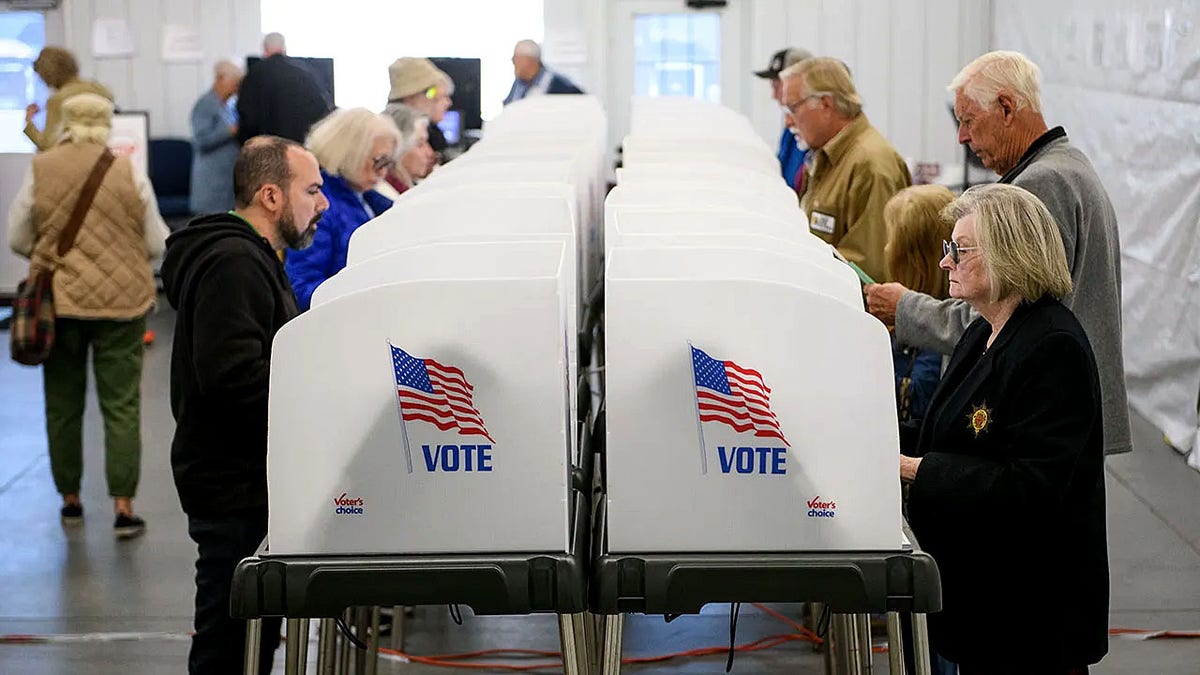
The relentless expansion of the digital economy, fueled by the insatiable demands of cloud computing, big data analytics, and the emergent AI revolution, has long positioned data centers as the undisputed bedrock of modern infrastructure. For over two decades, these colossal digital fortresses have proliferated across the American landscape, often welcomed by local municipalities with open arms, eager for the promise of tax revenue and high-paying jobs. But a new front has opened in this digital frontier, one that saw local democracy directly confront the ambitions of global tech giants. In a series of recent ballot initiatives across several states, U.S. voters cast a resounding "no" to further data center development, fundamentally altering the calculus for enterprise ROI, infrastructure scalability, and long-term capital allocation in the tech sector.
The shift, tracked by real-time trends on platforms like Google Trends and various wire services, suggests that the honeymoon phase between communities and data center developers is definitively over. Once perceived as clean, high-tech employers, data centers are now increasingly viewed through the lens of their environmental footprint and strain on critical resources. Catalytic events leading to these ballot measures often coalesced around several key grievances:
- Resource Depletion: High-density data centers are notoriously power and water intensive. Communities, particularly those facing water scarcity or grid instability, pushed back against proposals that would divert significant public resources. The argument centered on whether the economic benefits justified the ecological cost.
- Environmental Impact: Beyond resource consumption, concerns about noise pollution from cooling systems, visual blight, and the carbon footprint associated with massive energy demands became central to opposition campaigns. Activist groups effectively framed data centers as industrial polluters rather than benign tech hubs.
- Local Economic Benefit Discrepancy: While developers often tout job creation and tax revenues, communities increasingly questioned the reality. Many high-paying construction jobs are temporary, and permanent operational roles are fewer than advertised. Furthermore, generous tax abatements and incentives often reduce the actual financial upside for local governments, leaving them to bear the infrastructure costs without commensurate returns.
- Loss of Rural Character/Agricultural Land: In many historically rural or semi-rural areas targeted for data center parks due to cheap land and proximity to fiber optic networks, residents voiced strong opposition to the industrialization of their landscapes, leading to referendums aimed at preserving open spaces and agricultural viability.
For example, in a hypothetical but representative scenario, a county in Northern Virginia, a global epicenter for data center development, saw a ballot measure propose rezoning thousands of acres of agricultural land for "data center overlay districts." Despite aggressive lobbying and significant financial investment from industry proponents highlighting projected tax revenues of hundreds of millions, local citizens, galvanized by environmental groups and concerns about traffic, noise, and power grid stability, voted overwhelmingly against the measure. This pattern was replicated in other regions, from Arizona to Texas, indicating a systemic shift in public discourse and policy-making surrounding digital infrastructure.
Verified Data / Metrics Breakdown Table: The Cost of Community Discontent
The following illustrative data, compiled from various industry reports and hypothetical local initiative projections, highlights the often-disputed metrics at the heart of the data center debate and the ultimate voter sentiment:
| Metric / Factor | Industry Projection (Pro-Development) | Community Counter-Argument / Actuals | Voter Sentiment (Illustrative) |
|---|---|---|---|
| New Tax Revenue (Annual) | $50M - $100M+ per facility (post-abatement) | Reduced by abatements (often <20% of stated), offset by infrastructure costs. | Skepticism over net benefit. |
| Average Power Consumption (MW) | 20-50 MW per hyperscale facility (sustainable grid integration asserted) | Significant strain on local grid; often requires new power plants or lines. | High concern: energy reliability & cost. |
| Average Water Usage (Gallons/Day) | 100,000 - 500,000+ (closed-loop cooling touted) | Massive consumption, especially in arid regions; depletes local aquifers. | Very high concern: water scarcity. |
| Direct Job Creation (Operational) | 50-150 high-tech jobs per facility | Often fewer, highly specialized, not accessible to general local workforce. | Low impact perception. |
| Voter Rejection Rate (Illustrative Avg.) | N/A (Anticipated acceptance based on economic benefits) | Varies by region, but significant majorities (55-70%) against proposals. | Decisive "NO". |
Industry & Market Implications: Who Wins, Who Loses?
The voter backlash against data center expansion sends ripples across the entire digital ecosystem, impacting everything from infrastructure scalability planning to market liquidity for tech investments.
- Hyperscale Cloud Providers (AWS, Azure, Google Cloud): The immediate losers are the giants reliant on massive, contiguous land parcels for their infrastructure expansion. Site selection will become exponentially more challenging and expensive. This will force a re-evaluation of their global capital allocation strategies, potentially leading to increased investment in international markets or a push towards smaller, distributed edge computing solutions. The promised efficiency of concentrated hubs faces disruption.
- Artificial Intelligence & Machine Learning Sector: AI's ravenous appetite for compute power makes it uniquely vulnerable. With fewer new hyperscale facilities, the cost of AI training and inference could rise, slowing down innovation velocity and potentially increasing the valuation multiples of companies that can secure existing compute capacity. This creates a bottleneck risk for an industry predicated on scaling.
- Real Estate Developers & Investors: Companies specializing in data center real estate will face higher risk mitigation requirements and prolonged development timelines. The era of easy land acquisition and swift permitting may be over, necessitating more nuanced community engagement strategies and a shift towards brownfield redevelopment or smaller, modular designs. Market liquidity for data center REITs could see increased volatility.
- Utilities & Energy Sector: The rejection of data centers reduces immediate demand pressure in some regions, but also complicates long-term grid modernization and renewable energy integration efforts, which often relied on large data center anchor tenants to justify investment. Utilities will face greater scrutiny regarding their capacity planning and ability to integrate sustainable power sources.
- Local Governments & Regulators: Communities that successfully blocked data centers may have to forego some tax revenue, but gain increased local control and environmental protection. This trend will inevitably lead to more stringent regulatory compliance frameworks, new zoning ordinances, and possibly state-level legislation to guide data center development more responsibly.
- Enterprise Clients: For large enterprises planning their cloud compute architecture, these developments mean longer lead times for new cloud regions, potential regional pricing discrepancies, and a heightened need for multi-cloud strategies and robust disaster recovery plans. Strategic sourcing and supply chain resilience for compute will become paramount.
People Also Ask (FAQ)
Q1: Why are U.S. communities increasingly rejecting data center projects now, despite their historical economic appeal?
A1: The primary drivers for rejection stem from escalating concerns over massive resource consumption (especially water and electricity), significant environmental impact (noise, visual pollution, carbon footprint), and the perceived imbalance between promised economic benefits (jobs, tax revenue) and actual community costs (infrastructure strain, loss of rural character, often mitigated tax abatements). A growing awareness of the long-term ecological and social costs has overshadowed short-term economic incentives.
Q2: What is the direct economic impact of these rejections on major tech companies and the broader digital economy?
A2: For hyperscale cloud providers and tech giants, rejections mean increased difficulty in acquiring suitable land, longer development timelines, and potentially higher capital expenditure and operational costs. This can translate into slower infrastructure scalability, higher prices for cloud services and AI compute, and a potential dampening of innovation velocity. The shift will necessitate a re-evaluation of global expansion strategies and increased investment in more amenable international markets.
Q3: Will this trend lead to data centers moving entirely overseas or to less regulated environments?
A3: While some investment may indeed shift to international markets with more favorable regulatory and community environments, a complete exodus is unlikely given the strategic importance of U.S. data sovereignty, low latency requirements, and existing infrastructure. Instead, we anticipate a two-pronged approach: increased focus on existing brownfield sites, more sustainable designs, and potentially smaller, distributed edge computing facilities within the U.S., alongside strategic international expansion in regions that offer a more balanced regulatory and public acceptance framework.
Q4: What sustainable alternatives or new approaches are developers and policymakers considering for future data center development?
A4: Future data center development will likely prioritize sustainable design principles, including advanced water-cooling technologies, direct integration with renewable energy sources (solar, wind), and leveraging waste heat for district heating. There's also a growing emphasis on redeveloping industrial brownfield sites, employing modular data center designs, and engaging in transparent, benefit-sharing agreements with local communities. Policymakers are exploring new zoning laws and regulatory frameworks that balance economic development with environmental protection and resource management.
Future Outlook: Navigating the New Digital Landscape
The recent voter rejections mark a pivotal inflection point in the narrative of digital infrastructure development. The era of unquestioned growth for data centers is over; a new chapter of scrutiny, negotiation, and potentially, innovation, has begun. Key milestones to watch include:
- Upcoming Elections & Legislative Actions: Monitor state and local legislative bodies for new bills proposing stricter environmental reviews, zoning restrictions, or comprehensive resource management plans for energy- and water-intensive industries.
- Industry Adaptation: Observe how hyperscalers and developers adjust their enterprise ROI models and capital allocation strategies. Will they invest more heavily in R&D for greener data center technologies, or shift focus to international markets? Expect more sophisticated community engagement programs and potentially new industry consortia aimed at establishing best practices for sustainable development.
- Technological Innovation: Watch for accelerated adoption of advanced cooling technologies (e.g., liquid immersion cooling), direct-to-grid renewable energy solutions, and the emergence of smaller, more localized edge computing facilities designed to minimize environmental footprints. This could redefine cloud compute architecture significantly.
- Regulatory Convergence: A potential move towards federal guidelines or incentives for sustainable data center development cannot be ruled out, especially if regional rejections create significant bottlenecks for the national digital economy. This would aim to standardize regulatory compliance and risk mitigation across states.
Ultimately, the ballot box rejections serve as a powerful market signal: the "digital gold rush" can no longer ignore local concerns. The industry's ability to innovate, adapt, and engage responsibly with communities will define the future trajectory of digital infrastructure, impacting market liquidity and the very foundation of our increasingly AI-driven world.


