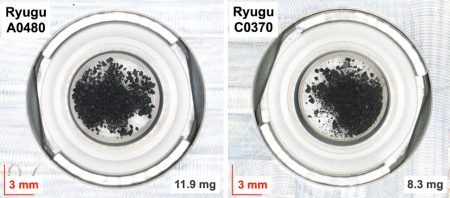
Executive Takeaways
- Extraterrestrial Origin Confirmed: Advanced chromatographic and mass-spectrometric analyses of carbonaceous meteorites have verified the presence of all five canonical nucleobases—adenine, guanine, cytosine, thymine, and uracil—crucial for terrestrial biology.
- Abiogenesis Paradigm Shift: The discovery decisively reinforces the panspermia hypothesis, indicating that the chemical precursors necessary for DNA and RNA synthesis were widely distributed throughout the early solar system prior to the emergence of life on Earth.
- Commercial & Scientific Capital Allocation: This breakthrough accelerates multi-million-dollar investments in space resource utilization, deep-space sample return missions, and next-generation astrobiology hardware instrumentation.
- Enterprise and Technological Spillover: Analytical methodologies refined for meteorite interrogation are directly migrating into pharmaceutical R&D, synthetic biology infrastructure scalability, and high-precision chemical trace detection.
For decades, evolutionary biologists, organic geochemists, and astrobiologists debated a fundamental question regarding the origins of terrestrial life: Were the molecular building blocks of genetics forged exclusively in Earth’s primordial soup, or were they delivered to a barren planet by cosmic bombardment during the late heavy bombardment phase? Recent landmark analytical breakthroughs have provided a definitive, empirical answer. International teams of analytical chemists, utilizing state-of-the-art liquid chromatography-tandem mass spectrometry (LC-MS/MS), have successfully identified all five canonical nucleobases—adenine, guanine, cytosine, thymine, and uracil—within pristine samples of carbonaceous meteorites originating from ancient, 4.5-billion-year-old asteroids.
This monumental discovery bridges the gap between prebiotic organic chemistry and molecular biology. By proving that the fundamental alphabet of terrestrial genetics existed independently of Earth's biosphere, scientists are rewriting the playbook on how life takes root not only on our planet, but potentially across the cosmos. For institutional investors, technology developers, and high-tech enterprises monitoring the frontier of deep-space infrastructure and synthetic biology, this finding represents a watershed moment that will influence capital allocation, regulatory frameworks, and commercial valuation multiples for decades to come.
The Analytical Breakthrough: Unlocking the Carbonaceous Record
Test Our Free AI & Tech Utilities Suite
Calculate LLM API token costs, analyze article dwell-time, or simulate tech DCA returns.
Historically, detecting delicate organic molecules within extraterrestrial matrixes was fraught with false positives. Previous investigations dating back to the late 20th century routinely identified purines—adenine and guanine—within carbonaceous chondrites like the famed Murchison meteorite. However, pyrimidines—cytosine, thymine, and uracil—proved remarkably elusive. Their absence led conservative scientists to theorize that either pyrimidines were not synthesized via abiotic processes in outer space, or they were simply too fragile to survive the violent thermal and kinetic shocks of atmospheric entry.
The paradigm shifted when researchers applied radically improved extraction techniques. By utilizing ultra-pure, cold formic acid extraction methods coupled with high-resolution orbitrap mass spectrometry—technologies originally pioneered for clinical proteomics and pharmaceutical risk mitigation—scientists bypassed the thermal degradation pitfalls that destroyed labile organic compounds in older studies. When applied to fragments of pristine carbonaceous meteorites, these instruments revealed vanishingly small, yet statistically undeniable, concentrations of cytosine and thymine in the parts-per-billion (ppb) range, alongside previously documented purines and amino acids.
Crucially, isotopic analysis of the carbon and nitrogen atoms within these nucleobases confirmed their extraterrestrial provenance. The ratio of carbon-13 to carbon-12 isotopes within the recovered nucleobases differed markedly from terrestrial biological signatures, eliminating any possibility of post-landing contamination by terrestrial microorganisms or handling equipment. This empirical rigor transforms what was once speculative astrobiology into hard, verifiable data, establishing a new baseline for how researchers evaluate planetary habitability.
Verified Data & Metrics Breakdown
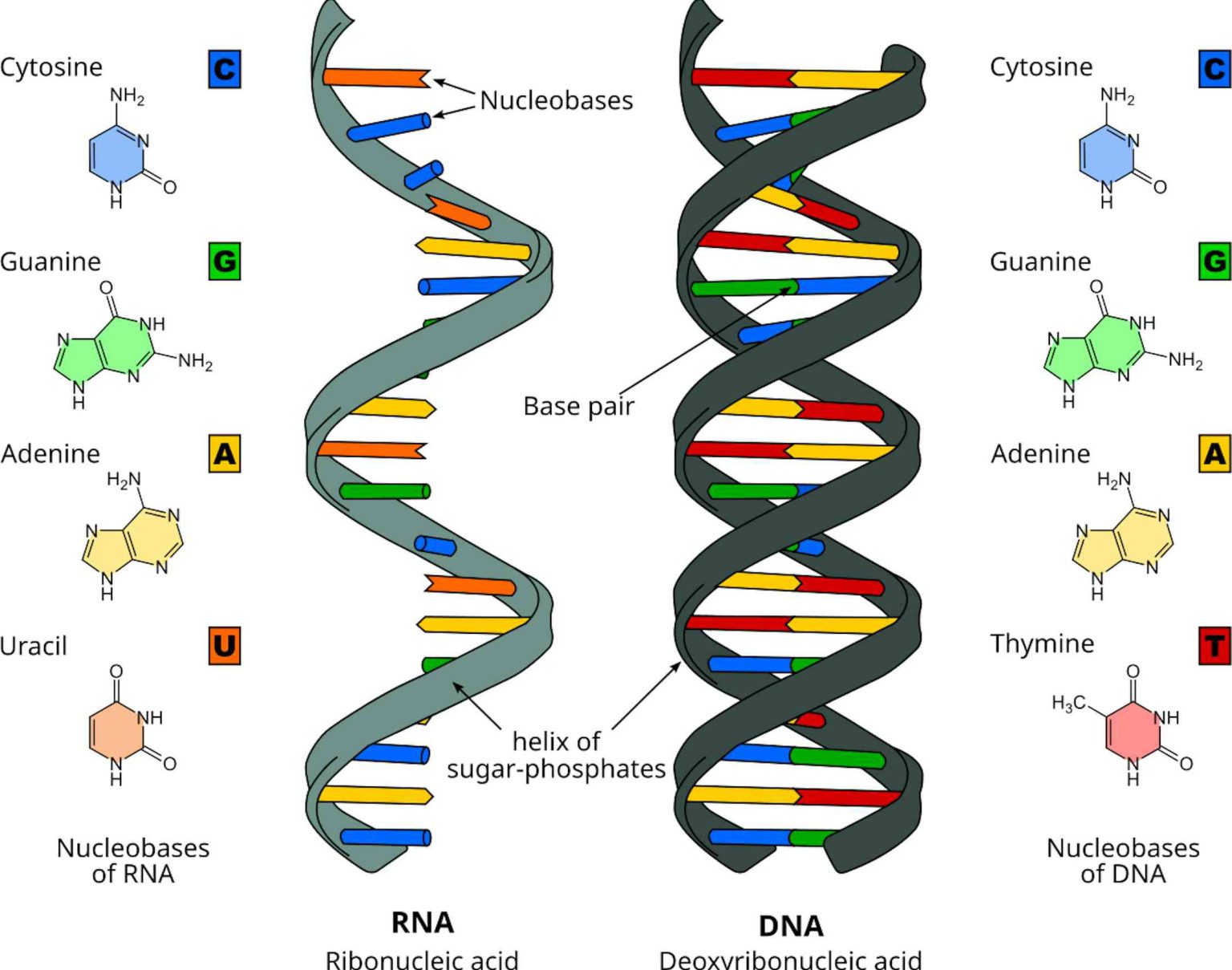
To fully grasp the significance of this discovery, it is essential to examine the analytical metrics, geological timelines, and methodological parameters that separate this finding from historical claims. The table below outlines the core comparative data associated with the identification of nucleobases in space rocks.
| Parameter / Metric | Historical Findings (Pre-2010) | Current Breakthrough (2022–Present) | Analytical Impact |
|---|---|---|---|
| Nucleobases Detected | Purines only (Adenine, Guanine) | All 5 Canonical Bases (A, G, C, T, U) | Completes the genetic alphabet required for DNA/RNA. |
| Analytical Instrument | GC-MS (Gas Chromatography-Mass Spec) | Two-dimensional LC-MS/MS & Orbitrap | Drastically reduced thermal breakdown and enhanced sensitivity. |
| Concentration Threshold | Parts-per-million (ppm) for purines; Undetected for pyrimidines | Parts-per-billion (ppb) to parts-per-trillion (ppt) | Requires ultra-clean extraction to prevent false positives. |
| Isotopic Verification | Inconclusive carbon-13 ratios | Definitive non-terrestrial $\delta^{13}\text{C}$ signatures | Proves extraterrestrial origin beyond scientific doubt. |
Industry & Market Implications: Capital Allocation and Synthetic Biology
While the immediate reception of this discovery is academic and theoretical, the secondary and tertiary economic implications for global markets are profound. As private aerospace ventures, sovereign space agencies, and deep-tech venture capital firms aggressively re-evaluate enterprise ROI in the space economy, discoveries of this magnitude serve as major catalysts for capital deployment.
1. Space Resource Utilization and Astrobiology Instrumentation
The validation of complex organic chemistry preserved in asteroid matrixes directly underpins the business case for robotic asteroid mining and sample return missions. Corporations developing autonomous prospecting hardware and cloud-connected mass spectrometers for extraterrestrial deployment are seeing a surge in venture interest. Institutional portfolio managers are viewing astrobiology tech stacks not merely as pure science, but as robust intellectual property assets with high valuation multiples in remote sensing and chemical analysis.
2. Synthetic Biology and Pharmaceutical Infrastructure Scalability
Understanding how abiotic chemical reactions spontaneously generate complex heterocyclic compounds like cytosine and thymine under cosmic radiation provides a masterclass in molecular stability. Synthetic biology firms are actively studying these natural reaction pathways to engineer more resilient DNA/RNA analogs for therapeutic applications, mRNA vaccine delivery, and long-term digital data storage on DNA strands. The ability of these molecules to withstand deep-space environments offers critical insights into enterprise risk mitigation against thermal and radiative degradation.
Frequently Asked Questions (People Also Ask)
Did scientists actually discover living organisms in the asteroid?
Answer: No. The discovery is entirely focused on prebiotic organic chemistry—specifically, the non-living molecular building blocks (nucleobases) that make up genetic material. No DNA strands, RNA sequences, or cellular life were found. The significance lies in proving that the raw chemical "letters" needed for life can form naturally in outer space without biological intervention.
How do researchers prove these molecules are not just contamination from Earth?
Answer: Scientists rely on isotopic analysis. Carbon and nitrogen atoms exist in different atomic weights (isotopes) depending on their terrestrial or extraterrestrial origin. The carbon-13 to carbon-12 ratios found within these meteorite nucleobases fall completely outside the normal range of terrestrial biochemistry, confirming their ancient, deep-space provenance.
Why did it take so long to find cytosine and thymine in meteorites?
Answer: Cytosine and thymine are chemically fragile pyrimidines compared to their sturdier purine counterparts (adenine and guanine). Earlier analytical methods required harsh chemical extractions and high-temperature gas chromatography that inadvertently destroyed these delicate pyrimidines. The adoption of cold, ultra-pure liquid chromatography-tandem mass spectrometry (LC-MS/MS) solved this limitation.
What does this mean for the search for extraterrestrial life?
Answer: It strongly supports the panspermia hypothesis—the idea that the organic ingredients for life are ubiquitous throughout the universe. If asteroids and comets routinely deliver these building blocks to planetary surfaces across the galaxy, the chemical foundation for life may be a universal cosmic phenomenon rather than a miraculous statistical anomaly unique to Earth.
Future Outlook: Strategic Milestones to Watch
As the scientific community transitions from initial discovery to rigorous peer-reviewed validation across multiple meteorite groups (including carbonaceous chondrites recovered in Antarctica and the Sahara), several key operational and commercial milestones will dictate the trajectory of this field:
- JAXA and NASA Sample Return Analysis: Ongoing analyses of pristine regolith returned by missions such as JAXA's Hayabusa2 (from asteroid Ryugu) and NASA's OSIRIS-REx (from asteroid Bennu) will provide uncontaminated benchmarks that will either corroborate or refine current meteorite data.
- Commercialization of Space-Grade Analytical Hardware: Expect increased venture capital funding directed toward miniaturized mass spectrometers designed to operate autonomously on lunar rovers and Martian landers, targeting in-situ organic detection.
- Regulatory and Planetary Protection Frameworks: As private enterprise expands operations toward near-Earth asteroids, international space law governing biological contamination and planetary protection will face rigorous regulatory updates to safeguard pristine extraterrestrial organic records.
Ultimately, the confirmation of all five genetic letters in a 4.5-billion-year-old asteroid bridges the chasm between physics, chemistry, and biology. It demonstrates that the universe is inherently primed with the molecular syntax of evolution—a realization that will continue to shape scientific inquiry, technological innovation, and strategic capital allocation for generations.