

Executive Takeaways
Test Our Free AI & Tech Utilities Suite
Calculate LLM API token costs, analyze article dwell-time, or simulate tech DCA returns.
- Sweeping Workforce Reduction: The Walt Disney Company is executing targeted headcount reductions spanning thousands of corporate, entertainment, and administrative roles to downsize overhead costs.
- 20% Non-Content Cost Optimization: Disney is locking in a rigorous target to slash non-content operating expenses by approximately 20%, focusing on corporate overhead, real estate rationalization, marketing efficiency, and IT/cloud enterprise infrastructure.
- Pivot to Free Cash Flow Yield: Executive leadership under Chief Executive Officer Bob Iger is decisively shifting strategy from top-line subscriber acquisition to bottom-line profitability, Direct-to-Consumer (DTC) margin expansion, and Free Cash Flow (FCF) generation.
- Countering Linear Decay and Activist Pressure: The restructuring directly responds to double-digit structural decline in legacy linear television revenues, heightened cost-per-acquisition metrics, and relentless pressure from institutional shareholders for enterprise ROI optimization.
1. The Anatomy of Retrenchment: Inside Disney’s Corporate Overhaul
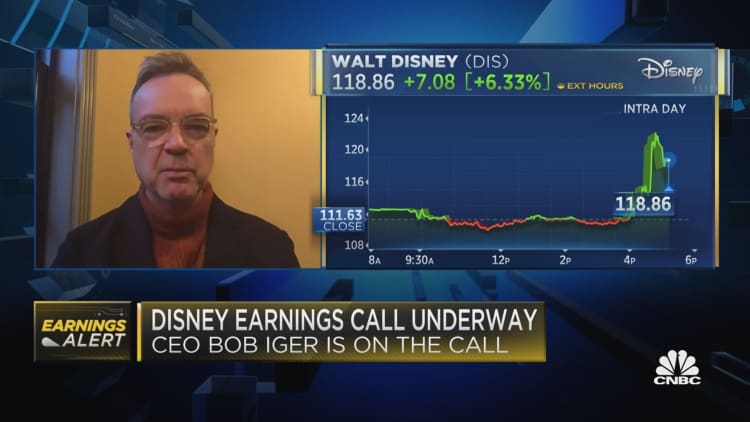
The Walt Disney Company has initiated a multi-phase corporate restructuring designed to remove thousands of non-production roles and deliver a comprehensive 20% reduction in non-content operating expenses. The mandate, spearheaded by CEO Bob Iger alongside Chief Financial Officer Hugh Johnston, represents one of the most aggressive capital realignments in the entertainment titan's 100-year history. The strategic pivot highlights the intense pressure confronting legacy media conglomerates as the high-margin profitability of traditional linear broadcast television evaporates faster than direct-to-consumer (DTC) streaming platforms can compensate.
At the core of this cost-reduction strategy is a fundamental recalibration of Disney’s organizational hierarchy. The initiative spans three central operating pillars: Disney Entertainment, ESPN, and Disney Parks, Experiences and Products (DPEP). While front-line consumer-facing roles within theme parks have largely been insulated to preserve service monetization, corporate corporate overhead, administrative functions, shared enterprise technology services, and centralized marketing units across Burbank, New York, and international hubs face sweeping headcount compression.
Chief executive leadership has made clear that the historical paradigm of hyper-scaling streaming subscriber volumes through aggressively subsidized customer acquisition costs (CAC) is officially over. Instead, Disney is instituting strict hurdle rates for capital deployment, demanding that every business unit defend its return on invested capital (ROIC) on a standalone basis. The operational mandate requires business unit leaders to systematically eliminate redundant management layers, consolidate international regional offices, and compress general, administrative, and enterprise sales expenditures (SG&A).
2. The Direct-to-Consumer Dilemma: Cash Burn, Cloud Architecture, and Content Amortization
The catalytic trigger for Disney's corporate retrenchment stems from the shifting unit economics of subscription video-on-demand (SVOD). During the early growth phase of Disney+, launched in late 2019, capital allocation was heavily weighted toward raw subscriber accumulation, driving peak cumulative streaming operating losses into billions annually. As Wall Street shifted its valuation multiples from enterprise revenue multiples to discounted cash flow (DCF) models and debt-coverage visibility, Disney’s leverage ratios came under intense scrutiny from credit rating agencies.
To achieve sustainable operating income across Disney+, Hulu, and ESPN+, management is executing a structural overhaul of both its technical infrastructure and content amortization profiles:
- Cloud Compute & Infrastructure Scalability: Disney's engineering groups are renegotiating enterprise contracts with public cloud infrastructure providers. By optimizing content delivery network (CDN) routing, optimizing data warehouse query architectures, and implementing automated workload auto-scaling, the technology division is targeting hundreds of millions in recurring infrastructure savings.
- Data-Driven Churn Optimization: Rather than over-allocating performance marketing dollars to acquire price-sensitive casual users, capital is being diverted toward algorithmic retention engines, unified identity management, and machine-learning-driven programmatic ad insertion. This shift supports Average Revenue Per User (ARPU) expansion while reducing overall acquisition overhead.
- Content Amortization & Library Rationalization: Disney is aggressively trimming its non-core content spending budgets, taking substantial non-cash impairment charges to purge low-engagement titles from its platform servers. Eliminating underperforming catalog titles reduces residual obligations, tax drag, and cloud storage overhead while concentrating content spend on high-yielding, tentpole intellectual properties.
Simultaneously, the structural decline of linear networks—comprising ABC, Disney Channel, and the traditional ESPN cable bundle—has stripped Disney of its historical cash engine. Dual-digit annual declines in traditional linear ad spend and accelerating cord-cutting metrics have constrained consolidated cash generation. The mandatory 20% operational savings target is designed explicitly to protect net operating margins against this secular linear decay.
3. Quantitative Restructuring Metrics and Capital Allocation Baseline
The structural transformation involves explicit shift benchmarks designed to re-anchor Disney's balance sheet metrics. Below is an analytical breakdown comparing Disney’s pre-restructuring baseline against its targeted operational structure post-optimization.
| Financial & Operational Metric | Pre-Restructuring Baseline | Targeted Post-Restructuring Profile | Strategic Impact & Margin Variance |
|---|---|---|---|
| Non-Content SG&A Expenses | ~$18.5 Billion (Consolidated) | ~20% Reduction Baseline Target | Unlocks ~$3.5B–$4.0B in annualized operational cash balance improvements. |
| Global Full-Time Workforce | ~225,000 Employees | Multi-Thousand Headcount Trim | Reduces structural corporate labor liability and ongoing fringe benefit overhead. |
| DTC Segment Operating Margin | Negative Operating Loss Trajectory | Positive Mid-Single-Digit Margin | Pivots streaming from cash drain to operating-income-accretive contributor. |
| Annual Content Spend Cap | Peak ~$30 Billion Annualized | Restricted to ~$24B–$25B Target | Enforces strict financial hurdle rates on greenlights and production slates. |
| Free Cash Flow (FCF) Conversion | Suppressed due to DTC Cash Burn | Expanded FCF Yield Generation | Supports reinstated cash dividend payments and share repurchase authorization. |
4. Institutional Activism, Debt Covenants, and Balance Sheet Strategy
The velocity of Disney’s cost-cutting roadmap is heavily linked to intense scrutiny from activist hedge funds, including high-profile campaigns mounted by Trian Fund Management and Blackwells Capital. Activist investors pointed to elevated corporate overhead, capital misallocation within legacy media assets, and the delayed consolidation of Hulu as core drivers of valuation multiple compression compared to pure-play tech and streaming peers.
To defend its balance sheet liquidity and preserve an investment-grade credit profile, Disney's corporate treasury is enforcing strict leverage covenants. The liquidity generated from the 20% cost savings program is being systematically deployed across three capital priorities:
A. De-leveraging and Debt Service Optimization
Following historical mega-acquisitions, Disney accumulated substantial total debt obligations. Lowering corporate overhead directly increases EBITDA margins, effectively bringing the Enterprise Value-to-EBITDA (EV/EBITDA) leverage ratio back into alignment with conservative balance sheet covenants. This leverage mitigation ensures access to investment-grade commercial paper markets at favorable credit spreads.
B. Theme Parks and Experience Capex Funding
Disney Parks, Experiences and Products continues to generate the highest return on capital across the portfolio. To protect this operational engine, Disney has earmarked approximately $60 billion in capital expenditures over a ten-year horizon for park enhancements, cruise line expansions, and international footprint extensions. The 20% SG&A reductions in corporate and entertainment divisions serve as a cash source to self-fund this high-margin experiential Capex without expanding long-term borrowing.
C. Flagship ESPN Direct-to-Consumer Transition
The impending launch of ESPN’s full standalone DTC platform ("Project Flagship") requires significant capital deployment for real-time sports streaming infrastructure, rights fee obligations, and interactive betting integration. Corporate overhead reductions ensure that the sports division can absorb soaring sports rights licensing fees without eroding consolidated operating margins.
5. Broader Media Industry Fallout: The Era of Efficiency Gains
Disney’s decisive pivot mirrors a broader macroeconomic re-platforming across the media, entertainment, and ad-tech ecosystems. The era of cheap capital, subsidized customer growth, and unconstrained creative spend has yielded to strict operational discipline across major media conglomerates, including Warner Bros. Discovery, Paramount Global, and NBCUniversal.
The widespread headcount reductions are causing structural shifts across several interconnected sectors:
- The Creative Talent and Production Ecosystem: Bidding wars for broad development deals have ended. Talent agencies, production vendors, and VFX facilities are adjusting to smaller overall volume orders, shorter series runs, and strict audit compliance regarding physical production costs.
- Digital Advertising & Ad-Tech Stack Monetization: As streaming platforms shift heavily toward ad-supported tiers (AVOD), Disney is expanding its proprietary Disney Select ad-tech ecosystem. Reductions in manual ad-operations personnel are being offset by automated programmatic ad exchanges and clean-room data integration with enterprise advertisers.
- Enterprise Software and Vendor Contracting: Enterprise software vendors, SaaS providers, and legacy consulting practices are experiencing contract renegotiations as Disney enforces vendor consolidation, demanding 15% to 25% price concessions or scope reductions across third-party IT frameworks.
Frequently Asked Questions (People Also Ask)
Why is Disney cutting thousands of jobs despite reporting profitable park operations?
While Disney’s Parks, Experiences and Products division generates strong operational cash flow, structural declines in its legacy linear television business (ABC, FX, Disney Channel) and high historic cash burn in the Direct-to-Consumer (DTC) streaming segment create a consolidated profit headwind. Cutting non-content corporate overhead by 20% allows Disney to protect overall enterprise operating margins, lower its debt service ratio, and ensure cash reserves are available to fund long-term capital investments in parks and streaming technologies.
How does the 20% non-content cost savings target affect Disney+ subscribers?
The cost savings focus specifically on non-content operational expenses—such as enterprise cloud compute optimization, redundant administrative layer removal, corporate real estate downsizing, and optimized programmatic marketing spend. Subscribers will primarily notice adjustments in platform pricing tiers, stricter password-sharing protocols, higher ad frequency on basic subscription tiers, and a more curated selection of high-performing franchise content rather than mass catalog expansion.
Which corporate divisions are hardest hit by Disney's restructuring initiative?
The workforce reductions are heavily targeted at corporate administrative tiers, middle-management enterprise layers, international linear channel management teams, central marketing operational groups, and non-engineering IT back-office operations across Disney Entertainment and corporate headquarters. Front-line operational staff within parks and resorts are substantially shielded to maintain customer service capabilities and park yield management.
What does this cost-reduction strategy mean for Disney’s enterprise stock valuation?
Institutional equity analysts view structural cost reductions as a positive driver for Free Cash Flow (FCF) expansion and margin recovery. By reducing fixed corporate SG&A overhead, Disney improves its EV/EBITDA multiple compression, accelerates balance sheet de-leveraging, and provides the financial flexibility required to support sustainable dividend payouts and potential share repurchases, making the company less vulnerable to linear advertising market volatility.
6. Future Outlook and Critical Milestones to Watch
Disney’s multi-phase operational rightsizing marks a permanent pivot from speculative market-share expansion to strict financial yield management. Over the next 12 to 24 months, executive leadership, institutional investors, and credit rating agencies will track several critical milestones to evaluate the efficacy of the turn-around strategy:
The primary barometer will be the sustained margin performance of the Direct-to-Consumer division. Investors will monitor whether Disney can maintain positive DTC operating income while simultaneously reducing performance marketing budgets and elevating subscription price tiers. Any acceleration in subscriber churn could force management to reassess its pricing power assumptions in a highly competitive SVOD landscape.
A second critical tracking point is the execution of the full DTC launch of ESPN. Successfully migrating high-margin sports audiences away from the declining legacy cable bundle into a standalone, feature-rich streaming product—without cannibalizing remaining linear carriage fees—remains the most complex strategic transition on Disney's docket.
Finally, the market will closely watch capital management surrounding the ultimate valuation settlement for Hulu equity liabilities and the execution of the $60 billion Parks Capex program. If Disney's 20% non-content operational savings yield the targeted $3.5B to $4.0B in annualized cash savings, the company will have successfully transformed its capital structure, creating a durable platform capable of generating multi-tier returns in a fully digitized media economy.



