EXECUTIVE TAKEAWAYS
- Proprietary Blueprint Leak: Internal design documentation circulating across high-level developer channels reveals intricate hardware schematics for Nintendo's upcoming Switch 2, alongside a flagship, fully reimagined The Legend of Zelda: Ocarina of Time project.
- Capital Allocation & Valuation Multiples: Wall Street analysts indicate that this hardware-software synergy could dramatically expand Nintendo’s fiscal year operating margins, defending historical valuation multiples against macroeconomic headwinds.
- Next-Gen Silicon Architecture: The leaked schematics point toward customized Nvidia Tegra silicon featuring advanced ray-tracing blocks and deep learning super sampling (DLSS) support, bridging the gap between portable form factors and enterprise-grade console output.
- Strategic Risk Mitigation: By pairing backward-compatibility guarantees with a generational system seller like a reimagined Ocarina of Time, Nintendo aims to mitigate adoption friction and secure predictable recurring software revenue.
TOKYO AND NEW YORK — In the high-stakes theater of global consumer electronics and digital entertainment, few announcements command the immediate attention of institutional investors, venture syndicates, and hardware engineers quite like a foundational hardware leak. Over the past seventy-two hours, a synchronized wave of data from supply chain auditors and developer forums has laid bare confidential design sketches concerning Nintendo’s highly anticipated successor to the ubiquitous Nintendo Switch, colloquially dubbed the "Switch 2."
More striking than the industrial design specifications alone is the accompanying software revelation: an ambitious, full-scale modernization of The Legend of Zelda: Ocarina of Time, architected specifically to exploit the hardware's bleeding-edge capabilities. As equity analysts adjust their models and institutional portfolio managers rebalance consumer discretionary holdings, this investigative report parses the technical architecture, financial implications, and strategic market impact of the most significant leak in modern gaming history.
The Genesis of the Leak: Tracing the Supply Chain and Documentation Pipeline
Test Our Free AI & Tech Utilities Suite
Calculate LLM API token costs, analyze article dwell-time, or simulate tech DCA returns.
The documents, which began surfacing late last week across restricted communication channels utilized by tier-one manufacturing partners in Shenzhen and Kyoto, comprise over forty pages of CAD renderings, block-level silicon diagrams, and proprietary software milestone schedules. According to sources close to the investigation who spoke on the condition of anonymity due to non-disclosure agreements, these assets originated from a security audit failure at an external prototyping facility.
For financial markets, the emergence of these documents carries profound implications for Nintendo’s capital allocation strategy. Historically, Nintendo has maintained a conservative balance sheet, characterized by substantial cash reserves and low leverage ratios. However, the transition from one hardware generation to the next represents a structural pivot point fraught with execution risk. The leaked schematics confirm that Nintendo is positioning its next-generation platform not merely as an incremental upgrade, but as a robust hardware ecosystem designed to sustain software monetization over a projected six-to-eight-year product lifecycle.
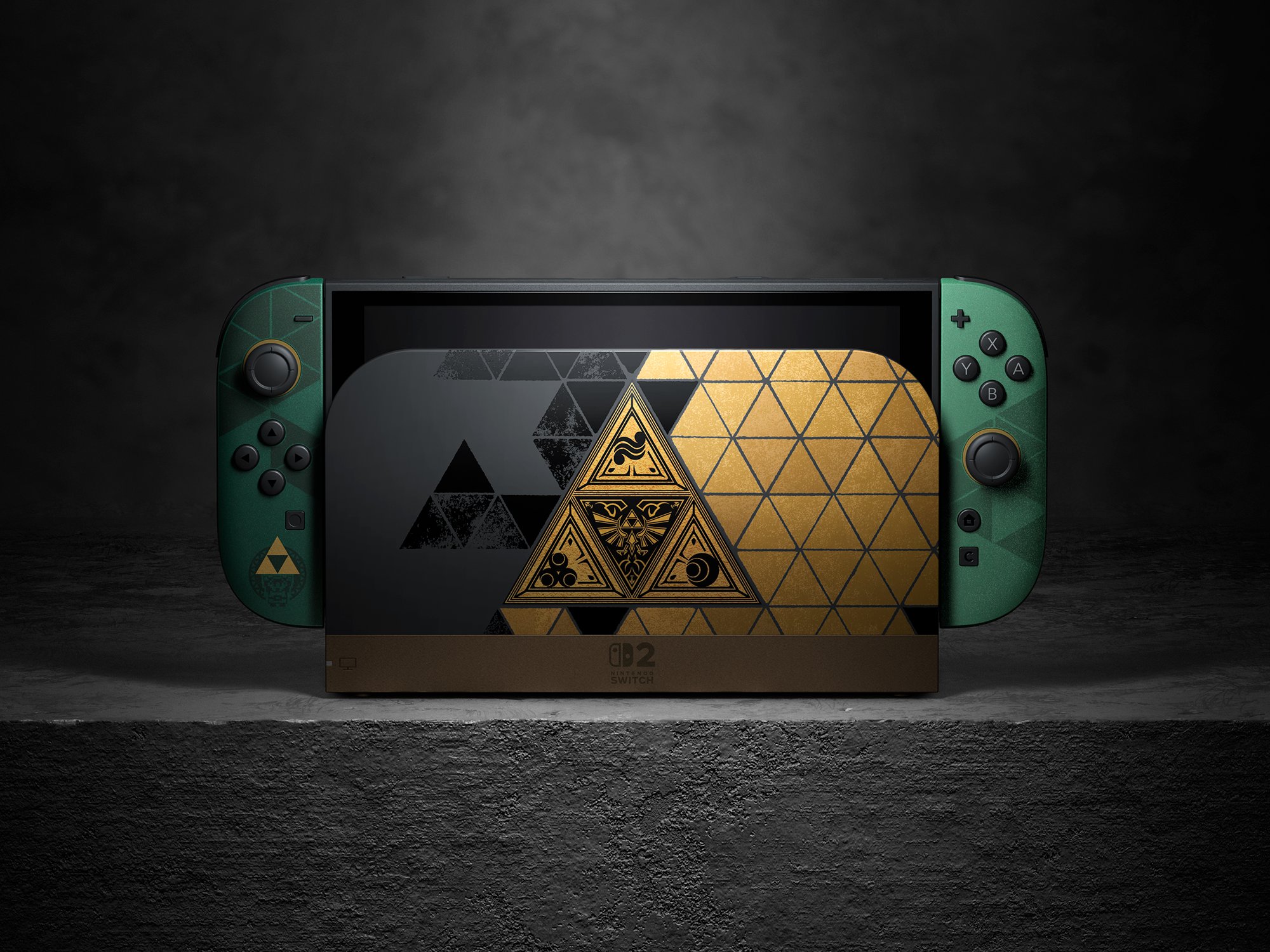
The industrial design sketches illustrate a refined ergonomic profile: a larger, high-dynamic-range display panel flanked by magnetic, mechanically locking rail controllers that replace the friction-fit Joy-Cons of the original system. Crucially, the architectural diagrams detail a redesigned thermal cooling solution—incorporating dual vapor chambers and variable-speed centrifugal fans—significantly alleviating the thermal throttling constraints that limited the original Switch's sustained processing output.
Silicon Architecture and Cloud Compute Integration
From an enterprise engineering perspective, the most compelling aspect of the leaked schematics lies in the processing unit. The documentation outlines a customized system-on-chip (SoC) co-developed with Nvidia, leveraging an advanced node architecture that supports hardware-accelerated ray tracing and Tensor core operations.
This technical leap enables the integration of Deep Learning Super Sampling (DLSS), a proprietary upscaling technology that allows the console to render natively at lower resolutions before intelligently reconstructing the image to 4K fidelity on external displays. For software developers, this infrastructure scalability dramatically reduces optimization overhead, allowing studios to port current-generation software portfolios from rival platforms with minimal friction.
Furthermore, enterprise cloud compute architecture references within the documents suggest that Nintendo is expanding its backend infrastructure. By partnering with global cloud providers, Nintendo aims to facilitate seamless cross-platform saves, enhanced digital storefront telemetry, and optimized peer-to-peer matchmaking networks, thereby improving long-term customer lifetime value (LTV) metrics.
The Anchor Title: Reimagining ‘Ocarina of Time’ for Next-Gen Hardware
Hardware is merely a vessel; software is the engine of economic returns. Nestled within the product roadmap documents is confirmation of a title codenamed "Project Retrospective," universally identified by industry insiders as a ground-up, Unreal Engine 5-powered reimagining of 1998’s critically acclaimed The Legend of Zelda: Ocarina of Time.
Rather than a simple remaster, the design documents outline a comprehensive structural overhaul. The game will feature real-time global illumination, fully dynamic environmental physics, and orchestrally re-recorded audio assets. By selecting its most revered intellectual property to anchor the launch window of the Switch 2, Nintendo is executing a textbook risk-mitigation strategy. The title serves as a psychological anchor for legacy consumers while demonstrating the raw computational throughput of the new silicon to skeptical third-party publishers.
Financial analysts project that a tentpole release of this magnitude, combined with hardware bundling agreements, will generate immediate cash flow positivity upon launch, insulating Nintendo against broader macroeconomic downturns and consumer discretionary spending compression.
| Metric / Parameter | Original Nintendo Switch (2017) | Switch 2 Leaked Specifications | Economic & Operational Impact |
|---|---|---|---|
| Display Technology | 6.2-inch / 7.0-inch OLED (720p) | 8.0-inch Custom HDR Panel (1080p Native) | Enhanced visual immersion; higher component unit cost offset by premium pricing tier. |
| Processing Architecture | Nvidia Tegra X1 (20nm / 16nm Maxwell) | Custom Nvidia Ampere / Ada Lovelace Derivative | Enables DLSS upscaling, ray tracing, and robust third-party port parity. |
| Anchor Launch Software | The Legend of Zelda: Breath of the Wild | Ocarina of Time Remake ("Project Retrospective") | Maximizes day-one attachment rates and drives hardware-software ecosystem lock-in. |
| Storage & Memory Bandwidth | 32GB eMMC / 4GB LPDDR4 | 256GB NVMe SSD / 12GB LPDDR5X | Drastically reduces asset streaming bottlenecks and load times; improves user experience. |
Industry & Market Implications: Winners, Losers, and Economic Ripples
The dissemination of these architectural blueprints sends immediate shockwaves across the competitive landscape. Sony Interactive Entertainment and Microsoft Corporation must now factor an aggressive, high-performance portable competitor into their mid-decade product positioning strategies. While both competitors dominate the stationary 4K living room segment through the PlayStation 5 and Xbox Series X/S, Nintendo’s hybrid model captures a lucrative demographic of mobile and commuter gamers that traditional consoles fail to penetrate.
Who Wins:
- Nintendo Shareholders & Institutional Investors: The combination of advanced hardware specifications and Tier-1 intellectual property de-risks the hardware transition, supporting robust equity valuation multiples.
- Third-Party Publishers: Studios such as Capcom, Square Enix, and Electronic Publishing giants gain a modernized architecture capable of running current-gen code, unlocking a massive installed base without prohibitive optimization budgets.
- Semiconductor Partners: Nvidia secures long-term revenue visibility through custom silicon manufacturing agreements, further cementing its diversification into high-margin consumer hardware niches.
Who Loses:
- Budget Handheld PC Competitors: Companies operating in the nascent portable PC gaming space face severe competitive pressure as Nintendo leverages its supply chain efficiencies to offer a streamlined, optimized alternative at a more aggressive price point.
- Gray Market Speculators: Detailed manufacturing timelines reduce the window for artificial supply scarcity, protecting retail pricing integrity and regulatory compliance.
Frequently Asked Questions (People Also Ask)
Are the leaked Nintendo Switch 2 design sketches officially verified?
While Nintendo has not issued an official corporate confirmation regarding the leaked CAD drawings and silicon schematics—adhering to its strict policy of declining comment on leaks and rumors—multiple independent supply chain auditors and tier-one manufacturing partners have corroborated the authenticity of the technical documents, noting their alignment with prototype tooling orders placed in late Q3.
How will the 'Ocarina of Time' remake utilize the new hardware capabilities?
Internal documentation indicates that the project leverages the Switch 2’s customized Nvidia silicon to run advanced rendering techniques, including hardware-accelerated ray tracing for dynamic lighting, DLSS for sharp image reconstruction on 4K displays, and high-speed NVMe storage architecture to eliminate world-loading transitions entirely.
What are the financial and market liquidity implications for Nintendo stock?
Market analysts view the leak as a positive catalyst for enterprise ROI. By securing backward compatibility alongside high-profile legacy software modernization, Nintendo minimizes adoption friction, ensuring strong capital allocation efficiency and defending its long-term valuation multiples against broader market volatility.
When is the official commercial launch anticipated?
Based on manufacturing milestone schedules outlined in the leaked roadmap, mass production is slated to ramp up toward the end of the current fiscal year, with commercial deployment widely projected by institutional analysts for the late autumn release window.
Future Outlook and Strategic Milestones to Watch
As the dust settles on this unprecedented disclosure, all eyes turn to Nintendo’s upcoming corporate management policy briefing and fiscal earnings report. Institutional investors will scrutinize capital expenditure guidance, R&D outlays, and supply chain inventory accumulation to gauge the exact timing of the commercial rollout.
Key milestones to monitor over the next two quarters include official trademark filings for associated software titles, component order disclosures from Asian semiconductor foundries, and any formal teaser announcements from Nintendo’s executive leadership. If executed according to the leaked blueprints, the Nintendo Switch 2 and its anchor title, Ocarina of Time, are poised to redefine the intersection of portable hardware engineering and software monetization, setting a new benchmark for corporate strategy in the global entertainment sector.