NEW YORK — The corporate restructuring at The Walt Disney Company (NYSE: DIS) has entered a more aggressive phase. Following a series of cascading workforce reductions initiated early last year, senior leadership is preparing to execute a fresh wave of layoffs affecting thousands of employees across its media, parks, and corporate divisions. According to internal sources familiar with the strategic roadmap, the cuts are designed to permanently re-engineer the entertainment giant’s cost structure, protect operating margins, and appease institutional investors demanding disciplined capital allocation.
For an enterprise boasting a market capitalization north of $200 billion, the decision underscores the profound structural pressures facing traditional media conglomerates. As legacy television models bleed linear subscribers and the direct-to-consumer (DTC) streaming segment transitions from a growth-at-all-costs acquisition phase to a hyper-focused profitability mandate, Disney’s executive suite is deploying aggressive risk mitigation strategies. The upcoming reductions highlight a broader macro trend: even the world’s most iconic intellectual property portfolios are not immune to stringent valuation multiples, rising cost-of-capital realities, and shifting consumer consumption patterns.
Executive Takeaways
Test Our Free AI & Tech Utilities Suite
Calculate LLM API token costs, analyze article dwell-time, or simulate tech DCA returns.
The Catalysts Behind Disney’s Multi-Year Restructuring
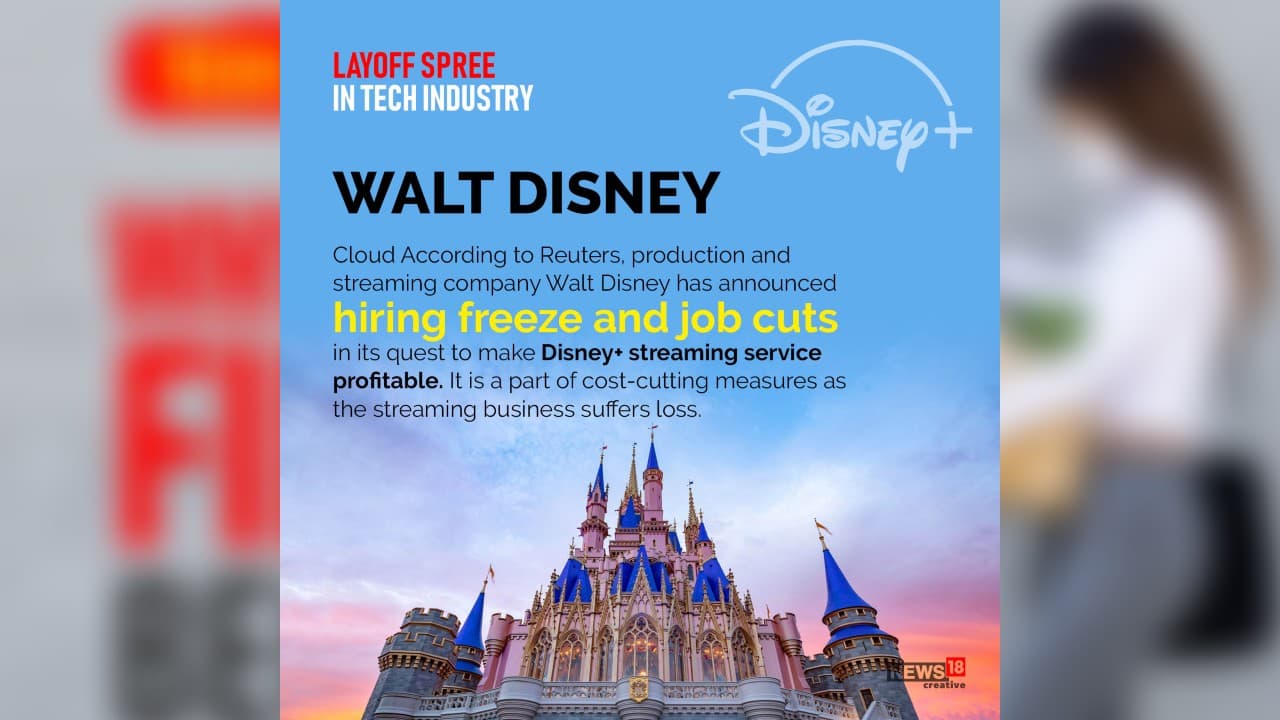
The genesis of Disney’s current contraction can be traced back to a confluence of macroeconomic headwinds and structural miscalculations in the early streaming boom. Under CEO Bob Iger, who returned to the helm in late 2022, the company embarked on a rigorous enterprise ROI review. This audit exposed bloated administrative layers, redundant operational silos, and unsustainable content spending that eroded traditional cash generation.
Historically, Disney’s diversified business model functioned as a self-sustaining flywheel: cash generated from linear cable networks like ESPN and the Disney Channel subsidized the capital-intensive theme parks division and the initial ramp-up of digital platforms. However, the acceleration of cord-cutting severely compromised linear cash flows. Simultaneously, the global race for streaming market share forced billions of dollars into unoptimized content production and customer acquisition costs.
To reverse this trajectory, management initiated a three-pronged restructuring plan targeting $7.5 billion in annualized cost reductions. While initial phases focused on eliminating redundant corporate overhead, consolidating regional marketing teams, and trimming non-core content production, the upcoming wave targets deeper operational layers. Observers note that this phase relies heavily on technological modernization—optimizing cloud compute architecture, automating back-office finance systems, and streamlining regulatory compliance frameworks across international jurisdictions.
| Restructuring Phase | Primary Focus Area | Estimated Target / Metric | Financial Impact |
|---|---|---|---|
| Phase I (Early 2023) | Corporate overhead, general & administrative (G&A) consolidation | 7,000 corporate and media positions eliminated | ~$5.5 billion in annualized cost savings achieved |
| Phase II (Late 2023 – Mid 2024) | DTC platform integration, ESPN+ rationalization, linear TV pruning | Optimization of third-party licensing and regional programming | Streaming division achieved profitability ahead of schedule |
| Phase III (Current Wave) | Advanced workflow automation, divisional consolidation, overhead reduction | Thousands of additional roles slated across media & operations | Designed to protect operating margins and expand free cash flow |
Industry & Market Implications
The ripple effects of Disney’s workforce rationalization extend far beyond Burbank and New York. In the broader media and telecommunications ecosystem, Disney serves as a bellwether for how legacy giants adapt to the post-zero-interest-rate policy (ZIRP) era. Competitors including Warner Bros. Discovery, Paramount Global, and NBCUniversal are watching closely, as their own capital allocation strategies are heavily dictated by debt servicing costs and investor appetite for media equities.
Winners and Losers in the New Media Paradigm
The clearest winners in this transition are institutional equity holders, hedge funds, and activist investors who prioritize balance sheet strength, dividend sustainability, and robust market liquidity over top-line subscriber vanity metrics. By enforcing strict cost discipline, Disney is positioning itself to maintain robust credit ratings and attractive valuation multiples relative to tech-adjacent entertainment entrants.
Conversely, the immediate losers are creative talent, mid-level executives, and production staff facing a contracted labor market. With fewer studios greenlighting speculative projects, the ecosystem of independent production houses, visual effects (VFX) studios, and marketing agencies dependent on Disney contracts faces severe margin compression. Furthermore, reduced output from a major Hollywood studio can diminish overall box office velocity, impacting theater chains and allied exhibition businesses.
Frequently Asked Questions (People Also Answered)
Why is Disney implementing additional layoffs after cutting thousands of jobs last year?
While initial layoffs focused on immediate corporate overhead reduction and initial streaming stabilization, the current wave addresses deeper structural efficiencies. Management is responding to ongoing secular declines in linear television revenue, the need to fund ongoing technological upgrades in direct-to-consumer platforms, and persistent demands from institutional shareholders to maximize free cash flow conversion and operating margins.
Which divisions are primarily affected by the latest restructuring?
The workforce reductions are heavily concentrated within Disney’s traditional media networks, corporate administration, regional marketing departments, and select operational support roles across film and television production. Theme parks and experiences, which have historically served as reliable profit engines, are largely insulated from broad corporate cuts unless specific segment-level efficiencies are identified.
How do these workforce reductions impact Disney’s streaming profitability?
By lowering administrative, technological, and content-amortization expenses, the layoffs directly improve the operating income profile of Disney’s Direct-to-Consumer segment. This disciplined cost architecture ensures that subscriber growth translates more efficiently into bottom-line net income, satisfying Wall Street's profitability benchmarks for streaming services.
What does this mean for Disney’s long-term stock valuation and market liquidity?
For equity analysts and institutional investors, aggressive cost management signals strong risk mitigation and operational resilience. Enhanced cash generation supports share buyback programs, dividend stability, and strategic investments in high-return infrastructure, potentially expanding Disney’s valuation multiples over the medium to long term.
Future Outlook & Key Milestones
As Disney navigates this critical juncture, executive leadership under CEO Bob Iger and incoming governance teams will face intense scrutiny regarding execution risk. The primary objective is proving that aggressive headcount reductions and operational streamlining do not compromise the creative vitality of core franchises like Marvel, Star Wars, and Pixar.
Market participants will monitor several critical milestones over the coming quarters:
Ultimately, Disney’s year of cuts represents a painful yet necessary evolution for a century-old institution adapting to the digital frontier. By prioritizing financial agility and structural resilience, the company is attempting to secure its dominance in a fiercely competitive global entertainment landscape.