Executive Takeaways
- The Shift in Cyber Warfare: On August 10, 2026, OpenAI officially expanded its elite cybersecurity initiative, "Daybreak," marking a critical pivot as the defensive time window against automated, AI-driven attacks continues to shrink.
- Introduction of GPT-5.6-Cyber: The core catalyst of the Daybreak expansion is the rollout of GPT-5.6-Cyber, a frontier model specifically architected for autonomous vulnerability discovery, automated patch management, and real-time threat neutralization.
- Enterprise Risk & Capital Allocation: Chief Information Security Officers (CISOs) and enterprise boards face an immediate restructuring of IT security budgets, as legacy perimeter defenses prove obsolete against polymorphic, machine-speed cyber incursions.
- Market & Regulatory Impact: The strategic shift forces global financial institutions, critical infrastructure operators, and regulatory bodies to reassess compliance frameworks and valuation multiples for cybersecurity vendors across the enterprise landscape.
The asymmetric nature of global cybersecurity reached a definitive inflection point on August 10, 2026, when OpenAI published its landmark strategic brief, "Expanding Daybreak as the Cyber Defense Window Narrows." For years, enterprise technology leaders, defense contractors, and geopolitical intelligence agencies have warned of a looming computational singularity in offensive and defensive digital warfare. Today, that theoretical threshold has been crossed. By massively scaling its foundational cybersecurity initiative, Daybreak, and introducing the commercial-grade frontier model GPT-5.6-Cyber, OpenAI has fundamentally altered the economics of digital risk mitigation.
This investigative report breaks down the structural mechanics of the Daybreak expansion, evaluates the technical architecture of GPT-5.6-Cyber, and analyzes the profound implications for enterprise capital allocation, cloud compute infrastructure, and global market liquidity.
The Genesis of Daybreak and the Compressing Defense Window
Test Our Free AI & Tech Utilities Suite
Calculate LLM API token costs, analyze article dwell-time, or simulate tech DCA returns.
To understand the urgency behind the August 10, 2026 announcement, one must examine the severe compression of what industry insiders term the "discovery-to-exploitation window." Historically, when a zero-day vulnerability was exposed in enterprise software, systems administrators possessed a window ranging from several days to weeks to deploy patches before malicious actors could reverse-engineer the flaw. With the proliferation of early generative models in 2024 and 2025, that window narrowed to hours.
By mid-2026, the proliferation of autonomous agentic malware capable of conducting zero-day discovery, social engineering, and lateral network movement at machine speed reduced the human defense window to mere minutes—and in some automated scenarios, seconds. In response to this existential threat vector, OpenAI’s original Daybreak initiative was conceived as an exclusive, tightly controlled sandbox for vetting frontier model safety in high-stakes environments. However, as state-sponsored syndicates and sophisticated cybercrime cartels weaponized unaligned foundational models, OpenAI was forced to pivot from an experimental sandbox to a full-scale operational defense framework.
The August expansion of Daybreak represents a coordinated doctrine shift: rather than restricting advanced AI capabilities out of fear of dual-use proliferation, OpenAI has opted to distribute asymmetric defensive power directly to vetted defenders, creating a formidable bulwark against systemic infrastructure collapse.
Deconstructing GPT-5.6-Cyber: Architecture and Enterprise Capabilities
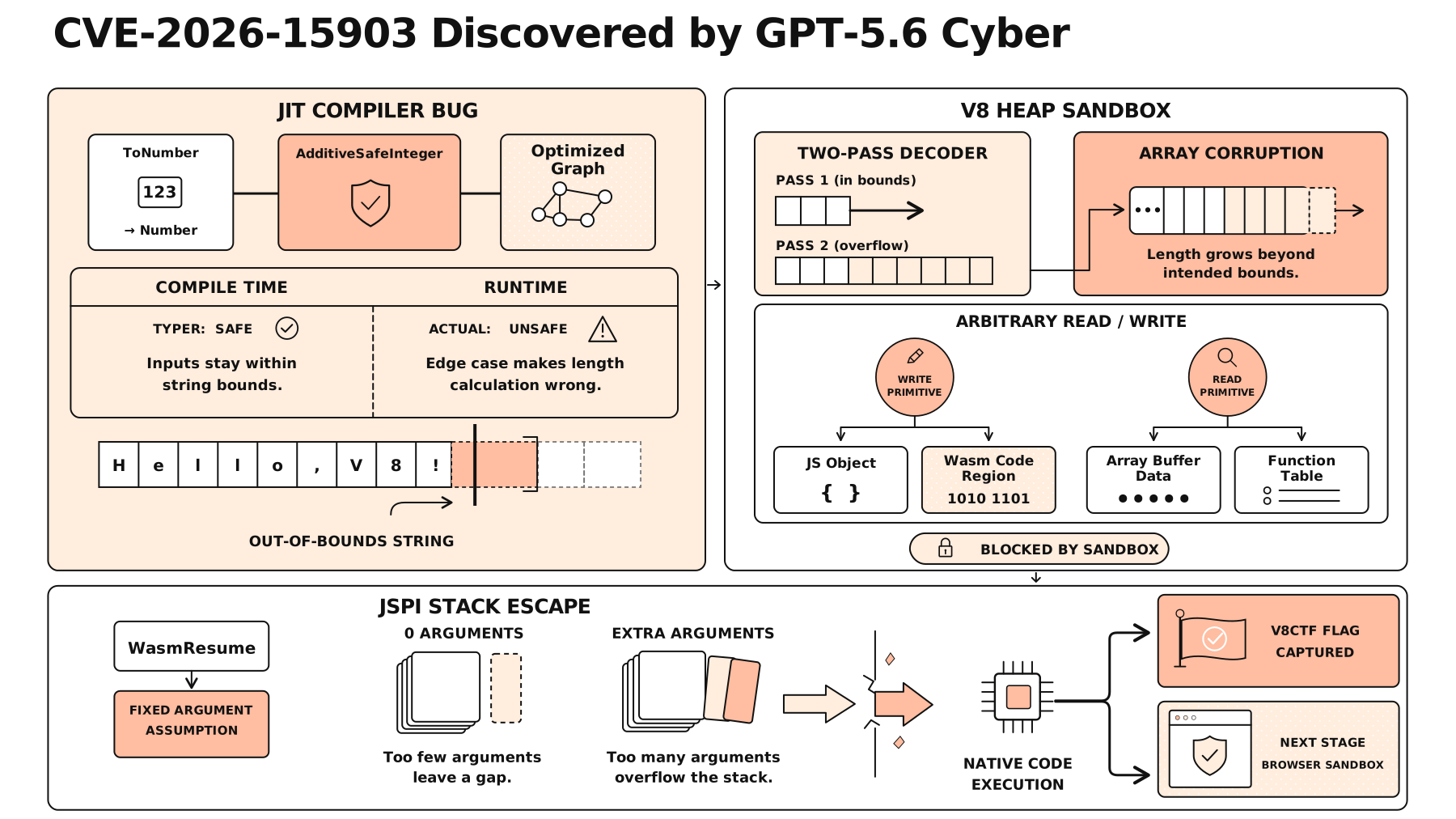
At the technological heart of the expanded Daybreak initiative is GPT-5.6-Cyber. Unlike general-purpose frontier models optimized for creative text generation, complex coding, or multimodal reasoning, GPT-5.6-Cyber has been custom-trained on vast corpuses of proprietary telemetry data, historical exploit databases, secure firmware repositories, and adversarial game-theoretic simulations.
Key technical dimensions of GPT-5.6-Cyber include:
- Autonomous Threat Hunting: Capable of parsing millions of lines of legacy codebase and real-time network packet captures simultaneously to isolate anomalous behavioral signatures long before traditional Security Information and Event Management (SIEM) tools trigger an alert.
- Zero-Shot Patch Generation: Upon identifying a previously unknown vulnerability, the model autonomously drafts, verifies, and stages secure patches across heterogeneous cloud-native environments without human intervention.
- Adversarial Red-Teaming Simulation: Enterprise security teams can deploy localized instances of GPT-5.6-Cyber to continuously assault their own cloud compute architecture, stress-testing resilience against adaptive, multi-vector synthetic threat actors.
- Regulatory Compliance Mapping: Built-in guardrails ensure that autonomous mitigation actions adhere strictly to international data privacy mandates, including GDPR, HIPAA, and emerging federal AI governance frameworks.
From an enterprise ROI perspective, the integration of GPT-5.6-Cyber promises to drastically reduce the mean-time-to-detect (MTTD) and mean-time-to-respond (MTTR), transforming cybersecurity from an expensive, reactive cost center into an agile, predictive operational asset.
Verified Data and Metrics Breakdown
A rigorous comparative analysis of the Daybreak expansion reveals the stark operational shifts in enterprise security posture before and after the August 10, 2026 release:
| Metric / Parameter | Legacy Security Posture (2024–2025) | Post-Daybreak Expansion (August 2026) |
|---|---|---|
| Primary Model Engine | General-purpose LLMs & Rule-based SIEM | GPT-5.6-Cyber (Specialized Frontier Agent) |
| Average Zero-Day Mitigation Time | 72 Hours to 14 Days | Sub-3 Minutes (Autonomous Patching) |
| False Positive Alert Rate | High (35% to 50% operational drag) | Negligible (<2% via advanced semantic verification) |
| Enterprise CISO Focus | Reactive triage and talent shortage mitigation | Strategic oversight of autonomous defense swarms |
Industry & Market Implications: Who Wins, Who Loses
The structural expansion of Daybreak and the rollout of GPT-5.6-Cyber send immediate shockwaves through global financial markets and the enterprise technology ecosystem.
The Winners
- Cloud Infrastructure Providers: Companies hosting heavy enterprise workloads—such as Microsoft Azure, Amazon Web Services, and Google Cloud—stand to capture massive recurring revenue streams as clients integrate high-compute autonomous defense layers.
- Next-Gen Cyber Pure-Plays: Innovative cybersecurity startups partnering with OpenAI's Daybreak framework will experience immediate valuation multiple expansions, attracting aggressive venture capital and private equity capital allocation.
- Enterprise Boardrooms: Organizations that rapidly adopt autonomous defense models will experience significantly reduced operational risk, lower cyber insurance premiums, and enhanced stakeholder trust.
The Loses
- Legacy Security Vendors: Traditional signature-based antivirus and outdated firewall manufacturers face an existential obsolescence crisis. Without rapid pivoting toward autonomous, LLM-driven architectures, their market share will rapidly erode.
- Manual SOC Outsourcers: Managed Security Service Providers (MSSPs) reliant on human-heavy Security Operations Centers (SOCs) running routine alert monitoring will struggle to compete with the speed and cost-efficiency of GPT-5.6-Cyber.
Frequently Asked Questions (People Also Ask)
Frequently Asked Questions
What is OpenAI's Daybreak initiative?
Daybreak is OpenAI’s flagship frontier-AI cybersecurity initiative. Originally established as a controlled research and testing sandbox, it has been expanded to distribute advanced defensive AI capabilities—culminating in the release of GPT-5.6-Cyber—to help enterprises counter rapid, automated cyber threats.
How does GPT-5.6-Cyber differ from standard language models?
Unlike general-purpose models, GPT-5.6-Cyber is specifically trained on adversarial simulations, telemetry data, and vulnerability intelligence. It is engineered to operate autonomously, executing zero-shot patch generation, real-time threat hunting, and automated red-teaming at machine speed.
Why is the cyber defense window described as narrowing?
The window refers to the time elapsed between the discovery of a vulnerability and its exploitation by threat actors. Due to the proliferation of agentic AI malware capable of automated exploitation, this window has shrunk from days and weeks down to minutes, necessitating automated, AI-driven defense mechanisms.
What are the financial and market implications for enterprises?
Enterprises must reallocate capital toward high-compute security infrastructure and AI governance. Organizations that fail to adopt automated defense systems face severe risks of catastrophic data breaches, regulatory penalties, and declining market valuations.
Future Outlook: What Comes Next
As the digital landscape absorbs the shock of OpenAI’s August 10, 2026 announcement, executive leadership and technology strategists must look ahead to the next phase of the cybersecurity arms race. Over the next 12 to 18 months, several critical milestones will dictate market winners and losers:
First, expect regulatory bodies across the European Union and the United States to introduce emergency compliance amendments governing the autonomy levels permitted in AI defense systems. While automated patching is celebrated for efficiency, the deployment of fully autonomous offensive countermeasures in corporate networks remains a legal and ethical grey area.
Second, the convergence of quantum computing threats and frontier-model cybersecurity will force a massive overhaul of enterprise encryption standards. Enterprises integrating GPT-5.6-Cyber today must simultaneously audit their cryptographic agility to prepare for post-quantum decryption threats.
Ultimately, the expansion of Daybreak proves that the future of security is no longer human-scale. As the cyber defense window narrows to vanishing points, survival in the global digital economy depends entirely on an organization's willingness to embrace machine-speed intelligence as its primary line of defense.