Executive Takeaways
- Historic Benchmark: SpaceX closed out October with its 700th successful Falcon 9 launch, cementing the vehicle's status as the most flown orbital-class rocket in history.
- Infrastructure Scalability: The unprecedented cadence demonstrates a mature, industrialized manufacturing and launch ecosystem that traditional aerospace primes struggle to match.
- Valuation & Capital Allocation: The rapid flight rate directly underpins SpaceX’s dominant market liquidity, aggressive enterprise ROI, and ongoing secondary market valuation multiples.
- Regulatory & Market Disruptions: Competitors face severe pressure regarding payload delivery costs, forcing a systemic rethinking of risk mitigation and satellite constellation deployment strategies.
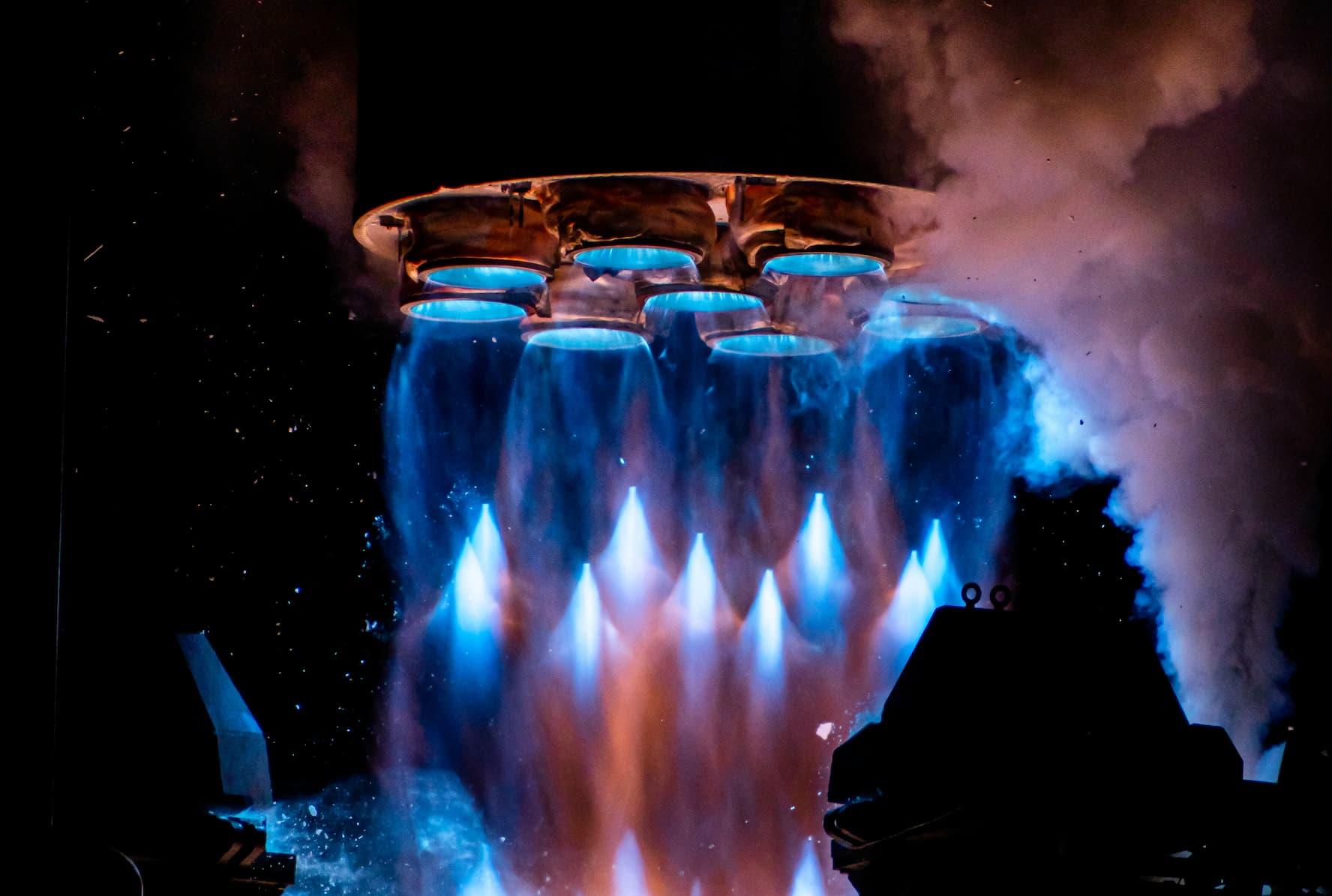
WASHINGTON & HAWTHORNE — In an industry historically defined by multi-year development delays, catastrophic engineering failures, and bloated cost-plus budgeting, SpaceX has achieved a benchmark that once sounded like speculative fiction. By closing out October with its 700th successful Falcon 9 mission, Elon Musk’s aerospace juggernaut has not merely set a launch record; it has fundamentally rewritten the operational calculus of the global space economy.
For institutional investors, defense strategists, and telecommunications conglomerates alike, this milestone represents a watershed moment. What began in June 2010 as an experimental medium-lift rocket launch from Cape Canaveral has evolved into an industrial assembly line for orbital access. As global demand for high-throughput bandwidth, Earth observation, and national security payloads intensifies, the Falcon 9 has transitioned from an innovative disruptor into the indispensable backbone of modern orbital infrastructure.
The Catalytic Ascent: Tracing the Path to 700
Test Our Free AI & Tech Utilities Suite
Calculate LLM API token costs, analyze article dwell-time, or simulate tech DCA returns.
To understand the gravity of the 700th launch, one must examine the logarithmic trajectory of SpaceX’s flight cadence. The first 100 launches took more than a decade to achieve, burdened by the iterative engineering required to master propulsive landing, stage separation, and fairing recovery. However, once the company unlocked repeatable booster reusability, the operational velocity shifted dramatically.
During the past twenty-four months, SpaceX has routinely executed launches at a cadence of one every few days, driven primarily by the rapid deployment of its proprietary Starlink broadband constellation alongside lucrative commercial and government contracts. This manufacturing and operational throughput has created a formidable economic moat. While legacy aerospace contractors operating under traditional cost-plus models struggle with supply chain bottlenecks and rigid regulatory compliance frameworks, SpaceX has optimized its cloud compute architecture, telemetry systems, and manufacturing floor for maximum capital efficiency.
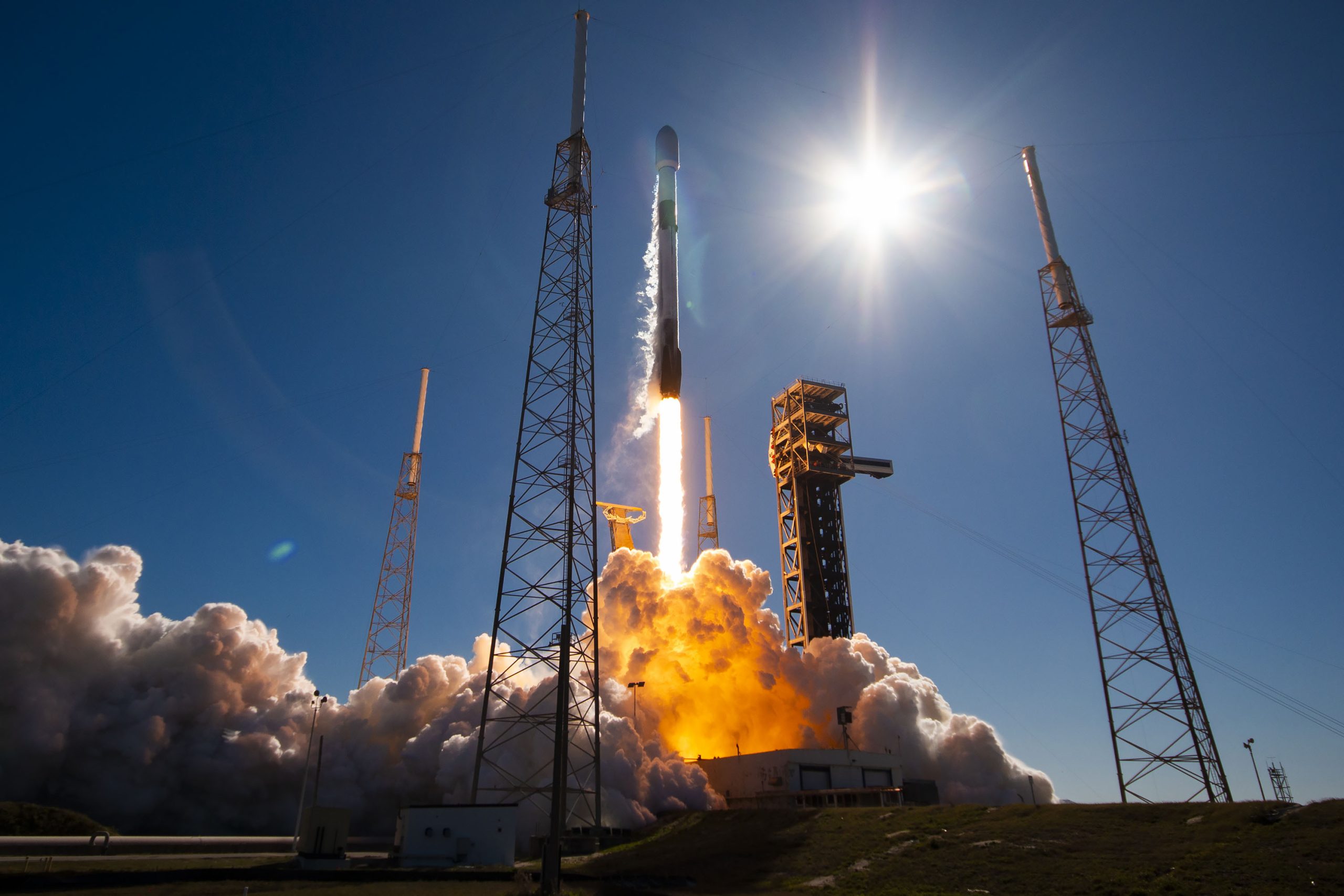
The October closeout mission was routine in execution—a textbook liftoff carrying yet another batch of communications satellites into low-Earth orbit (LEO)—yet its symbolic weight cannot be overstated. It serves as empirical validation of an enterprise model that prioritizes rapid iteration, vertical integration, and rigorous risk mitigation through actual flight heritage rather than protracted ground-based simulation.
Verified Data & Metrics Breakdown
| Operational Metric | Falcon 9 Historical Benchmark | Industry Average / Competitors |
|---|---|---|
| Total Successful Launches | 700 (As of October closeout) | Varies widely (Typically under 100 for legacy active fleets) |
| Booster Reusability Record | Up to 20+ flights per individual first-stage booster | Primarily expendable or single-reuse initiatives |
| Average Turnaround Time | Under 21 days per booster (optimized pads) | Months to years between comparable class flights |
| Payload Cost to LEO (Est.) | ~$2,500 – $3,000 per kilogram | $10,000 – $20,000+ per kilogram |
Industry & Market Implications: Winners, Losers, and Economic Shifts
The implications of the 700-launch milestone extend far beyond engineering circles, rippling through global financial markets and geopolitical strategy rooms.
Who Wins: Commercial Operators and Institutional Investors
Commercial satellite operators—ranging from direct-to-cell pioneers to Earth-imaging startups—now enjoy unprecedented market liquidity regarding launch availability. The predictability of the Falcon 9 flight manifest allows enterprise risk managers to secure precise orbital insertion windows, driving down insurance premiums and accelerating time-to-market for revenue-generating assets. Furthermore, private equity and venture capital firms backing aerospace ventures view SpaceX’s reliability as a stabilizing force, de-risking the broader space tech sector.
Who Loses: Legacy Launch Providers and State-Funded Programs
Traditional aerospace primes in the United States, Europe, and Asia face an existential squeeze. With unit economics that struggle to compete against a rocket flying with a reused first-stage booster, legacy providers are being forced to aggressively restructure. European space initiatives, in particular, have watched commercial market share erode while struggling to bridge the gap between their own next-generation vehicle debuts and SpaceX’s relentless operational cadence.
Geopolitical and Defense Realities
For the U.S. Department of Defense and the Intelligence Community, the Falcon 9 has become a critical national security asset. The ability to rapidly reconstitute damaged or degraded satellite constellations in low-Earth orbit provides a strategic asymmetry that adversaries cannot easily replicate. National security space policy is increasingly anchored around the assumption of reliable, high-frequency commercial launch capacity.
Frequently Asked Questions (People Also Ask)
What makes the Falcon 9 rocket uniquely cost-effective compared to traditional rockets?
The primary driver of Falcon 9’s cost efficiency is its pioneering propulsive first-stage reusability. By landing and refurbishing the most expensive component of the rocket—the booster engines, avionics, and structural tanks—SpaceX avoids the multi-million-dollar manufacturing cost of building a brand-new vehicle for every single flight. This capability, combined with high-volume manufacturing and streamlined pad operations, drives down the cost per kilogram to low-Earth orbit.
How many times can a single Falcon 9 booster be reused?
SpaceX has successfully flown individual first-stage boosters 20 times or more. Through rigorous post-flight telemetry analysis, metallurgical inspections, and targeted component replacements, engineers have progressively expanded the certified lifespan of the fleet, setting new standards for aerospace durability.
What role does the Starlink constellation play in the Falcon 9 launch frequency?
Starlink serves as the primary internal anchor tenant for the Falcon 9 manifest. A significant percentage of the 700 launches have been dedicated to deploying thousands of internet-beaming satellites into low-Earth orbit. This internal demand allows SpaceX to maintain a high operational tempo, keeping launch crews sharp, manufacturing lines active, and unit costs compressed while simultaneously accommodating external commercial and government payloads.
How does the 700th milestone impact SpaceX’s broader valuation and market standing?
Reaching 700 successful flights provides tangible proof of infrastructural scalability and operational maturity, which heavily supports private market valuation multiples. For institutional investors, the unmatched safety and success record translates directly into predictable revenue streams, mitigated execution risk, and a near-monopolistic command of the heavy commercial launch market.
Future Outlook: What Comes Next
Even as the 700th Falcon 9 mission enters the history books, leadership at SpaceX is already pivoting toward the next evolutionary phase of global logistics. The company’s primary capital allocation and engineering bandwidth are shifting decisively toward Starship—the fully reusable, super-heavy-lift transportation system designed to carry payloads and human crews to the Moon, Mars, and beyond.
However, industry analysts note that the Falcon 9 will not be retired prematurely. Its revenue-generating engine remains vital for funding the capital-intensive development of Starship. Over the next 24 to 36 months, key milestones to watch include the continued optimization of fairing recoveries, the scaling of direct-to-cell Starlink capabilities, and the gradual handover of heavy government obligations to the Starship architecture.
Ultimately, the 700th Falcon 9 launch is not merely a celebration of past achievements; it is a clear signal of an industrial paradigm shift. In the modern space economy, frequency breeds reliability, reliability commands market share, and operational velocity dictates who controls the ultimate high ground.