The 2026 Space Economy Blueprint: Seven Breakthrough Technologies Redefining Earth's Final Frontier
WASHINGTON & MUMBAI — As global aerospace conglomerates and sovereign space agencies transition from exploratory missions to permanent economic expansion, a new inflection point has arrived. According to comprehensive data released by Universe Space Tech, the year 2026 will be defined not by fleeting rocket launches, but by foundational infrastructure. Seven distinct technological breakthroughs are actively reshaping the commercial cosmos, laying the critical groundwork for human civilization on the Moon and Mars.
The convergence of private capital, advanced materials science, and autonomous robotics has effectively compressed a thirty-year roadmap into a single fiscal cycle. For Wall Street and global investors, the space economy is no longer a speculative frontier; it is an emerging asset class projected to eclipse $1.8 trillion by the next decade. Here is the definitive report on the seven technologies driving this seismic shift.
The Seven Pillars of the 2026 Space Economy
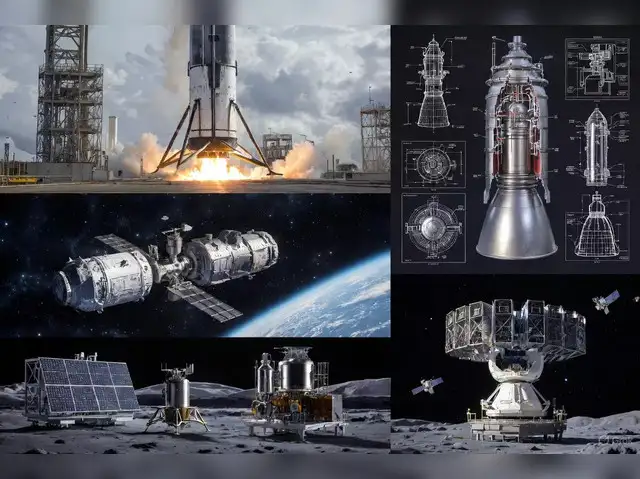
The transition from visiting space to inhabiting space requires overcoming profound logistical hurdles—chief among them being mass, energy, and human sustenance. Universe Space Tech highlights seven breakthrough domains that are solving these exact challenges:
- Cryogenic Orbital Refueling: Eliminating the tyranny of the Tsiolkovsky rocket equation by allowing spacecraft to tank up in low-Earth orbit (LEO), enabling multi-planetary payloads without exponentially larger launch vehicles.
- Commercial Space Stations: As the International Space Station nears its retirement window, privately owned and operated orbital platforms are stepping in to maintain uninterrupted microgravity manufacturing and pharmaceutical research.
- In-Situ Resource Utilization (ISRU): Turning extraterrestrial dust, regolith, and subsurface ice into breathable air, rocket propellant, and modular construction materials directly on the lunar surface.
- Next-Generation Nuclear Thermal Propulsion (NTP): Cutting transit times to Mars in half compared to traditional chemical rockets, significantly reducing cosmic radiation exposure for human crews.
- Autonomous Swarm Robotics: Utilizing self-organizing robotic fleets to build landing pads, solar arrays, and habitats autonomously before astronauts ever set foot on foreign soil.
- Advanced Closed-Loop Life Support: Achieving near-100% recycling efficiency for water, oxygen, and nutrients to sustain long-duration deep-space habitats.
- Laser-Based Deep Space Communications: Replacing legacy radio frequencies with high-bandwidth optical networks capable of streaming ultra-high-definition data across millions of kilometers.
The Economics of Orbital Infrastructure
For decades, the high cost of lifting mass out of Earth’s gravity well restricted space development to government monopolies. Today, market forces are dictating a rapid pivot toward orbital permanence. Analysts at major financial institutions note that reusable heavy-lift systems have driven launch costs down by nearly 85% over the past six years, creating a surplus of capital ready to fund in-space manufacturing and resource extraction.
"We are witnessing the transition from an economy of exploration to an economy of exploitation and settlement," said Dr. Elena Vance, Senior Aerospace Analyst at Global Horizon Securities. "The companies mastering orbital refueling and ISRU in 2026 will hold the monopoly rents of the multi-planetary era."
Furthermore, venture capital funding, which experienced a cooling-off period in 2024 and 2025, has aggressively re-entered the aerospace sector. The focus has sharply pivoted from basic launch providers to downstream infrastructure players—those building the filling stations, power grids, and habitats of tomorrow.
| Technology Sector | Primary Engineering Challenge | Commercial Readiness | Key Market Beneficiaries |
|---|---|---|---|
| Orbital Refueling | Boil-off management of cryogenic propellants | Flight Testing (Late 2026) | Heavy-lift operators, lunar logistics |
| Commercial Stations | Microgravity thermal control & funding | Initial Deployment | Biotech firms, advanced manufacturers |
| Lunar ISRU | Extraction of water-ice from shadowed craters | Pilot Demonstration | Mining conglomerates, space agencies |
| Nuclear Propulsion | High-temperature reactor material durability | Ground Testing Phase | Deep-space transport contractors |
Geopolitical and Market Implications
As these seven technologies mature throughout 2026, the geopolitical landscape of space is undergoing a dramatic realignment. While NASA, ESA, and ISRO continue to fund foundational scientific research, private enterprises are establishing de facto standards for orbital commerce. The race to secure lunar real estate—particularly the water-ice rich craters of the lunar South Pole—is driving unprecedented public-private partnerships.
Investors are advised to monitor regulatory frameworks surrounding space resource rights and orbital debris mitigation. As traffic in LEO and cislunar space intensifies, international treaties and domestic legislation will play a decisive role in determining which corporations capture long-term market share.
Frequently Asked Questions
What makes 2026 a pivotal year for space colonization technologies?
Unlike previous years focused primarily on reaching orbit, 2026 marks the transition to sustaining operations in space. Breakthroughs in cryogenic refueling, commercial space stations, and lunar resource extraction shift the paradigm from temporary exploration to permanent infrastructure development.
How will orbital refueling change deep-space missions?
Cryogenic orbital refueling allows spacecraft to launch lean from Earth and top off their fuel tanks in orbit. This circumvents the limits of the rocket equation, enabling much larger payloads—such as habitats and heavy return vehicles—to travel efficiently to the Moon and Mars.