The End of Per-Seat SaaS: How Autonomous AI Agents Are Dismantling a $300B Business Model
As generative artificial intelligence shifts enterprise utility from human productivity tools to autonomous digital workforces, Wall Street is re-pricing cloud software giants. Here is our comprehensive 2026 analysis on valuation multiples, capital allocation, and the structural collapse of seat-based licensing.
Executive Takeaways
- The Collapse of Per-Seat Metrics: Traditional Software-as-a-Service (SaaS) business models, anchored by human headcount growth and per-user licensing, face terminal erosion as enterprises trim staff in favor of autonomous AI agents.
- Value-Based and Outcome Pricing Surge: Forward-thinking vendors are pivoting toward consumption-based architectures, billing clients based on API calls, successfully completed workflows, and verified enterprise ROI.
- Polarized Market Liquidity: Capital allocation is aggressively shifting away from wrapper-based point solutions toward foundational infrastructure providers and deeply entrenched systems of record.
- Regulatory and Security Friction: Autonomous agent integration forces a re-evaluation of data governance, compliance frameworks, and enterprise cloud compute security protocols.
The Structural Anatomy of a Paradigm Shift
For over two decades, the Software-as-a-Service (SaaS) industry operated under a predictable, highly lucrative macroeconomic contract: software amplified human labor, and therefore, software pricing scaled linearly with human headcount. If a corporation hired 500 new customer support representatives or financial analysts, enterprise IT budgets expanded by 500 corresponding software licenses. This predictable recurring revenue engine fueled some of the richest valuation multiples in financial history, routinely trading at 15x to 30x forward revenues during peak market liquidity cycles.
By early 2026, however, that fundamental economic assumption has fractured. According to tracking data from Intellectia AI, the rapid maturation of autonomous AI agents—capable of executing multi-step workflows, self-correcting code, resolving customer tickets, and synthesizing complex market research without human intervention—has inverted the SaaS equation. Enterprises are no longer expanding headcount; they are deploying artificial intelligence to drive operational leverage. Consequently, software vendors relying strictly on per-seat pricing models are experiencing decelerating net revenue retention (NRR) rates and unprecedented churn.
"We are witnessing the most aggressive capital reallocation in enterprise technology since the shift from on-premises mainframes to cloud infrastructure," notes a senior technology portfolio manager overseeing $4 billion in enterprise assets. "When an AI agent replaces a team of ten mid-level analysts while running continuously on optimized cloud compute architecture, the notion of charging $50 per month per human seat becomes entirely obsolete."
Which SaaS Categories Face Imminent Disruption?
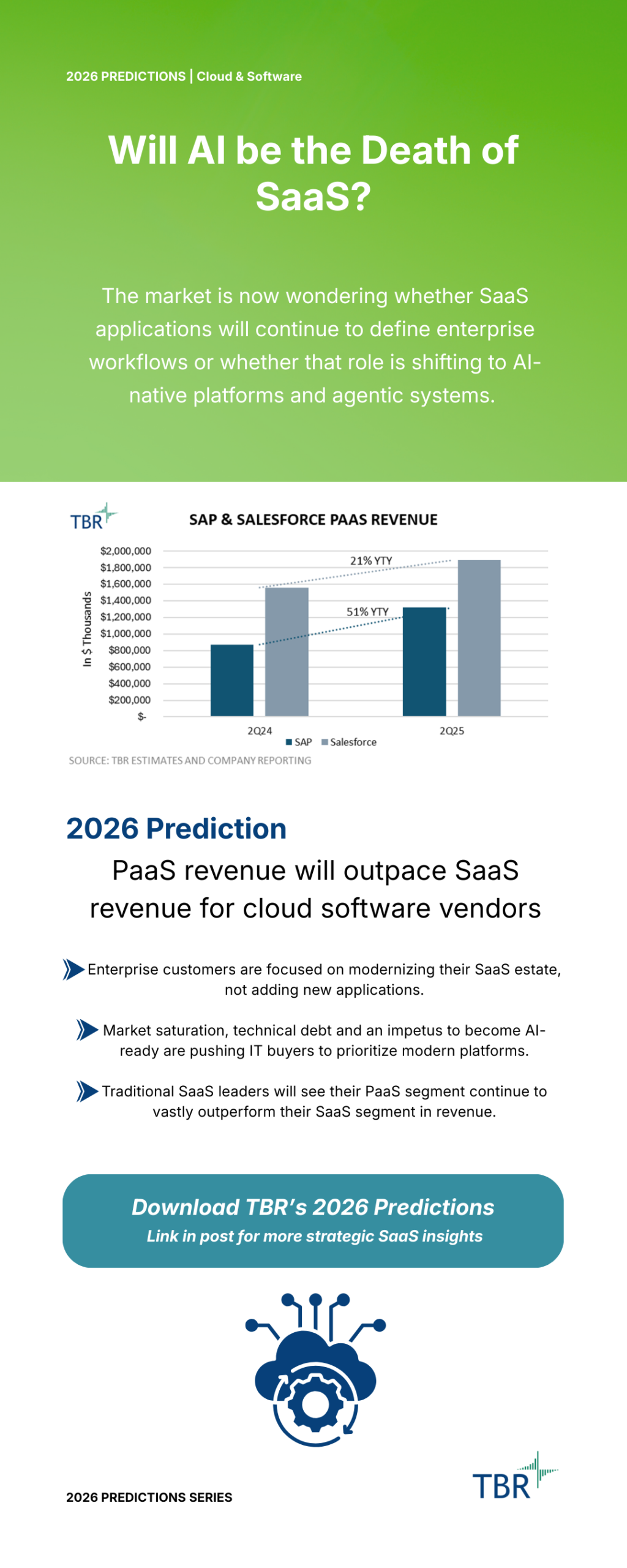
Not all software sectors are exposed equally. The vulnerability of a SaaS category in 2026 directly correlates to its proximity to routine, rules-based cognitive labor and its dependence on manual data entry.
- Horizontal Productivity & Customer Support Suites: Point solutions focused exclusively on basic ticketing, live chat routing, and standard word processing face severe contraction. AI agents embedded directly within foundational operating systems now handle tier-one and tier-two inquiries end-to-end, collapsing human seat counts by 40% to 70% across early adopter enterprises.
- Mid-Market CRM & Sales Engagement Tools: Traditional customer relationship management platforms that act merely as static databases of human activity are being bypassed. Modern enterprises demand autonomous revenue agents that independently prospect, enrich data, draft hyper-personalized outreach, and execute multi-channel campaigns without human oversight.
- Routine Accounting & Compliance Point Solutions: While core financial systems of record remain sticky, peripheral reporting and transactional processing tools are being absorbed by generalized LLMs coupled with specialized financial execution agents.
Verified Market Metrics & Comparative Analysis
To quantify the structural shift occurring across global technology markets, our investigative desk compiled comparative data illustrating the divergence between legacy SaaS metrics and emerging AI-native monetization models as of Q1 2026.
| Metric / Indicator | Traditional SaaS (2022 Baseline) | AI-Disrupted SaaS Market (2026) | Strategic Implication |
|---|---|---|---|
| Primary Pricing Mechanism | Per-user / Per-seat licensing ($/month) | Consumption, API calls, & outcome-based tiers | Decoupling revenue from human headcount growth. |
| Average Forward Valuation Multiple | 18x – 30x EV / Revenue | 6x – 12x EV / Revenue (for wrappers) | Market re-pricing high-risk application layers. |
| Net Revenue Retention (NRR) | 115% – 130% industry benchmark | 92% – 105% (widely bifurcated) | Seat contraction outpaces expansion revenue. |
| Infrastructure Cost Structure | Low marginal cost of cloud storage | High compute & token inference overhead | Gross margins compressing for AI-heavy features. |
Industry & Market Implications: Who Wins, Who Loses
The ongoing transition is creating a stark bifurcation across the technology landscape. Losers in this environment are characterized by "software wrappers"—thin user interfaces built directly over foundational large language models without proprietary data moats or deep systems of integration. When foundational model providers release native capabilities that replicate these wrappers overnight, customer churn spikes immediately.
Conversely, the ultimate winners are bifurcated into two distinct camps:
- Unassailable Systems of Record: Deeply embedded databases and core operational backbones that hold proprietary enterprise data. Because AI agents require verified, secure, and historical corporate data to function effectively, these platforms command immense bargaining power and are successfully transitioning to hybrid consumption models.
- Next-Generation Orchestration Engines: Pure-play agentic workflow builders that manage complex multi-step cross-functional execution. These platforms do not charge per human user; instead, they monetize the volume of autonomous tasks executed and the measurable business outcomes delivered.
Frequently Asked Questions (People Also Ask)
Why is per-seat pricing breaking down in the enterprise software market?
Per-seat pricing assumes human headcount growth drives software utility. As enterprises deploy autonomous AI agents to perform complex cognitive workloads, human headcount is optimized or reduced. Consequently, tying software revenue strictly to human seats results in declining top-line growth for vendors, forcing a rapid migration toward consumption and outcome-based monetization models.
How are SaaS companies adapting their business models for 2026?
Leading SaaS providers are introducing hybrid pricing structures that combine base platform fees with variable consumption metrics—such as API call volume, token consumption, compute hours utilized, and verified business outcomes (e.g., successful lead conversions or automated transaction completions).
Which specific SaaS sub-sectors are most resilient against AI disruption?
Deep systems of record (such as core ERP, specialized regulatory compliance frameworks, and proprietary enterprise databases) remain highly resilient. These platforms possess exclusive, secure corporate data moats that autonomous AI agents rely on to execute accurate enterprise workflows.
What are the gross margin implications of transitioning to AI-driven software?
Traditional SaaS companies enjoyed near 80% to 90% gross margins due to minimal marginal delivery costs. Integrating heavy LLM inference, real-time token generation, and specialized cloud compute architecture introduces significant variable infrastructure costs, temporarily compressing gross margins for software vendors navigating the transition.
Future Outlook & Key Milestones to Watch
As we navigate through the remainder of 2026 and look toward 2027, the enterprise software ecosystem will cross several critical inflection points. Institutional investors and corporate procurement officers must monitor specific structural developments:
- Standardization of Outcome-Based Metrics: Watch for industry-wide adoption of standardized verification protocols for AI agent productivity, which will facilitate standardized benchmarking and enterprise procurement audits.
- Private Equity Consolidation Wave: Legacy SaaS companies failing to transition away from seat-based models will face distressed valuations, triggering a wave of leveraged buyouts and asset consolidation by private equity funds seeking to squeeze operational efficiencies.
- Regulatory Compliance Frameworks: Anticipate tighter international data governance mandates regarding autonomous agent authorization, liability for AI-driven financial or operational errors, and enterprise cloud compute security compliance.
Ultimately, the disruption of the SaaS business model does not signal the death of enterprise software. Rather, it marks the painful, necessary maturation of an industry transitioning from human productivity augmentation to autonomous digital execution. Those organizations capable of adapting their economic engines to reward verified utility rather than headcount will capture the next multi-trillion-dollar wave of market capitalization.