Executive Takeaways
- Structural Drivers Over Panic: Groundbreaking empirical analysis from economic think-tank Bruegel indicates that the worldwide surge in long-term sovereign bond yields is propelled by a structural shift in real investment demand and elevated debt supply, rather than an institutional breakdown in monetary or fiscal credibility.
- The Resurgence of the Term Premium: After more than a decade of suppression via Quantitative Easing (QE), the term premium—the excess compensation investors demand for holding duration risk—has aggressively rebounded into positive territory across major sovereign benchmarks.
- Capital Allocation Repricing: The structural rise in the global cost of capital is forcing an aggressive recalibration of corporate valuations, raising hurdle rates for private equity, and compressing valuation multiples for long-duration technology and infrastructure assets.
- Sovereign Supply vs. Balance Sheet Runoff: A historically unprecedented collision between ballooning sovereign deficit financing and simultaneous quantitative tightening (QT) by the Federal Reserve and the European Central Bank has permanently altered supply-demand liquidity dynamics.
The Anatomy of a Global Paradigm Shift
For nearly fifteen years following the 2008 Global Financial Crisis, global capital markets operated under the hypnotic influence of zero-bound monetary policy, negative real yields, and aggressive central bank asset purchase programs. Capital was essentially free; duration risk was eradicated by administrative fiat; and the sovereign yield curve was suppressed by policymakers desperate to ward off secular stagnation.
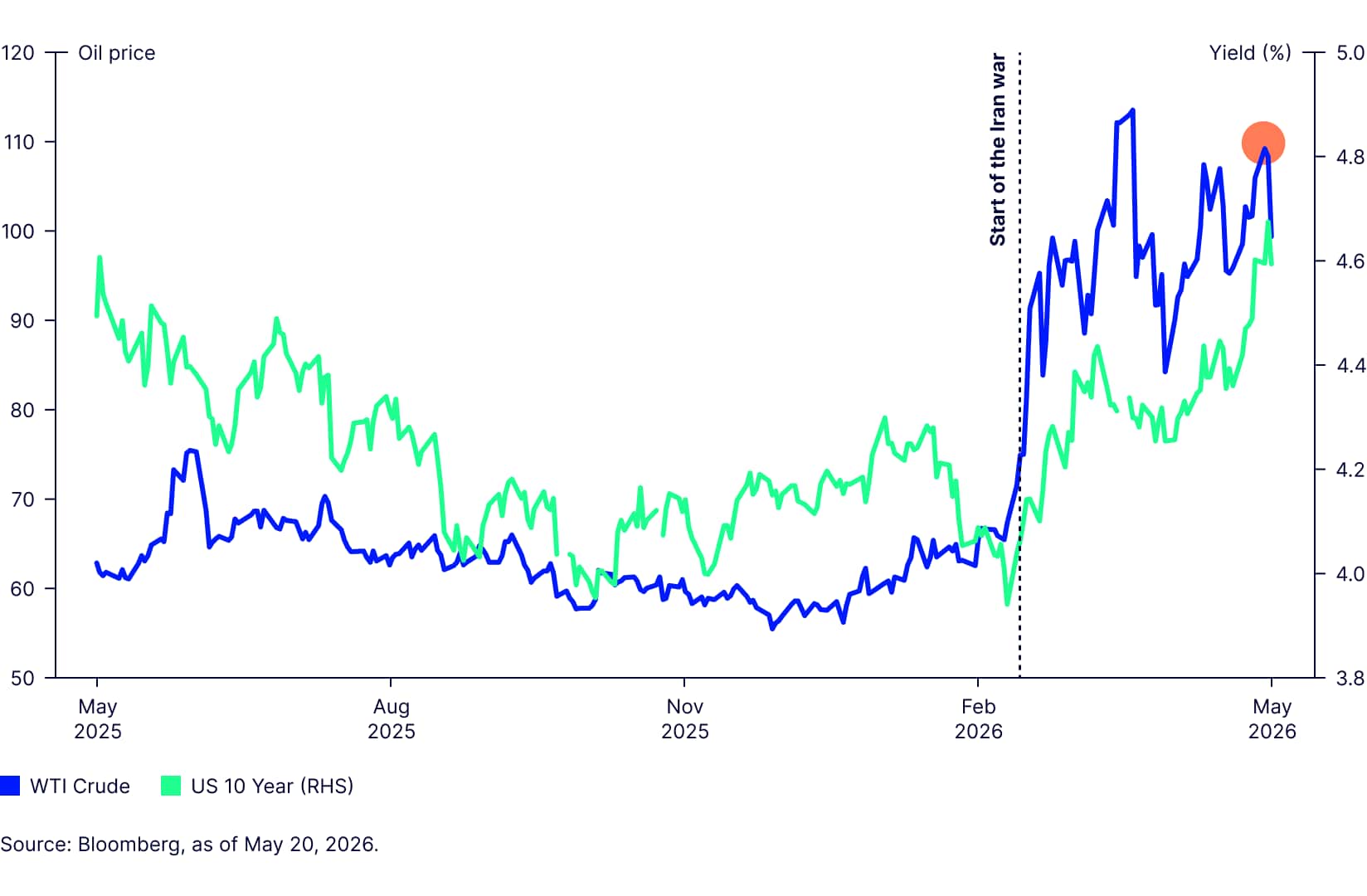
That macroeconomic paradigm has definitively collapsed. Over the past twenty-four months, yields on benchmark 10-year and 30-year sovereign bonds—led by United States Treasuries, German Bunds, UK Gilts, and Japanese Government Bonds (JGBs)—have surged to levels not sustained since the pre-crisis era. The benchmark U.S. 10-year Treasury yield, which spent years pinned beneath the 2.0% threshold, has structurally re-anchored north of 4.25%, with periodic ascents testing 5.0%.
Wall Street bears and geopolitical pessimists immediately attributed this tectonic repricing to existential threats: a collapse of international confidence in the U.S. dollar, terminal fiscal degradation in Washington, and the specter of an uncontrolled sovereign default cycle. However, exhaustive empirical research published by European economic think tank Bruegel presents a far more complex—and fundamentally different—reality.
The global ascent in long-term yields is not a vote of no-confidence in monetary or fiscal institutions. Instead, it reflects an economy transitioning from an era of global savings glut to an era of capital scarcity, catalyzed by massive capital expenditure requirements, surging private-sector investment appetites, expanding sovereign borrowing, and the natural normalization of market-driven term premiums.
The Four Engines Driving Sovereign Bond Yields Higher
1. Structural Investment Demand and the Global Capex Supercycle
The foremost driver isolated by macroeconomic researchers is a pronounced upward shift in structural investment demand. The world economy has entered an exceptionally capital-intensive phase characterized by three concurrent industrial transformations:
- The Enterprise AI and Cloud Compute Infrastructure Race: Hyperscalers and global enterprises are pouring hundreds of billions of dollars annually into data center capacity, advanced semiconductor procurement, and specialized power grid installations to sustain generative artificial intelligence workloads. This corporate demand for capital raises real natural rates of interest ($r^*$).
- The Energy Transition and Decarbonization: Re-engineering the global industrial base away from hydrocarbons toward electrification and renewables requires unprecedented private and public capital outlays, consistently absorbing liquidity that previously sought safe-haven fixed-income assets.
- Supply Chain Reshoring and Geopolitical Re-Armament: The retreat from hyper-globalization has forced multinational corporations to build redundant supply networks, while sovereign governments—particularly within NATO and the Indo-Pacific—are deploying massive capex to rebuild defense-industrial capacity.
When aggregate demand for investment capital structurally increases faster than aggregate domestic savings, the price of long-term capital—the real long-term interest rate—must rise to clear the market. The Bruegel study demonstrates that higher yields are a symptom of economic vitality and investment appetite rather than recessionary stagflation.
2. The Return of the Term Premium
To understand the mechanics of the yield curve, analysts dissect the nominal yield into two components: the expected path of short-term policy rates set by central banks, and the term premium. The term premium reflects the additional yield demanded by institutional allocators to lock up capital over 10, 20, or 30 years, shielding them against unexpected inflation spikes, fiscal instability, and interest rate volatility.
For more than a decade, central bank asset portfolios suppressed this premium into deeply negative territory. The Federal Reserve's balance sheet expansion, combined with the ECB's Asset Purchase Programme (APP), removed trillions of dollars in duration risk from the open market. Today, with the Federal Reserve, the ECB, and the Bank of England actively executing Quantitative Tightening (QT)—letting bonds roll off their balance sheets without reinvestment—private market participants must absorb duration once more. As calculated via the Adrian-Crump-Moench (ACM) model, the 10-year term premium has completed a historic journey from -100 basis points back into sustained positive territory.
3. The Supply-Demand Mismatch in Sovereign Paper
Even as central banks step away as price-insensitive buyers, sovereign debt issuance has expanded at an extraordinary pace. The United States Treasury has dramatically ramped up its gross coupon issuance schedules to finance federal fiscal deficits running near 6% to 7% of Gross Domestic Product (GDP)—levels historically seen only during severe economic contractions or major armed conflicts.
Concurrently, institutional buyers who historically absorbed this issuance face unique domestic constraints. Commercial banks, saddled with unrealized paper losses on held-to-maturity (HTM) portfolios following the 2023 regional banking turbulence, have minimized Treasury accumulation. Foreign sovereign reserve managers have diversified reserves into non-dollar assets or alternate liquid instruments. With price-sensitive private asset managers, hedge funds, and foreign institutional investors stepping into the void, sovereign issuers must offer substantially higher yields to clear the sheer volume of Treasury, Bund, and Gilt auctions.
4. Rising Real Neutral Rates ($r^*$)
For years, central bankers anchored monetary policy to the assumption that the structural neutral real rate of interest—the hypothetical equilibrium rate at which policy is neither restrictive nor stimulative—had plummeted toward zero due to aging demographics, high inequality, and weak productivity growth. Today, structural shifts in economic productivity, demographic workforce participation, and sustained fiscal deficits suggest that the neutral rate has shifted upward by 75 to 125 basis points across the advanced economies, permanently lifting the terminal floor for long-term borrowing costs.
Data Matrix: Global Benchmark Yields & Macro Indicators
The transition toward structurally higher long-term yields is not isolated to the United States; it is a synchronized global phenomenon across Tier-1 financial jurisdictions.
| Sovereign Benchmark (10-Yr) | Cycle Low Yield (2020–2021) | Current Yield Range (2025–2026) | Primary Repricing Catalyst | Estimated 10-Yr Term Premium Shift |
|---|---|---|---|---|
| U.S. 10-Year Treasury | 0.51% | 4.20% – 4.75% | Massive Treasury supply, robust GDP growth, QT runoff | +185 bps (ACM Model) |
| German 10-Year Bund | -0.85% | 2.35% – 2.80% | Deflation exit, ECB balance sheet contraction, industrial capex | +210 bps |
| UK 10-Year Gilt | 0.08% | 4.10% – 4.60% | Persistent services inflation, structural fiscal borrowing | +195 bps |
| Japan 10-Year JGB | -0.15% | 1.10% – 1.55% | Abandonment of Yield Curve Control (YCC), wage inflation | +130 bps |
Institutional Debunking: Why Fiscal Breakdown Is Not the Lead Driver
One of the most consequential findings delivered by Bruegel is the systematic dismantling of the narrative claiming that long-term rates are surging because investors anticipate an imminent collapse in United States or European governance institutions.
If long-term yields were rising due to fears of sovereign insolvency, credit degradation, or direct debt monetization, the repricing would be accompanied by specific market anomalies:
- Sovereign Credit Default Swaps (CDS): Five-year sovereign CDS spreads for the United States, Germany, and the United Kingdom would trade at elevated, distressed levels. In reality, credit default metrics for G7 sovereigns remain exceptionally modest, consistent with pristine credit health.
- Inflation Breakevens: 10-year breakeven inflation rates (derived from the differential between nominal yields and inflation-protected securities, or TIPS) would explode toward unanchored double digits. Instead, 5-year and 10-year forward inflation expectations remain anchored within the 2.1% to 2.4% corridor, confirming that investors retain deep confidence in the Federal Reserve and the ECB's ability to police consumer prices.
- Foreign Exchange Capitulation: A loss of institutional confidence in U.S. creditworthiness would trigger a catastrophic sell-off in the U.S. Dollar Index (DXY). Instead, the greenback has traded at persistent multi-year highs against major trading pairs, affirming that the surge in Treasuries is fundamentally driven by high real returns, domestic economic resilience, and genuine investment demand.
Enterprise and Market Implications: The Capital Allocation Reset
The structural transition toward sustained 4%+ long-term interest rates carries direct operational and financial consequences across the enterprise ecosystem, private markets, and corporate treasuries.
Valuation Multiples and Tech Infrastructure Scalability
The discount rate applied to corporate cash flows is intimately bound to the 10-year sovereign yield. In an era of sustained higher long rates, corporate valuation multiples—specifically enterprise value-to-EBITDA (EV/EBITDA) and price-to-earnings (P/E)—must compress to account for a higher Weighted Average Cost of Capital (WACC). This reality directly impacts early-stage technology companies and deep-tech platforms whose revenues reside far out on the duration horizon.
Conversely, enterprise software providers and infrastructure platforms with established balance-sheet cash reserves, high operating margins, and clear pathways to enterprise ROI are heavily rewarded. Corporate capital allocation now prioritizes projects delivering immediate free cash flow generation over speculative market-share expansion.
The Private Equity and Real Estate Refinancing Wall
The sectors most vulnerable to structurally elevated yields are commercial real estate (CRE) and private equity portfolios constructed on excessive leverage during the zero-interest-rate regime. Trillions of dollars in corporate debt issued at sub-4% coupons between 2017 and 2021 face an imminent refinancing cliff across 2025, 2026, and 2027. Refinancing this leverage at prevailing corporate spreads of 6.5% to 8.5% significantly erodes interest coverage ratios, requiring sponsors to inject fresh equity, accept dilutive recapitalizations, or surrender impaired assets to private credit funds.
Corporate Treasury Management and Liquidity
For Chief Financial Officers and Enterprise Treasurers, cash management has shifted from a passive administrative chore to an active profit center. Organizations holding substantial liquid cash reserves are extracting 4.5% to 5.25% yields on short-term paper and sovereign collateral without accepting credit risk, providing them with strategic M&A war chests while debt-laden competitors face rising debt-servicing burdens.
Frequently Asked Questions (People Also Ask)
What is driving the global rise in long-term interest rates?
The global rise in long-term sovereign bond yields is primarily driven by three intertwined structural factors: robust real investment demand linked to global energy, defense, and AI infrastructure cycles; an enormous supply of sovereign debt issued to fund national budget deficits; and the restoration of a positive term premium as central banks wind down their asset balance sheets via Quantitative Tightening (QT).
Is the rise in long-term yields a sign of an impending sovereign debt crisis?
No. Robust empirical analysis—including extensive research by Bruegel—indicates that the yield increase does not stem from a breakdown of trust in central banks or sovereign credit quality. Long-term inflation expectations remain anchored near 2%, and sovereign credit default swap (CDS) spreads show no systemic distress. Rather than reflecting insolvency fears, rising rates reflect stronger real economic performance, high demand for investment capital, and market-clearing equilibrium dynamics.
What is the "term premium," and why does it matter to everyday borrowers?
The term premium is the excess return investors demand for taking on the risk that interest rates, inflation, or economic conditions will fluctuate over the lifespan of a long-term bond. When the term premium rises, long-term borrowing costs—such as corporate bond rates, 30-year residential mortgages, and industrial equipment loans—increase independently of central bank policy changes, directly raising the cost of financing capital-intensive projects.
How does higher long-term debt yield affect enterprise capital allocation?
Higher long-term yields raise a company's Weighted Average Cost of Capital (WACC). Consequently, executive boards must raise their internal hurdle rates before approving mergers, acquisitions, or multi-year physical plant expansion. Capital projects that appeared profitable when financing was at 2% become non-viable at 5% or 6%, causing corporate leaders to redirect capital toward debt retirement, operational efficiency, and high-ROI digital transformation initiatives.
Future Outlook: Strategic Milestones to Watch (2025–2027)
As financial markets, enterprise executives, and sovereign authorities acclimate to a structurally elevated yield environment, market volatility will increasingly pivot around three forward-looking variables:
- Sovereign Debt Issuance Profiles: The U.S. Treasury's Quarterly Refunding Announcements (QRAs) will remain among the most consequential liquidity events in global finance. Any reallocation toward issuing higher proportions of short-dated Treasury bills versus long-term bonds can manipulate the term premium and dictate global liquidity conditions.
- Terminal Balance Sheet Architecture: Central banks must formally define where Quantitative Tightening concludes. Once the Federal Reserve and ECB reach their desired baseline liquidity buffer in the banking system, the end of runoff will stabilize the structural bid for long-dated paper.
- Corporate Rollover Metrics: Market scrutiny will center entirely on the corporate debt rollover wall through 2026. High-yield and leveraged loan credits that must roll over obligations at higher cost bases will serve as the stress-test for whether this structurally higher rate regime can persist without generating acute localized defaults.
The era of artificial rate suppression is over. Long-term sovereign bond yields have reclaimed their historic role as the true price discovery mechanism for global risk, discipline, and investment return—signaling not an economy in distress, but a global industrial complex aggressively competing for capital to build the future.