From Classified Spy Hardware to Deep-Space Pioneer: NASA Successfully Launches the Nancy Grace Roman Space Telescope
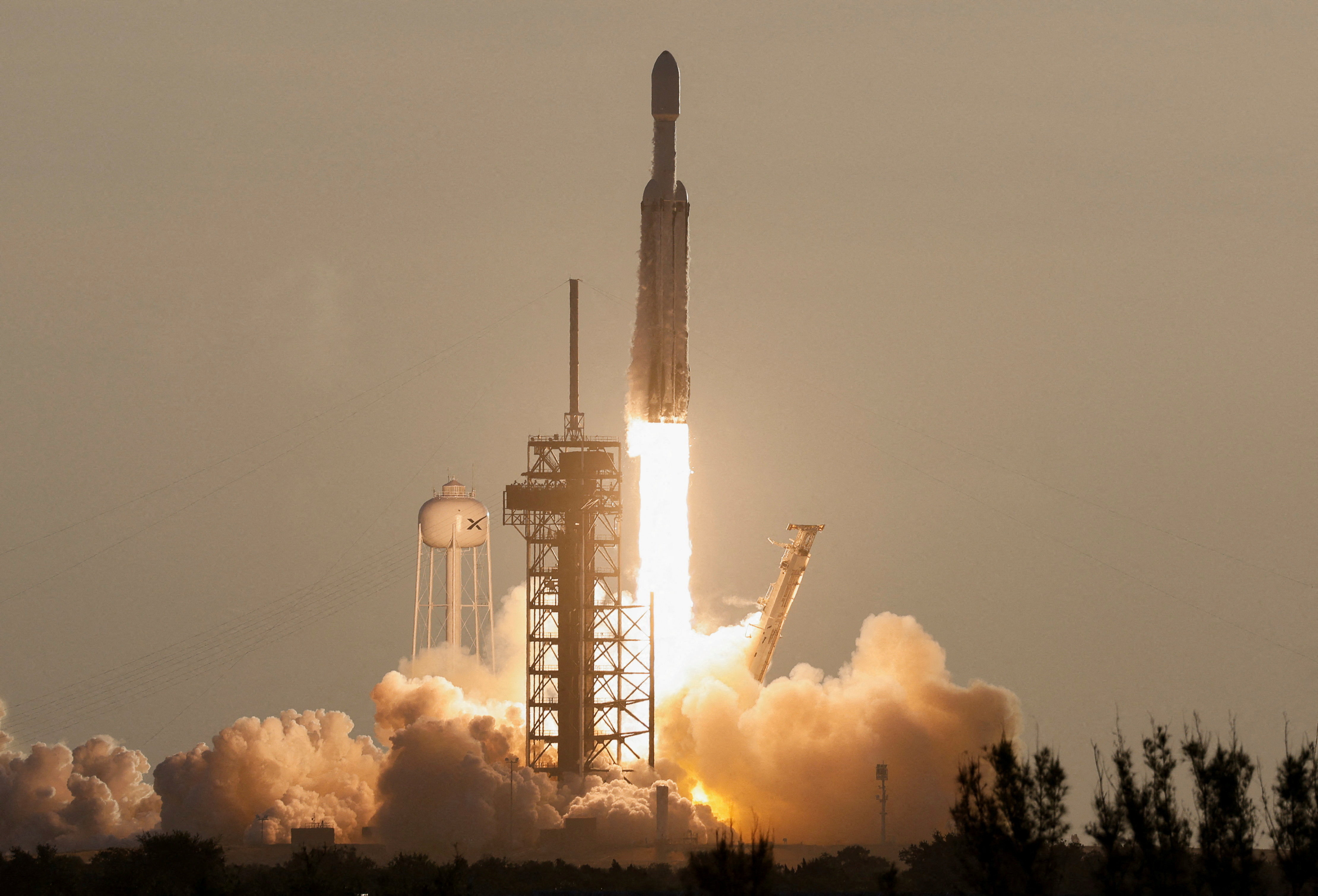
CAPE CANAVERAL, Fla. — In a triumph of high-stakes aerospace engineering and recycled military tech, NASA officially launched the Nancy Grace Roman Space Telescope on August 30, 2026. Propelled into the cosmos by a thunderous SpaceX Falcon Heavy rocket from the Kennedy Space Center, the observatory marks a monumental leap forward in humanity's quest to decode the universe's most elusive mysteries: dark energy and dark matter.
The mission, which has captured global headlines over the past week, breathes new life into hardware originally designed for an entirely different kind of surveillance. Built around a surplus mirror gifted to NASA by the National Reconnaissance Office (NRO) in 2012, the Roman Space Telescope represents one of the most successful adaptations of classified spy technology into an instrument of pure scientific discovery.
Mission Overview at a Glance
- Launch Date: August 30, 2026
- Launch Vehicle: SpaceX Falcon Heavy rocket
- Primary Objective: Probe dark energy, dark matter, and discover exoplanets
- Hardware Origin: Repurposed 2.4-meter spy satellite mirror from the NRO
- Field of View: 100 times greater than the Hubble Space Telescope’s infrared instrument
A Gift From the Shadows: The Spy Satellite Connection
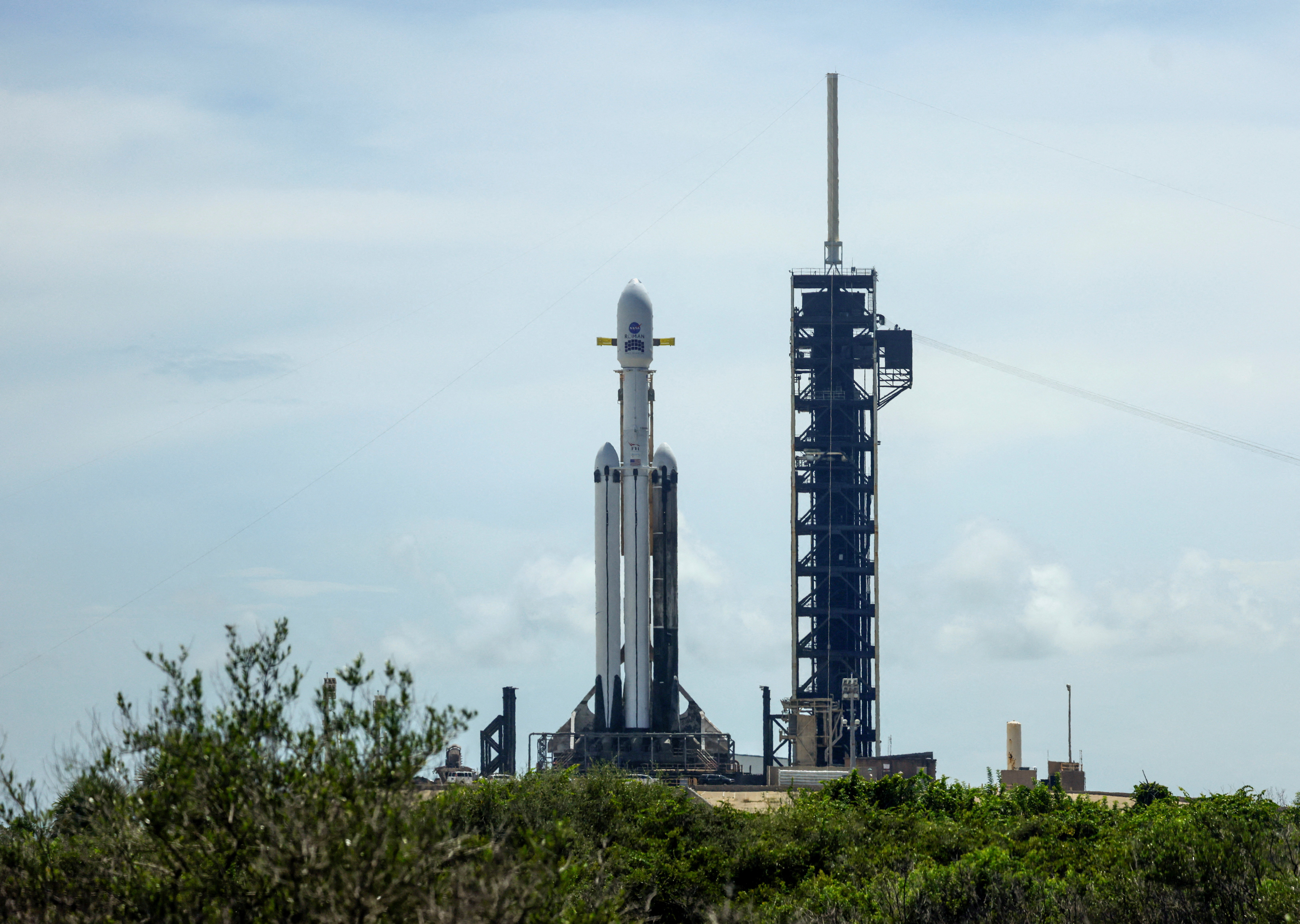
The story of the Roman Space Telescope is as much about geopolitical intrigue as it is about astrophysics. More than a decade ago, the NRO—the clandestine agency responsible for the U.S. government's spy satellites—contacted NASA to hand over two unused, high-grade optical telescope assemblies left over from a canceled reconnaissance program.
While the hardware was initially built to look down at Earth with exquisite clarity, NASA's astrophysicists immediately recognized its potential to look outward. Featuring a primary mirror identical in size to the 2.4-meter mirror on the Hubble Space Telescope—yet possessing a field of view 100 times larger—the surplus mirror formed the bedrock of a revolutionary wide-field observatory.
Named after Dr. Nancy Grace Roman, NASA’s first chief astronomer and the celebrated "Mother of Hubble," the newly minted telescope is uniquely positioned to map the cosmos on a scale never before attempted. By combining military-grade optics with cutting-edge infrared detectors, engineers have transformed an instrument of terrestrial espionage into an unmatched window to the stars.
Unlocking the Cosmos: Dark Energy and Exoplanets
Astronomers and economists alike are closely watching the mission, which carries massive implications for our fundamental understanding of physics. Beginning its scientific campaigns in earnest following last week's flawless ascent, the Roman Space Telescope is tasked with addressing some of the greatest paradigms in modern science.
Foremost among these is the investigation of dark energy, the mysterious repulsive force driving the accelerated expansion of the universe. While ordinary matter—stars, planets, and gas—makes up only a small fraction of the cosmos, dark energy comprises roughly 68% of the universe, with dark matter accounting for another 27%. By charting the positions and shapes of millions of galaxies across cosmic time, Roman will provide the vast datasets needed to test Einstein’s theory of general relativity on a cosmic scale.
Furthermore, the telescope will act as an elite exoplanet hunter. Utilizing a technique known as gravitational microlensing, Roman is expected to discover thousands of distant planets, ranging from icy giants to Earth-sized worlds lurking far from their parent stars.
| Telescope Attribute | Nancy Grace Roman Space Telescope | Hubble Space Telescope |
|---|---|---|
| Primary Mirror Diameter | 2.4 meters | 2.4 meters |
| Field of View | 100x larger than Hubble (IR) | Standard baseline |
| Primary Focus | Dark energy, dark matter, exoplanets | General optical/UV astronomy |
| Launch Era | 2026 | 1990 |
Economic and Technological Fallout
The successful execution of the Falcon Heavy launch also underscores the evolving economics of deep-space exploration. By leveraging existing hardware (the NRO mirror) and partnering with commercial heavy-lift providers like SpaceX, NASA has demonstrated a streamlined model for executing flagship-class missions more efficiently.
Financial analysts tracking the aerospace and defense sectors note that the intersection of repurposed defense hardware and commercial rocketry is creating a robust ecosystem for high-yield scientific endeavors. As private-public partnerships mature, the cost-per-discovery ratio for deep-space astronomy continues to drop, opening doors for even more ambitious projects in the 2030s.
Future Outlook: What Happens Next?
Following its departure atop the SpaceX Falcon Heavy, the Roman Space Telescope is currently journeying toward its operational home at the Sun-Earth Lagrange Point 2 (L2), located roughly one million miles away from Earth. Over the next several months, engineers will perform rigorous commissioning checks, calibrating its massive instrument suite and focusing its spy-derived optics.
If initial telemetry is any indication, the scientific community can expect the first tranche of revolutionary deep-space data sooner rather than later. As Roman begins its multi-year survey of the heavens, it promises not only to rewrite textbooks on dark energy and planetary formation but also to validate the power of turning tools of observation from the ground back toward the infinite expanse of the universe.
Frequently Asked Questions
Why was the Roman Space Telescope originally a spy satellite?
The telescope's primary mirror and optical assembly were built as surplus hardware for the National Reconnaissance Office (NRO) for classified reconnaissance programs. When the program was canceled, the NRO transferred the hardware to NASA, saving taxpayers hundreds of millions of dollars in manufacturing costs.
What makes the Roman Space Telescope better at finding dark energy than Hubble?
While Roman shares the same 2.4-meter mirror size as Hubble, its specialized wide-field instrument provides a field of view that is 100 times larger. This allows Roman to survey vast swaths of the sky and capture data on millions of galaxies in a fraction of the time it would take older observatories.