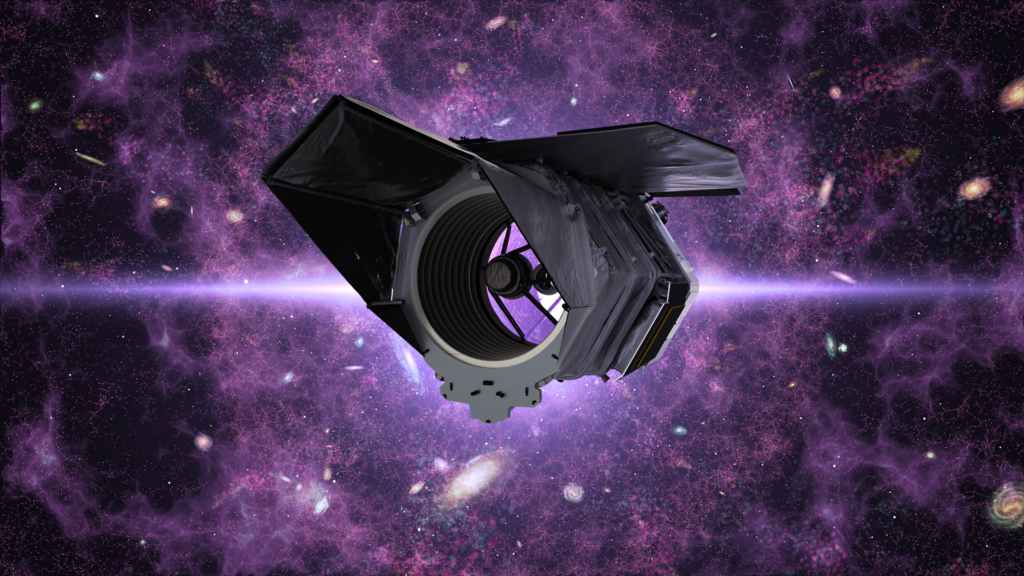
WASHINGTON D.C. — In the high-stakes arena of space exploration, a quiet revolution is taking shape inside NASA’s cleanrooms. As the global space economy races toward an estimated $1.8 trillion valuation by 2035, the U.S. National Aeronautics and Space Administration (NASA) is preparing to deploy its next flagship instrument: the Nancy Grace Roman Space Telescope. Designed to solve mysteries that have baffled astrophysicists for generations, this advanced observatory is being positioned as a geopolitical and scientific triumph that could fundamentally alter our understanding of the cosmos.
While the James Webb Space Telescope (JWST) captured the world's imagination by peering deep into the universe's past with a highly focused, needle-like gaze, the Roman Space Telescope is built for speed and scale. Armed with a field of view 100 times greater than that of the historic Hubble Space Telescope, Roman will map the sky at speeds never before possible, effectively creating the first high-definition cosmic census.
The Dawn of the Wide-Field Era
For decades, astronomers have struggled with a fundamental trade-off: capture highly detailed images of a tiny patch of sky, or sweep vast portions of the heavens at low resolution. The Nancy Grace Roman Space Telescope—named after NASA’s first chief astronomer, often called the "Mother of Hubble"—shatters this limitation.
By utilizing a 2.4-meter mirror (identical in size to Hubble's but significantly lighter) coupled with a massive 300-megapixel infrared camera, Roman will capture panoramic vistas of the universe with the same razor-sharp clarity as Hubble. In just a few months of operation, Roman will map an area of the sky that would take Hubble hundreds of years to catalog.
"If Webb is like looking at the universe through a microscope, Roman is like looking at it through a wide-angle lens," says Dr. Jonathan Crass, an astrophysicist specializing in next-generation instrumentation. "We are moving from studying individual cosmic anomalies to analyzing the entire cosmic architecture."
The Three Pillars of Roman's Mission

NASA's new flagship observatory is tasked with answering three existential questions that lie at the intersection of astrophysics and fundamental physics:
- What is Dark Energy? Roughly 68% of the universe is composed of dark energy, a mysterious force causing the expansion of the universe to accelerate. Roman will map billions of galaxies to measure this acceleration over cosmic time, helping scientists determine if dark energy is a constant property of space or a dynamic force that could eventually tear the universe apart.
- How Common are Exoplanets? Using an observational technique called gravitational microlensing, Roman will monitor millions of stars in our galactic center. It is expected to discover thousands of new exoplanets, including rocky, Earth-sized worlds orbiting within their stars' habitable zones.
- Direct Imaging of Alien Worlds: The telescope will carry a highly sophisticated Coronagraph Instrument. This technology will block out the blinding glare of distant stars to directly image and analyze the atmospheres of giant exoplanets, testing technologies crucial for finding chemical signs of life in the future.
Comparing the Titans of the Sky
To understand the leap in capability that the Roman Space Telescope represents, it is essential to compare it with its legendary predecessors:
| Feature | Hubble Space Telescope | James Webb Space Telescope (JWST) | Nancy Grace Roman Space Telescope |
|---|---|---|---|
| Primary Mirror Size | 2.4 meters | 6.5 meters | 2.4 meters |
| Wavelengths | Ultraviolet, Visible, Near-Infrared | Near-Infrared, Mid-Infrared | Visible, Near-Infrared |
| Field of View | Baseline (1x) | Comparable to Hubble (tight focus) | 100x Hubble's Field of View |
| Primary Science Target | Deep-space deep fields, early stars | First galaxies, atmospheric spectroscopy | Dark energy, exoplanet census, wide surveys |
| Target Launch / Status | Launched (1990) | Launched (2021) | Targeting Late 2026 / Early 2027 |
The Economic and Geopolitical Stakes
The development of the Roman Space Telescope is not merely a scientific endeavor; it is a major economic driver. The project represents a multibillion-dollar investment, fueling high-tech manufacturing, engineering, and software jobs across the United States and its international partners, including the European Space Agency (ESA) and the Japanese Aerospace Exploration Agency (JAXA).
Major defense and aerospace contractors, including L3Harris Technologies and Ball Aerospace (now part of BAE Systems), have spearheaded the construction of the telescope's optical components and spacecraft bus. The highly sophisticated Coronagraph Instrument, developed at NASA’s Jet Propulsion Laboratory, serves as a critical testbed for technologies that will define the next generation of space observatories, ensuring the U.S. maintains its technological hegemony in aerospace engineering.
Furthermore, the massive influx of data—projected to be over 20 petabytes throughout its primary mission—will catalyze advancements in artificial intelligence and machine learning. Standard computational methods are insufficient to process Roman's vast data streams, forcing NASA to partner with silicon valley firms to develop automated algorithms capable of identifying new planets and distant galaxies without human intervention.
Executive Summary: What to Watch Next
- Integration Milestones: Over the next 12 months, engineers at Goddard Space Flight Center will complete the integration of the Wide Field Instrument and the Coronagraph onto the main spacecraft bus.
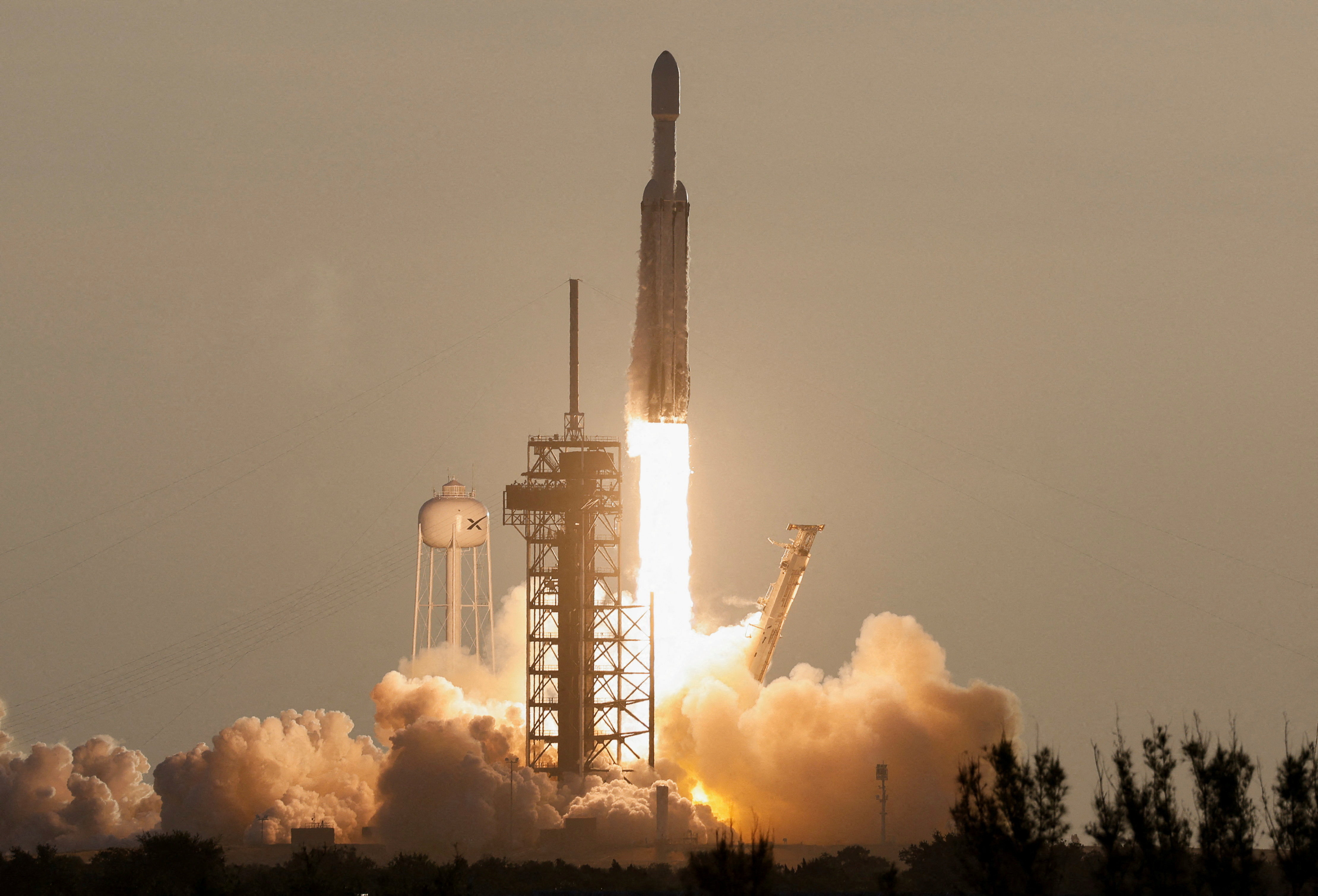
- Launch Vehicle Readiness: SpaceX’s Falcon Heavy has been selected to launch the telescope from Kennedy Space Center, marking another high-profile win for commercial aerospace integration.
- Scientific Democratization: Unlike past missions where data was kept proprietary for up to a year, all of Roman's scientific data will be made public immediately upon capture, democratizing discovery worldwide.
Frequently Asked Questions
Is the Roman Space Telescope replacing the James Webb Space Telescope?
No. The Roman Space Telescope is designed to work in tandem with Webb and Hubble. While Roman will perform massive, wide-area surveys to locate interesting cosmic phenomena, Webb will be used to zoom in on those specific targets to perform deep, highly detailed atmospheric and spectroscopic analyses.
How will the Roman Space Telescope help us find alien life?
While Roman is not expected to find microscopic life directly, its Coronagraph Instrument will test revolutionary star-blocking technology. This will allow astronomers to take direct images of planets orbiting other stars and analyze their atmospheres for biosignatures like oxygen, water vapor, and methane, paving the way for dedicated habitability missions in the 2030s.