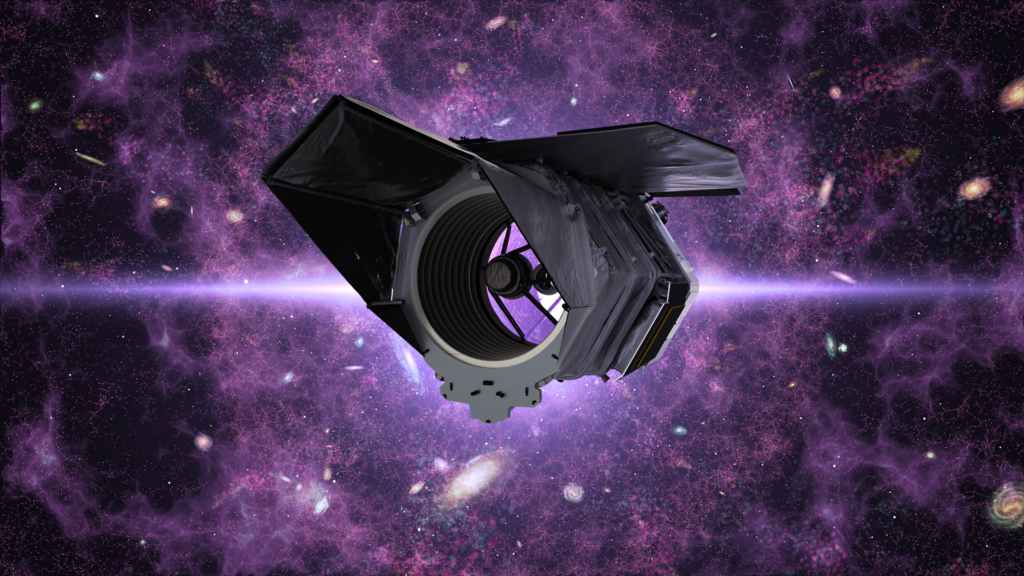
WASHINGTON — Humanity is on the precipice of a profound astronomical awakening. NASA is finalizing preparations for the launch of a revolutionary space telescope engineered to pierce the deepest veils of the cosmos, promising to shatter our current understanding of stellar evolution, galaxy formation, and the fundamental architecture of the universe.
The mission, which has sent ripples of anticipation through the global scientific community, is designed to capture unprecedented high-resolution imagery and spectral data. By peering further back in time and deeper into obscured cosmic nurseries than ever before, the observatory aims to answer questions that have baffled astrophysicists for generations. Industry insiders and space agency officials alike are calling it the most significant leap in observational capability since the deployment of its predecessors, setting the stage for paradigm-shifting discoveries.
The Dawn of a New Observational Era
For decades, astronomers have relied on a succession of orbital and ground-based instruments to map the heavens. However, interstellar dust, atmospheric interference, and technological limitations have historically restricted our view. This upcoming mission leverages cutting-edge optics and advanced infrared sensing technology designed to bypass these cosmic roadblocks.
According to mission briefings and insights discussed across major scientific broadcasts—including recent deep-dives on NPR’s Shortwave podcast—this telescope is not merely an incremental upgrade. It represents an entirely new way of seeing. By tracing the intricate orbital paths of known stars and mapping the invisible scaffolding of dark matter that holds galaxies together, the observatory will provide cartographers of space with unprecedented spatial accuracy.
Key Mission Objectives & Strategic Highlights
- Unlocking Stellar Nurseries: Penetrating dense molecular clouds where stars are born to observe ignition processes in real-time.
- Mapping Galactic Kinematics: Tracing the complex orbital paths of stars across local and distant galactic clusters with unmatched precision.
- Cosmic Evolution: Observing light from the earliest epochs of the universe to understand how the first galaxies assembled.
- Technological Leap: Utilizing next-generation cooling systems and segmented mirror arrays to maximize photon collection efficiency.
Economic and Scientific Stakes
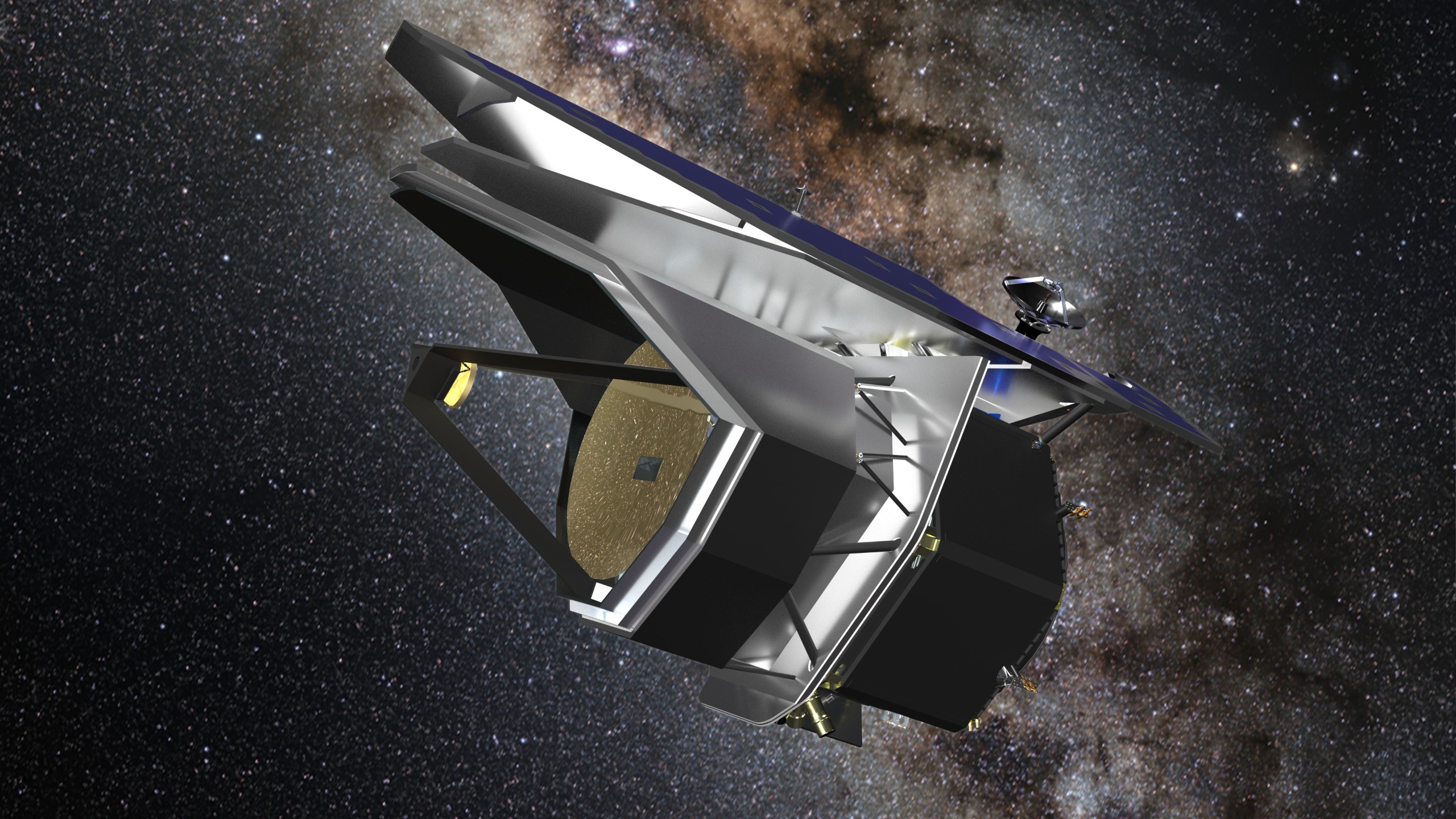
Beyond its sheer scientific value, the impending launch carries significant weight for the global aerospace economy. The multi-billion-dollar project has catalyzed public-private partnerships, driving innovation in optics, quantum sensing, and data processing. Wall Street analysts tracking the aerospace and defense sectors note that the mission’s success will likely spur a secondary boom in commercial space observation and telemetry markets.
Furthermore, the cultural impact cannot be overstated. Public fascination with space exploration—often amplified by cultural icons and space veterans, such as recent reflections shared by actor William Shatner on the psychological and philosophical weight of spaceflight—continues to drive massive public engagement. This mission serves as a unifying global moment, reminding humanity of our collective curiosity and fragility on a pale blue dot.
At a Glance: Mission Metrics & Specifications
| Metric / Feature | Specification Details | Primary Objective |
|---|---|---|
| Primary Focus | Deep-space infrared and optical imaging | Capture light from obscured stellar nurseries and early galaxies |
| Data Processing | AI-driven telemetry and automated spectral analysis | Handle petabytes of deep-space data efficiently |
| Scientific Impact | High-resolution orbital path mapping | Redefine stellar dynamics and galactic evolution models |
| Launch Window | Imminent (Upcoming weeks) | Deploy into stable deep-space observation orbit |
What Comes Next?
As launch day approaches, engineers at NASA’s primary integration facilities are conducting rigorous final checkouts of the spacecraft's deployment mechanisms, communication arrays, and thermal shields. Once airborne, the telescope will undergo a tense commissioning phase lasting several months, during which its mirrors will align with microscopic precision.
If successful, the data flowing back to Earth will not only grace the front pages of newspapers worldwide but will fundamentally rewrite astrophysics textbooks. For scientists, investors, and space enthusiasts alike, the countdown has begun to a moment that will forever change how we look up at the night sky.
Frequently Asked Questions
When is the official launch scheduled to take place?
NASA is slated to execute the launch within the coming weeks, pending final weather evaluations and systems checks at the launch site.
How does this telescope differ from older instruments like Hubble or James Webb?
While instruments like Hubble and Webb pioneered ultraviolet, optical, and deep infrared astronomy, this new mission integrates advanced wide-field mapping capabilities specifically optimized for tracking complex stellar kinematics and hidden galactic structures on a massive scale.