EXECUTIVE TAKEAWAYS
- Infrastructure Scale Shift: Brazil’s Pix and India’s Unified Payments Interface (UPI) have processed a combined annual transaction volume exceeding $3.2 trillion, demonstrating that open, state-backed Digital Public Infrastructure (DPI) can displace proprietary duopolies.
- Margin Disruption: Near-zero Merchant Discount Rates (MDR) and instantaneous real-time gross settlement (RTGS) APIs are systematically stripping away the lucrative 1.5% to 3.5% interchange fees historically captured by legacy credit card rails and acquiring banks.
- Cross-Border Interoperability: Sovereign DPI stacks are expanding beyond domestic boundaries through bilateral linkups and multilateral architectures (such as the BIS Project Nexus), threatening traditional correspondent banking fees and legacy wire services.
- Capital Reallocation: Enterprise tech stacks are shifting capital allocation away from physical Point-of-Sale (POS) hardware and legacy clearing systems toward high-concurrency cloud payment orchestration, microservices APIs, and automated regulatory compliance engines.
The Death of the 3% Tollbooth: Sovereign Architecture Breaks Legacy Financial Rails
For decades, the plumbing of global consumer commerce was governed by a lucrative private tax. Global card networks and incumbent merchant acquirers exacted a 150-to-350 basis point fee on every transaction, capitalizing on network effects and proprietary routing systems. That rent-extraction model is now facing structural obsolescence across major emerging and developed markets. Driven by open, state-directed Digital Public Infrastructure (DPI), national central banks and public consortia have engineered zero-cost or ultra-low-cost payment rails that treat payment settlement not as a high-margin corporate product, but as an essential public utility.
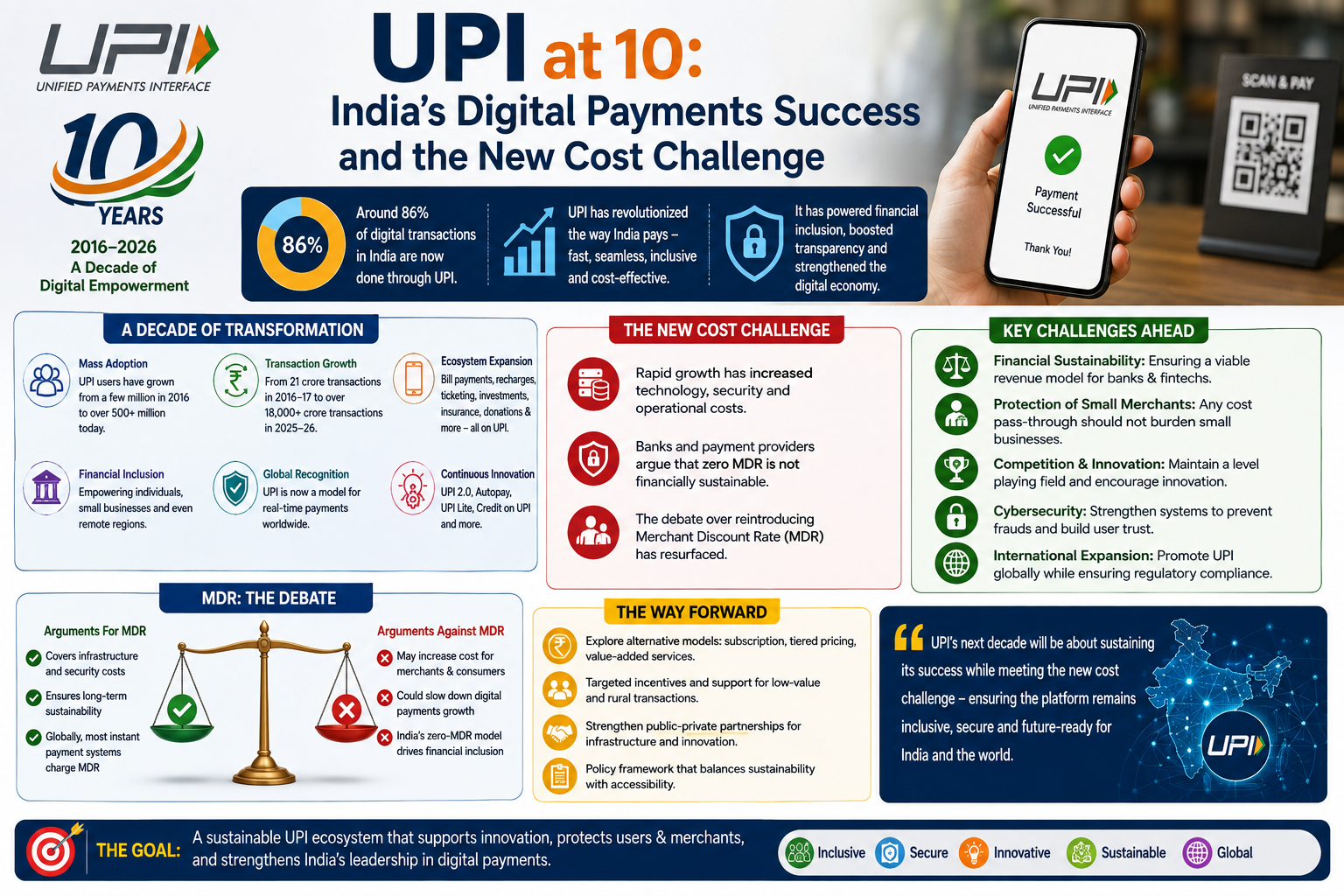
The catalytic agents of this structural shift are India’s Unified Payments Interface (UPI), built by the National Payments Corporation of India (NPCI) and launched in 2016, and Brazil’s Pix, deployed by the Banco Central do Brasil in November 2020. Data from early 2026 highlights a monumental paradigm shift: Pix and UPI collectively process more than 18 billion transactions monthly, capturing over 75% of all digital retail payments in their respective domestic jurisdictions. The cost per transaction for merchants operating on these rails has dropped from roughly $0.50–$1.20 under traditional interchange frameworks to fractions of a cent ($0.001 to $0.005), fundamentally altering enterprise capital allocation and velocity of money across the Global South.
The core innovation driving this rapid adoption lies in protocol-level interoperability. Legacy card models rely on a complex, multi-party routing chain—encompassing the issuing bank, acquiring bank, payment gateway, and global card network—each levying a fee and introducing settlement latency of 24 to 72 hours. Conversely, DPI platforms operate as unified, open-access API stacks. By decoupling identity from routing mechanisms through standardized aliasing systems (such as a phone number, tax ID, or Virtual Payment Address), DPI enables immediate, account-to-account (A2A) push payments with real-time settlement finality.
According to research highlighted by the Observer Research Foundation (ORF), DPI's success relies on a three-tier architectural approach: identity authentication, open payment protocols, and consent-based data management. This "tech stack as a public good" philosophy has reduced Customer Acquisition Costs (CAC) for financial institutions by up to 80%, allowing challenger fintechs and commercial banks to reallocate capital away from legacy acquiring hardware into AI-driven credit scoring, liquidity management, and wealth management products.
Deconstructing the Stacks: Pix vs. UPI
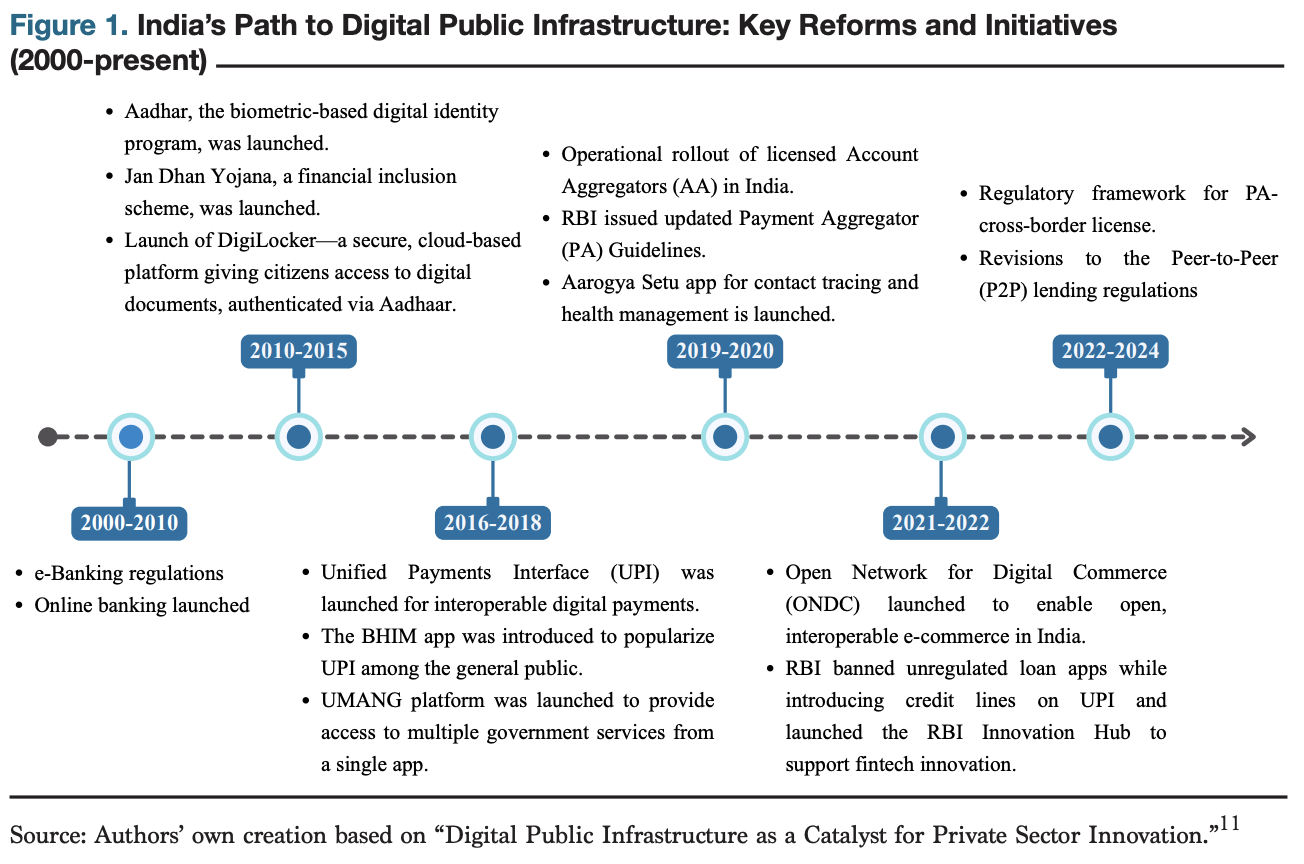
While both Pix and UPI share the philosophical baseline of public-good digital rails, their regulatory engines, technical topologies, and monetization frameworks feature distinct strategic variations tailored to their home markets.
| Metric / Dimension | Brazil (Pix) | India (UPI) |
|---|---|---|
| Governance Authority | Banco Central do Brasil (Central Bank owned & operated) | National Payments Corporation of India (NPCI - Public/Private Bank Consortium) |
| Launch Year | 2020 | 2016 |
| Core Routing Architecture | SPI (Sistema de Pagamentos Instantâneos) - Direct Central Bank Ledger | IMPS (Immediate Payment Service) - Microservices API Gateway Layer |
| Primary User Key (Alias) | Chave Pix (CPF/CNPJ Tax ID, Email, Phone, Random Key) | VPA (Virtual Payment Address, Mobile Number, Aadhaar) |
| Merchant Discount Rate (MDR) | Capped / Market-driven (~0.22% for debit-like, zero for peer-to-peer) | Mandated 0% MDR for Person-to-Merchant (P2M) RuPay/UPI transactions |
| Monthly Transaction Volume (2025/2026 Run Rate) | ~5.8 Billion transactions / month | ~14.5 Billion transactions / month |
| Settlement Latency & Availability | Sub-second finality; 24/7/365 continuous operating liquidity | Sub-second finality; 24/7/365 continuous operating liquidity |
| Cross-Border Integration Protocol | Direct bilateral APIs, BIS Project Nexus integration roadmap | UPI Global (Singapore PayNow, UAE, France, Sri Lanka linkages) |
In Brazil, the Central Bank acted as designer, owner, and sole operator of the SPI settlement clearinghouse. By mandating that all licensed financial institutions with more than 50,000 active customer accounts join Pix, the Central Bank bypassed the chicken-and-egg distribution problem that plagues private payment startups. Furthermore, Pix introduced native data architectures that allow direct integration with ERP systems, enabling instant invoicing, dynamic QR codes, and automated liquidity management for corporate treasuries.
India’s UPI took a federated, multi-tier API route. The NPCI built the core switch, but incentivized private front-end interface developers—such as PhonePe, Google Pay, and Paytm—to build consumer-facing applications. This open protocol strategy ignited private competition at the application layer while keeping the underlying transaction infrastructure public. The elimination of P2M transaction fees via zero-MDR mandates served as a massive fiscal stimulus for micro-merchants, converting hundreds of millions of cash-based micro-enterprises into active participants in the formal banking ecosystem.
Market Implications: Winners, Losers, and Enterprise CapEx Pivots
The expansion of high-velocity DPI rails creates distinct competitive pressures and growth opportunities across the global financial services landscape.
The Disrupted Incumbents (The Losers)
- Legacy Payment Networks & Card Issuers: Debit card transaction volumes in Brazil and India have experienced sharp contractions as consumer behavior moves toward direct QR and A2A payments. Interchange fee revenue, credit card annual fees, and card manufacturing CapEx face structural margin pressure.
- Traditional POS Hardware Manufacturers: Legacy terminal vendors reliant on high-cost leased hardware are seeing revenue decline. Merchants are migrating to software-based Tap-to-Pay, dynamic QR displays, and low-cost IoT soundboxes that provide instant auditory confirmation of settlement.
- High-Fee Cross-Border Money Transfer Operators (MTOs): Traditional remittance corridors charging 5% to 10% spreads are being bypassed by direct account-to-account cross-border linkages operating at ISO 20022 messaging standards.
The Infrastructure Beneficiaries (The Winners)
- Cloud Compute & Database Orchestrators: To maintain five-nines uptime (99.999%) under massive transaction concurrency—frequently exceeding 20,000 peak transactions per second (TPS)—financial institutions are making significant enterprise investments in distributed, microservices-based cloud architectures (e.g., AWS, Microsoft Azure, Google Cloud, and localized hybrid clouds).
- Big Tech & Super-App Platforms: Front-end apps leveraging open APIs can acquire vast customer bases via zero-margin payment services, monetizing those users through cross-selling higher-margin products like consumer credit, wealth management, insurance, and target-market advertising.
- Corporate Treasuries & Enterprise MSMEs: Zero-latency settlement dramatically improves working capital cycles. Capital previously trapped in 2-to-3 day settlement float is immediately unlocked, maximizing overnight yield optimization and cash flow stability.
Frequently Asked Questions (People Also Ask)
How do Pix and UPI differ fundamentally from legacy credit card networks like Visa and Mastercard?
Legacy credit card networks operate four-party systems (Cardholder, Issuer, Acquirer, Merchant) that route authorization requests across private, fee-charging networks, taking days to achieve net financial settlement. Pix and UPI utilize public-good open API protocols that enable direct account-to-account (A2A) fund transfers with sub-second gross settlement finality directly on central bank or instant-clearinghouse ledgers. This architecture bypasses traditional acquiring networks, eliminating multi-tiered interchange fees.
If transactions are free or strictly fee-capped, how do banks and fintechs turn a profit on DPI?
Financial institutions treat digital public payments as a low-cost, high-frequency customer acquisition channel. While payments themselves yield minimal direct transaction margins, they generate real-time, high-fidelity transactional data. Banks and fintechs utilize this data for automated underwriting, offering instant pre-approved working capital loans, micro-insurance policies, embedded credit lines (such as credit on UPI/Pix Credit), and wealth management products where enterprise margins remain lucrative.
What cloud infrastructure requirements are needed to run a DPI-compliant payment architecture?
To comply with central bank uptime mandates and support extreme TPS bursts, financial institutions must implement cloud-native microservices architectures, decoupled API gateways, high-throughput message brokers (such as Apache Kafka), and distributed multi-region databases (such as CockroachDB or AWS Aurora). Real-time risk management systems powered by low-latency machine learning models are also essential to screen transactions for fraud within sub-100-millisecond windows.
How are sovereign payment platforms expanding into global cross-border remittances?
Nations are linking their instant payment systems directly through bilateral API agreements (e.g., India's UPI connecting with Singapore's PayNow and the UAE's AANI) and multilateral frameworks like the Bank for International Settlements' (BIS) Project Nexus. These linkages utilize standardized ISO 20022 messaging protocols to enable real-time, cross-border foreign exchange clearing and account settlement, eliminating correspondent banking intermediaries and drastically reducing remittance costs.
Future Outlook: Programmable Money, Offline Resilience, and Cross-Border Dominance (2026–2030)
As Digital Public Infrastructure matures, the technical frontier is rapidly advancing beyond simple peer-to-peer and peer-to-merchant retail transactions. The strategic focus of central banks and corporate fintech innovators has shifted toward three crucial development vector: programmability, offline transaction capability, and CBDC integration.
1. Programmable Escrow and Smart Settlements: The integration of smart contract execution layers atop Pix and UPI enables automated conditional payments. Corporate supply chains can now utilize programmable escrow mechanisms where funds are instantly unlocked to suppliers only when IoT sensors confirm delivery and quality metrics. This drastically reduces counterparty risk and legal reconciliation overhead.
2. Offline Functionality via Hardware Security Modules: A historic vulnerability of digital payments—dependence on uninterrupted cellular connectivity—is being addressed through hardware-level solutions. Features like UPI Lite X and Pix Offline leverage Near Field Communication (NFC) protocols and secure elements within mobile devices to execute encrypted, offline peer-to-peer ledger updates, ensuring business continuity during network outages and in remote regions.
3. Convergence with Central Bank Digital Currencies (CBDCs): Sovereign digital currencies—such as Brazil’s Drex and India’s Digital Rupee (e₹)—are being engineered to interoperate seamlessly with existing DPI rails. While instant payment systems handle the retail distribution layer, CBDCs operate as the underlying wholesale settlement medium, enabling tokenized asset clearing, automated interbank liquidity management, and cross-border delivery-versus-payment (DvP) mechanisms without friction.
The macroeconomic trajectory is clear: nations that deploy open, low-cost, high-concurrency Digital Public Infrastructure are systematically expanding financial inclusion, boosting economic velocity, and lowering the operational cost of commerce. Enterprise institutions failing to modernize legacy core banking systems to interface with open API infrastructure risk irrelevance in a rapidly shifting, multi-trillion-dollar instant economy.