Inside Skyroot’s Orbital Playbook: How Vikram-1 Is Reshaping the Global Space Economy
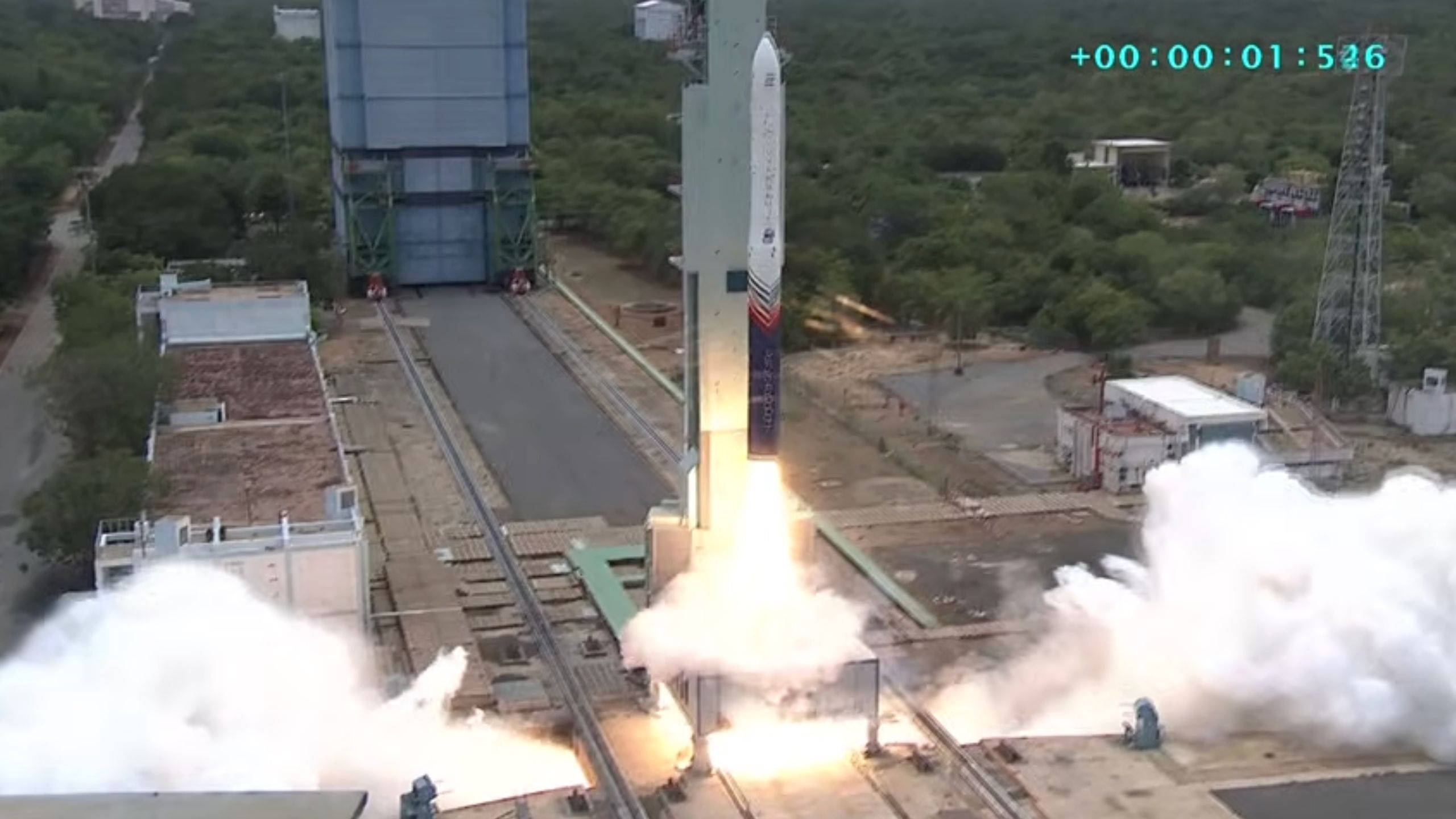
NEW DELHI & BENGALURU — On a brisk morning at the Satish Dhawan Space Centre, history is quietly being rewritten not by state bureaucrats, but by venture-backed engineers and agile capital allocators. As institutional investors recalibrate their portfolios toward deep-tech and national security infrastructure, India’s private space sector has officially crossed the Rubicon. At the center of this paradigm shift stands Vikram-1, India’s first privately developed orbital launch vehicle engineered with a cutting-edge hydrogen-compatible, solid-liquid hybrid propulsion architecture.
For decades, the Indian Space Research Organisation (ISRO) served as the solitary architect of the nation’s stellar ambitions, operating with world-class technical efficiency but bounded by bureaucratic constraints and constrained capital allocation. Today, market liquidity is shifting toward commercial disruptors like Skyroot Aerospace. Backed by marquee institutional venture capital and sovereign-adjacent funding, Vikram-1 represents more than just an engineering triumph; it is a masterclass in infrastructure scalability, regulatory compliance, and cost-efficient enterprise ROI in an increasingly congested Low Earth Orbit (LEO) marketplace.
Executive Takeaways
- Proprietary Hybrid Architecture: Vikram-1 pioneers a hydrogen-compatible solid-liquid hybrid propulsion system, drastically reducing manufacturing overhead while maintaining high specific impulse metrics.
- Commercial Validation: The vehicle directly targets the multi-billion-dollar small-satellite (smallsat) deployment market, offering high-margin enterprise payload delivery with compressed lead times.
- Regulatory & Ecosystem Maturity: Operating under the aegis of IN-SPACe (Indian National Space Promotion and Authorization Centre), Skyroot exemplifies how streamlined public-private partnerships accelerate venture maturation and unlock global risk mitigation.
- Valuation Multiples & Capital Flows: The success of Vikram-1 triggers a massive re-rating of South Asia's deep-tech valuation multiples, attracting Tier-1 global institutional capital previously hesitant to cross emerging-market regulatory boundaries.
The Catalytic Shift: Breaking the State Monopoly
The liberalization of India’s space sector in 2020 was designed to address a glaring market inefficiency: while India possessed world-class launch capabilities, its share of the global commercial space economy—estimated at over $450 billion—hovered around a paltry 2%. Global enterprise demand for rapid, dedicated, and cost-effective orbital insertion was exploding, driven by mega-constellations, Earth-observation telemetry, and cloud compute architecture deployed in orbit. ISRO, tasked with national security payloads and interplanetary exploration, could not pivot quickly enough to capture high-frequency commercial transactions.
Enter Skyroot Aerospace, founded by former ISRO scientists Pawan Chandana and Bharath Daka. By unbundling the rocket-building process and leveraging commercial-off-the-shelf (COTS) components, advanced software modeling, and 3D-printed thrusters, the company engineered a capital-lean operational model. Vikram-1 is the physical manifestation of this agile methodology. Designed specifically to lift payloads of up to 300 kilograms into Sun-Synchronous Polar Orbits (SSPO), the rocket bridges the dangerous gap between micro-launchers that lack payload utility and heavy-lift vehicles whose pricing structures break enterprise ROI models.
The Engineering Marvel: Inside Vikram-1’s Propulsion DNA
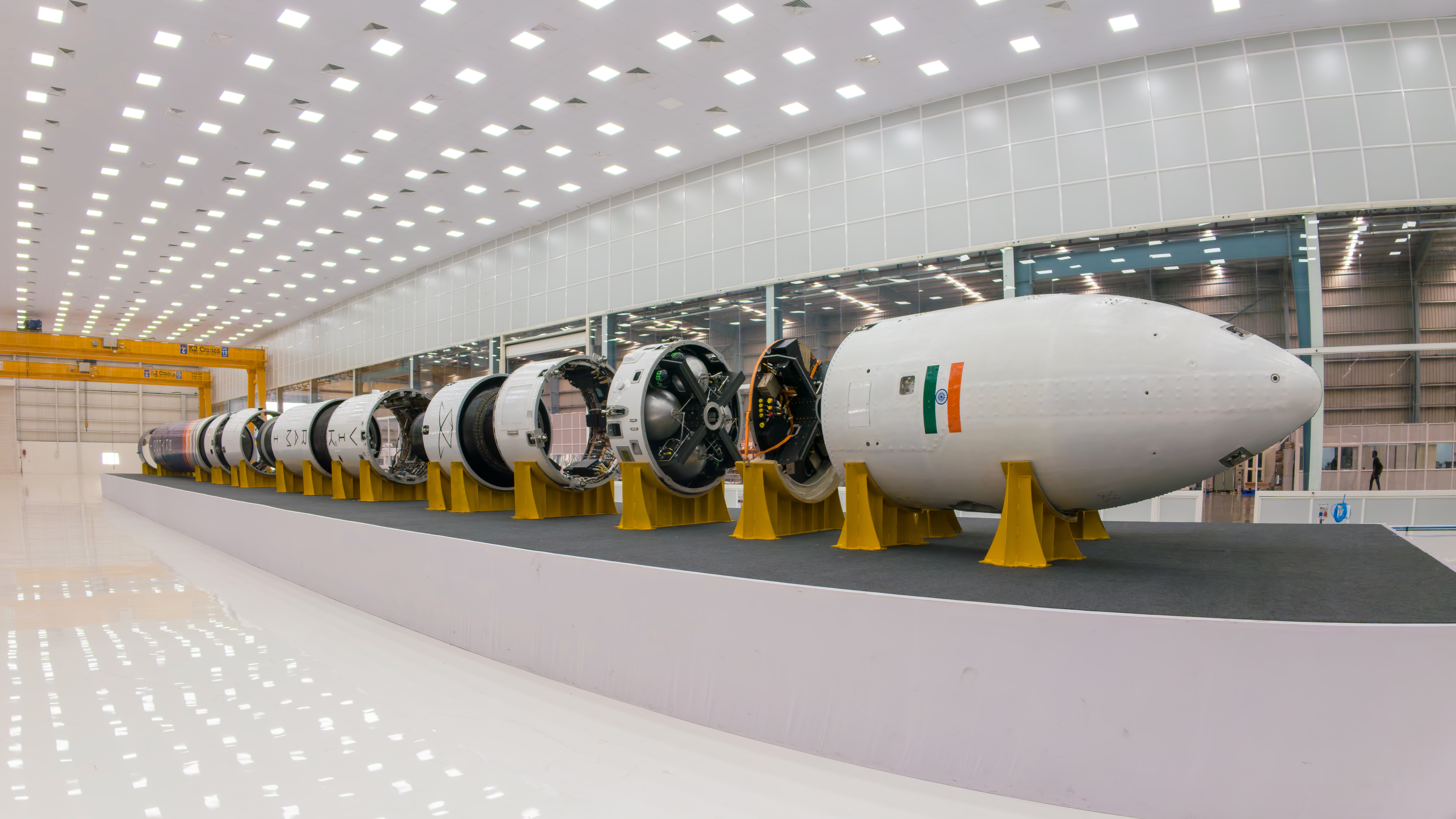
To understand why aerospace analysts are closely tracking Vikram-1, one must examine its propulsion mechanics. Traditional launch vehicles rely exclusively on either complex, expensive liquid rocket engines or rigid, hard-to-control solid rocket motors. Vikram-1 introduces a sophisticated solid-liquid hybrid propulsion architecture that optimizes safety, cost, and throttleability.
Crucially, the vehicle incorporates hydrogen-compatible staging and oxidizer systems. Liquid hydrogen and advanced cryogenic mixtures present immense metallurgical and thermodynamic challenges, notably hydrogen embrittlement and extreme boil-off rates. Skyroot’s engineering team has successfully navigated these variables, deploying advanced composite materials and proprietary thermal protection systems. This ensures that structural integrity is preserved under extreme aerodynamic stress while maximizing mass fractions—the ratio of propellant weight to total vehicle weight—which is the ultimate determinant of launch vehicle efficiency.
Financial Analyst Note: In aerospace manufacturing, lower propellant complexity translates directly to reduced safety margins overhead, faster assembly turnaround, and compressed working capital cycles—key metrics evaluated by institutional underwriters during debt and equity syndication.
| Parameter | Vikram-1 (Skyroot) | Traditional Small-Lift Vehicle | Industry Impact |
|---|---|---|---|
| Propulsion Architecture | Solid-Liquid Hybrid (Hydrogen-compatible) | Pure Liquid / Multi-stage Solid | Lower manufacturing complexity; enhanced throttling control. |
| Payload Capacity (to SSPO) | ~300 kg (at 500 km altitude) | 150 kg – 250 kg | Optimized for multi-satellite rideshare clusters. |
| Time-to-Launch Agility | 72 hours call-up capability | 3 to 6 months integration window | Critical for defense responsiveness and commercial patch deployment. |
| Development & Unit Economics | Lean COTS integration; high modularity | Custom-tooled, heavily state-subsidized | Superior valuation multiples and sustainable EBITDA margins. |
Industry & Market Implications: Winners and Losers
The commercialization of India’s orbital capabilities sends shockwaves across the global aerospace ecosystem, precipitating clear shifts in competitive advantages:
- The Winners — Global Smallsat Operators & Venture Capitalists: Satellite operators gain access to a reliable, redundant, and highly competitive launch provider outside the traditional Western and state-backed monopolies. Meanwhile, early-stage investors holding equity in South Asian deep-tech startups are positioned for significant liquidity events, including potential cross-border M&A and IPO pathways.
- The Losers — High-Cost Legacy Micro-Launchers: Emerging Western private launch startups that rely on exorbitant capital burn rates and complex, hyper-expensive liquid engines will face severe pricing pressure. Skyroot’s ability to arbitrage India’s engineering cost advantage while maintaining uncompromising safety standards sets a brutal new benchmark for unit economics.
- Geopolitical & Strategic Resilience: For democratic nations seeking supply-chain diversification away from geopolitical flashpoints, India emerges as a trusted, high-trust manufacturing hub for dual-use space technology and critical telecommunications infrastructure.
Frequently Asked Questions (People Also Ask)
What makes Vikram-1’s propulsion system unique?
Vikram-1 utilizes an advanced solid-liquid hybrid propulsion architecture that is hydrogen-compatible. This hybrid design merges the high reliability and simplicity of solid rocket motors with the throttleability, safety, and operational control of liquid engines, significantly driving down manufacturing costs while maintaining high performance metrics.
What is the primary target market for Skyroot’s Vikram-1?
The vehicle is purpose-built for the small-satellite (smallsat) deployment market, specifically targeting payloads up to 300 kg destined for Low Earth Orbit (LEO) and Sun-Synchronous Polar Orbits (SSPO). This caters directly to Earth-observation networks, IoT constellations, and scientific research payloads.
How does IN-SPACe facilitate private space operations in India?
IN-SPACe (Indian National Space Promotion and Authorization Centre) acts as a single-window, independent nodal agency under the Department of Space. It regulates, promotes, and authorizes private sector entities to use Indian space infrastructure, share ISRO test facilities, and execute commercial launches, thereby ensuring robust regulatory compliance and streamlined risk mitigation.
When did Vikram-1 enter active commercial operations?
Following rigorous static-fire testing of its stages—including the Raman-I and Kalam series of engines—Vikram-1 reached operational readiness in mid-2026, marking a watershed moment for commercial payload contracts signed with domestic and international enterprise clients.
Future Outlook: Milestones on the Horizon
As Vikram-1 transitions from developmental milestones to high-cadence commercial manifests, Skyroot Aerospace’s executive leadership is already looking toward the horizon. The roadmap includes the heavier Vikram-2 and Vikram-3 variants, designed to scale payload capacities toward the 500-kg to 1,000-kg thresholds, unlocking deeper interplanetary trajectories and heavy enterprise constellations.
For institutional investors and enterprise strategists, the takeaway is unequivocal. The democratization of space is no longer a speculative Silicon Valley narrative; it is an engineered, balance-sheet-driven reality taking root in Hyderabad and Bengaluru. As regulatory frameworks harmonize and capital liquidity deepens, Vikram-1 stands not merely as India’s first private orbital vehicle, but as the vanguard of a multi-trillion-dollar commercial celestial economy.