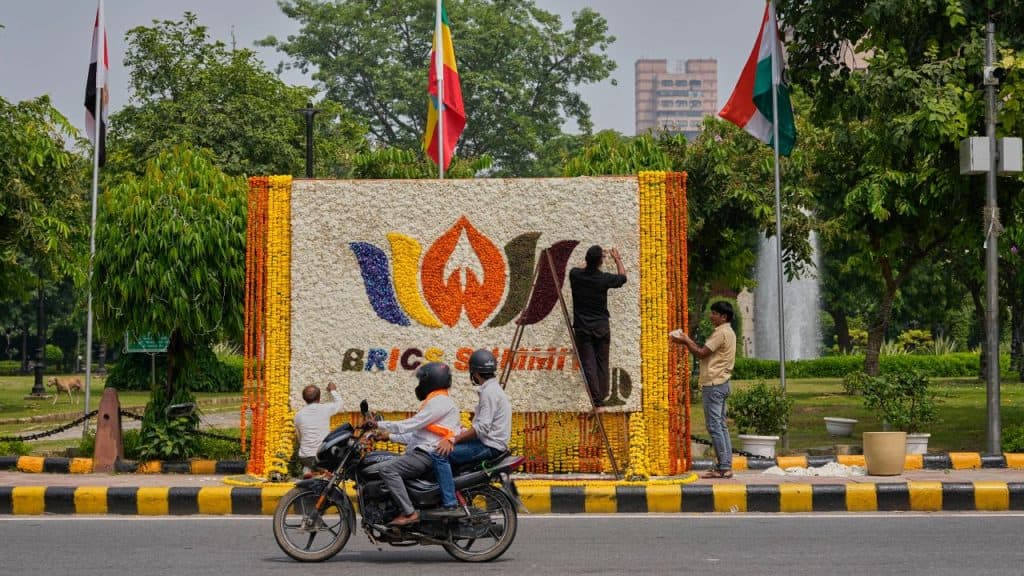
India’s Tech Leap: AI Cancer Detection and Quantum Computing Lead New Delhi’s Geopolitical Charm Offensive at BRICS 2026
NEW DELHI / Moscow — In a move that signals its transition from the world’s back-office to a premier global deep-tech powerhouse, India has unveiled a highly curated exhibition of 37 breakthrough technological innovations at the BRICS 2026 Summit. Covering critical sectors from AI-driven oncology to next-generation quantum computing, New Delhi is leveraging its technological prowess as a primary instrument of soft power and economic diplomacy across the Global South.
The showcase, which has captured the attention of world leaders and global venture capitalists alike, represents a strategic pivot for the Indian technology ecosystem. By presenting highly scalable, low-cost, and indigenous alternatives to Western-dominated technology suites, India is positioning itself as the de facto technology provider for emerging economies seeking digital sovereignty.
Executive Summary: The Core Takeaways
- The Core Showcase: 37 handpicked, indigenous Indian innovations made their debut, spanning artificial intelligence, healthcare, quantum mechanics, and agricultural technology.
- Healthcare Revolution: Low-cost AI models designed for early-stage cervical and breast cancer screening, alongside portable maternal care IoT devices, stole the spotlight.
- Deep-Tech Breakthroughs: Indian startups and research institutions demonstrated functional quantum key distribution (QKD) models and quantum computing algorithms tailored for financial modeling and logistics.
- Strategic Geopolitics: The exhibition serves as New Delhi’s blueprint for "Digital Public Infrastructure" (DPI) diplomacy, offering the BRICS bloc a pathway to bypass expensive, proprietary Western software.
The Oncology and Maternal Care AI Disruptors
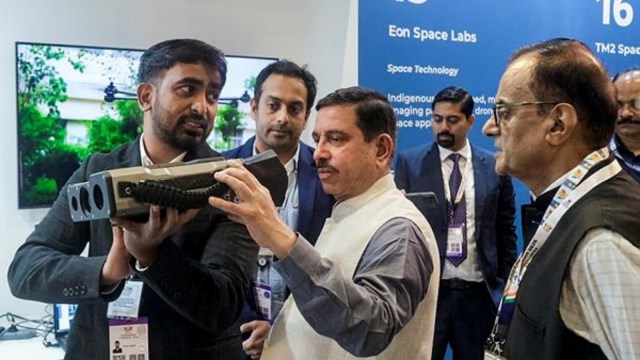
Among the 37 innovations, healthcare technologies designed for mass deployments attracted the highest engagement. India’s healthcare-tech delegation demonstrated an AI-driven, handheld screening device capable of detecting cervical and breast cancers in under five minutes. Leveraging deep learning algorithms trained on diverse clinical datasets from rural India, the tool offers clinical-grade accuracy at a fraction of the cost of standard Western diagnostics.
Furthermore, new-age maternal care platforms utilizing wearable IoT patches were showcased. These devices monitor fetal and maternal vitals in real-time, transmitting predictive alerts to distant medical centers via low-bandwidth satellite links. For emerging economies across Africa and Latin America represented at the summit, these innovations present an immediate, cost-effective solution to high maternal mortality rates.
"What we are demonstrating is not just innovation for the elite, but frugal engineering scaled for humanity," noted an Indian Ministry of Electronics and Information Technology (MeitY) official attending the summit. "These are clinical-grade, regulatory-approved tools designed to operate in resource-constrained environments."
Quantum Computing and the Frontiers of Deep Tech
While life-sciences innovations dominated the humanitarian discussions, India's display of quantum computing capabilities sent a clear signal to global tech competitors. Indian deep-tech consortia presented proprietary breakthroughs in Quantum Key Distribution (QKD) over commercial fiber networks, targeting absolute cryptographic security for state communications and banking infrastructure.
Additionally, quantum-inspired algorithms aimed at optimizing supply chain logistics and weather forecasting were demonstrated. This marks a significant milestone for India's National Quantum Mission, showcasing practical, commercialized use cases rather than purely theoretical research. The display serves as a direct challenge to the duopoly of US and Chinese tech firms in the quantum landscape, offering BRICS partners a politically neutral alternative for secure communications.
Data at a Glance: Key Segments of India’s BRICS Showcase
| Tech Sector | Number of Innovations | Primary Use Case showcased | Strategic Value to BRICS |
|---|---|---|---|
| AI & Health-Tech | 14 | Cancer screening, maternal vitals monitoring, telemedicine | Drastic reduction in healthcare delivery costs |
| Quantum & Deep-Tech | 8 | Quantum Key Distribution, secure financial cryptography | Data sovereignty, post-quantum cybersecurity |
| Agritech & Climate | 9 | AI-driven crop yield prediction, smart irrigation systems | Food security amidst unpredictable climate shifts |
| Digital Infrastructure | 6 | Sovereign digital identity, offline payment networks | Financial inclusion and de-dollarization support |
Geopolitical Implications: Exporting the 'India Stack'
The strategic timing of this showcase cannot be overstated. As BRICS expands its membership to include nations across the Middle East, Africa, and South America, New Delhi is actively using its technological leadership to build strategic dependencies. By offering to export its open-source "India Stack"—including unified payment architectures, identity systems, and now deep-tech healthcare solutions—India presents itself as a more collaborative partner than either Washington or Beijing.
Global technology analysts view this as a sophisticated move to capture market share in high-growth, underserved economies. Unlike Western solutions, which often come with high licensing fees and restrictive geopolitical conditions, India's tech ecosystem is framing its offerings as collaborative, adaptable, and highly cost-efficient.
"India is demonstrating that it can build world-class tech that solves real-world problems for the next six billion people," says a senior tech policy analyst. "By exhibiting these 37 innovations at BRICS, India is pitching itself as the chief technology officer of the Global South."
The Road Ahead: Commercialization and Scaling
The ultimate success of India’s BRICS offensive will depend on how successfully these 37 innovations can transition from exhibition booths to bilateral trade agreements. Government officials confirmed that initial discussions are already underway with several member states to run pilot programs for the AI cancer screening tools and agritech systems by late 2026.
As venture capital funding increasingly targets cross-border B2B SaaS and deep-tech enterprises, the Indian government’s backing of these 37 innovations provides a powerful seal of validation. It is clear that India’s economic narrative is no longer confined to manufacturing and IT services—it is now firmly anchored in pioneering the technological frontiers of tomorrow.
Frequently Asked Questions
1. What is the significance of the 37 innovations displayed at the BRICS 2026 Summit?
The display marks India’s emergence as a creator of high-end, proprietary deep technology, moving beyond its traditional role as an IT service provider. By showcasing AI diagnostic tools, quantum computing advancements, and agritech systems, India is positioning itself as a key technology partner for emerging markets looking for cost-effective, high-performing tech alternatives.
2. How does India’s quantum technology compare to Western developments?
While Western tech giants focus on building high-qubit hardware, India's approach emphasizes practical, deployable applications like Quantum Key Distribution (QKD) and quantum-inspired algorithms designed for immediate integration into banking, defense, and logistics. This focus on commercial viability and security makes it highly attractive to sovereign states seeking data security.