Executive Takeaways
- Historic First-in-class Mission: The Japan Aerospace Exploration Agency (JAXA) is finalizing preparations for the Martian Moons eXploration (MMX) mission, an ambitious endeavor designed to collect and return the first-ever physical samples from Mars’s largest moon, Phobos.
- Strategic Geopolitical Positioning: As NASA’s Mars Sample Return (MSR) program faces budget inflation and timeline restructuring, Japan’s streamlined capital allocation model positions JAXA to leapfrog Western and Chinese counterparts in securing primordial Martian materials.
- Commercial & Defense Industrial Catalyst: Powered by Mitsubishi Heavy Industries’ flagship H3 launch vehicle, MMX serves as a critical stress-test for Japan’s domestic defense industrial base, deep-space telemetry architecture, and sovereign launch supply chains.
- International Consortium: Featuring key instrumentation and rover assets from NASA, France’s CNES, and Germany’s DLR, MMX establishes a low-risk, high-return template for international public-private aerospace partnerships.
The Deep-Space Paradigm Shift: Japan’s High-Stakes Gamble Beyond Earth’s Orbit

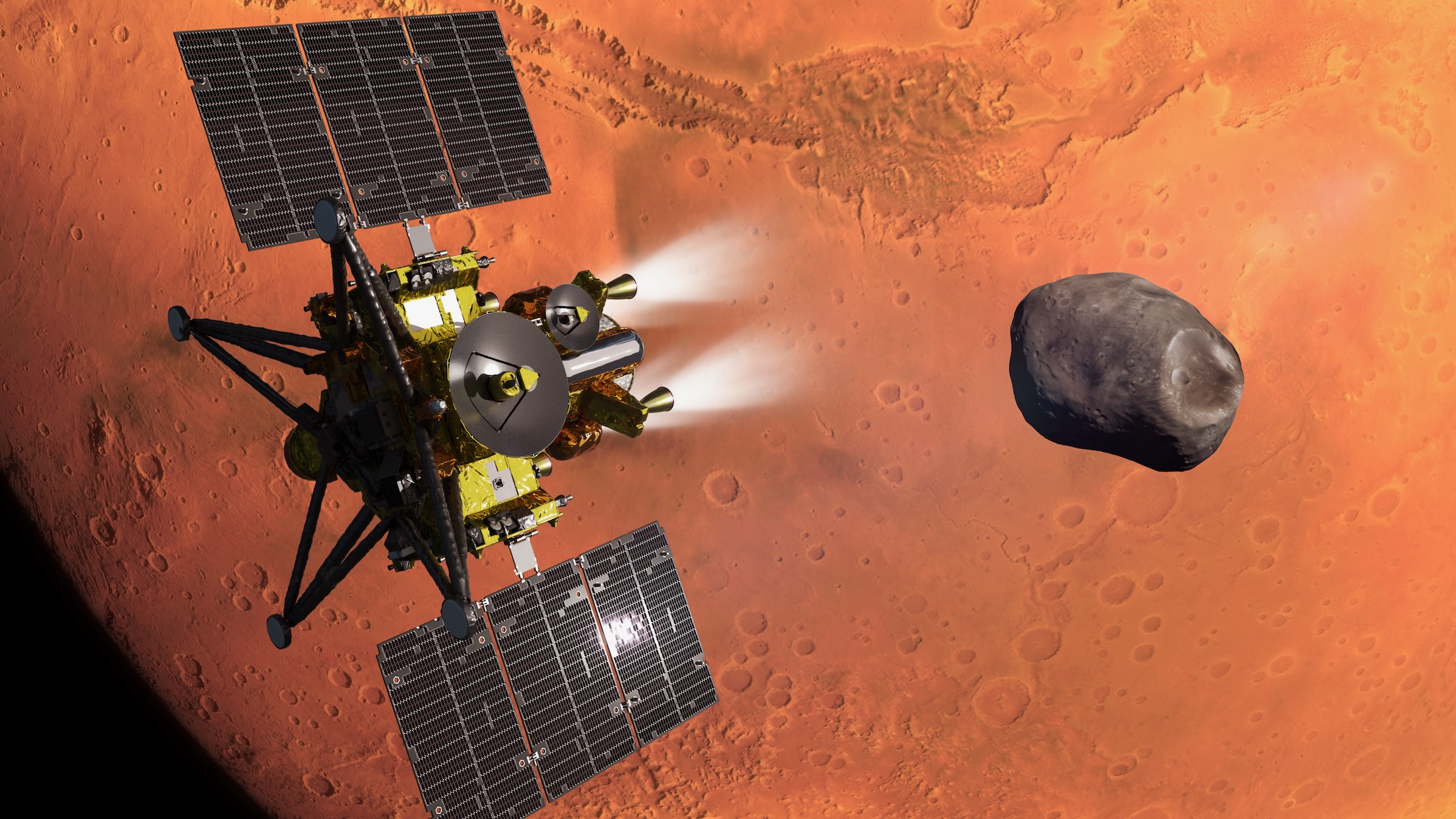
While global superpowers remain locked in strategic competition over lunar infrastructure and low-Earth orbit economic zones, Japan is quietly executing an unprecedented deep-space play. JAXA’s Martian Moons eXploration (MMX) mission represents an extraordinary convergence of state-backed capital deployment, advanced propulsion engineering, and high-risk orbital logistics. The mission targets Phobos and Deimos—the two enigmatic natural satellites orbiting Mars—with the primary goal of landing on Phobos, extracting subsurface regolith, and returning those samples safely to Earth.
This initiative comes at a critical juncture for the global aerospace ecosystem. NASA’s flagship Mars Sample Return program, originally slated to bring Martian surface soil back to Earth via a multi-hardware joint architecture with the European Space Agency (ESA), has encountered major fiscal friction. Projected costs for the U.S. program have ballooned beyond $11 billion, prompting Congressional scrutiny and architectural re-evaluations. In contrast, JAXA’s targeted budget of approximately 46.4 billion yen ($300 million to $400 million range depending on final integration parameters) highlights a hyper-efficient capital allocation framework that leverages proven asteroid-sampling methodologies developed during the historic Hayabusa and Hayabusa2 missions.
For global institutional investors and defense prime contractors monitoring sovereign aerospace strategy, MMX is far more than a pure scientific excursion. It is a calculated exercise in technical sovereign capability, validating key technologies ranging from autonomous precision landing and deep-space communications systems to specialized heat-shield materials capable of surviving super-orbital re-entry velocities upon return to Earth.
Engineering the Unprecedented: The MMX Architecture and the H3 Vehicle
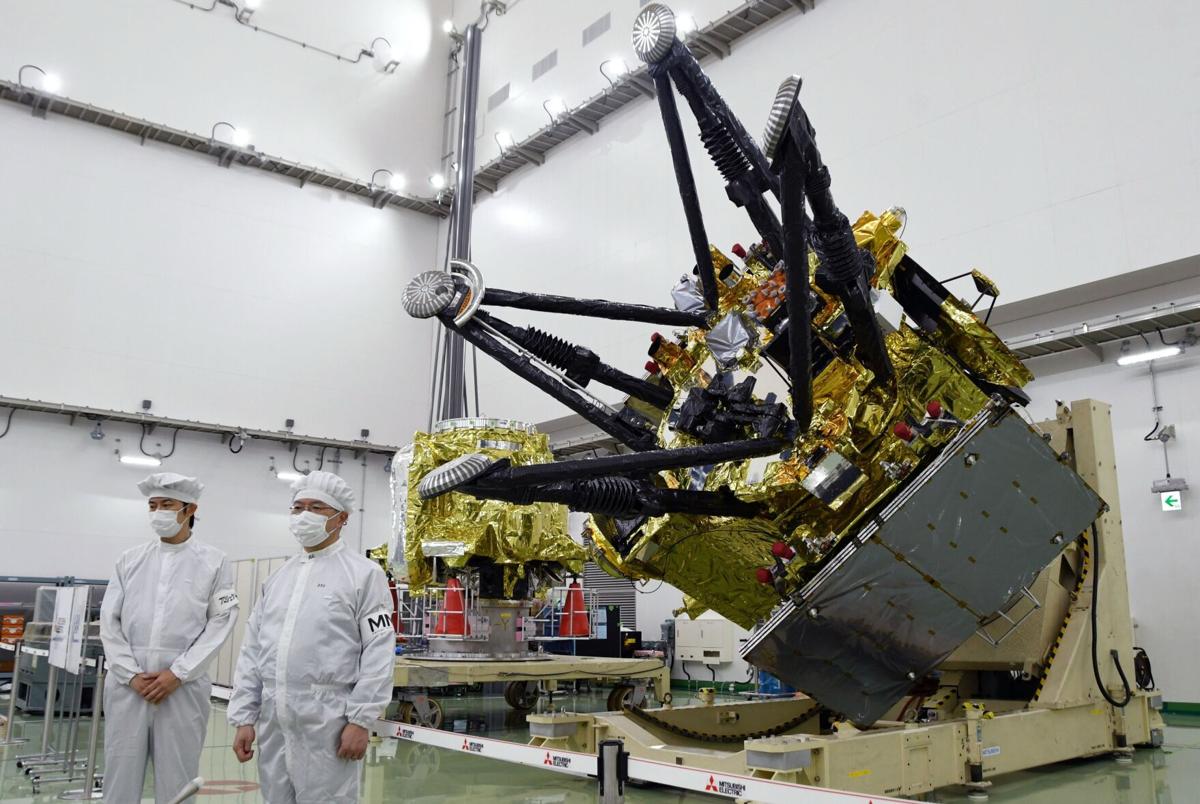
The technical architecture of the MMX spacecraft comprises three distinct modules: a propulsion module equipped with high-efficiency chemical thrusters for orbit insertion and transfers, an exploration module containing scientific payloads and landing gear, and a return module carrying the Earth Re-entry Capsule (ERC). The entire stack boasts a launch mass exceeding 4,000 kilograms, making it one of the heaviest interplanetary payloads ever developed by a Asian spacefaring nation.
Crucial to the execution of MMX is the operational performance of Japan’s H3 launch vehicle, manufactured by Mitsubishi Heavy Industries (MHI). Following early qualification challenges, the successful second and third test flights of the H3 have stabilized Japan’s commercial launch pipeline. The heavy-lift H3 rocket features the newly developed LE-9 expander-bleed cycle engine, engineered to radically reduce per-launch unit costs while delivering competitive payload capacity to geostationary transfer orbits (GTO) and trans-Mars injection (TMI) vectors.
“The operational integration of the MMX payload onto the H3 platform is a definitive litmus test for MHI’s long-term commercial competitiveness,” notes a senior defense analyst at a Tokyo-based investment bank. “If JAXA demonstrates consistent execution on deep-space injection profiles, Japan secures a higher valuation multiple for its domestic aerospace supply chain, directly competing against Western providers like SpaceX and Arianespace.”
The Scientific Imperial Paradigm: Resolving the Origin of Martian Satellites
The core scientific objective of MMX centers on a foundational debate in planetary astrophysics: Are Phobos and Deimos captured primitive asteroids, or are they the coalesced ejecta from a giant collision between a protoplanet and early Mars? Solving this question carries profound implications for understanding terrestrial planet formation, water transport mechanisms in the inner solar system, and the overall habitability of early planetary environments.
Because Phobos orbits Mars at an extraordinarily low altitude—roughly 6,000 kilometers above the Martian surface—it has spent billions of years acting as a natural catch-basin for materials blasted off the Martian surface by meteorite impacts. Consequently, samples retrieved from the surface of Phobos are expected to contain a double dividend: primary material from the moon’s own primordial structure, alongside secondary atmospheric and crustal particles ejected from Mars itself. This allows JAXA to effectively sample the Martian surface without navigating the steep gravity well and atmospheric entry, descent, and landing (EDL) complexities required for a direct Mars surface return mission.
Mission Parameters & Capital Deployment Breakdown
The operational roadmap for the MMX mission requires precise synchronization across multiple international ground tracking networks, high-power deep-space telemetry nodes, and autonomous flight controls. The table below delineates the core operational metrics, technology suppliers, and mission architecture parameters underlying the venture.
| Parameter / Metric | Specifications / Operational Target | Primary Entity / Supplier |
|---|---|---|
| Primary Launch Vehicle | H3 Heavy-Lift Rocket (24L Configuration) | Mitsubishi Heavy Industries (MHI) / JAXA |
| Spacecraft Mass at Launch | ~4,000 kg (including propellants) | JAXA Prime Contractor Network |
| Sample Acquisition Target | Minimum 10 grams of regolith (depth > 2 cm) | JAXA / NASA Pneumatic Sampler System |
| Surface Exploration Rover | 4-wheeled lightweight autonomous micro-rover (IDEFIX) | CNES (France) / DLR (Germany) |
| Gamma-Ray & Neutron Spectrometer | MEGANE (Neutron & Gamma-ray Spectrometer) | NASA / Johns Hopkins Applied Physics Lab |
| Target Launch Window | Mid-2020s (Trans-Mars Injection trajectory) | Tanegashima Space Center, Japan |
| Planned Sample Return Date | Early 2030s (Direct Earth Re-entry Profile) | Landing site: Woomera, South Australia |
Industry, Defense, and Financial Market Implications
The macro-economic ripple effects of Japan’s MMX program extend deep into the global defense industrial complex, private equity capital flows, and the commercial satellite services sector. By consolidating advanced technology research within domestic industrial leaders, Japan is executing a targeted import-substitution strategy for high-reliability aerospace components.
1. Commercial Aerospace & Defense Valuation Multiples
Japanese defense and machinery conglomerates—primarily Mitsubishi Heavy Industries, IHI Corporation, and NEC Corporation—are utilizing state-funded space initiatives to scale enterprise engineering capacity. The proprietary manufacturing techniques developed for the MMX propulsion systems, advanced carbon-composite structures, and radiation-hardened micro-electronics directly feed into Japan’s national defense umbrella, particularly regarding hypersonic flight testing, missile defense tracking, and resilient sovereign communication satellite constellations. As sovereign defense spending rises across Asia-Pacific, these dual-use technology transfer dynamics bolster long-term EBITDA margins and credit ratings for participating Tier-1 contractors.
2. Infrastructure Scalability & Deep-Space Telemetry
Deep-space operations demand uninterrupted, high-throughput command links and orbital trajectory determination. To support MMX, JAXA has expanded its deep-space tracking infrastructure, including the Usuda Deep Space Center's 54-meter parabolic antenna. These facility upgrades increase Japan’s strategic equity within space-agency barter arrangements. By offering ground-station coverage to NASA, ESA, and private lunar lander developers (such as ispace), JAXA converts capital investments in deep-space communication nodes into high-margin operational assets and trade leverage.
3. Risk Mitigation via Multi-Lateral Consortiums
By integrating foreign instrument suites—specifically CNES/DLR’s micro-rover and NASA’s MEGANE spectroscopy payload—JAXA mitigates individual program failure risks while optimizing its capital efficiency. This co-funding model creates legal, operational, and diplomatic alignment across Western-aligned space agencies, establishing an operational framework designed to counter China’s independent Deep Space Exploration Laboratory initiatives.
Frequently Asked Questions (People Also Ask)
What is the primary objective of JAXA’s MMX mission to Phobos?
The primary objective of the Martian Moons eXploration (MMX) mission is to collect a physical sample of regolith from Mars’s moon Phobos and return it safely to Earth. Scientifically, the mission aims to determine whether Phobos is a captured asteroid or the result of a giant impact on Mars. Economically and technologically, MMX serves to demonstrate high-precision landing capabilities, deep-space navigation, and autonomous surface sampling technologies required for future long-duration planetary exploration.
How does Japan's MMX mission differ from NASA's Mars Sample Return project?
While NASA’s Mars Sample Return (MSR) project focuses on gathering samples directly from the Martian surface using a complex, multi-vehicle architecture involving landers, rockets, and orbiters, JAXA’s MMX targets Mars’s moon Phobos. Because Phobos sits within a shallow gravitational well and holds ejected material from Mars due to historical meteorite impacts, MMX can return both Phobos regolith and traces of ancient Martian soil at a fraction of the cost, complexity, and gravitational debt associated with launching off the Martian surface directly.
Why is the launch of MMX using the H3 rocket significant for Japan's economy?
The H3 rocket, built by Mitsubishi Heavy Industries, is Japan’s next-generation flagship launch vehicle, engineered to reduce launch costs by up to 50% compared to its predecessor, the H-IIA. Utilizing H3 for a high-profile, high-mass interplanetary mission like MMX provides global commercial validation for the platform. A successful mission enhances Japan’s position in the global commercial launch market, attracting satellite fleet operators, private ventures, and sovereign partners seeking reliable, cost-effective space access.
Where will the MMX return capsule land when it brings back the samples?
Upon completing its multi-year journey, the Earth Re-entry Capsule (ERC) carrying the collected samples from Phobos is scheduled to decouple from the return module and execute a high-speed atmospheric re-entry landing within the restricted airspace of the Woomera Proving Ground in South Australia. This landing protocol mirrors the successful return vector utilized by JAXA’s Hayabusa2 mission in 2020.
Strategic Outlook and Key Milestones (2026–2031)
As JAXA completes the integration and environmental testing phases for the MMX flight model, institutional stakeholders must monitor several upcoming milestone indicators that will determine the long-term success and commercial return of the program:
- Final System Integration & Payload Qualification: Structural and thermal vacuum tests verifying the durability of the sample collection mechanism under severe thermal gradients representative of Phobos’s orbital environment.
- Launch Execution Window: Precision launch campaign execution from Tanegashima Space Center utilizing the H3 heavy-lift variant, establishing nominal performance along the Trans-Mars Injection vector.
- Mars Orbit Insertion (MOI) & Phobos Proximity Operations: Complex orbital maneuvers designed to drop the spacecraft into an Quasi-Satellite Orbit (QSO) around Phobos, allowing for high-resolution topographic mapping before attempting landing operations.
- IDEFIX Micro-Rover Deployment: The controlled release of the CNES/DLR micro-rover to conduct low-gravity surface mobility tests, gathering real-time telemetry on regolith bearing strength to de-risk the primary spacecraft’s touchdown.
- Sample Retrieval & Trans-Earth Injection: Autonomous core drilling/pneumatic surface tapping to secure regolith, followed by launch off Phobos and transition into a trajectory returning to Earth’s gravitational sphere of influence.
The MMX mission stands as a masterclass in focused, high-yield capital deployment within sovereign aerospace policy. If executed according to plan, Japan will not only secure a historic planetary science breakthrough, but will also solidify its standing as an indispensable technological anchor in global space exploration and defense industrial policy.