Red Planet Gambit: Inside Japan’s High-Stakes Sample-Return Mission to the Mysterious Martian Moon Phobos
TOKYO — In an unprecedented display of deep-space ambition and precision engineering, Japan’s space agency has officially initiated its boldest interplanetary endeavor to date. Today marks the pivotal launch window for a mission designed to bridge the vast cosmic void between Earth and Mars, targeting the enigmatic Martian moon Phobos. For the Japan Aerospace Exploration Agency (JAXA), this undertaking represents far more than an academic exercise in planetary science; it is a monumental demonstration of technological sovereignty, international space leadership, and high-stakes capital allocation in the burgeoning multi-trillion-dollar space economy.
As institutional investors, aerospace conglomerates, and geopolitical strategists monitor the telemetry, the implications of this mission ripple far beyond astrophysics. From satellite infrastructure scalability to the secure utilization of off-world resources, the success of this voyage will serve as a critical benchmark for the commercialization and exploration of our solar system. The global space sector is undergoing a profound structural shift, and JAXA’s latest gambit places Japanese innovation firmly at the vanguard of interplanetary enterprise.
Executive Takeaways
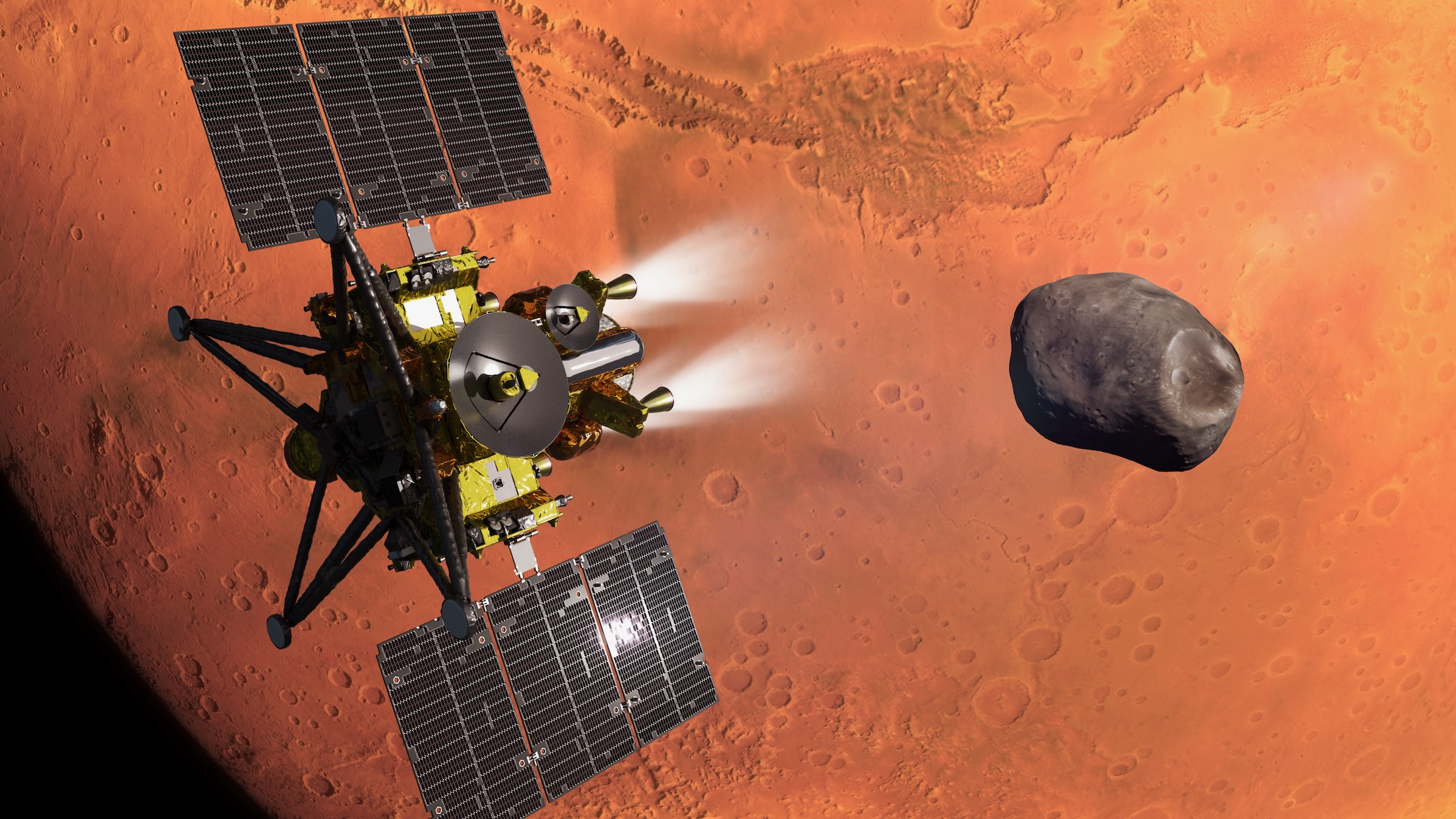
- Historic Interplanetary Scope: JAXA has launched its ambitious Martian Moons Exploration (MMX) mission, aiming to land on Phobos, collect pristine subsurface samples, and return them safely to Earth by 2031.
- Commercial & Industrial Stakes: The mission highlights critical advancements in autonomous guidance, deep-space communication infrastructure, and risk mitigation strategies for long-duration robotic operations.
- Capital & Valuation Impact: As aerospace and defense valuations adjust to the new paradigm of deep-space exploration, successful execution validates long-term corporate investments in advanced propulsion and sample-containment technologies.
- Scientific Breakthrough: By retrieving unadulterated regolith from Phobos, researchers aim to unlock the definitive origins of the Martian moons and gather crucial data on the early dynamics of our solar system.
The Catalytic Voyage to Phobos: Engineering Against the Void
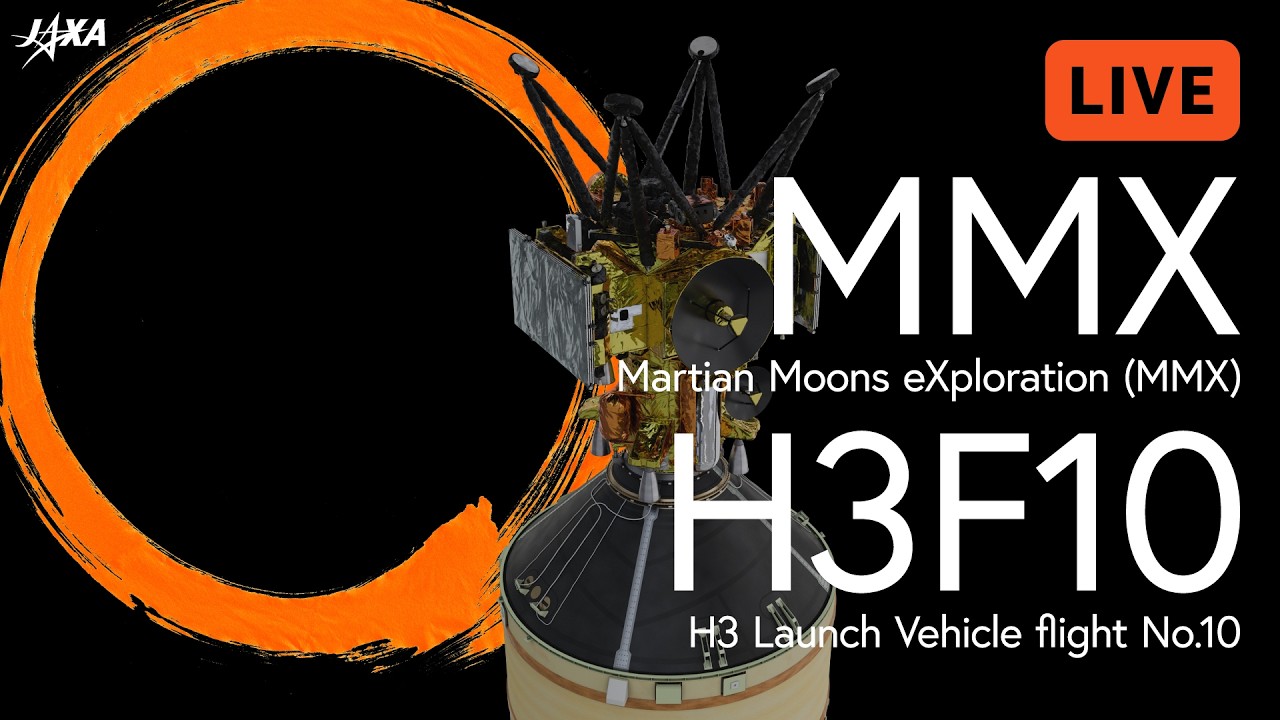
The journey to the Martian system is fraught with immense engineering challenges. Unlike lunar missions, which benefit from proximity and real-time communication loops, missions to Mars require absolute autonomy. Light-speed delays stretching up to 20 minutes each way mean that onboard systems must execute complex orbital insertions, proximity operations, and surface touchdowns without human intervention. JAXA’s spacecraft relies on state-of-the-art cloud compute architecture analogs adapted for radiation-hardened processors, ensuring uninterrupted data processing and autonomous threat detection during critical flight phases.
Phobos itself remains one of the most compelling and perplexing bodies in the solar system. Astronomers have long debated whether this crater-scarred, potato-shaped moon is a captured asteroid from the outer reaches of the asteroid belt or the byproduct of a catastrophic impact that blasted debris into Mars orbit early in planetary history. Settling this scientific debate has enormous implications for our understanding of planetary formation. For enterprise aerospace contractors, the mission also tests the limits of infrastructure scalability, proving that complex, multi-stage robotic architectures can be deployed reliably across interplanetary distances.
Furthermore, the financial mechanics underpinning modern space exploration demand flawless risk mitigation. With program budgets running into the hundreds of millions of dollars, institutional stakeholders and government overseers require rigorous compliance, transparent milestone tracking, and fault-tolerant engineering. JAXA has partnered with a constellation of elite private-sector contractors and international space agencies—including NASA and the European Space Agency (ESA)—to share technical burdens and optimize capital allocation across critical subsystems, ranging from ion propulsion engines to laser altimeters.
Verified Data and Mission Specifications
To understand the sheer magnitude of the Phobos sample-return mission, one must examine the hard metrics governing the spacecraft's design, trajectory, and scientific payload. The table below outlines the core parameters defining this historic interplanetary campaign.
| Metric / Parameter | Mission Specification | Strategic Significance |
|---|---|---|
| Target Body | Phobos (Inner Martian Moon) | Provides insight into Martian system origin and primordial solar system composition. |
| Launch Window | Current Trending Launch Date | Optimizes orbital mechanics and minimizes delta-V fuel requirements. |
| Expected Earth Return | Year 2031 | Delivers pristine regolith samples for global laboratory analysis. |
| Sample Acquisition Goal | Minimum 10 grams from core and surface | Sufficient mass for multi-disciplinary geochemical and isotopic testing. |
| International Partners | NASA, ESA, CNES | Shares operational risk and integrates advanced scientific instrumentation payloads. |
Industry and Market Implications: Who Wins, Who Loses
The global space economy is no longer driven solely by geopolitical prestige; it is increasingly shaped by commercial viability, technological dominance, and asset protection. JAXA’s mission sends strong signals across several key economic sectors:
- Winners — Advanced Aerospace Manufacturers: Companies specializing in radiation-hardened electronics, precision actuators, and autonomous navigation algorithms stand to gain immense market share as national agencies ramp up deep-space procurement.
- Winners — Scientific Instrumentation & Analytics: High-precision mass spectrometers and laboratory equipment providers will see increased institutional demand as universities and research facilities prepare to analyze the returned Phobos regolith.
- Under-Pressure Legacy Defense Contractors: Traditional firms slow to pivot toward agile, software-defined spacecraft architectures risk losing out on high-margin interplanetary contracts to nimble aerospace innovators.
- Broader Economic Impact: The technological spin-offs generated by deep-space exploration—ranging from improved closed-loop life support systems to advanced remote-sensing data compression—directly enhance terrestrial industries, driving enterprise ROI across telecommunications and materials science.
Frequently Asked Questions (People Also Ask)
Why did JAXA choose Phobos instead of Mars itself or Deimos?
Phobos presents a unique geological and logistical advantage. Its low surface gravity makes landing and subsequent ascent significantly less energy-intensive than landing on Mars or even Earth's Moon. Furthermore, because Phobos accumulates impact ejecta from Mars over billions of years, a sample from Phobos may contain fragments of Mars itself, offering researchers a dual scientific bounty without the immense hazards of a direct Martian surface landing and launch.
How long will the entire mission take from launch to sample analysis?
The mission is structured as a marathon rather than a sprint. Following today's launch, the spacecraft will spend roughly a year traveling to the Martian system. After entering orbit around Mars and conducting extensive reconnaissance of both moons, the spacecraft will touch down on Phobos, acquire the samples, and begin the long return journey to Earth, with the landing capsule scheduled to parachute down in 2031.
What are the primary technical risks associated with landing on Phobos?
The primary hurdles include navigating irregular gravitational fields, operating in microgravity where standard landing traction does not apply, and managing prolonged communication blackouts due to solar conjunctions. JAXA has integrated advanced optical navigation systems and autonomous hazard-avoidance algorithms to mitigate these structural risks.
How does this mission impact commercial space ventures and valuation multiples?
While JAXA is a public space agency, the mission relies heavily on proprietary hardware and software supplied by private enterprise. Successful execution validates the intellectual property of participating technology suppliers, boosting investor confidence, driving favorable valuation multiples, and encouraging venture capital deployment into the deep-space infrastructure sector.
Future Outlook: Milestones on the Horizon
As the spacecraft breaks Earth's gravitational grasp and sets its course for the red horizon, attention immediately turns to the next set of operational milestones. Over the coming months, mission controllers will conduct critical trajectory correction maneuvers and test deep-space communication relays. By late next year, the focus will shift to orbital insertion preparations and the calibration of scientific payloads.
The success of this mission will redefine humanity’s reach into the cosmos. By proving that complex sample-return protocols can be successfully executed at Martian distances, Japan is cementing its status as an indispensable pillar of international space exploration. For investors, engineers, and policymakers alike, the voyage to Phobos is not just a journey to a distant moon—it is a foundational stepping stone toward the permanent expansion of human economic and scientific activity across the solar system.