Executive Takeaways
- Sovereign Milestone: The Japan Aerospace Exploration Agency (JAXA), in partnership with Mitsubishi Heavy Industries (MHI), CNES, and NASA, is finalizing preparations for the Martian Moons eXploration (MMX) mission—poised to become humanity's first successful sample-return mission from the Martian system.
- Geopolitical Front-Running: By targeting the Martian moon Phobos, JAXA aims to deliver pristine extraterrestrial material to Earth ahead of NASA-ESA’s budget-strained Mars Sample Return (MSR) architecture and China’s accelerating Tianwen-3 expedition.
- Industrial & Defense Synergies: The mission serves as an operational testbed for Japan’s flagship H3 heavy-lift launch system, reinforcing sovereign defense capabilities, dual-use propulsion infrastructure, and commercial satellite deployment competitiveness.
- High-Stakes Technical Execution: Navigating microgravity sample extraction, radiation shielding, and an automated return trajectory requires deep capital allocation and real-time autonomous systems, laying the groundwork for commercial asteroid mining and orbital logistics architectures.
The Scramble for the Red Planet’s Moons

In the austere cleanrooms of JAXA’s Sagamihara campus and the industrial manufacturing bays of Mitsubishi Heavy Industries in Nagoya, engineers are calibrating what may become the most consequential deep-space asset of the decade. The Martian Moons eXploration (MMX) mission represents more than an ambitious scientific inquiry into the origins of our solar system; it is a calculated bid for leadership in the emerging celestial supply chain.
While global headlines have historically fixated on NASA’s multi-billion-dollar rovers traversing the Jezero Crater and China’s robotic landers on Utopia Planitia, Tokyo has quietly engineered an asymmetrical maneuver. Rather than descending into the deep gravity well of the Martian surface—an endeavor requiring massive descent stages and complex orbital rendezvous mechanisms—Japan is targeting Phobos, the larger and innermost of Mars’ two irregular satellites.
The strategic logic is as much economic as it is scientific. Phobos acts as an orbital sponge, sweeping up millions of tons of ejecta blasted off the Martian crust by asteroid impacts over four billion years. By collecting core samples from Phobos, JAXA intends to extract authentic Martian material alongside native asteroidal regolith at a fraction of the cost, complexity, and thermodynamic burden associated with lifting off from the surface of Mars itself.
Engineering the Architecture: Gravitational Real Estate and Autonomous Robotics
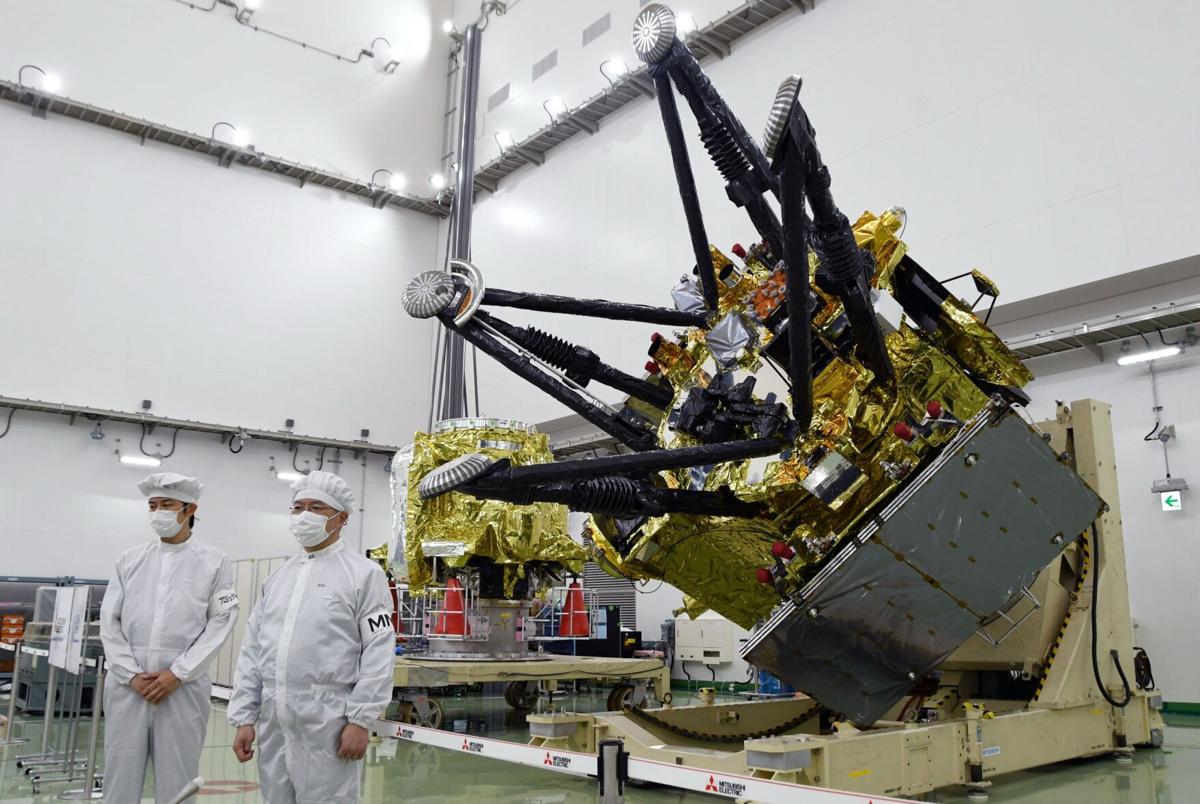
The mission architecture relies on a triad configuration: a propulsion module for interplanetary transit, an exploration module equipped with specialized landing gear and scientific instrumentation, and a return capsule designed to survive high-speed terrestrial atmospheric reentry. The entire stack will weigh roughly four metric tons at launch, representing the heaviest payload JAXA has ever directed toward interplanetary space.
Securing samples from Phobos introduces acute engineering challenges distinct from lunar or terrestrial landings. The surface gravity of Phobos is negligible—roughly one-thousandth of Earth's gravity—meaning the spacecraft cannot rely on weight to stabilize itself. JAXA engineers, building on the operational legacy of the Hayabusa and Hayabusa2 missions, have developed a multi-layered extraction suite featuring both a core sampler (capable of drilling up to 10 centimeters into the sub-surface) and a pneumatic gas-injection mechanism to mobilize and funnel fine dust into sealed containment vaults.
In parallel, the spacecraft will deploy a compact four-wheeled rover developed jointly by the French National Centre for Space Studies (CNES) and the German Aerospace Center (DLR), dubbed "IDEFIX." Designed to operate semi-autonomously across Phobos’ jagged terrain, the rover provides in-situ geochemical context, mapping surface mineralogy to mitigate landing risks for the mothership’s primary extraction sequence.
The H3 Pivot: Restoring Sovereign Heavy-Lift Launch Capability
The strategic timeline of MMX is inextricably linked to the operational certification of the H3 launch vehicle. Developed by MHI and JAXA as the successor to the reliable but economically uncompetitive H-IIA, the H3 is central to Japan’s sovereign launch autonomy and commercial space export targets.
Following an early stage-two ignition failure during its inaugural flight in 2023, the H3 demonstrated an operational turnaround with successful back-to-back orbital insertions. For MHI, launching MMX to Mars transfer orbit represents a definitive technical validation, critical for competing against SpaceX’s Falcon 9 and Falcon Heavy in the commercial launch market, as well as Europe’s newly minted Ariane 6.
Space agencies allocate capital not only for pure discovery, but to underwrite their domestic industrial bases. The H3 propulsion core, featuring the newly designed LE-9 expander-bleed cycle engine, requires rigorous operational flight heritage to win high-margin sovereign and enterprise payloads. Deploying a deep-space probe of MMX's scale serves as the ultimate marketing prospectus for Japan’s heavy industrial aerospace complex.
Deep-Space Sample Return Architectures: Comparative Metrics
The global race to return materials from the Martian system has fractured into distinct technological and fiscal paradigms. While Western efforts face ballooning capital expenditures, Asian space programs are executing targeted, agile missions.
| Mission | Agency / Lead | Target Destination | Est. Sample Mass | Target Return Window | Projected Architecture Cost |
|---|---|---|---|---|---|
| MMX | JAXA (with NASA, CNES, DLR) | Phobos (Moon of Mars) | ≥ 10 grams | ~2031 | $350M – $450M |
| Mars Sample Return (MSR) | NASA / ESA | Martian Surface (Jezero Crater) | ~500 grams | 2033–2040 (Under Review) | $8B – $11B |
| Tianwen-3 | CNSA (China) | Martian Surface | ~500 grams | 2028–2031 | Undisclosed (Est. $1.5B+) |
| Hayabusa2 (Benchmark) | JAXA | Asteroid Ryugu | 5.4 grams (Retrieved) | Completed (2020) | ~$270M |
Commercial Supply Chains, Dual-Use Tech, and Geopolitical ROI
The enterprise spillover of the MMX mission extends across the defense, telecommunications, and high-precision manufacturing sectors. Prime contractors, including Mitsubishi Electric (Melco), NEC Corporation, and IHI Aerospace, are testing systems that directly translate to terrestrial and low-Earth orbit (LEO) balance sheets.
Autonomous Avionics and Micro-Rendezvous Maneuvering
Deep-space navigation cannot rely on real-time Earth telemetry due to a one-way light delay ranging between 4 and 24 minutes. The autonomous optical navigation and target-tracking algorithms developed for Phobos descent are directly transferrable to sovereign defense capabilities, specifically anti-satellite (ASAT) tracking mitigation, space domain awareness (SDA), and autonomous rendezvous and proximity operations (RPO) within contested orbital corridors.
Planetary Resource Rights and the Orbital Economy
Long-duration space operations require in-situ resource utilization (ISRU). Water ice and organic compounds trapped inside Phobos’ porous interior could theoretically be processed into hydro-lox propellants. By securing sovereign physical data on the structural cohesion and volatile content of Phobos, Japan establishes priority access to the primary logistical waystations for future crewed Mars missions, positioning Japanese industry at the core of future deep-space infrastructure contracts.
Capital Efficiency vs. Megaproject Inertia
NASA’s Mars Sample Return architecture is currently ensnared in a cycle of cost escalations and programmatic redesigns, prompting independent review boards to warn that its budget demands could cannibalize other critical planetary science accounts. If JAXA executes MMX on a fraction of that capital base, it will reinforce the case for lean, highly focused interplanetary missions, driving sovereign agencies to adjust procurement policies toward agile public-private partnerships.
Frequently Asked Questions (People Also Ask)
Why is Japan targeting a Martian moon instead of Mars' surface?
Landing on the surface of Mars presents a steep gravitational gradient, requiring massive heat shields, parachutes, and a high-thrust ascent vehicle to return to orbit. Phobos has negligible gravity, allowing a spacecraft to land, drill, and depart using minimal delta-v (velocity change) and low fuel reserves. Because Phobos is coated with planetary ejecta cast off Mars by meteor impacts over billions of years, JAXA can gather Martian material without the high fiscal and physical cost of surface liftoff.
How does JAXA's MMX compare to NASA’s Mars Sample Return (MSR) program?
While NASA’s MSR program seeks to retrieve roughly 30 sealed tubes of surface rock cached by the Perseverance rover directly from the Martian surface, the project faces mounting technical complexity and budgets projected between $8 billion and $11 billion. JAXA’s MMX is an agile, single-architecture mission with an estimated programmatic cost under $500 million, designed to capture at least 10 grams of regolith from Phobos and return it to Earth on an accelerated timetable.
What launch vehicle will carry the MMX spacecraft?
The MMX mission will launch aboard Japan’s flagship H3 heavy-lift launch vehicle, operated by Mitsubishi Heavy Industries. The rocket represents Japan's latest liquid-propellant launch architecture, designed to cut launch costs by 50% relative to the H-IIA while doubling domestic production cadence for institutional and commercial satellite operators.
When will the samples return to Earth, and where will they land?
Current mission baselines schedule the spacecraft to spend approximately three years in the Martian orbital system conducting surveys of both Phobos and Deimos before touching down to gather samples. The return capsule will detach and execute a high-speed atmospheric entry over the remote desert ranges of Woomera, South Australia, where sample recovery and cold-chain containment facilities will be deployed.
Future Outlook: Milestones and Strategic Horizons
Over the next 18 to 24 months, JAXA and its industrial partners will transition the MMX space vehicle through full-scale thermal-vacuum testing, electromagnetic compatibility trials, and integration with the H3 payload fairing at the Tanegashima Space Center. Orbital insertion trajectories depend strictly on the planetary alignment of Earth and Mars, which opens a viable launch window every 26 months.
If JAXA successfully retrieves Phobos regolith at the turn of the decade, it will disrupt the traditional geopolitical space hierarchy. The operation will prove that mid-tier sovereign space powers, through tightly defined parameters and multilateral industrial coalitions, can outperform superpower budgets trapped in procurement inertia. For aerospace markets and sovereign investors, the mission offers a clear lesson: in the emerging orbital economy, technological agility and strategic target selection beat raw capital allocation every time.