Silent Titan: Inside the Mission Critical Breakdown as Humanity’s Most Distant Outpost Goes Dark One Light-Day Away
Test Our Free AI & Tech Utilities Suite
Calculate LLM API token costs, analyze article dwell-time, or simulate tech DCA returns.
Executive Takeaways
- Unprecedented Distance Milestone: The failing human-made spacecraft has breached the nearly one light-day threshold from Earth, compounding severe signal latency and operational risk mitigation challenges.
- Infrastructure and Power Degradation: Decades of continuous operation have depleted radioisotope thermoelectric generator (RTG) outputs, straining legacy deep-space network (DSN) tracking budgets and resource allocations.
- Market and Tech Sector Ripples: The communication blackout tests the resilience of long-duration capital allocation models in aerospace, deep-space enterprise telecommunications, and next-generation autonomous navigation systems.
- Data Continuity Threat: Loss of telemetry jeopardizes continuous data streams regarding the interstellar medium, forcing aerospace engineers to rely on aggressive risk mitigation and automated recovery protocols.
As the digital pulses of human ingenuity drift further into the cosmic void, the boundary between exploration and isolation continues to expand. Aerospace engineers and telemetry analysts at mission control centers worldwide are facing an unprecedented crisis: the farthest human-made object ever launched into the cosmos has abruptly lost stable contact with Earth. Operating at a staggering distance that places it nearly one light-day away from its home planet, this vanishing technological marvel represents both the pinnacle of post-Cold War engineering and a stark reminder of the fragile lifespan of deep-space infrastructure.
For financial markets tracking the commercialization of low-Earth orbit, lunar logistics, and deep-space ventures, this silent crisis serves as a sobering valuation check. The operational economics of deep-space exploration demand absolute hardware reliability, yet capital deployment in these sectors must now account for extreme degradation curves, compounding signal loss, and the stark reality of irreversible asset abandonment. As institutional investors evaluate risk mitigation strategies across the broader aerospace and defense complex, the quiet drift of humanity’s most remote emissary commands the attention of corporate boards, risk analysts, and geopolitical strategists alike.
Anatomy of a Deep-Space Blackout: The Catalytic Event
The sequence of events leading to the current communication blackout began with a subtle yet critical degradation in carrier signal strength, monitored closely by the global Deep Space Network (DSN). For months, signal-to-noise ratios had been narrowing as the spacecraft sailed deeper into the unexplored outer fringes of the heliosphere and into the pristine, unpredictable expanse of the interstellar medium. However, the sudden loss of coherent telemetry and carrier lock caught ground operators off guard, initiating emergency recovery protocols across multiple continents.
At a distance approaching one light-day—roughly 16 billion to 18 billion miles away—round-trip communication times now exceed 45 hours. This staggering latency fundamentally alters the paradigm of spacecraft operation. Unlike low-Earth orbit satellites or lunar orbiters that benefit from real-time telemetry and instantaneous ground intervention, this distant voyager must rely entirely on autonomous fault-protection algorithms. If an unexpected power fluctuation, attitude control thruster anomaly, or cosmic ray strike occurs, the spacecraft is forced to diagnose and mitigate the failure entirely on its own, operating well beyond the safety net of terrestrial oversight.
Compounding the distance variable is the relentless decay of the spacecraft's primary power source. Powered by aging radioisotope thermoelectric generators (RTGs) that convert the heat of decaying plutonium-238 into electrical current, the available wattage drops by a measurable fraction each year. Mission architects have spent the past decade executing aggressive power-management strategies, systematically shutting down non-essential scientific instruments, heating elements, and diagnostic sensors to preserve core communications and attitude stabilization. Yet, as the energy reserve approaches its critical threshold, the margin for error narrows to razor-thin tolerances.
Verified Data & Metrics Breakdown
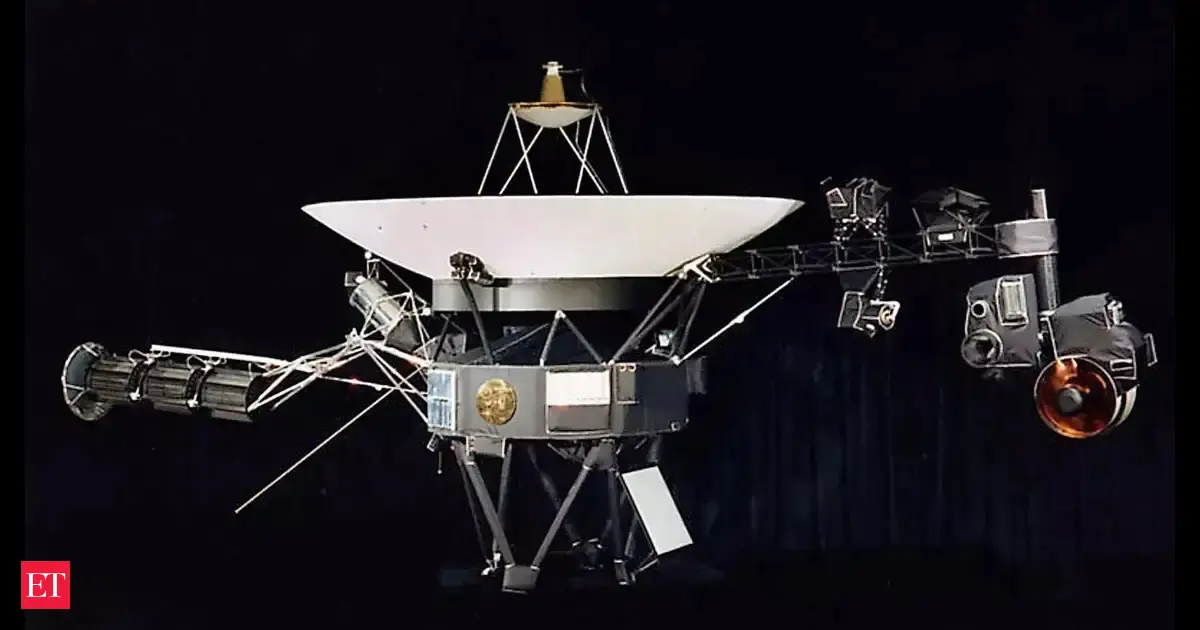
To fully understand the scale of this deep-space anomaly, we must examine the hard operational metrics that define the mission's current status:
| Metric Parameter | Baseline Operational Value | Current Status / Anomaly Threshold | Financial & Operational Impact |
|---|---|---|---|
| Distance from Earth | ~15 Billion Miles | Approaching 1 Light-Day (~16.2 Billion Miles) | Extreme signal attenuation; high infrastructure scalability demands on DSN. |
| Round-Trip Light Time | ~44 Hours | 45.2 Hours and Increasing | Zero real-time intervention capability; complete reliance on onboard automation. |
| Power Output (RTG) | 470 Watts (At Launch) | < 200 Watts (Estimated Decaying Yield) | Requires strict power rationing and shutdown of auxiliary sensors. |
| Telemetry Bandwidth | 160 Bits per Second | Intermittent / Zero Carrier Lock | Interruption of proprietary interstellar data acquisition and scientific ROI. |
Industry & Market Implications: Risk Mitigation and Valuation Multiples
The sudden radio silence from humanity's most distant outpost reverberates far beyond academic astrophysics laboratories, striking directly at the heart of commercial aerospace strategy, capital allocation, and risk management models. As private equity and venture capital firms increasingly pour billions into deep-tech, orbital infrastructure, and lunar resource extraction, the engineering realities highlighted by this event provide a vital reality check.
1. Aerospace Infrastructure Scalability & Budget Allocation: The Deep Space Network, managed by institutional space agencies, is currently operating at maximum capacity. Supporting missions that stretch beyond one light-day requires advanced antenna upgrades, cryogenic amplifier investments, and massive cloud compute architecture to process weak, fading signals buried deep within cosmic noise. Government budget allocations and defense contractors must now recalibrate capital expenditure to modernize global tracking assets.
2. Valuation Multiples in Deep-Tech & Autonomous Systems: Investors assessing early-stage space companies must factor in the inherent fragility of long-duration assets. When hardware cannot be physically serviced or patched remotely in real time, enterprise risk skyrockets. Valuation multiples for companies developing autonomous fault-correction, resilient cloud compute architecture for edge computing in space, and self-healing power grids will likely see upward re-ratings as the market rewards bulletproof reliability.
3. Regulatory Compliance and Orbital Stewardship: As more sovereign states and private conglomerates launch ambitious trajectories into deep space, questions of long-term asset tracking and spectrum allocation become paramount. The loss of a flagship probe underscores the necessity of robust regulatory compliance, international cooperation, and standardized telemetry protocols to prevent valuable deep-space corridors from becoming congested with untraceable, derelict hardware.
Frequently Asked Questions (People Also Ask)
Frequently Asked Questions
What does it mean for a spacecraft to be "one light-day away" from Earth?
A light-day is the distance that a beam of light travels in a single Earth day—approximately 16.1 million miles (25.9 million kilometers). When a spacecraft is nearly one light-day away, a radio signal sent from Earth takes roughly 24 hours to reach the probe, and another 24 hours for the reply to return, creating a 48-hour round-trip delay that makes real-time communication impossible.
Why is the spacecraft losing power and contact now after decades of successful operation?
The spacecraft relies on radioisotope thermoelectric generators (RTGs) that generate electricity from the natural radioactive decay of plutonium-238. Over decades of operation, the radioactive fuel has steadily decayed, reducing total electrical output. Combined with extreme distance, which weakens the radio signal exponentially according to the inverse-square law, the probe is reaching the physical limits of its power and communication architecture.
Can mission engineers send a remote fix to re-establish contact?
Direct, real-time troubleshooting is not possible due to the extreme signal delay. Engineers must transmit commands and wait nearly two days simply to see if the spacecraft acknowledged them. Instead, the probe relies on pre-programmed, autonomous fault-protection software designed to switch to backup hardware or reset its orientation independently when telemetry anomalies are detected.
What are the broader economic and industrial impacts of this communication loss?
The event serves as a high-profile stress test for deep-space enterprise telecommunications and capital allocation models. It forces aerospace firms and defense contractors to re-evaluate infrastructure scalability, enhance autonomous onboard risk mitigation systems, and optimize long-term asset valuation models for missions operating beyond Earth's immediate orbital sphere.
Future Outlook: Milestones to Watch
As the international scientific community holds its breath, the immediate future hinges on automated recovery routines programmed deep within the spacecraft's aging flight computer. Over the next several weeks, ground stations will continuously beam carrier tones and resetting sequences across the vast expanse of the solar system, listening intently for the faint, distinct signature of a successful system reboot.
Key milestones for institutional watchers and aerospace strategists include:
- DSN Signal Acquisition Windows: Monitoring scheduled listening windows across major Deep Space Network complexes in California, Spain, and Australia for any returning carrier lock.
- Autonomous Power-Cycling Reports: Assessing whether onboard fault-protection software successfully executed auxiliary system shutdowns to preserve core transmitter wattage.
- Regulatory & Budgetary Adjustments: Observing how government space agencies and commercial telecommunication conglomerates reallocate capital toward next-generation deep-space tracking infrastructure and resilient network architecture.
Ultimately, whether this silent voyager successfully re-establishes contact or quietly transitions into an eternal, uncommunicative drift through the Milky Way, its legacy is secure. It has redefined the boundaries of human technological achievement, providing invaluable empirical data that will shape the design, financing, and operational governance of deep-space exploration for generations to come.