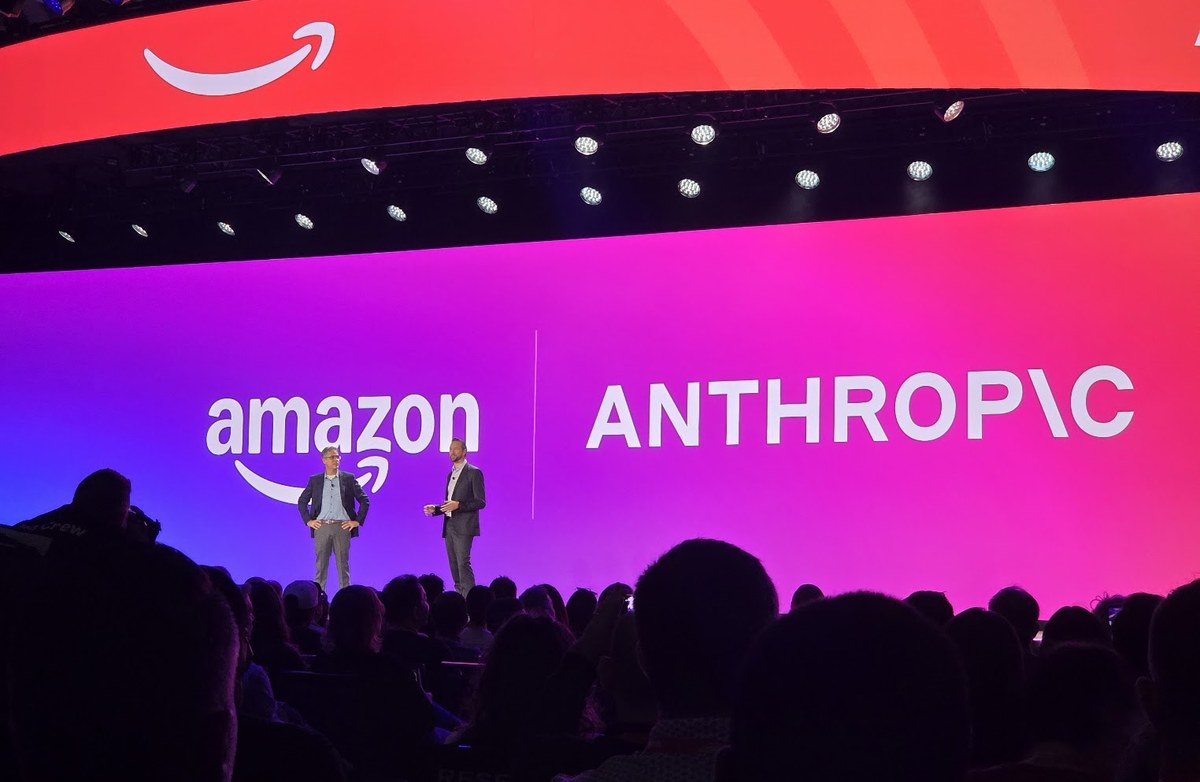
For years, the generative artificial intelligence boom has been defined by a shadow war of capital allocation, cloud infrastructure commitments, and hyper-scaled hardware acquisition. At the heart of this gold rush sits Anthropic, the San Francisco-based frontier lab behind the Claude model family. While public discourse has long fixated on the headline-grabbing investments funneled into Anthropic by tech titans like Amazon and Google, a newly public IPO filing has finally pulled back the curtain on the other side of the ledger: where that money is actually being spent.
According to comprehensive data unearthed from the company's long-anticipated prospectus, the anatomy of Anthropic’s cloud compute architecture tells a definitive story about strategic partnerships, risk mitigation, and infrastructure scalability. Far from spreading its capital evenly across the valley, Anthropic’s balance sheet provides a masterclass in modern enterprise economics, clarifying precisely where the tech giants stand in the fierce battle to power the next generation of artificial intelligence.
Executive Takeaways
Test Our Free AI & Tech Utilities Suite
Calculate LLM API token costs, analyze article dwell-time, or simulate tech DCA returns.
- Asymmetric Capital Flow: Newly surfaced IPO documentation reveals precise geographic and corporate distribution of Anthropic's multi-billion-dollar infrastructure expenditures, separating public marketing narratives from balance-sheet reality.
- The Hardware Hegemony: The filings underscore how frontier AI research relies entirely on hyper-concentrated supply chains, exposing deep reliance on specialized cloud compute providers and silicon giants.
- Strategic Vendor Hedging: Anthropic’s cloud expenditure strategy highlights a deliberate effort to balance multi-cloud redundancy against the deep-pocketed equity partnerships that anchor its valuation multiples.
- Market Liquidity and Valuation Impact: The disclosure of these heavy, non-discretionary capital outlays provides institutional investors with a clear lens into the unit economics and burn rates governing foundational model providers.
The Anatomy of the AI Boom: Decoding the Capital Flow

To understand the weight of Anthropic’s recent filings, one must understand the staggering physics of modern large language model training. Building systems capable of reasoning, complex coding, and multi-modal synthesis requires unfathomable amounts of floating-point operations. For an enterprise of Anthropic's scale, compute spending is not a variable line item; it is the fundamental cost of goods sold, research and development, and future market viability rolled into one.
For years, Wall Street analysts, venture capitalists, and tech journalists have debated the true nature of the symbiotic relationships between foundational AI labs and cloud hyperscalers. When Amazon and Google injected billions of dollars of capital into Anthropic, the market assumed a natural quid pro quo: cash in exchange for exclusive or heavily favored cloud compute consumption. However, until the recent filing of the company's registration statement, the exact distribution of those cloud credits and cash disbursements remained shrouded in corporate confidentiality agreements.
The prospectus changes the narrative entirely. By detailing the massive vendor obligations and hosting commitments made over the past fiscal cycles, the filing allows financial analysts to trace the dollar from venture syndicate pockets straight into the data centers of the world's largest technology conglomerates. It reveals a complex chessboard where equity investments, strategic partnerships, and pure infrastructure performance dictate who ultimately captures the economic value of the generative AI revolution.
Infrastructure Scalability and the Cloud Compute Battleground
At the center of Anthropic’s operational architecture is a relentless demand for silicon. Training clusters comprising tens of thousands of specialized accelerators—ranging from proprietary Tensor Processing Units (TPUs) to enterprise-grade graphics processing units (GPUs)—demand resilient, high-bandwidth data center facilities that only a handful of global firms can deploy.
The IPO disclosures lay bare the financial mechanics governing these relationships. While Amazon Web Services (AWS) has aggressively positioned itself as a primary home for Anthropic through multi-billion-dollar commitments and the integration of Claude models into its Bedrock ecosystem, and Google maintains a parallel heavyweight footprint via its Cloud platform and TPU infrastructure, the balance sheet illustrates how capital allocation shifts in real-time based on pricing, availability, and hardware performance.
Enterprise ROI in the AI sector is inextricably linked to infrastructure efficiency. Every baseline efficiency gain in inference or reduction in training epoch time translates directly into margin expansion. Consequently, Anthropic’s treasury operations and engineering leadership have meticulously optimized their multi-cloud posture. The filing demonstrates that while strategic equity partners secure a foundational share of the compute wallet, market-rate competitive dynamics still dictate significant portions of secondary infrastructure procurement.
| Metric / Strategic Dimension | Amazon Web Services (AWS) Partnership | Google Cloud Platform (GCP) Partnership |
|---|---|---|
| Primary Equity Alignment | Multi-billion-dollar strategic capital commitment | Significant early-stage and ongoing financial backing |
| Hardware Architecture Focus | Custom Trainium and Inferentia silicon alongside NVIDIA clusters | Proprietary Tensor Processing Units (TPUs) and high-end GPUs |
| Ecosystem Integration | AWS Bedrock distribution and enterprise sales channel synergy | Vertex AI integration and developer toolchain optimization |
| Compute Spend Allocation | Dominant share of primary training and inference workloads | Substantial secondary scaling and specialized research capacity |
Industry & Market Implications: Who Wins and Who Loses?
The ripple effects of Anthropic’s spending disclosures extend far beyond the company’s corporate headquarters. For public market investors, the filing serves as a crucial bellwether for the entire artificial intelligence ecosystem.
The Tech Giants (The Cloud Hyperscalers): Amazon and Google emerge as both financiers and primary beneficiaries. By recycling their investment capital back into their own cloud infrastructure divisions through Anthropic’s compute consumption, these giants are effectively subsidizing their own cloud revenue growth while securing premier anchor tenants for their next-generation data centers. It is a closed-loop financial ecosystem that bolsters top-line cloud growth metrics scrutinized closely by Wall Street.
The Hardware and Silicon Makers: Companies providing the underlying plumbing—most notably NVIDIA, alongside custom silicon design teams within the hyperscalers—are the ultimate structural winners. Regardless of how Anthropic divides its compute budget between AWS and GCP, the underlying capital flows overwhelmingly toward advanced semiconductor fabrication and hardware manufacturing.
Independent Infrastructure Providers: Traditional data center operators and neo-cloud competitors face a formidable barrier. The sheer capital expenditure required to compete with the bundled equity-and-compute packages offered by Amazon and Google leaves independent providers fighting for smaller, non-frontier workloads.
Frequently Asked Questions (People Also Ask)
1. What do Anthropic’s IPO filings reveal about its relationship with AWS and Google?
The prospectus details the precise scale of cloud compute commitments made to its primary backers, illustrating how equity investments correlate directly with massive infrastructure spending obligations across Amazon Web Services and Google Cloud Platform.
2. Why is compute spending such a critical metric in foundational AI IPOs?
In the generative AI sector, compute is the equivalent of raw material and manufacturing plant combined. Tracking compute spending allows institutional investors to evaluate unit economics, infrastructure efficiency, capital burn rates, and the sustainability of long-term profit margins.
3. Does Anthropic rely exclusively on a single cloud provider for its AI models?
No. While Amazon and Google hold dominant positions due to their strategic financial backing and hardware ecosystems, the filings indicate a sophisticated multi-cloud strategy designed to optimize availability, mitigate supply chain bottlenecks, and leverage competitive pricing for specialized workloads.
4. How do these infrastructure commitments impact Anthropic’s valuation multiples?
Heavy, non-discretionary capital expenditure requirements introduce significant fixed costs, which investors weigh against revenue growth velocity and enterprise adoption rates when determining appropriate valuation multiples for the upcoming public offering.
Future Outlook: Milestones to Watch
As Anthropic marches closer to its public market debut, market participants will be tracking several critical inflection points. First, the rate of enterprise monetization relative to compute expansion will dictate whether frontier model margins can outpace infrastructure costs. Second, any shifts in hardware dependency—particularly as custom silicon from AWS and Google matures—will alter the cost structure of training future iterations of Claude.
Ultimately, the IPO filing is more than a regulatory requirement; it is a financial X-ray of the modern artificial intelligence economy. It proves that while the public narrative focuses on visionary breakthroughs and safety research, the ultimate determinant of success in the AI era remains brutally grounded in physical infrastructure, capital allocation, and the relentless accumulation of compute power.