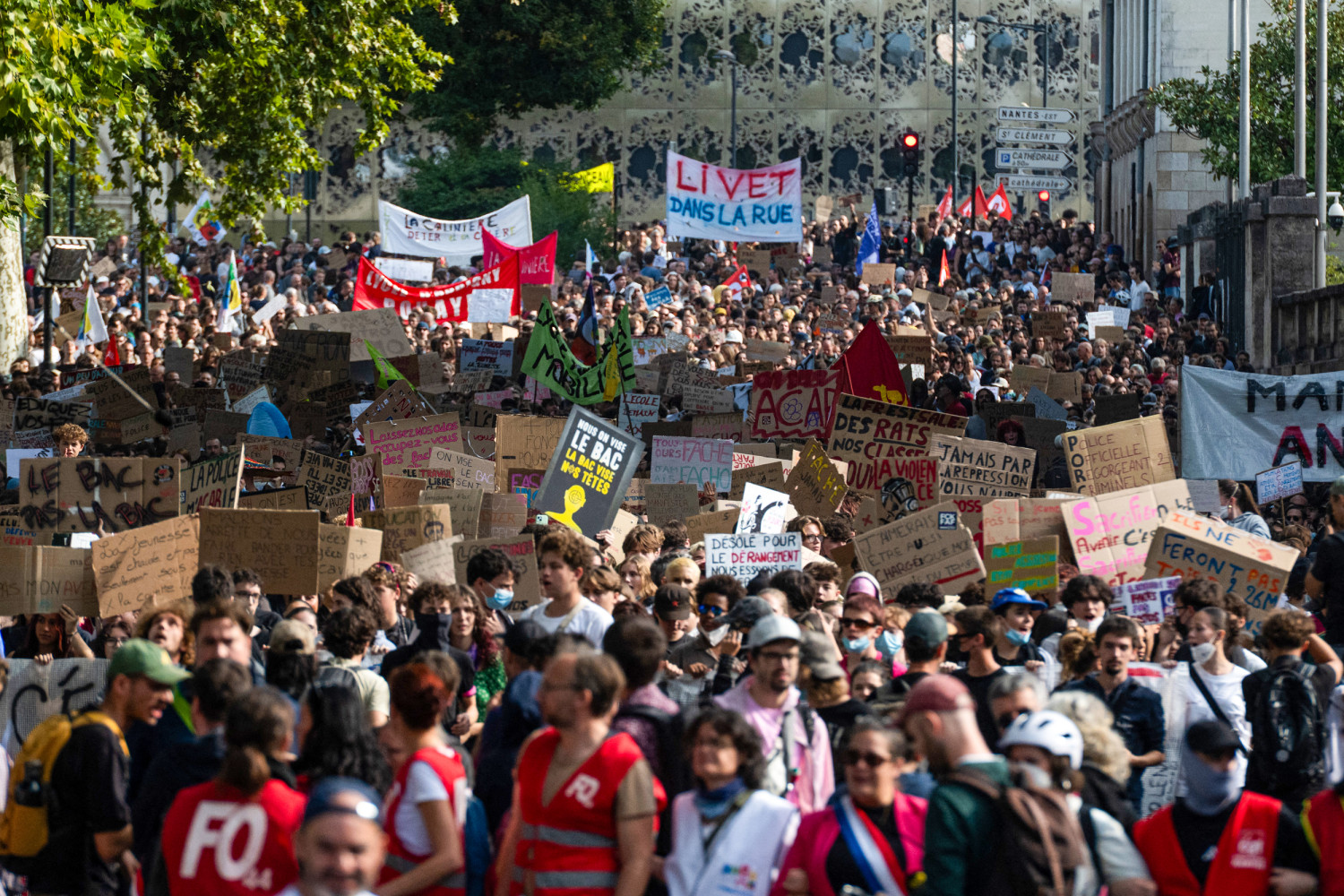
PARIS — France is facing a severe nationwide crisis as nearly 900 secondary schools have been forced to shutter their doors following an escalation of violent education protests. What began as student-led demonstrations against sweeping institutional reforms, curriculum adjustments, and alleged budget cuts has rapidly devolved into intense street clashes, blockades, and widespread civil unrest across major French metropolitan areas.
The sudden closure of educational facilities has disrupted hundreds of thousands of students, sending shockwaves through the French government. President Emmanuel Macron’s administration is now scrambling to contain a multi-front crisis that threatens to paralyze the nation’s public services just as economic tensions reach a boiling point.
At a Glance: The French Education Crisis
- Total Closures: Nearly 900 secondary and high schools (lycées) closed or heavily disrupted.
- Core Triggers: Opposition to educational funding cuts, proposed curriculum changes, and tightening academic standards.
- Security Response: Heavy deployment of riot police (CRS) in Paris, Marseille, Lyon, and Toulouse.
- Economic Fallout: Supply chain bottlenecks, commuter delays, and investor jitteriness over domestic stability.
Unprecedented Unrest Hits French Classrooms
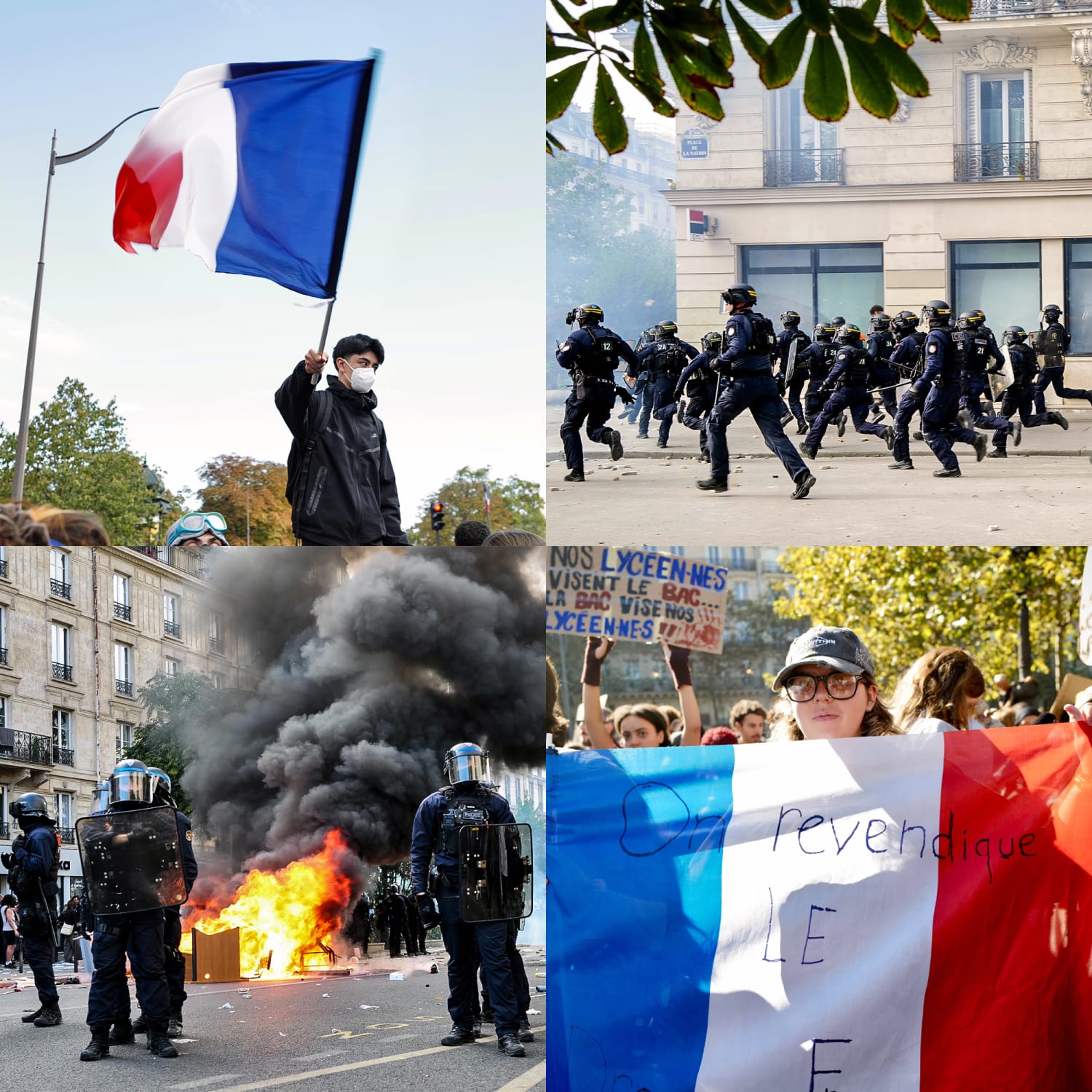
Over the past week, tensions surrounding France’s public education sector boiled over into the streets. High school students, joined by powerful teacher unions and sympathetic labor organizations, set up fiery barricades outside school gates, using burning trash bins and overturned bicycles to block access.
While the initial demonstrations centered on grievances regarding educational funding and institutional reforms, the movement has quickly absorbed broader societal anger. Protesters are voicing deep-seated frustrations over the rising cost of living, inflation, and government policies perceived as favoring corporate interests over public welfare.
The Ministry of Education confirmed that approximately 900 institutions experienced total shutdowns or severe operational blockades. In cities like Marseille and Lyon, clashes between masked protesters and anti-riot police turned violent, with authorities deploying tear gas and stun grenades to disperse crowds hurling stones and fireworks.
Market and Economic Implications
Global investors and economic analysts are closely monitoring the unfolding situation. France, the Eurozone's second-largest economy, is already navigating delicate fiscal tightropes. Extended civil unrest not only disrupts domestic productivity but also shakes consumer confidence and weighs on the euro.
Furthermore, the transportation and logistics sectors are experiencing secondary disruptions due to impromptu street marches and transit blockades. Industry leaders warn that if the unrest persists through the end of the fiscal quarter, tourism, retail, and hospitality sectors in major urban centers could suffer measurable revenue losses.
| Metric / Indicator | Current Status | Market Impact |
|---|---|---|
| Impacted Schools | Nearly 900 nationwide | High disruption to workforce parents |
| Security Deployment | Max alert in urban centers | Elevated public spending allocation |
| Eurozone Sentiment | Cautious observation | Mild pressure on French sovereign bonds |
| Labor Union Alignment | Growing solidarity strikes | Risk of cross-sectoral general strikes |
Government Response and Political Fallout
The French government has adopted a two-pronged approach: condemning the violence while signaling an openness to dialogue regarding educational reforms. Government spokespersons have maintained that while the right to peaceful protest is foundational, lawlessness, vandalism, and the obstruction of public education will not be tolerated.
Interior Ministry officials have authorized robust security measures to protect critical infrastructure and maintain public order. However, opposition politicians from both the political left and right have seized on the chaos to criticize the administration's handling of public sector grievances.
Critics argue that years of centralized policymaking and a failure to adequately consult teachers and student representatives have created a pressure cooker environment. As pressure mounts, the Macron administration faces the daunting task of restoring order without triggering an even larger nationwide general strike.
What Lies Ahead for French Institutions
As unions debate whether to escalate the movement into indefinite industrial action, parents and students are left in limbo. Educational authorities are racing to establish remote learning protocols for the affected institutions, though digital infrastructure disparities remain a persistent hurdle.
For international observers and financial markets, the key question is whether Paris can defuse the standoff before it metastasizes into a broader economic paralysis. For now, heavily armored police presence remains the primary symbol of governance on the streets of France, signaling that a swift resolution is far from guaranteed.
Frequently Asked Questions
Why are French students and teachers protesting?
The protests were initially sparked by opposition to proposed education reforms, budget cuts, and curriculum changes. However, the movement has quickly expanded to encompass broader public discontent over the cost of living and government economic policies.
How is the French government responding to the school closures?
The government has deployed heavy police forces to manage violent demonstrations and clear blockades while simultaneously calling for calm and offering to open channels for dialogue with moderate union leaders and student representatives.