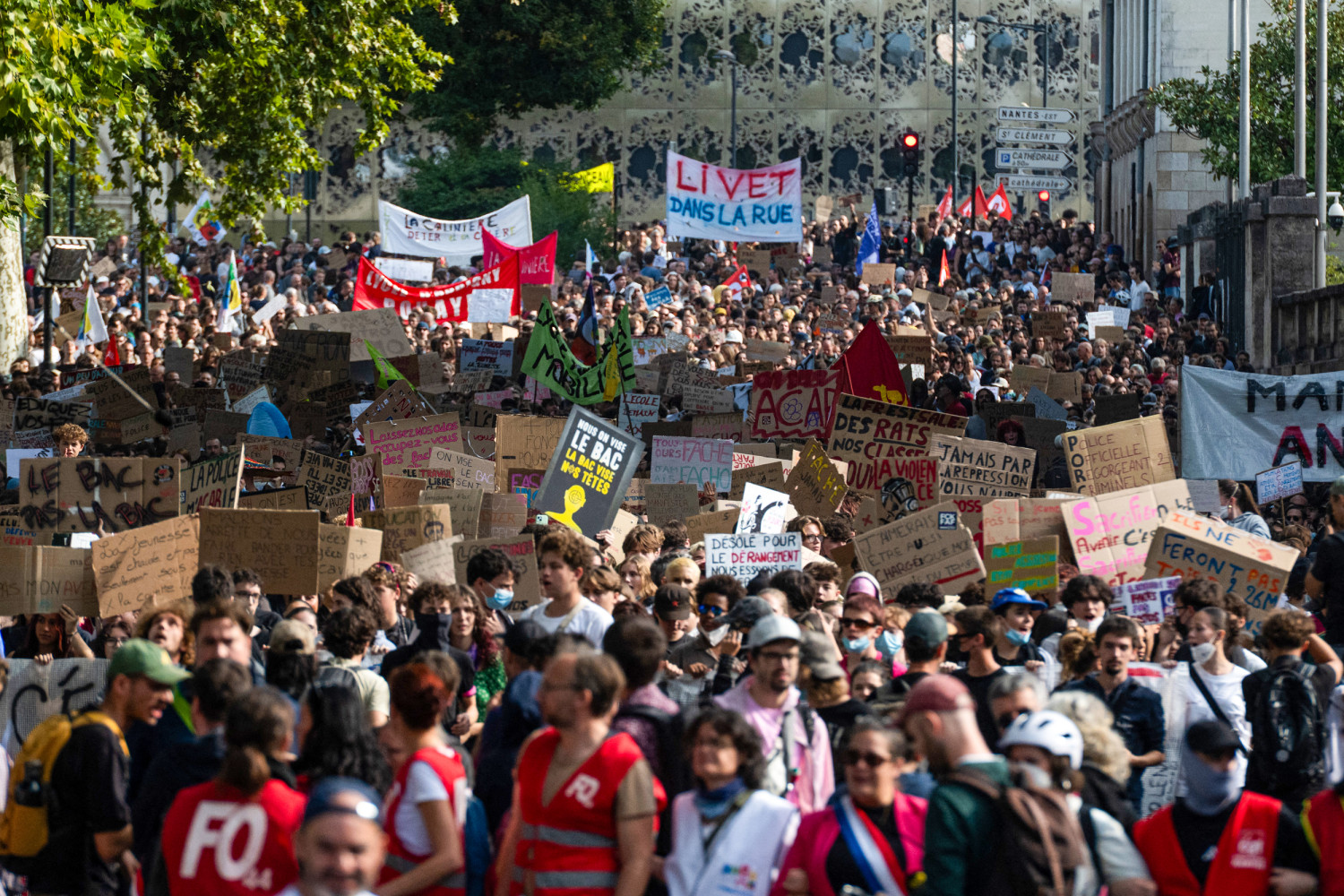
PARIS — In one of the most severe domestic disruptions facing the French government in recent years, authorities have ordered the emergency closure of nearly 900 schools across the country. The sweeping closures come as nationwide student-led demonstrations over sweeping education reforms and funding cuts rapidly escalate into violent clashes with security forces.
The unprecedented shutdowns have paralyzed academic life from Paris to Marseille, forcing millions of families to scramble for alternative childcare while transforming major urban centers into flashpoints of civil disobedience. The escalating crisis poses a formidable political challenge to President Emmanuel Macron’s administration, which is already grappling with persistent inflation and broader labor unrest.
At a Glance: The French Education Crisis
- Total Schools Closed: Nearly 900 primary and secondary institutions nationwide.
- Primary Catalysts: Opposition to proposed curriculum reforms, budget reductions, and teacher-to-student ratio adjustments.
- Security Response: Tens of thousands of riot police deployed; widespread reports of tear gas, projectiles, and property damage.
- Economic Impact: Significant workforce absenteeism as working parents are forced to stay home, disrupting commercial activity in major metros.
The Spark That Lit the Fuse
The current wave of unrest began weeks ago as localized walkouts by high school and university students dissatisfied with government education overhaul plans. However, what started as peaceful rallies demanding increased funding and a rollback of contentious administrative changes quickly morphed into a generalized youth uprising.
Protesters argue that the government's recent policy shifts degrade the quality of public instruction, weaken diploma standards, and fail to address chronic understaffing in classrooms. As unions, teachers' syndicates, and student federations joined forces, the movement gained critical mass, culminating in coordinated blockades of school gates, transit hubs, and municipal buildings.
"We are fighting for the future of public education in France," said Lucile Martin, a representative for a national high school student union in Paris. "When the state guts our resources and ignores our voices, disruption becomes the only language they understand."
Escalation and Clashes: The Streets of Paris
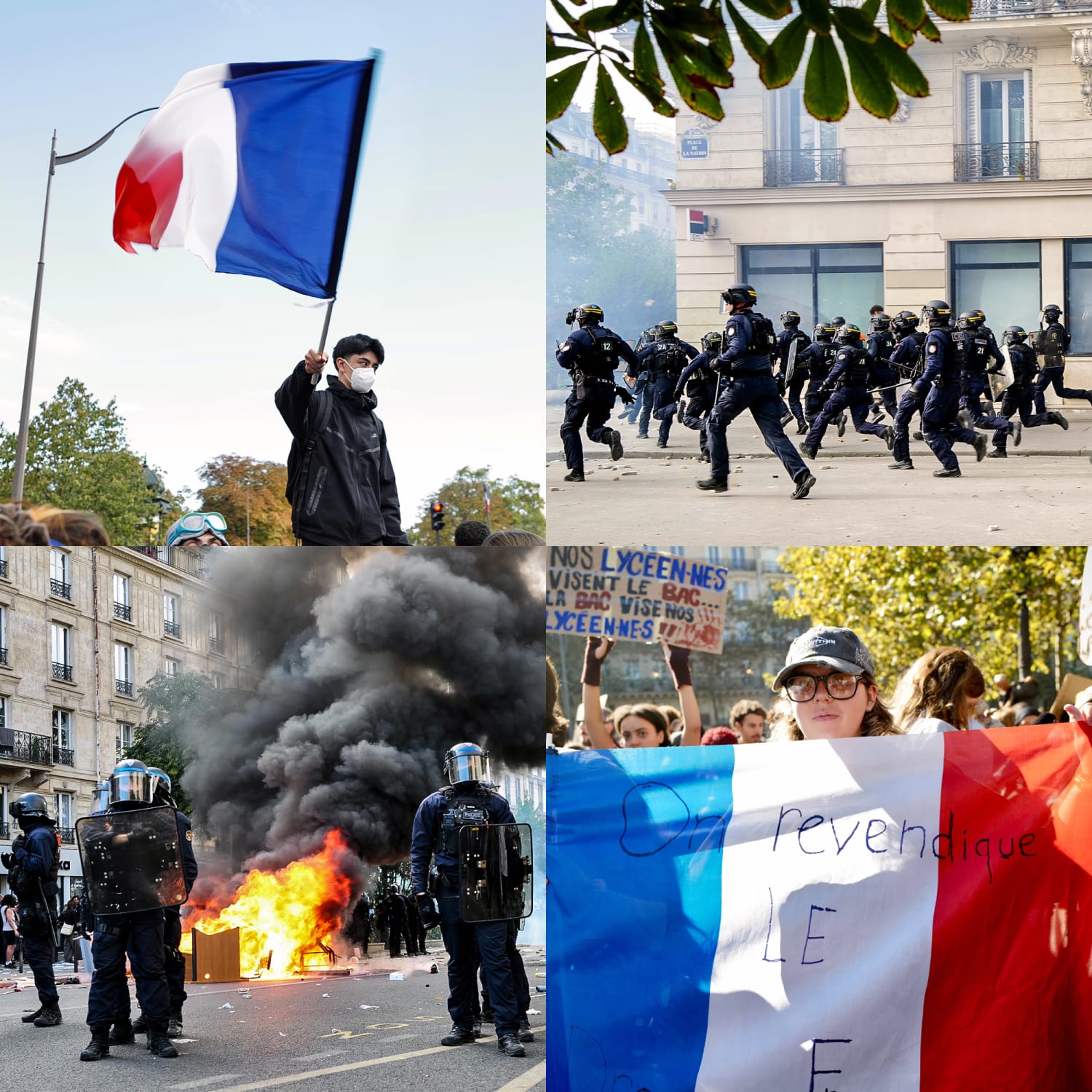
By mid-week, demonstrations in major cities had turned volatile. Footage broadcast across international news networks showed barricades of burning dumpsters outside lycées, overturned cars, and running battles between masked demonstrators and anti-riot police units (*Compagnies Républicaines de Sécurité*).
Law enforcement agencies reported numerous injuries among officers, largely from thrown cobblestones, fireworks, and glass bottles. In response, police deployed tear gas, stun grenades, and water cannons to disperse hostile crowds, resulting in dozens of arrests across Paris, Lyon, and Toulouse.
Interior Ministry officials condemned the violence, asserting that radical agitators had hijacked legitimate student grievances to sow chaos. "Peaceful assembly is a constitutional right, but vandalism, looting, and attacks on law enforcement will be met with absolute firmness," a senior ministry spokesperson stated during an emergency press briefing.
Economic and Political Fallout
The closure of close to 900 educational facilities has rippled well beyond the classroom, striking a blow to France’s broader economic productivity. With millions of children kept at home, thousands of working parents have been forced to take unexpected leave, creating operational bottlenecks for businesses already navigating a sluggish European economic landscape.
Financial markets are closely monitoring the political fallout. Investors are wary that persistent domestic instability could undermine the Macron administration's legislative agenda, particularly upcoming fiscal reforms and pension adjustments.
| Metric / Indicator | Current Status | Economic & Social Impact |
|---|---|---|
| Affected Schools | ~900 institutions closed | Widespread disruption to K-12 academic calendars. |
| Parental Absenteeism | Spiking across urban hubs | Estimated 15% drop in daily productivity for service sectors. |
| Police Deployment | Over 35,000 security personnel | Heightened state expenditure and strained public resources. |
| Market Sentiment | Cautious / Watchful | Uncertainty regarding legislative stability and civil peace. |
What Lies Ahead: A Stalemate on the Horizon
As government officials call for calm and dialogue, student leaders and labor unions have vowed to maintain pressure until the controversial education policies are officially rescinded. Calls for a general nationwide strike are gaining traction, raising fears that the unrest could bleed into transportation and healthcare sectors.
For the Macron administration, the path forward is narrow. Yielding entirely to the protesters risks projecting weakness and emboldening other labor factions, while maintaining a hardline stance threatens to prolong the violence and deepen public resentment. As classrooms remain dark and barricades linger on French streets, the coming days will prove critical in determining whether Paris can negotiate a peaceful resolution to its deepest social crisis in months.
Frequently Asked Questions
Why are French students protesting?
Students are primarily protesting against government-backed education reforms, budget cuts, and adjustments to curriculum and testing standards. They argue these measures harm the quality of public schooling and reduce institutional support.
How is the French government responding?
The government has deployed heavy security forces to maintain public order, condemned acts of violence and vandalism, and urged student leaders to return to the negotiating table while refusing to immediately repeal the disputed policies.