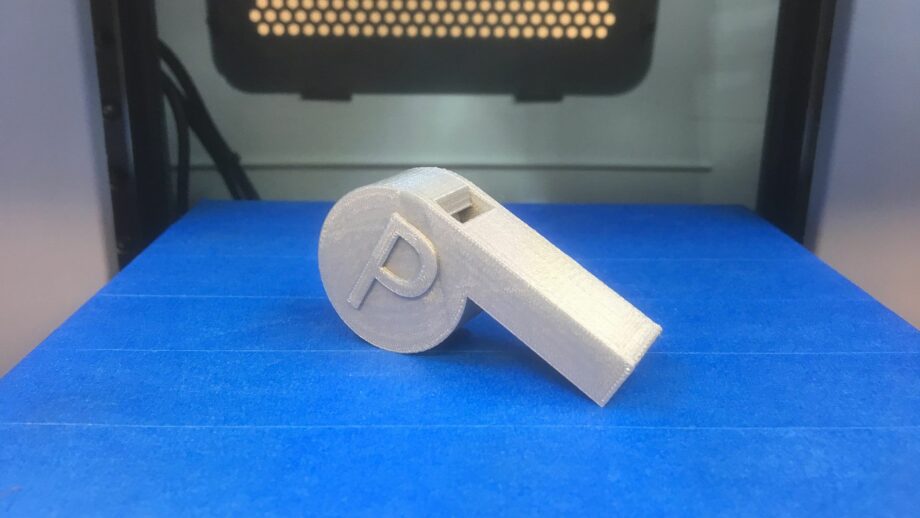
For executive leadership, supply chain architects, and hardware venture capitalists, additive manufacturing has transitioned from a prototyping novelty into a critical pillar of enterprise infrastructure scalability. When a production run hits a milestone as grueling and revealing as 40,000 units of a single mechanical item—in this case, a high-tolerance safety whistle—theoretical machine specifications are violently stripped away. What remains is a brutal test of thermal stability, firmware reliability, extrusion consistency, and total cost of ownership (TCO).
In the high-stakes theater of desktop and prosumer manufacturing, performance is no longer measured by marketing brochures, but by operational uptime, filament efficiency, and yield predictability. As corporate balance sheets face mounting pressure regarding capital allocation and supply chain risk mitigation, selecting the right additive manufacturing hardware is an exercise in strict financial and technical governance.
Executive Takeaways
Test Our Free AI & Tech Utilities Suite
Calculate LLM API token costs, analyze article dwell-time, or simulate tech DCA returns.
- The 40,000-Unit Stress Test: High-volume continuous manufacturing exposes microscopic hardware flaws, thermal creep, and software bottlenecks that standard benchmark prints fail to reveal.
- Capital Allocation & Enterprise ROI: Selecting a production-grade machine requires evaluating long-term depreciation schedules, maintenance labor costs, and component replacement lifecycles rather than initial purchase price alone.
- Ecosystem Integration & Cloud Architecture: Modern production floors demand seamless cloud compute integration, encrypted telemetry, and remote fleet management to protect proprietary enterprise intellectual property.
- The Definitive Hardware Verdict: After enduring tens of thousands of continuous operational hours, only hardware engineered with rigid kinematic frameworks, closed-loop feedback systems, and industrial-grade hotends survives enterprise scrutiny.
The Anatomy of Industrial Fatigue: Why 40,000 Parts Reveal the Truth

To understand why printing 40,000 identical functional units serves as the ultimate litmus test for additive manufacturing hardware, one must examine the physics of layered deposition under continuous load. A whistle is deceptively complex: it relies on precise internal chamber geometries, sharp acoustic edges, and air-tight wall perimeters to generate sound. A microscopic nozzle clog, a fraction of a millimeter in thermal expansion drift, or slight belt slippage at hour 400 ruins the acoustic properties, instantly destroying unit economics and market liquidity for that batch.
In early-stage prototyping, operators tolerate misprints, manual calibration resets, and frequent filament jams. However, when transitioning to low-volume production or decentralized manufacturing models, equipment failure directly threatens delivery timelines and compresses valuation multiples for hardware-dependent enterprises. Risk mitigation in this domain begins and ends with machine architecture. Open-source hobbyist frames utilizing acrylic or thin aluminum extrusions inevitably suffer from vibrational fatigue, leading to layer shifting and structural delamination over extended production cycles.
Conversely, enterprise-grade units employ cast aluminum or steel chassis frameworks, coupled with high-torque core-XY motion systems and advanced vibration compensation algorithms. These engineering choices ensure that dimensional accuracy remains uncompromised from part number one to part number 40,000. For Chief Financial Officers evaluating capital expenditure, the elimination of scrap rates directly translates to enhanced EBITDA margins and predictable operating cash flows.
Comparative Metrics: Enterprise-Grade Additive Manufacturing Hardware
To provide institutional investors, procurement directors, and engineering leads with actionable data, the following matrix evaluates the core technical and financial parameters defining top-tier production 3D printers currently dominating enterprise deployments.
| Hardware Class | Target Enterprise Use Case | Average Uptime / MTBF | Estimated TCO (3-Year Horizon) | Risk Mitigation Profile |
|---|---|---|---|---|
| Prosumer Core-XY (Enclosed) | Rapid tooling, small-batch functional parts, agile R&D. | 1,500 – 3,000 Hours | $2,500 – $5,000 | Moderate; requires local operator intervention and manual calibration. |
| Industrial Workhorse (Direct-Drive) | End-use manufacturing, bridge production, jigs & fixtures. | 8,000 – 12,000 Hours | $12,000 – $25,000 | High; features automatic bed leveling, filament runout sensors, and closed-loop telemetry. |
| Enterprise Farm Cluster (Multi-Printer) | Decentralized mass customization, high-throughput consumer goods. | 15,000+ Continuous Hours | $50,000 – $120,000+ | Maximum; robust cloud management, redundancy across nodes, and enterprise SLA support. |
Industry & Market Implications: Operational Scalability and Margin Protection
The operational reality of printing tens of thousands of industrial or consumer components highlights a broader macroeconomic shift: the localization of manufacturing and the decoupling of supply chains from fragile overseas hubs. Enterprises that integrate robust additive manufacturing fleets into their workflow gain a profound competitive moat. They bypass minimum order quantities (MOQs) imposed by traditional injection molding firms, eliminate costly steel mold tooling charges, and drastically shorten product iteration loops.
Who Wins: Agile hardware startups, defense contractors requiring secure local fabrication, and forward-thinking automotive and medical device manufacturers. These entities leverage high-end 3D printers to pivot immediately in response to market disruptions, ensuring continuous operational flow and protecting profit margins against inflationary logistics spikes.
Who Loses: Legacy contract manufacturers reliant on high-volume, low-margin injection molding for short-run components, as well as enterprises utilizing unverified, low-tier hobbyist hardware that suffers from high failure rates. The hidden cost of aborted prints, wasted raw polymers, and technician downtime rapidly erodes any initial capital expenditure savings associated with sub-standard machinery.
Frequently Asked Questions (People Also Ask)
What specific hardware failure points emerge most frequently during a 40,000-unit continuous print run?
The primary failure points include extruder gear wear from abrasive engineering filaments, heatbreak thermal creep leading to jams, PTFE tubing degradation, and mechanical backlash in belt-driven axes. Industrial-grade machines mitigate these risks by incorporating hardened steel drive gears, all-metal hotends capable of handling temperatures exceeding 300°C, and self-tensioning motion components.
How does enterprise cloud software integration impact additive manufacturing ROI?
Modern enterprise printer fleets rely on centralized cloud compute architecture to monitor print progress, analyze historical yield data, push secure firmware updates, and manage print queues remotely. This drastically reduces labor costs associated with manual machine monitoring and ensures strict regulatory compliance and data security when handling sensitive proprietary designs.
Is it more cost-effective to deploy a single high-end industrial printer or a cluster of prosumer-grade machines?
For high-volume production like a 40,000-unit run, the optimal strategy depends on redundancy and part geometry. While a cluster of prosumer machines offers parallel processing, the aggregate maintenance overhead, higher failure rates, and increased labor intervention often negate upfront savings. A certified industrial workhorse or a managed enterprise farm cluster provides predictable uptime and lower total cost of ownership over a multi-year depreciation cycle.
Future Outlook: The Horizon of Autonomous Additive Manufacturing
As artificial intelligence and computer vision continue to merge with advanced hardware manufacturing, the next evolution of enterprise 3D printing will be characterized by fully autonomous error detection and self-correcting print heads. Machine learning algorithms analyzing real-time extrusion data will instantly halt or correct microscopic imperfections before they manifest into structural failures.
For executive leadership, the mandate is clear: treating additive manufacturing as a peripheral workshop tool is no longer viable. Integrating production-grade, highly reliable 3D printing infrastructure into the core operational strategy is a vital imperative for maintaining market dominance, ensuring supply chain resilience, and maximizing long-term enterprise valuation.