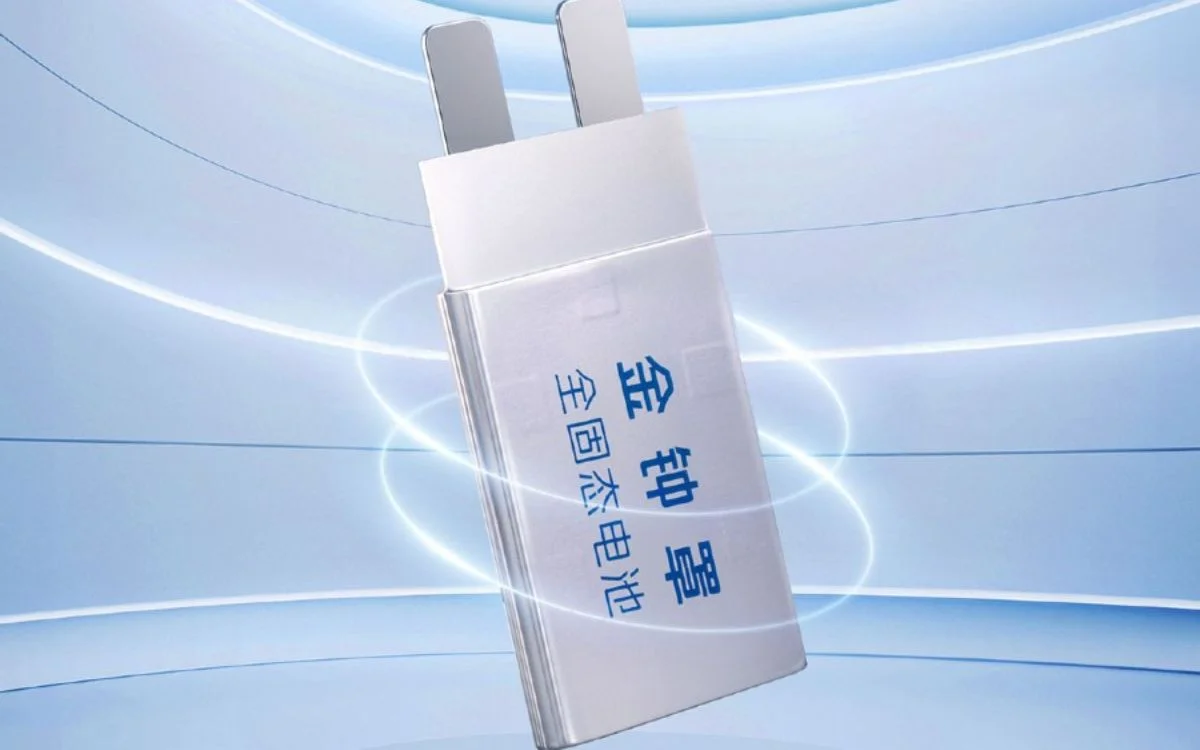
BEIJING / SHANGHAI — The long-sought holy grail of the electric vehicle industry has officially crossed from laboratory whiteboards to assembly lines. In a development sending shockwaves through Detroit, Wolfsburg, and Tokyo, automotive manufacturers and battery pioneers across China have begun deploying next-generation solid-state and advanced semi-solid batteries capable of delivering nearly 1,000 miles (1,600 kilometers) of driving range on a single charge.
The milestone represents a decisive technical and psychological blow to range anxiety—the single most persistent deterrent holding back mainstream global electric vehicle (EV) adoption over the past two decades. With vehicles now capable of driving from Beijing to Shanghai, or New York to Atlanta, without a single plug-in stop, China’s industrial apparatus is solidifying an aggressive technological moat around the global automotive sector's energy transition.
Executive Summary: The Disruption at a Glance
- Unprecedented Range: Newly certified battery architectures leverage high-density solid and semi-solid chemistries delivering vehicle ranges between 800 and 1,000 miles (1,300 to 1,600 km under CLTC standards).
- Energy Density Leap: Energy densities are shattering previous commercial ceilings, moving past 450 to 500 Watt-hours per kilogram (Wh/kg)—nearly double that of conventional premium ternary lithium-ion packs.
- Enhanced Thermal Safety: By replacing volatile, flammable liquid electrolytes with non-combustible solid or ceramic-based matrixes, the new battery packs virtually eliminate runaway fire risks.
- Commercial Escalation: Pilot fleets and flagship luxury variants are hitting public roads throughout 2026, marking the transition from lab-scale prototypes to scalable manufacturing lines.
Breaking the Liquid Barrier: The Engineering Leap
For more than a decade, the modern EV revolution has ridden the back of traditional liquid-electrolyte lithium-ion chemistries—namely nickel-manganese-cobalt (NMC) and lithium iron phosphate (LFP). While manufacturing optimizations drove battery pack costs below $100 per kilowatt-hour, chemical energy densities inevitably plateaued around 250 to 300 Wh/kg.
Solid-state technology upends these constraints. By substituting combustible liquid electrolytes with solid ceramics, polymers, or sulfide-based compounds, engineers have fundamentally stabilized the internal cell architecture. This chemical stability permits the integration of ultra-dense lithium-metal anodes, which pack significantly more energy into a fraction of the physical footprint.
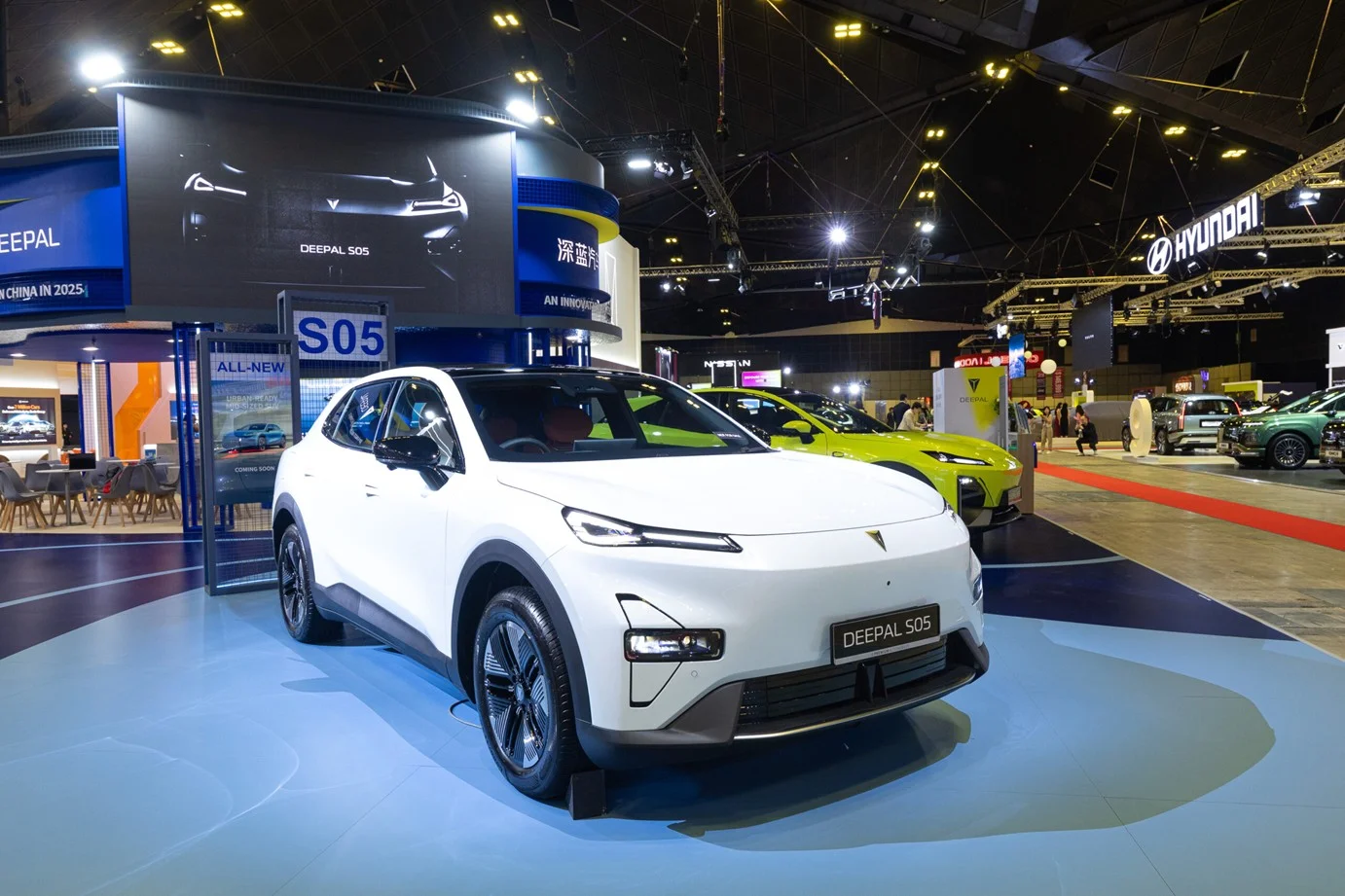
Recent developments highlighted across Chinese automotive corridors—championed by dynamic state-backed consortiums, battery champions like CATL, and aggressive pioneers including SAIC's IM Motors, NIO (partnered with WeLion), and specialized disruptors like Talent New Energy—demonstrate that continuous innovation in solid-liquid hybrid formulations has bridged the gap to pure all-solid-state designs. The result is a pack architecture that not only packs nearly 150 to 200 kWh of energy into standard sedan floorboards without penalizing passenger volume, but also charges to 80% capacity in 12 to 15 minutes.
Comparative Architecture: Traditional vs. Next-Gen Storage
| Metric / Attribute | Standard Liquid Lithium-Ion | Semi-Solid State (Gen 1) | All-Solid-State (2026 Rollout) |
|---|---|---|---|
| Cell Energy Density | 200 – 280 Wh/kg | 350 – 400 Wh/kg | 450 – 520+ Wh/kg |
| Real-World Driving Range | 300 – 420 miles | 550 – 650 miles | 850 – 1,000 miles |
| Thermal Runaway Risk | Moderate to High (Liquid volatile) | Low (Dramatically reduced) | Negligible (Non-flammable solid) |
| Cold-Weather Degradation | 25% – 40% range penalty | 10% – 15% range penalty | < 8% range penalty |
| 10% to 80% Fast-Charge | 25 – 40 minutes | 18 – 22 minutes | 10 – 15 minutes |
Geopolitical Stakes: Western Automakers Face a Deepening Chasm
The operational reality of 1,000-mile electric sedans entering the market exerts immense pressure on legacy Western automakers. For years, European and American automotive executives projected solid-state adoption as an elusive target toward the end of the 2020s or early 2030s. Toyota, Volkswagen, and Ford have funneled billions into proprietary research and domestic startup partnerships, yet most Western programs remain confined to low-volume pilot testing.
China's rapid scaling reflects its integrated supply-chain dominance. By uniting state research institutes, raw-material refining monopolies, and specialized battery equipment makers, Chinese manufacturers have industrialized production methodologies—such as dry-electrode processing and ultra-thin solid electrolyte film coating—substantially faster than outside analysts predicted.
"This isn't merely an incremental packaging upgrade; it is a structural inflection point," notes automotive supply-chain strategist Chen Guokang. "When an electric car travels 1,000 miles on a charge, the debate over charging infrastructure changes entirely. You no longer need a public charger on every corner. The EV transition ceases to be an infrastructural bottleneck and becomes a pure economics play."
The Road Ahead: High Costs and Mass-Market Scaling
Despite the technical triumph, economic hurdles remain before these ultra-range batteries reach mass-market commuter cars. First-wave solid-state implementations carry a distinct premium. Because production techniques require ultra-clean dry rooms and costly materials like refined lithium sulfide and germanium additives, early production vehicles will primarily sit in executive flagship brackets commanding price tags north of $45,000 to $65,000.
However, industrial history suggests that early adoption curves in China compress rapidly. Just as LFP battery pack costs plummeted by over 80% across the prior decade through relentless scaling, battery analysts forecast that solid-state pack costs will halve by 2028 as yield rates cross the 90% threshold.
Frequently Asked Questions (FAQ)
Will these 1,000-mile solid-state EVs be available in the US or Europe anytime soon?
Direct exports will face stiff headwinds due to escalating geopolitical tariffs, including 100% duties on Chinese EVs in the United States and sliding anti-subsidy tariffs across the European Union. However, Western automakers will likely face indirect pressure to license the underlying technology or expedite their domestic joint ventures to avoid falling a generation behind on energy density and vehicle efficiency.
Can current fast-charging stations support these massive new batteries?
Yes. Because solid-state batteries exhibit superior thermal resilience, they can accept high-voltage direct current (DC) without overheating or degrading internal components. They are fully backward-compatible with modern 400V and 800V charging networks, while possessing the unique capability to exploit upcoming 600kW+ megawatt-charging stations that can recharge a 1,000-mile battery in about 12 minutes.