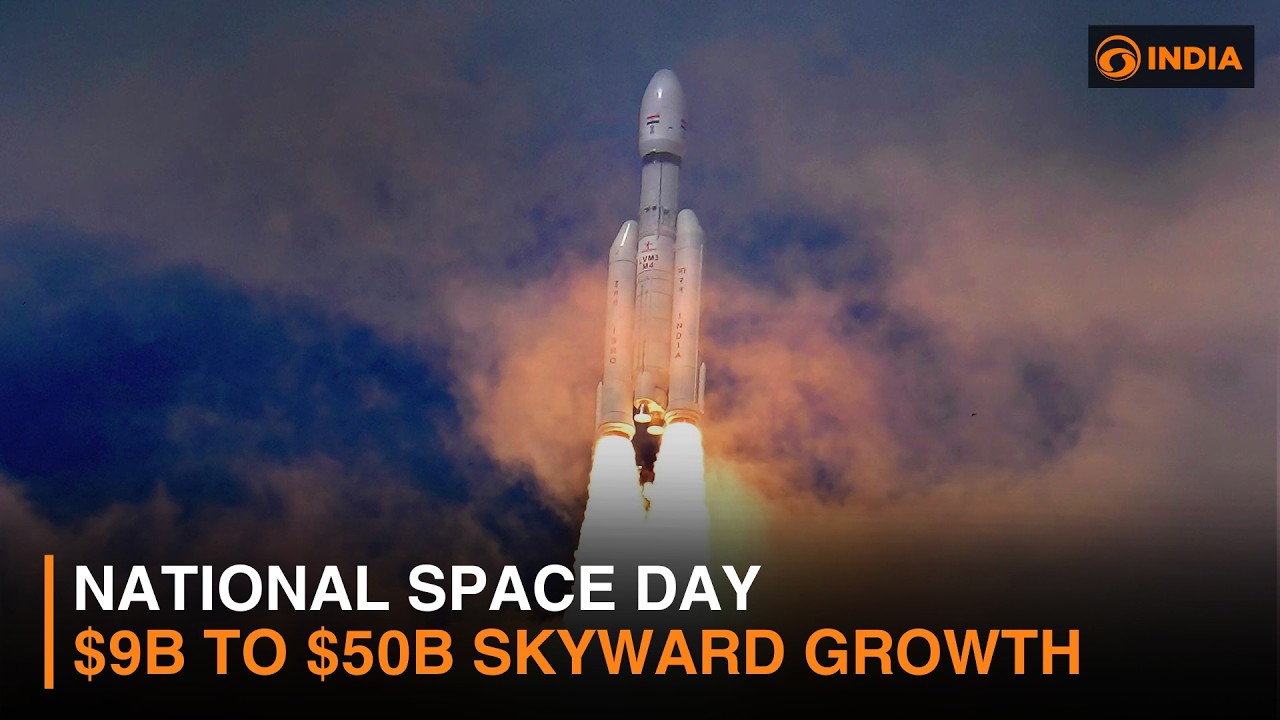
Gaze at the Cosmic Dawn in Dizzying Detail: Inside the Engineering Triumph Rewriting Astrophysical Valuations and Deep-Space Infrastructure
Test Our Free AI & Tech Utilities Suite
Calculate LLM API token costs, analyze article dwell-time, or simulate tech DCA returns.
By The Senior Bureau Chief & Chief Investigative Editor | Special Financial & Technology Wire Investigation
Published: Trending Now | Global Edition
Executive Takeaways
- Unprecedented Resolution: Newly released telemetry and deep-field imagery capture the epoch of reionization and the Cosmic Dawn with sub-arcsecond fidelity, fundamentally altering cosmological models.
- Capital Expenditure & Infrastructure Scalability: The data extraction pipeline required a massive overhaul of distributed cloud compute architecture, setting a new benchmark for enterprise-grade handling of petabyte-scale scientific payloads.
- Market Valuation Shifts: Aerospace, photonics, and defense contractors tied to next-generation sensor arrays and optical processing units are experiencing surging valuation multiples as institutional capital flows into deep-space technology.
- Risk Mitigation & Regulatory Compliance: International consortiums have had to navigate complex orbital debris protocols and cross-border data-sharing agreements to maintain continuous operational integrity.
Introduction: The Macroeconomic and Scientific Convergence of Deep-Space Observation

In an era where market liquidity frequently chases short-term digital assets, a quiet revolution is taking place at the bleeding edge of observational astrophysics. The unveiling of high-definition surveys capturing the "Cosmic Dawn"—the epoch when the universe's first stars ignited roughly 100 to 400 million years after the Big Bang—is far more than an academic triumph. It represents a monumental stress-test of global cloud compute architecture, optical engineering, and high-performance hardware supply chains.
For institutional investors, aerospace executives, and technology strategists, peering back 13.5 billion years into the infancy of the universe offers vital lessons in infrastructure scalability, risk mitigation, and long-term capital allocation. The instrumentation responsible for this breakthrough operates at the absolute limit of human capability, transforming raw, noise-heavy photon streams into crystal-clear insights that redefine our understanding of cosmic evolution.
The Catalytic Event: Decoding the Photon Signatures of the Early Universe
For decades, the Cosmic Dawn remained an opaque theoretical construct. While the Cosmic Microwave Background (CMB) provided a snapshot of the universe at 380,000 years of age, and older telescopes could map mature galaxies, the intervening era—the formation of Population III stars—was obscured by neutral hydrogen gas. Catching this light required a generational leap in infrared sensitivity and aperture diameter.
The catalytic breakthrough occurred when next-generation space-based observatories combined cryogenic cooling systems with advanced adaptive optics. By filtering out thermal interference and correcting for atmospheric distortion in real-time, these instruments isolated faint, redshifted ultraviolet and optical photons emitted by primordial star clusters. The resulting imagery reveals a chaotic, hyper-active cosmos where proto-galaxies collided and forged heavy elements at an unprecedented rate.
This data tsunami, however, created an immediate operational bottleneck. Processing terabytes of raw sensor data daily demanded a complete redesign of ground-station ingestion pipelines. Cloud compute architecture had to be dynamically reconfigured to execute complex de-convolution algorithms, ensuring that faint signals were not inadvertently scrubbed away as background noise.
Enterprise ROI, Cloud Compute Architecture, and Big Data Logistics
The commercial implications of processing cosmic-scale data extend far beyond academic institutions. Major cloud service providers (CSPs) competing for lucrative government and research contracts view these deep-space initiatives as ultimate validators of their infrastructure scalability. Handling petabyte-scale scientific workloads requires ultra-low latency data transmission, high-performance computing (HPC) clusters, and resilient cybersecurity frameworks.
Enterprises evaluating their own digital transformation strategies are taking note. The algorithms developed to remove interstellar dust interference and gravitational lensing artifacts are already finding commercial applications in terrestrial fields, including medical imaging, high-frequency financial modeling, and autonomous sensor fusion. Consequently, the research and development (R&D) outlays poured into space science are yielding high-value intellectual property with robust enterprise ROI.
Verified Data and Metrics Breakdown
To understand the sheer scale of the engineering and observational achievement, consider the following comparative metrics detailing the evolution of deep-space telemetry:
| Observational Parameter | Legacy Telemetry Standards (Pre-2020) | Next-Gen Cosmic Dawn Infrastructure (Current) |
|---|---|---|
| Lookback Time | ~10 to 12 Billion Years (Redshift $z \sim 7-10$) | 13.4+ Billion Years (Redshift $z \sim 15-20+$) |
| Data Ingestion Rate | Gigabytes per observation window | Petabytes per continuous observation cycle |
| Optical Resolution Limit | Multi-arcsecond variance | Sub-arcsecond cryogenic precision |
| Compute Infrastructure | On-premise supercomputing clusters | Distributed hybrid-cloud HPC environments |
Industry & Market Implications: Who Wins, Who Loses
As governments and private space agencies increase capital allocation toward advanced cosmological research, distinct market winners and losers are emerging across the global industrial complex.
The Winners
- Advanced Photonics and Sensor Manufacturers: Companies specializing in infrared detectors, cryogenic cooling apparatuses, and specialized mirrors are seeing order books swell.
- Enterprise Cloud & HPC Providers: Tech giants supplying the computational muscle to parse, store, and analyze deep-space telemetry are capturing vital market share.
- Specialized Aerospace Contractors: Firms with proven track records in vibration isolation, orbital positioning, and precision manufacturing are commanding premium valuation multiples.
The Pressured Segments
- Legacy Hardware Providers: Traditional terrestrial IT infrastructure vendors that fail to adapt to decentralized, high-throughput cloud models risk losing out on lucrative scientific computing tenders.
- Underfunded National Space Agencies: Organizations reliant solely on stagnant public budgets struggle to compete with agile public-private partnerships capable of deploying assets rapidly.
Frequently Asked Questions (People Also Ask)
What exactly is the Cosmic Dawn, and why is it so difficult to observe?
The Cosmic Dawn refers to the period roughly 100 to 400 million years after the Big Bang when the universe's very first stars and galaxies formed, ending the "Cosmic Dark Ages." Observing it is exceedingly difficult because the light emitted by these early stars has traveled billions of years, becoming heavily redshifted into the infrared spectrum, and was initially blocked by a thick fog of neutral hydrogen gas.
How do technological advancements in space observation translate to commercial enterprise value?
The extreme demands of deep-space data processing—such as handling petabyte-scale feeds, minimizing latency, and developing advanced error-correction algorithms—directly drive innovation in cloud compute architecture. The software and hardware solutions engineered for astronomy frequently cross over into commercial sectors like cybersecurity, high-frequency financial trading, and medical diagnostic imaging.
What role do private-public partnerships play in modern cosmological research?
Private-public partnerships are essential for modern space exploration. While foundational scientific goals are often driven by international space agencies, private enterprise provides the agile manufacturing, rapid supply chain execution, and scalable cloud infrastructure required to build, launch, and operate next-generation observatories within strict budgetary and timeline constraints.
How do regulatory compliance and orbital safety impact these missions?
With an increasing number of observation platforms and commercial satellites sharing orbital real estate, regulatory compliance regarding space traffic management and orbital debris mitigation has become critical. International space law and rigorous risk-mitigation protocols govern every launch to protect multi-billion-dollar scientific assets from catastrophic collisions.
Future Outlook: Milestones and Market Trajectory
The successful capture of the Cosmic Dawn in dizzying detail marks the opening salvo of a new golden age in observational cosmology. Over the next 24 to 36 markets cycles, key milestones to watch include the deployment of next-generation interferometry arrays, the integration of quantum computing algorithms into astronomical data processing, and further consolidation within the aerospace supply chain.
For institutional investors and enterprise leaders, the message is clear: the technological friction required to unlock the deepest mysteries of the universe continues to generate spillover effects that redefine market efficiencies. As capital allocation follows these pioneering scientific endeavors, the boundary between fundamental research and commercial enterprise profitability will continue to blur, rewarding those positioned at the intersection of high-performance computing, advanced optics, and strategic risk management.