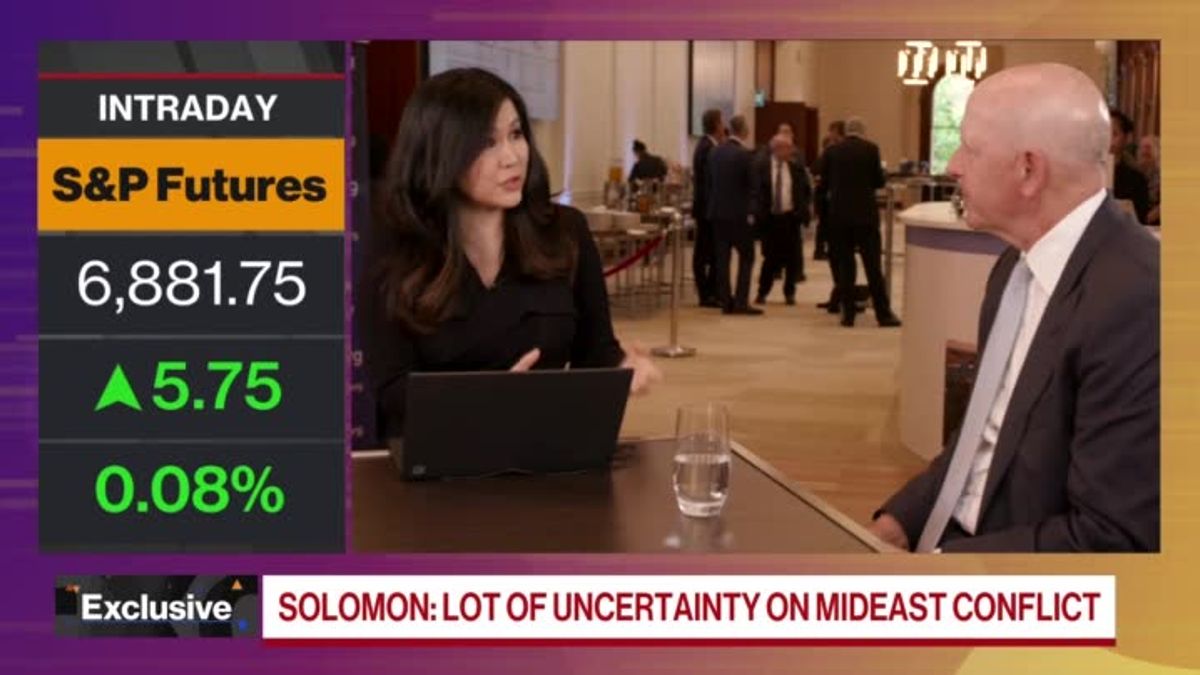
NEW YORK — As artificial intelligence reshapes the global corporate landscape, Wall Street’s premier dealmakers are moving past the initial hype phase and diving headfirst into structural execution. David Solomon, Chief Executive Officer of Goldman Sachs, has added his formidable voice to the chorus of financial titans betting big on the artificial intelligence revolution, declaring that demand for AI-related mergers, acquisitions, and financing transactions remains "very robust."
Speaking to institutional investors and corporate executives alike, Solomon’s assessment underscores a fundamental shift in capital allocation strategies across global markets. The narrative has decisively pivoted from exploratory generative AI software pilots to massive, capital-intensive infrastructure scalability. Data centers, semiconductor supply chains, power grid integration, and specialized cloud compute architecture now dominate boardrooms. For elite financial institutions like Goldman Sachs, this transition represents a once-in-a-generation pipeline of fee-generating advisory work, equity underwriting, and direct private credit deployment.
Executive Takeaways
- Unprecedented Deal Momentum: Goldman Sachs CEO David Solomon confirms that corporate appetite for AI-driven transactions, strategic partnerships, and infrastructure financing remains exceptionally strong.
- Infrastructure as the New Frontier: Capital allocation has shifted decisively toward physical and digital infrastructure—including power generation, cooling systems, and hyper-scale data centers—to support compute scalability.
- Advisory and Capital Markets Windfall: Investment banking divisions are poised for substantial revenue growth as technology giants and traditional enterprises race to secure market dominance through high-stakes M&A and debt financing.
- Risk Mitigation and Valuation Realism: Despite robust demand, institutional underwriters are applying rigorous due diligence to enterprise ROI, regulatory compliance, and long-term valuation multiples to protect investors against speculative overreach.
The Catalytic Shift: Moving from Hype to Hardware
Test Our Free AI & Tech Utilities Suite
Calculate LLM API token costs, analyze article dwell-time, or simulate tech DCA returns.
To understand the gravity of Solomon’s remarks, one must examine the macroeconomic trajectory of the technology sector over the past twenty-four months. The initial phase of the generative AI boom, catalyzed by the public release of transformer-based models in late 2022, triggered a speculative retail and institutional equity frenzy. Software companies rushed to integrate conversational AI features, while venture capitalists poured capital into early-stage application layers.
However, by late 2023 and into 2024, institutional focus shifted from software novelty to structural capacity. The bottleneck of the AI revolution is no longer algorithmic sophistication; it is raw physical infrastructure. Training and running advanced large language models requires unprecedented quantities of electricity, advanced semiconductors, high-density cooling systems, and hyper-scale data center real estate.
This operational reality has transformed Silicon Valley’s biggest players into industrial-scale infrastructure developers. Hyperscalers—including Microsoft, Alphabet, Amazon, and Meta—are committing hundreds of billions of dollars in capital expenditures. Because these capital demands far exceed even the staggering balance sheets of Big Tech, Wall Street has been enlisted to structure complex syndications, project financing facilities, and cross-border mergers.
Solomon’s commentary highlights Goldman Sachs’ pivotal role at the center of this financial machinery. By acting as the strategic intermediary between institutional capital pools, private equity heavyweights, and industrial operators, Goldman is orchestrating the financial architecture of the modern AI economy.
Capital Allocation, Debt Markets, and the Rise of AI Private Credit

A critical component of Goldman’s optimistic outlook centers on the evolution of corporate finance models designed to fund the AI boom. Traditional equity markets and syndicated bank loans are no longer sufficient to absorb the sheer volume of capital required for next-generation data center construction. Consequently, alternative asset managers and investment banks are pioneering bespoke financing structures.
Private credit markets have stepped into the breach, providing debt financing packages that bypass traditional public market scrutiny while offering attractive risk-adjusted yields for institutional lenders. These transactions often involve asset-backed lending, where the underlying collateral consists of high-value graphics processing units (GPUs) and specialized real estate holdings.
At the same time, M&A activity is accelerating. Established industrial and telecommunications conglomerates are aggressively acquiring specialized AI startups and infrastructure providers to secure proprietary technology stacks. Goldman’s investment banking division is actively advising on these complex cross-sector combinations, navigating intricate regulatory environments and antitrust scrutiny across multiple global jurisdictions.
| Metric / Dimension | 2023 Infrastructure Phase | Current Expansion Phase (2024–2025) |
|---|---|---|
| Primary Deal Drivers | Software integration, early pilot projects | Data center expansion, energy integration, M&A |
| Average Capital Commitment | $50M – $250M per venture | $1B – $10B+ per infrastructure syndicate |
| Financing Instrument Mix | Venture capital, initial public offerings | Private credit, project finance, corporate debt |
| Key Risk Factor | Algorithmic efficacy, software adoption | Power grid capacity, supply chain bottlenecks |
Industry & Market Implications: Winners, Losers, and Systemic Risk
The relentless pursuit of AI dominance is reshaping corporate hierarchies, creating clear winners while imposing existential pressures on laggards.
The Winners: Enterprise technology providers, semiconductor manufacturers, and specialized energy companies stand to gain the most. Furthermore, Tier-1 investment banks with elite advisory franchises—most notably Goldman Sachs, Morgan Stanley, and JPMorgan Chase—are reaping substantial advisory fees as boards seek expert guidance on transformative transactions.
The Vulnerable: Enterprises failing to articulate a clear, ROI-driven AI strategy risk capital flight and margin compression. Additionally, legacy financial institutions lacking robust technology advisory capabilities are losing lucrative mandates to more agile Wall Street competitors.
Macroeconomic and Systemic Considerations: While Solomon’s outlook is undeniably bullish, market observers maintain a watchful eye on potential systemic vulnerabilities. The massive concentration of capital in AI infrastructure evokes historical parallels to the late-1990s telecommunications buildout. Underwriters must perform rigorous risk mitigation to ensure that debt-funded data center projects do not face premature technological obsolescence or severe overcapacity.
Frequently Asked Questions (People Also Ask)
What did Goldman Sachs CEO David Solomon specifically say about AI deals?
David Solomon stated that demand for artificial intelligence-related transactions, corporate mergers, and infrastructure investments remains "very robust." He emphasized that corporate executives are actively looking to deploy capital to secure competitive advantages through advanced technology integration and foundational infrastructure development.
Why are AI infrastructure deals dominating investment banking pipelines?
The primary constraint in the current AI landscape is physical infrastructure—specifically data centers, specialized cooling, semiconductor supply chains, and massive electrical power generation. Because these projects require billions of dollars in upfront capital, corporations rely on major investment banks like Goldman Sachs to structure complex financing packages, private credit facilities, and strategic M&A transactions.
How are Wall Street firms managing the financial risks associated with AI investments?
Investment banks are employing enhanced risk mitigation strategies, including thorough due diligence on enterprise return on investment (ROI), asset-backed private credit structures, and conservative valuation multiples. This ensures that capital is deployed into fundamentally sound projects with clear pathways to profitability rather than speculative ventures.
What sectors are benefiting the most from the current wave of AI dealmaking?
The primary beneficiaries include semiconductor manufacturers, hyper-scale cloud providers, industrial real estate developers specializing in data centers, and traditional energy providers capable of supplying the immense electrical load required by modern compute clusters.
Future Outlook: Strategic Milestones to Watch
As Goldman Sachs and its Wall Street peers navigate this multi-trillion-dollar transition, several critical milestones will dictate market trajectory over the next 12 to 36 months.
First, the intersection of artificial intelligence and energy infrastructure will become the defining dealmaking battleground. Data centers require consistent, massive baseload power. Expect a surge in innovative corporate partnerships between tech giants and nuclear, natural gas, and renewable energy providers.
Second, regulatory scrutiny over AI market consolidation will intensify. As major technology firms attempt to acquire specialized AI startups and infrastructure networks, antitrust regulators in the United States, European Union, and United Kingdom will scrutinize transactions for anti-competitive behavior. Wall Street dealmakers will need to navigate these regulatory minefields with sophisticated legal and financial strategies.
Ultimately, David Solomon’s optimistic reading of the market signals that the institutionalization of artificial intelligence is entering its most critical, capital-intensive phase. For Wall Street, the mandate is clear: channel the world’s liquidity into building the physical foundation of the digital future, balancing unbridled market enthusiasm with disciplined financial stewardship.