SAN FRANCISCO — Google is overhauling access to its flagship artificial intelligence ecosystem. In a strategic shift reshaping how millions interact with generative AI, the tech giant is rolling out a new tiered structure for the Gemini app. The update explicitly restricts which underlying models free and mid-tier "AI Plus" subscribers can utilize, while simultaneously introducing a powerful new reasoning capability, dubbed "Deep Think," exclusively for top-tier AI Pro users.
The move marks a pivotal moment in the monetization of consumer AI. As operational costs for running massive large language models (LLMs) continue to soar, Silicon Valley is increasingly drawing hard lines between casual users and power users willing to pay top dollar for advanced computational muscle.
Understanding the New Gemini App Access Tiers
For months, users of the Gemini app have enjoyed relatively fluid access to Google’s most capable AI engines. That era of open-door experimentation is drawing to a close. Under the newly implemented guidelines, Google is segmenting its user base into three distinct categories:
- Free Tier: Restricted to lighter, faster models optimized for basic tasks, web searches, and routine content generation. Advanced reasoning queries will hit a strict paywall.
- AI Plus Tier: Designed for everyday professionals and enthusiasts, offering broader model access and higher rate limits, though still barred from Google's heaviest computational models.
- AI Pro Tier: The enterprise-grade consumer tier, unlocking the full suite of state-of-the-art models and debuting the highly anticipated "Deep Think" functionality.
Industry analysts note that this segmentation mirrors the playbook established by rival OpenAI with ChatGPT Plus and enterprise offerings, signaling a broader industry consensus that foundational AI models can no longer be given away universally without incurring unsustainable infrastructure costs.
What is 'Deep Think' and Why It Matters
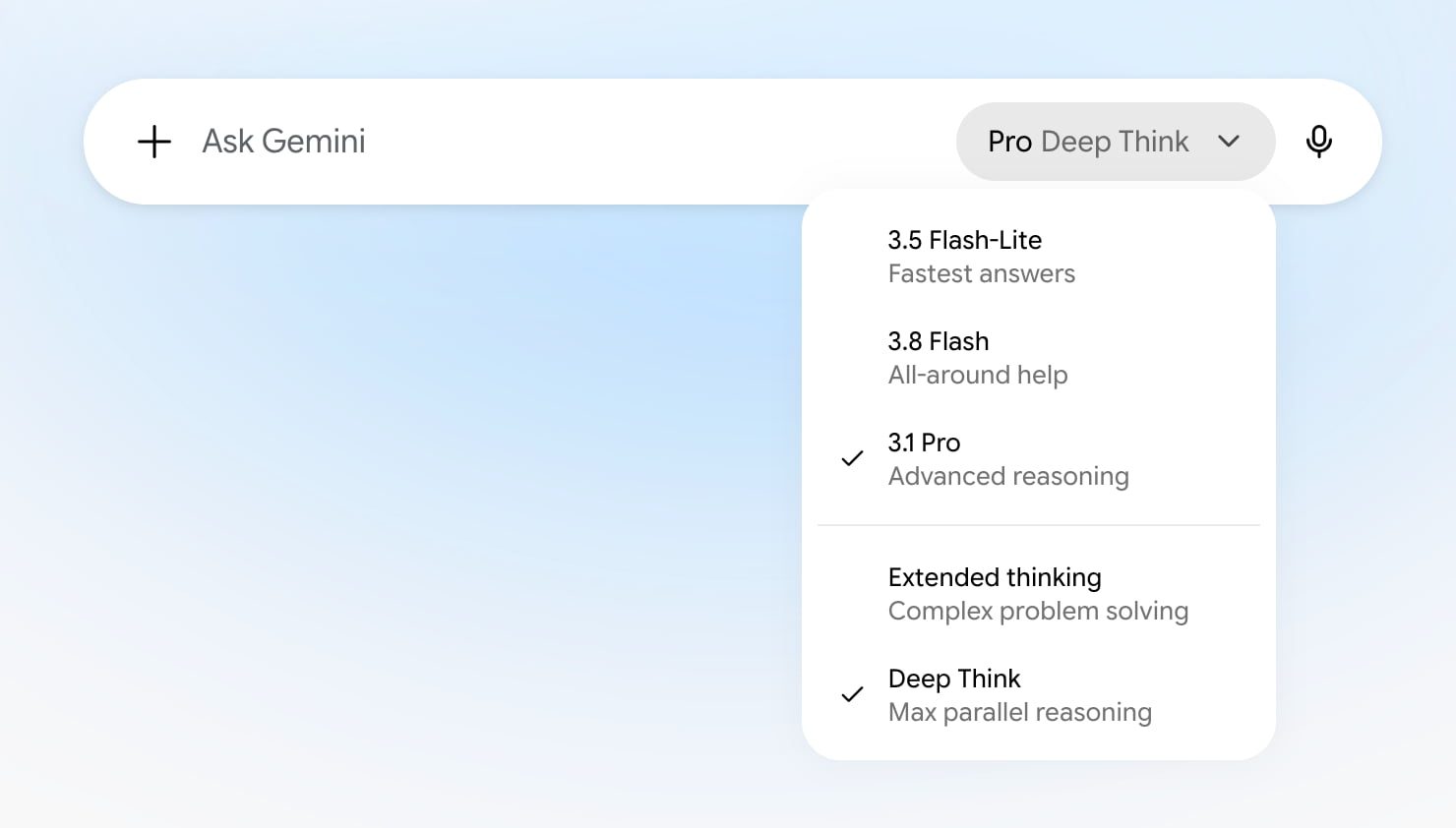
The crown jewel of the AI Pro update is Deep Think, a specialized processing mode designed to tackle complex, multi-step problems in mathematics, coding, logic, and strategic planning. Unlike standard prompt-and-response mechanisms, Deep Think allows the model to pause, evaluate alternative hypotheses, and execute recursive self-corrections before delivering a final output.
"We are moving past the era of instant, superficial generation and entering a phase of cognitive depth," said a Silicon Valley product strategist familiar with the rollout who spoke on the condition of anonymity. "For software engineers, quantitative analysts, and researchers, a model that can 'think twice' before answering is exponentially more valuable than one that simply guesses the next most likely token."
Early benchmarks suggest that while Deep Think requires significantly more processing time—sometimes taking up to a minute to formulate a response—its accuracy on complex reasoning tests dramatically outperforms standard conversational models.
Quick Facts: Gemini App Tier Breakdown
| Subscription Tier | Target Audience | Model Access | Key Exclusive Features |
|---|---|---|---|
| Free | Casual users, students | Standard Gemini models (capped limits) | Basic chat, web integration |
| AI Plus | Power users, creators | Upgraded models, higher rate limits | Priority response times during peak hours |
| AI Pro | Developers, analysts, researchers | Full access to flagship frontier models | Deep Think reasoning mode, advanced data analysis |
The Economic Reality Behind the Paywalls
Google’s decision to limit free model access underscores the harsh economic realities of the generative AI boom. Training and serving frontier models require billions of dollars in specialized hardware, massive data center footprints, and staggering amounts of electrical power.
By restricting free users to less resource-intensive models, Google can effectively manage server load and preserve GPU availability for paying subscribers. However, the strategy carries risks. Consumer adoption has largely been driven by the democratization of top-tier AI tools. Puts and takes on free accessibility could alienate casual users who may defect to competitors offering more generous free tiers.
Conversely, enterprise and professional users have demonstrated a willingness to pay subscription fees if the productivity gains justify the cost. By introducing Deep Think exclusively to the AI Pro tier, Google is betting that high-end professionals will view the subscription not as a luxury, but as an essential digital tool.
Future Outlook: Where the AI Wars Head Next
As the dust settles on Google's restructuring, the broader tech landscape is watching closely. The battleground for consumer AI is shifting rapidly from raw conversational fluency to specialized capability and economic sustainability.
Competitors like OpenAI, Anthropic, and Microsoft are expected to refine their own tiered offerings, likely introducing even more granular pricing models based on compute usage, task complexity, and specialized reasoning tools. For end-users, the message is clear: the free lunch of unrestricted, cutting-edge artificial intelligence is officially over.
Frequently Asked Questions
Will free users lose access to the Gemini app entirely?
No. Free users will still have access to the Gemini app and its core features, but they will be routed to lighter, less compute-heavy models and will face stricter usage limits and capability restrictions on complex queries.
How can users access the new 'Deep Think' feature?
Deep Think is available exclusively to subscribers of the top-tier AI Pro plan. Eligible users will see a toggle or prompt option within the Gemini app interface to activate the deep reasoning mode for complex tasks.