The Big Tech Reckoning: Is the 2026 Correction a Generational Buying Opportunity for Apple, Nvidia, and Microsoft?
NEW YORK & MUMBAI — Wall Street is locked in a high-stakes debate as 2026 proves significantly more volatile and challenging for global equities than many institutional forecasters anticipated. Following a period of unprecedented expansion driven by generative artificial intelligence and cloud dominance, the market's holy trinity—Apple, Nvidia, and Microsoft—has faced sharp, sentiment-driven pullbacks. As portfolios bleed and retail investors panic, senior strategists are asking the trillion-dollar question: Is this correction a dangerous value trap, or is it the ultimate "buy the dip" moment of the decade?
According to primary market data from TradingView, macroeconomic headwinds, shifting monetary policy expectations, and valuation digestion have punctured the untouchable aura surrounding Big Tech. Yet, beneath the red trading screens, fundamental enterprise growth, robust free cash flow generation, and accelerating technological integration suggest a vastly different underlying reality. This report breaks down the catalysts behind the current sell-off, evaluates the risk-reward profile of each corporate titan, and provides a strategic roadmap for navigating the 2026 equity landscape.
Decoding the 2026 Tech Correction: What Went Wrong?
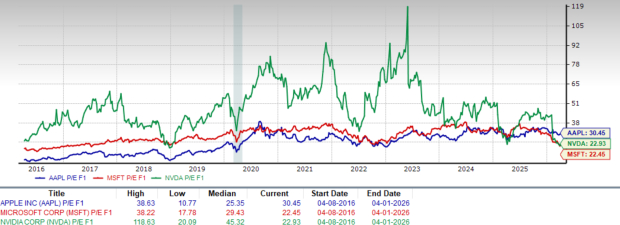
The stellar momentum that carried mega-cap technology stocks through previous years encountered a heavy reality check in early 2026. Global supply chain frictions, persistent interest rate uncertainty, and stringent regulatory scrutiny across both the United States and the European Union have compressed price-to-earnings multiples. Investors who grew accustomed to uninterrupted, linear appreciation are now grappling with classic market cyclicality.
However, veteran market analysts emphasize that the current drawdown is primarily a valuation reset rather than an existential crisis of business models. "Markets are experiencing a necessary digestion phase," notes a senior chief investment officer based in New York. "The macroeconomic narrative has shifted from pure growth-at-all-costs to capital efficiency, margin protection, and tangible return on AI investment. While sentiment is fragile, the underlying cash generators of the global economy remain remarkably resilient."
Deep Dive: The Big Three Under the Microscope
Apple: Ecosystem Resilience Meets Hardware Renaissance
Apple Inc. has navigated the 2026 turbulence by leaning heavily into its unassailable hardware-software ecosystem and expanding services revenue. While smartphone upgrade cycles have faced regional headwinds, the tech giant’s aggressive push into integrated on-device artificial intelligence has unlocked new consumer monetization loops. Trading at a more attractive valuation multiple compared to its historical highs, Apple represents the defensive stalwart of the Big Tech trio, offering safety through unmatched balance sheet strength and aggressive share buyback programs.
Nvidia: The AI Infrastructure Engine Pushes Forward
Nvidia remains the undisputed bellwether of the artificial intelligence revolution. Despite periodic investor jitters regarding hardware adoption rates and enterprise ROI timelines, demand for next-generation computing architecture continues to outstrip supply. The company's strategic pivot toward full-stack software and enterprise sovereign cloud solutions has insulated its margins. For aggressive growth investors viewing the current dip through a multi-year lens, Nvidia's technological moat remains wider and deeper than any competitor in the silicon space.
Microsoft: Cloud Dominance and Enterprise AI Monetization
Microsoft Corporation stands at the intersection of enterprise cloud infrastructure and practical generative AI deployment. Through its dominant Azure cloud platform and deeply embedded Copilot productivity ecosystem, Microsoft is successfully translating heavy capital expenditures into recurring subscription revenue. Analysts point out that enterprise clients are sticking with Microsoft’s unified ecosystem due to mission-critical dependency and superior cybersecurity architecture, making any significant share price correction an appealing entry point for long-term institutional capital.
Executive Summary: Key Takeaways for Global Investors
- Valuation Compression: P/E multiples have pulled back from historical peaks, offering more sensible entry points for long-term capital allocators.
- AI Monetization Shift: Wall Street is moving away from speculative infrastructure spending toward proven enterprise ROI and software integration.
- Macroeconomic Resilience: Despite a challenging 2026 macro environment, Apple, Nvidia, and Microsoft continue to generate massive free cash flow.
- Strategic Rebalancing: Institutional desks are utilizing volatility to reallocate capital into category-defining leaders with bulletproof balance sheets.
Market Snapshot: Big Tech Financial Health Indicators
| Company | Primary Growth Catalyst | Market Sentiment | Key Risk Factor |
|---|---|---|---|
| Apple (AAPL) | On-device AI ecosystem & Services expansion | Cautiously Bullish | Hardware upgrade cycle maturation |
| Nvidia (NVDA) | Next-gen AI chips & Enterprise sovereign cloud | Aggressively Optimistic | Cyclical capex digestion by hyperscalers |
| Microsoft (MSFT) | Azure cloud scaling & Copilot monetization | Stable / Accumulate | Heightened regulatory antitrust scrutiny |
Expert Outlook and Future Trajectory
As the market digests first-quarter earnings and looks toward the second half of 2026, the divergence between speculative assets and elite mega-cap enterprises will likely widen. Market historians remind investors that panics and pullbacks have historically provided generational wealth-building opportunities for those who look past near-term noise and focus on fundamental market dominance.
Chief economists suggest maintaining a disciplined, dollar-cost-averaging approach rather than attempting to time the absolute market bottom. By focusing on companies with unassailable economic moats, pristine balance sheets, and structural secular tailwinds, investors can successfully weather the 2026 turbulence and position their portfolios for the next major leg of secular expansion.
Frequently Asked Questions
1. Is it safe to buy Big Tech stocks during the current 2026 market correction?
While no investment is entirely without risk, Apple, Nvidia, and Microsoft possess robust balance sheets and dominant market positions that historically allow them to recover faster and stronger from macroeconomic downturns than smaller peers.
2. What is the primary catalyst driving the recent sell-off in technology equities?
The correction is primarily driven by macroeconomic policy uncertainty, elevated interest rate expectations, and a broader investor shift toward scrutinizing the immediate return on investment (ROI) of heavy corporate AI spending.