EXECUTIVE TAKEAWAYS
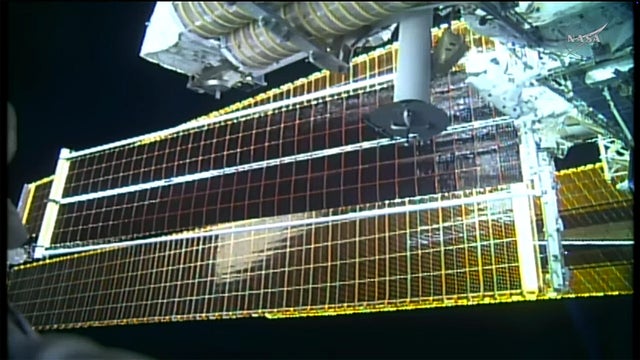
- Critical Infrastructure Milestone: NASA astronauts have commenced the ultimate stage of a years-long, high-stakes overhaul of the International Space Station’s electrical grid.
- Technology Leap: Bulky, degraded nickel-hydrogen batteries are being replaced with high-density lithium-ion units, optimizing energy storage and enterprise ROI for orbital operations.
- Extended Lifespan: This infrastructure refresh ensures uninterrupted power availability, safeguarding vital scientific payloads and commercial manufacturing capabilities through the station's planned retirement.
- Capital & Risk Mitigation: Executing complex extravehicular activities (EVAs) in low-Earth orbit requires strict engineering rigor, mitigating catastrophic failure risks in a volatile operating environment.
HOUSTON / WASHINGTON — In an intricate ballet of engineering, robotics, and human endurance, astronauts aboard the International Space Station (ISS) have stepped into the vacuum of space to execute the final, definitive phase of a multi-year power system upgrade. This monumental infrastructure campaign—valued in the hundreds of millions of dollars—replaces aging vintage hardware with cutting-edge energy storage systems designed to sustain continuous commercial and scientific exploitation of low-Earth orbit (LEO).
For financial markets, aerospace contractors, and commercial space logistics firms, this meticulous extravehicular activity (EVA) is far more than a routine maintenance procedure. It represents a vital capital allocation milestone. Ensuring uninterrupted power architecture is the bedrock for enterprise scalability as the global economy transitions toward a bustling LEO economy, characterized by microgravity pharmaceutical manufacturing, fiber-optic production, and private orbital outposts.
The Genesis of the Grid Upgrade: Replacing Decades-Old Tech
Test Our Free AI & Tech Utilities Suite
Calculate LLM API token costs, analyze article dwell-time, or simulate tech DCA returns.
To understand the magnitude of the current spacewalk campaign, one must examine the legacy of the station's power distribution grid. When the primary structural truss segments of the ISS were assembled in the early 2000s, engineers relied on nickel-hydrogen ($Ni\text{-}H_2$) batteries to store solar-generated electricity captured during the station's 90-minute orbits.
While remarkably durable for their era, these original batteries had a design life of roughly 6.5 years. By the mid-2010s, they were exhibiting noticeable capacity degradation. Operating an orbital laboratory experiencing 16 sunrises and sunsets every 24 hours places extreme thermal and electrical stress on energy storage systems. Without a modernized power grid, the station faced diminishing electrical output, directly threatening ongoing research, life support systems, and the burgeoning commercial payload market.
In response, NASA and its international partners formulated a comprehensive infrastructure overhaul. The strategy: swap out 48 aging nickel-hydrogen batteries across the station’s eight power channels with 24 advanced lithium-ion batteries, each accompanied by specialized adapter plates and charge-discharge units.
Anatomy of the Final Phase: Execution and Engineering Precision
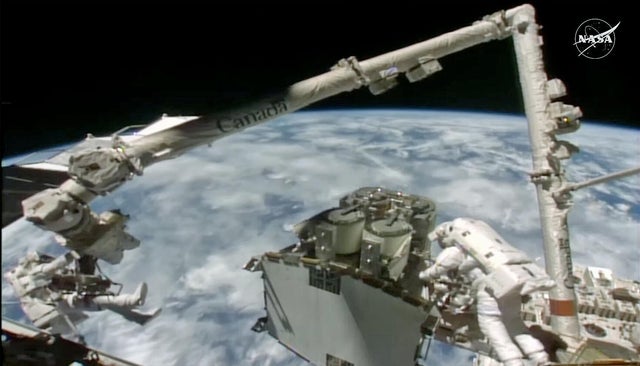
The current spacewalks represent the culminating chapter of this sprawling logistical effort. Coordinating the delivery of next-generation lithium-ion batteries via uncrewed cargo resupply vehicles—including Northrop Grumman’s Cygnus and SpaceX’s Cargo Dragon—demanded years of synchronization between mission control teams in Houston, Huntsville, and Tokyo.
During these high-stakes EVAs, astronauts must navigate cumbersome spacesuits while handling heavy, high-voltage hardware mounted to the station’s truss. Working in extreme thermal fluctuations—where temperatures swing from positive 250 degrees Fahrenheit in direct sunlight to negative 250 degrees in Earth's shadow—spacewalkers unbolt legacy batteries, stow them temporarily, maneuver the new lithium-ion power packs into place, and secure complex electrical interfaces.
The operational risk is immense. A single misaligned connector or torque miscalculation could compromise an entire power channel, disrupting critical science experiments and life-support architecture. Consequently, every movement is rehearsed extensively in the Neutral Buoyancy Laboratory (NBL) at the Johnson Space Center, ensuring rigorous risk mitigation before astronauts ever step out of the Quest airlock.
Verified Data and Technical Specifications
A rigorous examination of the ISS power channel modernization highlights the profound technical leap achieved between legacy architectures and contemporary hardware:
| System Metric | Legacy System (Nickel-Hydrogen) | Upgraded System (Lithium-Ion) |
|---|---|---|
| Battery Count Required | 48 units across 8 channels | 24 units (higher energy density) |
| Design Operational Lifespan | ~6.5 years | 10+ years (designed to station retirement) |
| Energy Density & Efficiency | Moderate; higher volumetric footprint | Superior charge retention, reduced mass |
| Primary Supplier / Partner | Legacy Aerospace Contractors | NASA, JAXA, Boeing, GS Yuasa |
Industry and Market Implications: Winners, Losers, and Economic Value
The successful execution of this power system upgrade carries significant ramifications across the aerospace, defense, and technology sectors:
- Aerospace Prime Contractors & Hardware Manufacturers: Companies specializing in advanced energy storage, high-reliability wiring harnesses, and robotic manipulation systems stand to gain valuable validation. Demonstrating flight-proven reliability in extreme LEO environments translates directly to valuation multiples and competitive advantages in commercial station bids.
- Commercial Payload Operators: Biotechnology firms, semiconductor developers, and private research entities leasing lab space aboard the ISS rely on stable, uninterrupted electricity. Power fluctuations can corrupt multi-million-dollar crystal growth experiments or pharmaceutical crystallization runs. This upgrade provides absolute operational certainty.
- Regulatory Compliance and Safety Auditors: As human spaceflight commercializes, federal oversight agencies—including the FAA and NASA safety panels—are closely examining how legacy architecture is retrofitted. The success of these EVAs sets a regulatory benchmark for future commercial orbital destinations (NODs) scheduled to replace the ISS post-2030.
- Legacy Suppliers Facing Obsolescence: Traditional manufacturers tied exclusively to older chemistry models are forced to accelerate their R&D spending to pivot toward high-density solid-state and lithium-ion architectures, lest they lose market share in the rapidly expanding space infrastructure economy.
Frequently Asked Questions (People Also Ask)
Why does the International Space Station need a power system upgrade now?
The original nickel-hydrogen batteries installed during early station assembly have exceeded their designed operational lifespans of 6.5 years, suffering from capacity degradation. Upgrading to modern lithium-ion batteries ensures a reliable, high-density power supply capable of supporting continuous scientific research and commercial operations through the remainder of the station's operational lifecycle.
How do astronauts perform these complex battery replacements in space?
Astronauts utilize a combination of specialized extravehicular activity (EVA) tools, robotic arm assistance (such as the Canadarm2 operated by flight controllers on Earth), and pre-positioned adapter plates. The process requires removing old batteries from the station’s truss, stowing or jettisoning them safely, and installing the new lithium-ion units into designated electrical slots.
What happens to the old batteries once they are removed from the ISS?
Historically, older nickel-hydrogen batteries have been packed into uncrewed cargo spacecraft—such as Japanese HTV vehicles—which are subsequently released from the station to burn up safely upon re-entering Earth's atmosphere over remote ocean sectors, preventing orbital debris accumulation.
How does this power upgrade impact commercial ventures in low-Earth orbit?
A stable, robust electrical grid guarantees that private companies leasing research space or running automated manufacturing modules aboard the ISS will not experience power interruptions. This minimizes financial risk, protects enterprise ROI on delicate scientific payloads, and paves the way for future commercial space station architectures.
Future Outlook: Milestones and the Post-ISS Horizon
With the final phase of the power system upgrade drawing to a close, attention within the aerospace community is shifting toward long-term asset management and the eventual decommissioning of the ISS, currently slated for the early 2030s. The lessons learned during this complex, multi-year electrical overhaul will serve as a masterclass in orbital infrastructure management.
Key milestones to watch in the coming quarters include the full integration and automated stress-testing of the final power channels, followed by the seamless transition of high-draw commercial payloads to the enhanced grid. Furthermore, aerospace engineers will apply these rigorous maintenance protocols to the design blueprints of upcoming commercial space stations—such as Axiom Station and Orbital Reef—ensuring that next-generation orbital habitats launch with scalable, future-proof power architectures from day one.